1. ArchDaily
  2. Cultural Identity

Cultural Identity: The Latest Architecture and News

Architectural Rebuilding as Cultural Memory: The Paradox of Ever-Fresh Heritage

Architecture—one of the few cultural artifacts made to be publicly lived with, preserved, and often capable of standing for centuries—contributes significantly to the cultural identity of places and people. Historically, buildings have expressed institutional attitudes, influence, and power; they are clear demonstrations of culture. Yet longevity complicates preservation: when a structure is rebuilt, repaired, or entirely reassembled, in what sense is it still the same building?

There's the classic Ship of Theseus puzzle from Plutarch. if a ship's planks are replaced one by one over time, is it still the same ship? Thomas Hobbes adds a twist—if the original planks are reassembled elsewhere, which ship is "the original"? The paradox tests what grounds identity: material fabric, continuous use and history, or shared recognition. In architecture and conservation, it reframes preservation as a choice among keeping matter, maintaining form and function, or sustaining the stories and practices that give a place meaning.

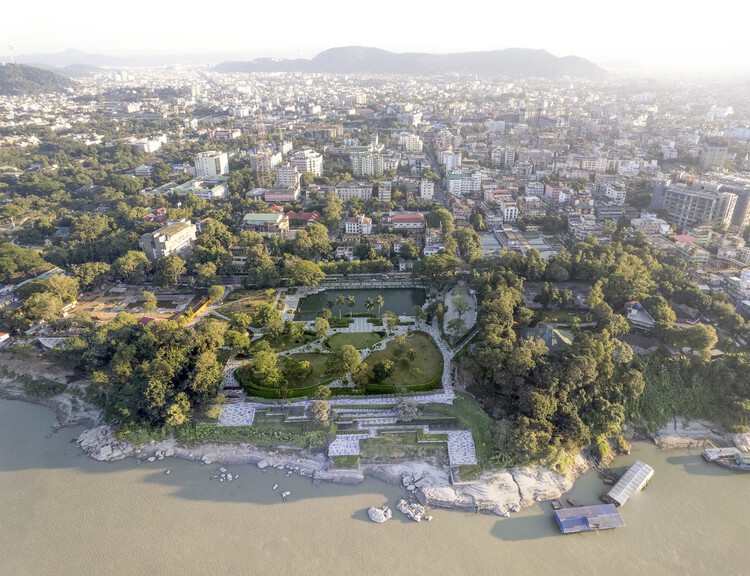
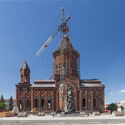
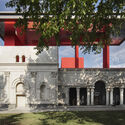
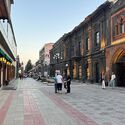
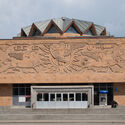
Architectural Rebuilding as Cultural Memory: The Paradox of Ever-Fresh Heritage - Imagen 1 de 4Architectural Rebuilding as Cultural Memory: The Paradox of Ever-Fresh Heritage - Imagen 2 de 4Architectural Rebuilding as Cultural Memory: The Paradox of Ever-Fresh Heritage - Imagen 3 de 4Architectural Rebuilding as Cultural Memory: The Paradox of Ever-Fresh Heritage - Imagen 4 de 4Architectural Rebuilding as Cultural Memory: The Paradox of Ever-Fresh Heritage - More Images+ 17

Mauro Marinelli Wins 2025 Wheelwright Prize for Research on Mountain Architecture Across the Alps, Andes, and Himalayas

Harvard University Graduate School of Design (GSD) has announced Maura Marinelli, co-founder of franzosomarinelli, as the winner of the 2025 Wheelwright Prize. The annual $100,000 grant supports emerging architects in pursuing investigative research that addresses contemporary architectural challenges with a global perspective. Marinelli's winning proposal, "Topographies of Resistance: Architecture and the Survival of Cultures," explores how architecture can sustain and revitalize rural, mountainous regions that confront climate change, infrastructure limitations, and cultural erosion. His research aims to develop design strategies that promote autonomy, sustainability, and local identity by comparing contexts in the Alps, Andes, and Himalayas. Through fieldwork and analysis, the project seeks to propose architectural approaches that empower communities and challenge urban-centric perspectives.

Archi/Tree/tecture: Lithuania’s Pavilion at the 2025 Venice Biennale Explores the Relationship Between Identity and Urban Nature

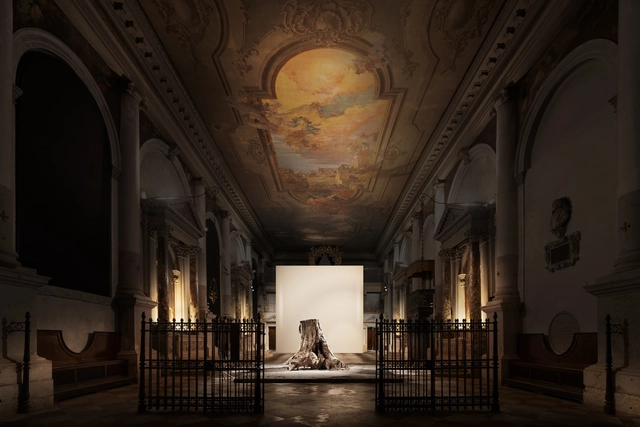
The Lithuanian Pavilion at the 2025 Venice Architecture Biennale presents Archi / Tree / tecture, a project by the National Architects Association. Commissioned by Juratė Tutlyte and curated by architect Gintaras Balčytis, the exhibition invites architects, students, communities, and visitors to reflect on the deep connections between architecture and urban nature. It positions the discipline as an interpretive medium that reveals the layered relationships shaping our cities, which in turn reflect these dynamic interactions. The proposal evokes an urban memory rooted in landscapes where fields and trees once stood, introducing the dimension of time into discussions on city ecosystems, sustainability, and resilience. The exhibition, an indoor installation designed by architects Paulius Vaitiekūnas, Andrius Pukis, and Vika Pranaitytė, will be set within the Church of Santa Maria dei Derelitti. The audiovisual and light installation in the pavilion was designed by the interdisciplinary art duo Lina Pranaitytė and Urtė Pakers, while the sculptural component of the installation was created by Kęstutis Lanauskas.

Archi/Tree/tecture: Lithuania’s Pavilion at the 2025 Venice Biennale Explores the Relationship Between Identity and Urban Nature - 1 的图像 4Archi/Tree/tecture: Lithuania’s Pavilion at the 2025 Venice Biennale Explores the Relationship Between Identity and Urban Nature - 2 的图像 4Archi/Tree/tecture: Lithuania’s Pavilion at the 2025 Venice Biennale Explores the Relationship Between Identity and Urban Nature - 3 的图像 4Archi/Tree/tecture: Lithuania’s Pavilion at the 2025 Venice Biennale Explores the Relationship Between Identity and Urban Nature - 4 的图像 4Archi/Tree/tecture: Lithuania’s Pavilion at the 2025 Venice Biennale Explores the Relationship Between Identity and Urban Nature - More Images+ 2

Edmund Sumner Explores Memory and Emotional Spaces with Architectural Photography Exhibition in London

Starting on June 30th, 2024, Edmund Sumner presents the “Traces” exhibition, a solo show at Rodic Davidson Architects in London featuring architectural photography that explores cultural identity and historical significance across diverse landscapes. The show offers a profound exploration of architecture and design across diverse landscapes, including Europe, India, and Mexico, presenting a compelling intersection between photography and the built environment. Additionally, the photographer is expected to release his fifth book with Thames & Hudson in 2025.

Edmund Sumner Explores Memory and Emotional Spaces with Architectural Photography Exhibition in London - Image 1 of 4Edmund Sumner Explores Memory and Emotional Spaces with Architectural Photography Exhibition in London - Image 2 of 4Edmund Sumner Explores Memory and Emotional Spaces with Architectural Photography Exhibition in London - Image 3 of 4Edmund Sumner Explores Memory and Emotional Spaces with Architectural Photography Exhibition in London - Image 4 of 4Edmund Sumner Explores Memory and Emotional Spaces with Architectural Photography Exhibition in London - More Images+ 4

Restoring a Symbol of Collective Memory: Holcim Award Winner Xu Tiantian Discusses the Impact of Adaptive Reuse

In the mountain valleys of China’s Fujian Province, thousands of large, rammed earth fortresses lay abandoned. Once used for both defense and collective housing, the tulou typology is an integral part of the region’s cultural heritage, with 46 of them being recognized by UNESCO as World Heritage Sites. Despite this, the rural communities surrounding them have struggled to find new roles and purposes for these buildings. Going beyond the need for conservation, architect Xu Tiantian of DnA_Design and Architecture set out to develop and adapt this heritage to reintroduce it into community life. The Fujian Tulou | Adaptive Reuse project recently won the Gold Prize of Holcim Awards 2023 for Asia-Pacific, recognized for creating “an exemplary model for building conservation initiatives.” In a video interview for ArchDaily, Xu Tiantian discusses the principles that underpin this initiative and the potential outcomes of adaptive reuse in rural communities.

Restoring a Symbol of Collective Memory: Holcim Award Winner Xu Tiantian Discusses the Impact of Adaptive Reuse - Image 1 of 4Restoring a Symbol of Collective Memory: Holcim Award Winner Xu Tiantian Discusses the Impact of Adaptive Reuse - Image 2 of 4Restoring a Symbol of Collective Memory: Holcim Award Winner Xu Tiantian Discusses the Impact of Adaptive Reuse - Image 3 of 4Restoring a Symbol of Collective Memory: Holcim Award Winner Xu Tiantian Discusses the Impact of Adaptive Reuse - Image 4 of 4Restoring a Symbol of Collective Memory: Holcim Award Winner Xu Tiantian Discusses the Impact of Adaptive Reuse - More Images+ 4

Is Ornament Still a Crime?

Subscriber Access | 

Ornament and Its Discontents

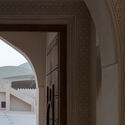
Disguise, makeup. Expression of the subjectivity of a group, language, or sign. Historical document, emblem of fleeting fashions. A crime. Ornaments have been interpreted in different ways and are considered one of the most degenerate sins of architecture. Resisting the temptation of decoration has become a virtue, a legitimate sign of authenticity and a possible future.

Is Ornament Still a Crime? - Image 1 of 4Is Ornament Still a Crime? - Image 2 of 4Is Ornament Still a Crime? - Image 3 of 4Is Ornament Still a Crime? - Image 4 of 4Is Ornament Still a Crime? - More Images+ 10