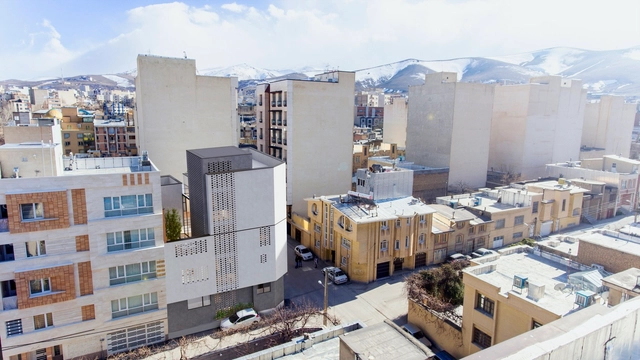
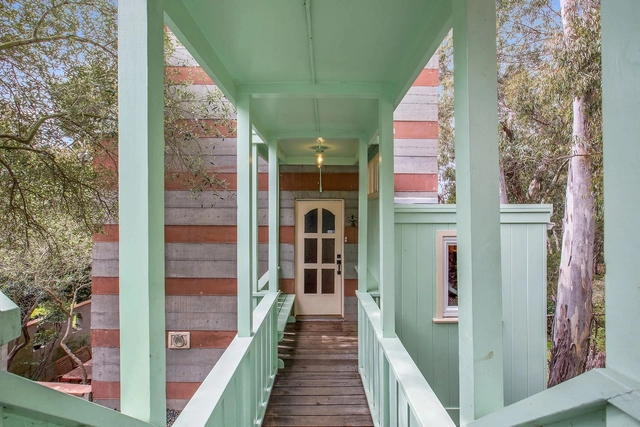
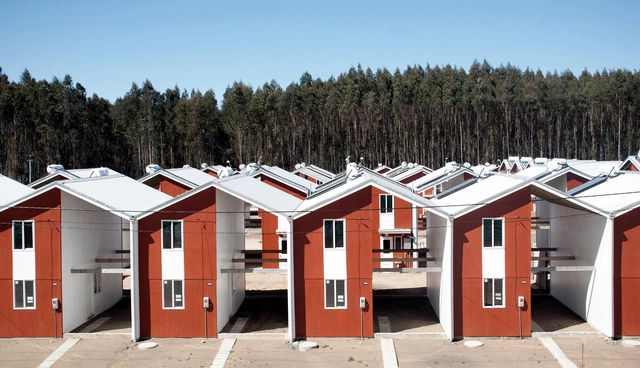
The whining of architects is futile. The stick-frame-over-podium building—the so-called 5-over-1—is here to stay. The Box, as I like to refer to it, utilizes the hybrid technology of a concrete-and-steel base below wood-frame construction, and is used predominantly for market-rate housing. Despite the common negative reaction to its banal aesthetics, the appeal to a large segment of apartment consumers is undeniable. It’s an obvious hit with developers, too.
The 17th edition of World Architecture Festival (WAF) will take place at Marina Bay Sands in Singapore from the 6-8th November 2024. In addition to the unique live-judged awards programme and crit presentations, this year's event will include fringe events, an exhibition, and keynote talks from an international panel of speakers.
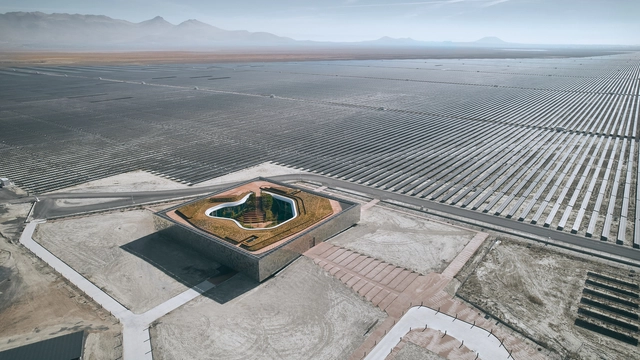
This week, the festival announced their short list of most innovative projects from around the globe, celebrating the best new completed buildings and landscapes as well as the most inspiring future architectural concepts, across 33 categories, ranging from residential, to transport, to retrofit. This year's finalists range from major world architects including Zaha Hadid Architects, WOHA, Renzo Piano Building Workshop, MVRDV, Tadao Ando Architect & Associates, Kohn Pederson Fox, and Nikken Sekkei, with many emerging practices also on stage competing against the big names.
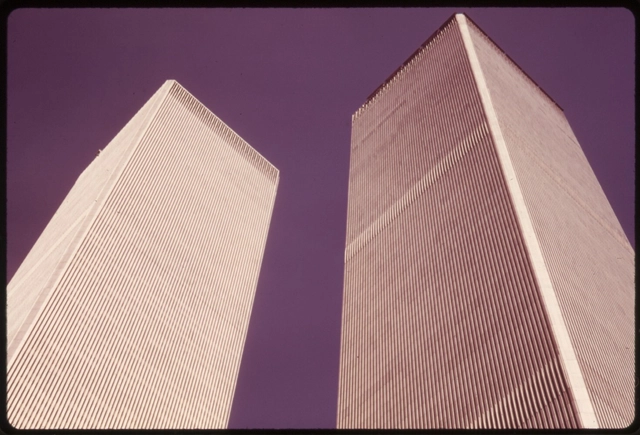
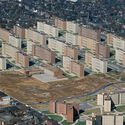
His work – more than 250 buildings in the span of 30 years – was lauded by critics and colleagues, cited for international design awards, and landed the architect on the cover of Time. But today, even practitioners and aficionados might be challenged to name one of Minoru Yamasaki's buildings beyond his two most infamous creations that no longer exist: the Pruitt-Igoe housing project in St. Louis and New York’s World Trade Center towers. Paul Kidder explores this complex architect and his work in a new book, Minoru Yamasaki and the Fragility of Architecture (Routledge).
Kidder, a professor of philosophy at Seattle University, provides a fresh, sobering assessment not only of Yamasaki's architecture but the man himself: his challenges, triumphs, and contradictions, as well as the fragility of architectural achievement. The loss of this architect’s most famous buildings suggests the growing scope of architecture’s fragility, especially today, when real-estate investment often augers against preservation of even late-modern works. Yet, paradoxically, Yamasaki believed that fragility could be a desirable architectural quality—the source of its refinement, beauty, and humanity.
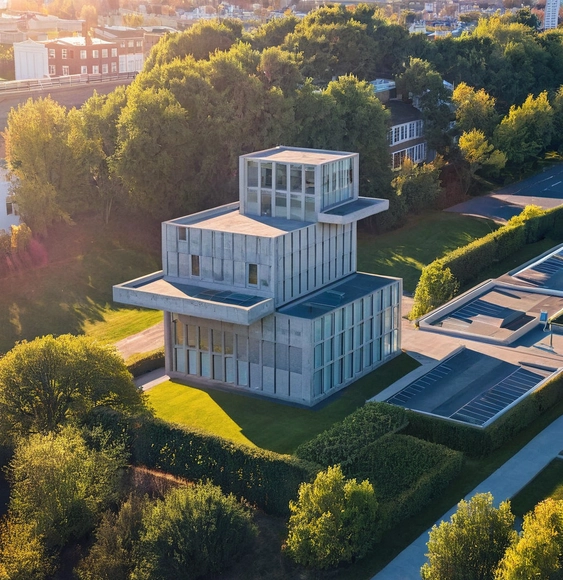
Gendo Design to Image Output. Image Courtesy of Gendo
The introduction of AI generative tools represents one of the most significant technological revolutions in the field of architecture and design. While there is concern about this changing the working landscape for professionals in the field, a significant number of practices are embracing the new technology. Architectural visualizations represent one of the main areas where these changes take effect. However, the array of AI tools accessible to non-specialist users rarely allows for true control over the design process, often offering general interpretations of scripts. This can be helpful during early conceptual design phases but loses its appeal soon after. Gendo, a new browser-based app, aims to change this, offering the possibility to not only generate visualizations in seconds but also to edit and customize them, even introducing real-life products in the design. Until August 3, readers of ArchDaily can register and use the code ARCHDAILY50 to get 50% off any plan.
Christopher Alexander (1936–2022) and Joseph Rykwert (b. 1926) were two giants of 20th century architectural theory who began their work in England and eventually created lasting legacies at two great American architectural schools: the University of California at Berkeley (Alexander) and the University of Pennsylvania in Philadelphia (Rykwert). Their careers not only coincided with a critical period of social and cultural research among designers and urbanists, but in many ways continue to inspire the current generation of committed critics of late capitalist development on our imperiled planet. Yet to many they are too little known.
Developers often make it sound as though their latest LEED platinum office building will single-handedly reverse climate change. The unfortunate reality is that they could spend a lifetime designing and building all of their work to meet the highest environmental standards, but it wouldn’t fix the problem. The planet will grow hotter, the seas will rise, and storms will intensify. A century of burning fossil fuels has baked global warming into the atmosphere for our lifetime.
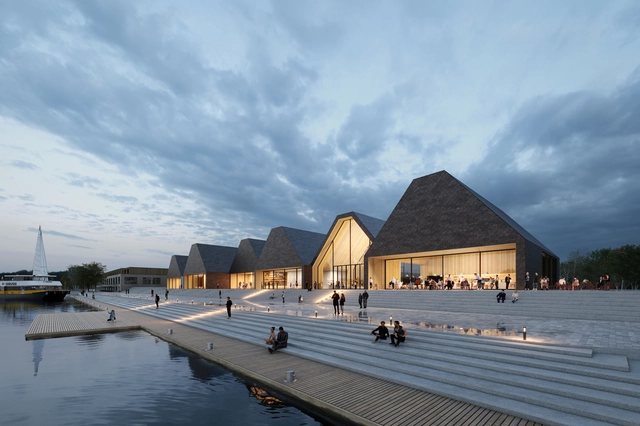
Squama Museum building from the Aura river. Image Courtesy of Sigge Architects
Finnish office Sigge Architects has been announced as the winner of the international competition for the design of the Museum of History and the Future in Finland's oldest city, Turku. The proposal, selected out of over 400 entries, creates a permeable structure along the waterfront, acting as a catalyst for the regeneration of the area. The museum aims to showcase the most innovative scientific research through a wide variety of exhibitions, audio-visual installations, and educational spaces. Construction is expected to start in 2027 and be completed by 2029, with a public opening scheduled for 2030.
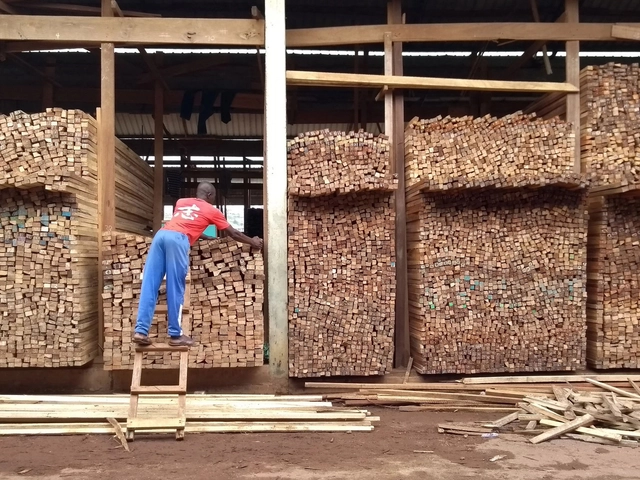
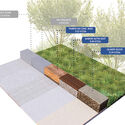
“Embodied carbon accounts for 75 to 95 percent of the greenhouse gas emissions from landscape architecture projects,” said Chris Hardy, ASLA, PLA, senior associate at Sasaki, during the third in a series of webinars organized by the ASLA Biodiversity and Climate Action Committee. But by selecting locally made low-carbon materials, landscape architects can significantly reduce the climate impacts of their work.
Embodied carbon emissions are generated from the extraction, manufacturing, transportation, and construction of landscape materials. The other share of project emissions come from operating and maintaining a landscape.
https://www.archdaily.com/1017789/climate-action-is-about-choosing-local-low-carbon-materialsJared Green
The Second Studio (formerly The Midnight Charette) is an explicit podcast about design, architecture, and the everyday. Hosted by Architects David Lee and Marina Bourderonnet, it features different creative professionals in unscripted conversations that allow for thoughtful takes and personal discussions.
A variety of subjects are covered with honesty and humor: some episodes are interviews, while others are tips for fellow designers, reviews of buildings and other projects, or casual explorations of everyday life and design. The Second Studio is also available on iTunes, Spotify, and YouTube.
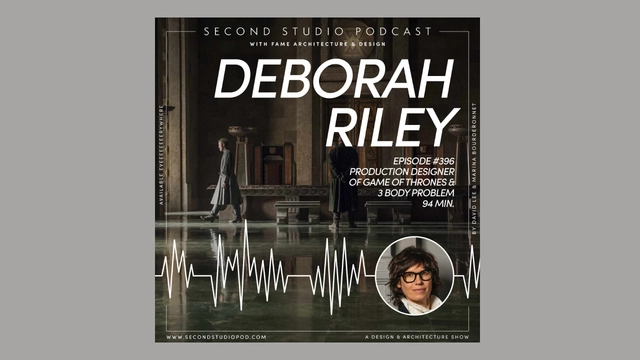
This week David and Marina of FAME Architecture & Design are joined by Deborah Riley, Production Designer of Game of Thrones and Three Body Problem to discuss her background; why she studied architecture; career transition into set design; progressing from set designer to production designer; becoming a production designer on Game of Thrones; her responsibilities as a production designer; navigating physical sets versus digital or CGI sets; the challenge of working on different projects; and more.
https://www.archdaily.com/1017740/the-second-studio-podcast-deborah-riley-production-designer-of-game-of-thrones-and-3-body-problemThe Second Studio Podcast
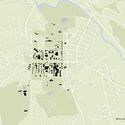
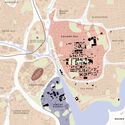
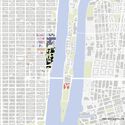
In London, where I live, there are 23 universities. Those universities make up an institutional population of nearly half a million people. In a city with almost 10 million residents, 5% may seem a small number, but it’s a significant one, roughly the population of Atlanta. Shrink the city, and the proportion can increase dramatically. In our neighbouring cities of Oxford (population 150,000), 40% of the population is institutional; in Cambridge (population 125,000), it’s 33%. Campus and city are so intertwined in those places that a plan for one is almost necessarily a plan for the other.
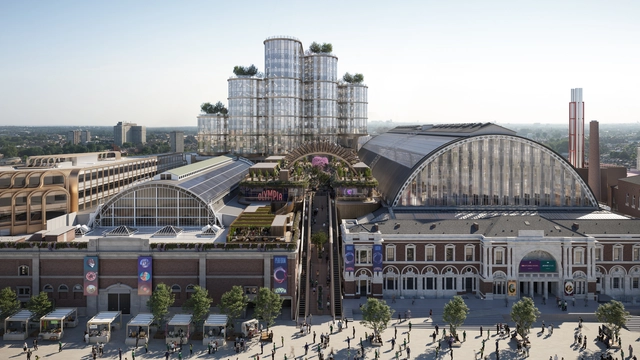
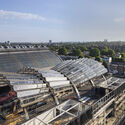
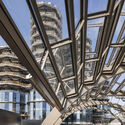
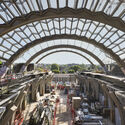
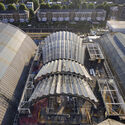
Heatherwick Studio has unveiled the design of a new large-scale glass canopy to become one of the main attractions of Olympia, an ambitious regeneration project aimed at transforming the 138-year-old exhibition halls in London into a global culture and entertainment destination. Originally designed by Sir Henry Edward Coe, Olympia is set to offer visitors a wide range of venues and activities, including two hotels, over 30 restaurants, bars and eateries, a 4,400-capacity live music hall, a theater, and spaces for the Wetherby Performing Arts School, in addition to over 2.5 acres of accessible public spaces. The revival project is co-designed by Heatherwick Studio and SPPARC.
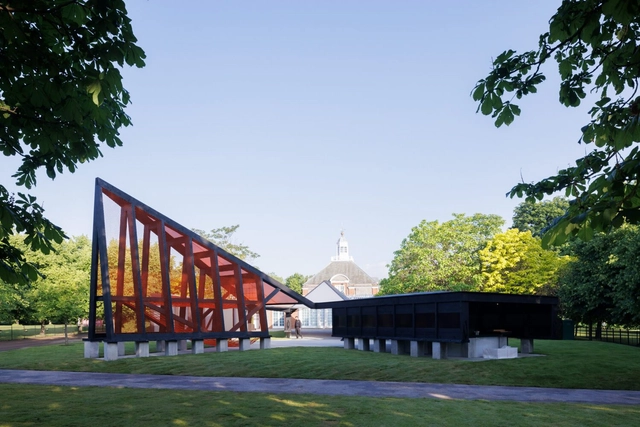
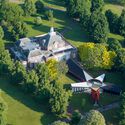
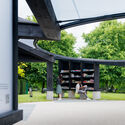
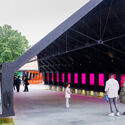
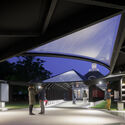
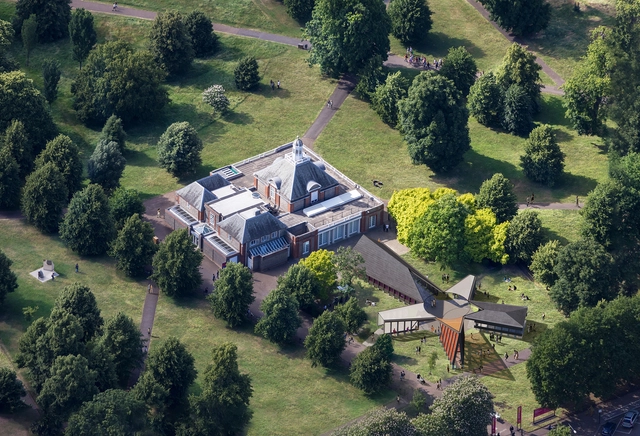
The official opening date for the 23rdSerpentine Pavilion has been announced for June 7th, 2024. The structure designed by Seoul-based Korean architect Minsuk Cho and his firm Mass Studies, will welcome visitors until October 27, 2024, in London’s Kensington Gardens. Titled “Archipelagic Void,” the pavilion is composed of five islands displayed around a central void in reference to the mandang, a type of open courtyard found in traditional Korean houses. The intervention will be activated throughout the summer with a diverse program of events, starting with a conversation between Minsuk Cho and Serpentine Artistic Director Hans Ulrich Obrist on June 7, 2024.
For architects and designers, unbuilt/unrealized projects are confounding, bittersweet, frustrating, elusive, even ghostly—the ultimate what-ifs. Often launched with the grandest ambitions, only to become derailed by the multiplicity of complications that can beset every proposed work of architecture. Author, editor, and critic Sam Lubell has spent a healthy chunk of his career cataloging these thwarted fever dreams. Now he has released, with co-author Greg Goldin, a new compilation, Atlas of Never Built Architecture (Phaidon), a global survey of more than 300 unbuilt projects ranging from the 20th century to the present day.
Recently I reached out to the writers to talk about the book, what unbuilt projects say about the culture at large, and some of their favorite unrealized projects. This interview was conducted via email, with Lubell and Goldin choosing to respond jointly.
The Second Studio (formerly The Midnight Charette) is an explicit podcast about design, architecture, and the everyday. Hosted by Architects David Lee and Marina Bourderonnet, it features different creative professionals in unscripted conversations that allow for thoughtful takes and personal discussions.
A variety of subjects are covered with honesty and humor: some episodes are interviews, while others are tips for fellow designers, reviews of buildings and other projects, or casual explorations of everyday life and design. The Second Studio is also available on iTunes, Spotify, and YouTube.
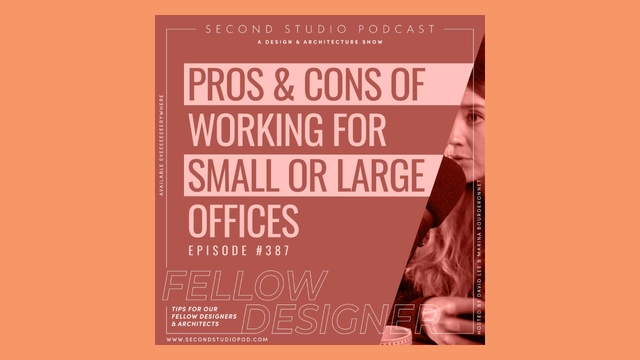
This week David and Marina of FAME Architecture & Design discuss the benefits and negatives of working for small and large architecture offices as a young professional. The two share their own experiences and cover why working at different-sized offices can be beneficial.
https://www.archdaily.com/1017054/the-second-studio-podcast-dynamics-of-working-for-small-and-large-architecture-officesThe Second Studio Podcast
When he was invited to design the 21st Serpentine Pavilion in London’s Kensington Gardens public park, Chicago-based artist Theaster Gates envisioned a calm space to offer respite and a subtle exploration into the power of sound and music in architecture. Created out of lightweight stained wood, the “Black Chapel” demonstrates more than just artistic and architectural sensibilities. In addition to the use of sustainable materials, the project also pays close attention to how the building materials are sourced, bringing visibility to the problem of modern slavery in the construction materials supply chain.
23rd Serpentine Pavilion by Mass Studies. Image Courtesy of Serpentine Gallery
Seoul-based Korean architect Minsuk Cho and his firm Mass Studies have been selected to design the 23rdSerpentine Pavilion, to open on June 5, 2024, in London’s Kensington Gardens. Titled “Archipelagic Void,” this iteration of the iconic commission will consist of five ‘islands’ displayed around an open space, breaking down the structure into a series of smaller elements intertwined with the park’s natural ecology. The pavilion will be open to the public from June 7, until October 27, 2024, with a press preview two days before the opening.
The Pritzker Architecture Prize 2024 Laureate Riken Yamamoto will deliver the lecture, "uncovering his journey in the discovery of communities throughout the world, inspiring his socially-driven architecture that blurs the boundaries between public and private dimensions". Following the lecture, Yamamoto will be joined by recent Laureates, Sir David Chipperfield CH (2023), Francis Kéré (2022), and Anne Lacaton (2021), who share a similar commitment to the value of the social system." They will discuss the responsibility of the architect as a catalyst for change and debate respective challenges of creating and bridging communities as they shape new approaches to the design of the built environment."
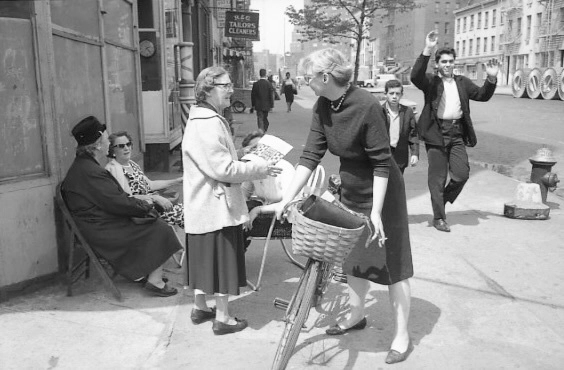
In 1956, when car ownership and the suburban development that this enabled were just being embraced as American cultural ideals, pioneering urbanist Jane Jacobs wrote that the U.S. was becoming “an unprecedented nation of centaurs. … Our automobile population is rising about as fast as our human population and promises to continue for another generation.” She continued, “the car is not only a monstrous land-eater itself: it abets that other insatiable land-eater—endless, strung-out suburbanization.”
https://www.archdaily.com/1016717/jane-jacobs-cyclistPeter L. Laurence