1. ArchDaily
  2. Embodied Carbon

Embodied Carbon: The Latest Architecture and News

The Role of Architects Is Shifting: From Solitary Visionaries to Collective Activists

 | In Collaboration

For a long time, architecture was understood as an essentially individual activity, dependent on the figure of a creative genius and centered on the ability to solve problems through drawing. Over time, this image began to fade. The protagonism once concentrated in a few names reached its peak during the era of the starchitects and gradually became distributed among offices, collectives, and multidisciplinary teams. Today, architects are expanding their boundaries into other fields such as gastronomy, music, design, and the corporate world, applying spatial thinking to address challenges of various kinds. As social, environmental, and political crises deepen, the role of the architect continues to evolve from a solitary author to a mediator, activist, and collective agent of transformation. This shift reflects an ethical awakening and a recognition that design, regulation, and care are inseparable dimensions of contemporary practice.

CarbonSpace: Designing with Carbon from the First Sketch

Subscriber Access | 

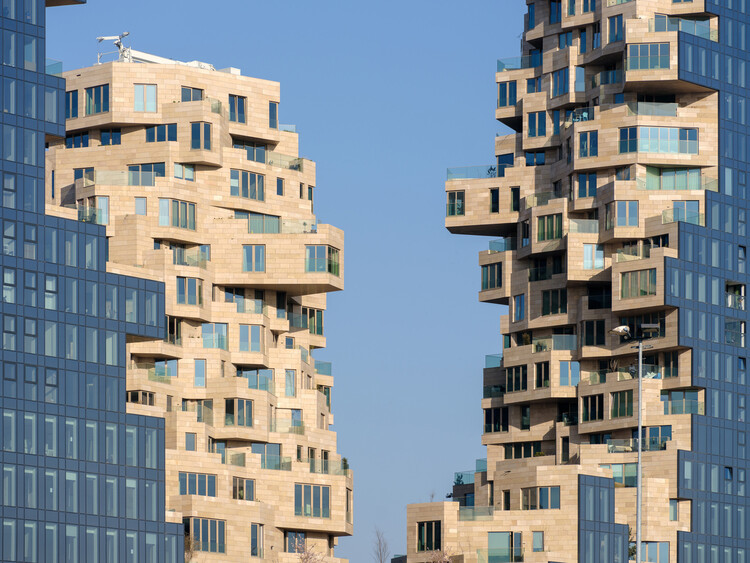
Every act of building begins with the transformation of raw materials, energy, and land, and this inevitably entails environmental impact. This encompasses all the changes a process triggers in the natural world: from resource extraction to pollutant emissions, from energy consumption to biodiversity loss. Measuring this is complex, as it spans multiple dimensions. Carbon has emerged as the common metric, translating these effects into greenhouse gas emissions (CO₂ equivalent) directly linked to global warming. This standardization has made it omnipresent and comparable across materials, systems, and sectors. Reducing carbon emissions, therefore, means addressing the root of global warming, which is a particularly urgent task in the construction industry, responsible for about 39% of global emissions. In response to this challenge, MVRDV NEXT, the innovation and digital tools division of the Dutch architectural firm, launched CarbonSpace, a free, open platform that brings carbon accounting to the architect's desk, right at the napkin sketch stage.

CarbonSpace: Designing with Carbon from the First Sketch - Image 1 of 4CarbonSpace: Designing with Carbon from the First Sketch - Image 2 of 4CarbonSpace: Designing with Carbon from the First Sketch - Image 3 of 4CarbonSpace: Designing with Carbon from the First Sketch - Image 4 of 4CarbonSpace: Designing with Carbon from the First Sketch - More Images+ 19

Climate Action Is About Choosing Local, Low-Carbon Materials

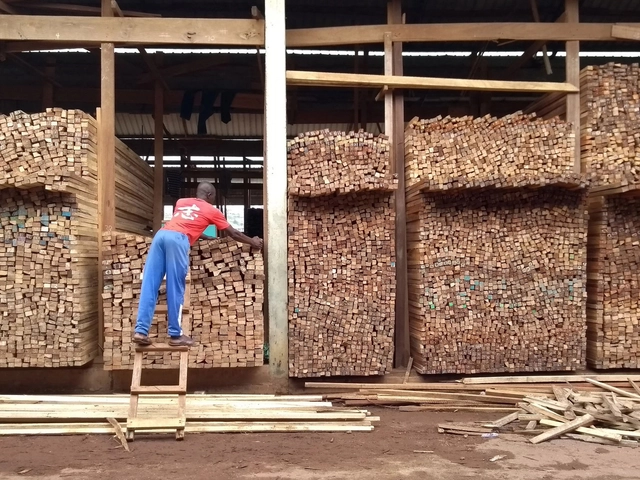
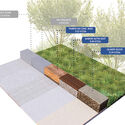
Embodied carbon accounts for 75 to 95 percent of the greenhouse gas emissions from landscape architecture projects,” said Chris Hardy, ASLA, PLA, senior associate at Sasaki, during the third in a series of webinars organized by the ASLA Biodiversity and Climate Action Committee. But by selecting locally made low-carbon materials, landscape architects can significantly reduce the climate impacts of their work.

Embodied carbon emissions are generated from the extraction, manufacturing, transportation, and construction of landscape materials. The other share of project emissions come from operating and maintaining a landscape.

Climate Action Is About Choosing Local, Low-Carbon Materials - Image 1 of 4Climate Action Is About Choosing Local, Low-Carbon Materials - Image 2 of 4Climate Action Is About Choosing Local, Low-Carbon Materials - Image 3 of 4Climate Action Is About Choosing Local, Low-Carbon Materials - Image 4 of 4Climate Action Is About Choosing Local, Low-Carbon Materials - More Images

New Constitution Gardens Will Be a Biodiversity Mecca

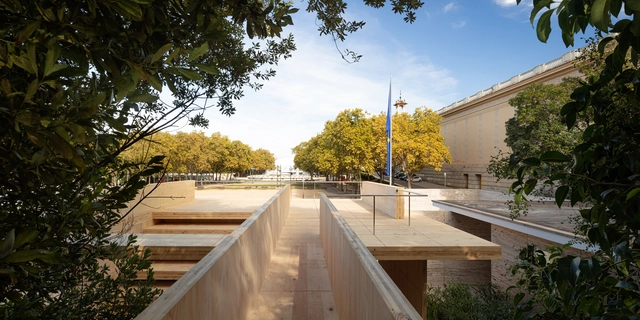
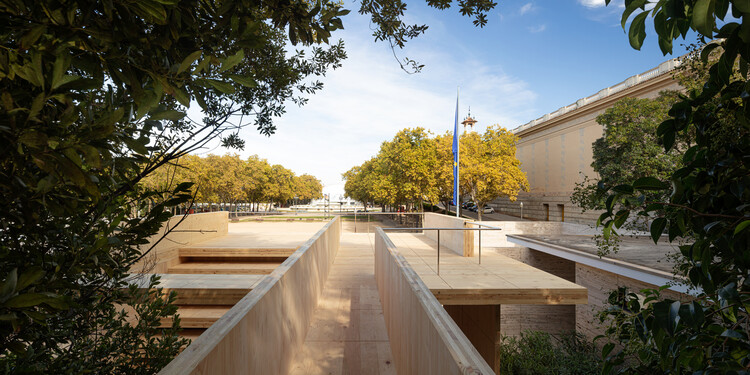
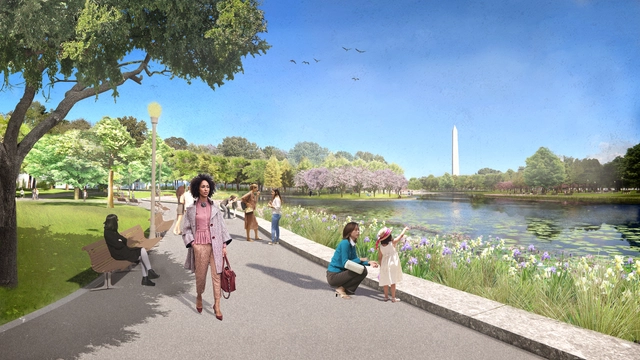
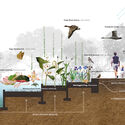
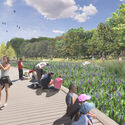
“Constitution Gardens will become a biodiversity hotspot on the National Mall,” said Adam Greenspan, FASLA, design partner at PWP Landscape Architecture. “We will create a garden, based in nature, while respecting the historic design.” Constitution Gardens in Washington, D.C. opened in 1976 to commemorate the bicentennial of the American revolution. Concepts outlined in the McMillan Plan and designs by Dan Kiley and SOM shaped the landscape.

But over the past forty years, the gardens fell into disrepair and became a pass-through site on the way to other more popular destinations on the mall. Now, the second phase of a three-phase plan to revitalize the garden has been approved by the Commission of Fine Arts and National Capital Planning Commission. The design by PWP Landscape Architecture and Rogers Partners Architects will create a “new ecological landscape” designed for people and hundreds of plant and animal species.

New Constitution Gardens Will Be a Biodiversity Mecca - Image 1 of 4New Constitution Gardens Will Be a Biodiversity Mecca - Image 2 of 4New Constitution Gardens Will Be a Biodiversity Mecca - Image 3 of 4New Constitution Gardens Will Be a Biodiversity Mecca - Image 4 of 4New Constitution Gardens Will Be a Biodiversity Mecca - More Images+ 2

UNStudio Designs Hybrid Building in Luxembourg for a Reduced Carbon Footprint

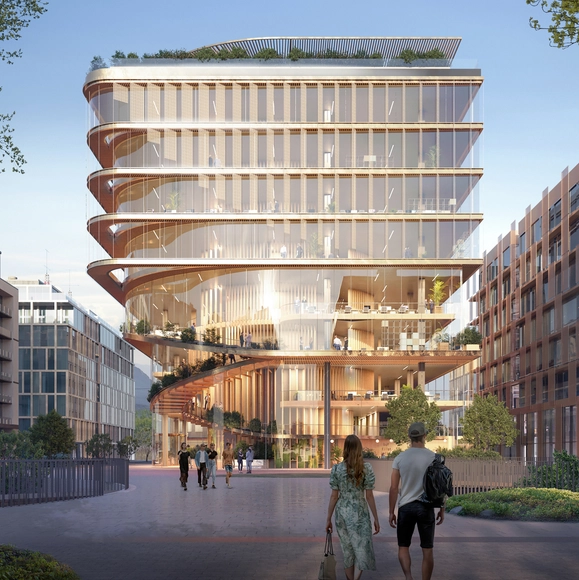
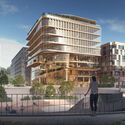
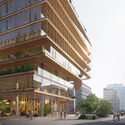
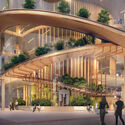
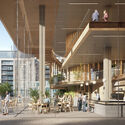
UNStudio, in collaboration with local partner HYP Architects, has won the competition for the design of the Kyklos building in Luxembourg. The project is part of Beval, a large-scale redevelopment initiative aiming to transform a former industrial site into an urban center complete with a university and technological center, in addition to residential, office, and retail spaces. When designing the Kyklos building, which will occupy a central position in the district's main square, the architects set out to find solutions to create the smallest carbon footprint for both operational and embedded metrics.

UNStudio Designs Hybrid Building in Luxembourg for a Reduced Carbon Footprint - Image 1 of 4UNStudio Designs Hybrid Building in Luxembourg for a Reduced Carbon Footprint - Image 2 of 4UNStudio Designs Hybrid Building in Luxembourg for a Reduced Carbon Footprint - Image 3 of 4UNStudio Designs Hybrid Building in Luxembourg for a Reduced Carbon Footprint - Image 4 of 4UNStudio Designs Hybrid Building in Luxembourg for a Reduced Carbon Footprint - More Images