1. ArchDaily
  2. Minoru Yamasaki

Minoru Yamasaki: The Latest Architecture and News

Milan Design Week 2026 Selection and Wasl Tower in Dubai: This Week’s Review

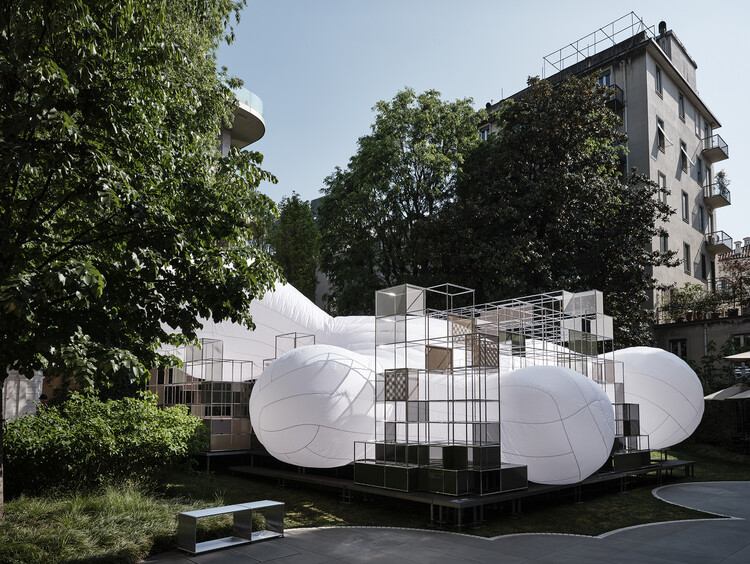
Across cultural platforms, heritage sites, and institutional developments, this week's news reflects how the built environment is reshaped through processes of transformation, reinterpretation, and public engagement. From archaeological reactivations and adaptive reuse strategies to museum expansions and large-scale international gatherings, architecture operates across multiple temporalities, balancing preservation with contemporary use and spatial continuity with evolving cultural programs. Within this context, ArchDaily's selection of installations and exhibitions from Milan Design Week 2026 highlights how design weeks increasingly function as curatorial frameworks for experimentation, while global events and institutional projects continue to expand the formats through which architecture is produced, shared, and debated.

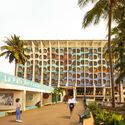
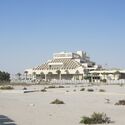
Milan Design Week 2026 Selection and Wasl Tower in Dubai: This Week’s Review - Image 1 of 4Milan Design Week 2026 Selection and Wasl Tower in Dubai: This Week’s Review - Image 2 of 4Milan Design Week 2026 Selection and Wasl Tower in Dubai: This Week’s Review - Image 3 of 4Milan Design Week 2026 Selection and Wasl Tower in Dubai: This Week’s Review - Image 4 of 4Milan Design Week 2026 Selection and Wasl Tower in Dubai: This Week’s Review - More Images+ 6

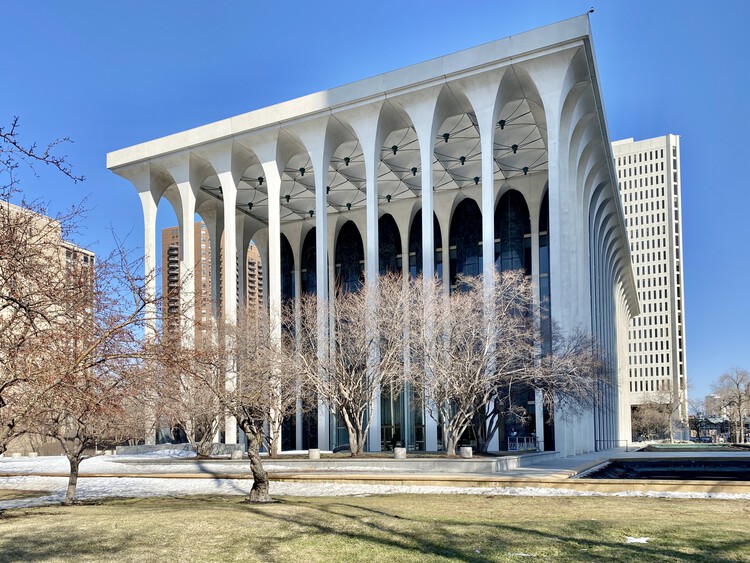
Minoru Yamasaki's Northwestern National Life Building in Minneapolis to Be Converted Into Hotel

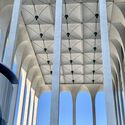
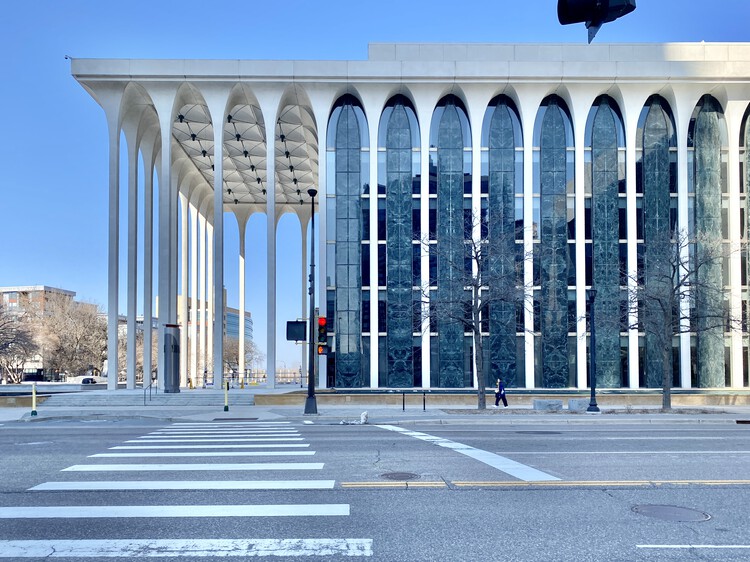
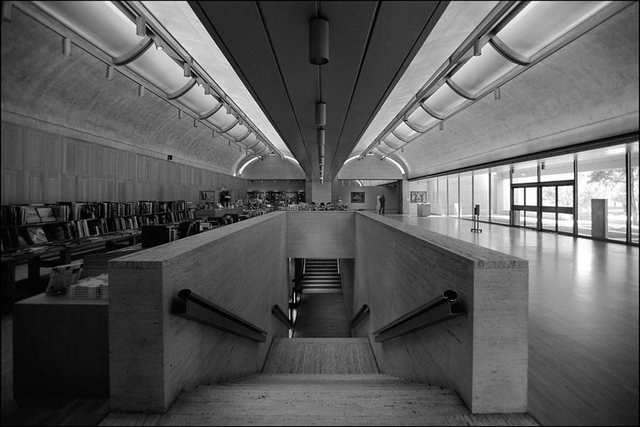
A building designed by Minoru Yamasaki in downtown Minneapolis is set to be converted into a hotel, marking a new phase in the life of the former headquarters of the Northwestern National Life Insurance Company, one of the architect's lesser-known yet formally distinctive works. Vacant since 2023, the building at 20 Washington Avenue South is now the subject of an adaptive reuse proposal that aims to introduce hospitality and public-facing functions. Initial plans were presented in April 2026, outlining a transformation of the structure while retaining its defining architectural features. The project is expected to move forward pending approvals, with a projected opening targeted for 2028.

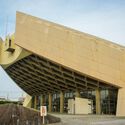
Minoru Yamasaki's Northwestern National Life Building in Minneapolis to Be Converted Into Hotel - Image 1 of 4Minoru Yamasaki's Northwestern National Life Building in Minneapolis to Be Converted Into Hotel - Image 2 of 4Minoru Yamasaki's Northwestern National Life Building in Minneapolis to Be Converted Into Hotel - Image 3 of 4Minoru Yamasaki's Northwestern National Life Building in Minneapolis to Be Converted Into Hotel - Image 4 of 4Minoru Yamasaki's Northwestern National Life Building in Minneapolis to Be Converted Into Hotel - More Images

Minoru Yamasaki: The Fragility of Architecture

His work – more than 250 buildings in the span of 30 years – was lauded by critics and colleagues, cited for international design awards, and landed the architect on the cover of Time. But today, even practitioners and aficionados might be challenged to name one of Minoru Yamasaki's buildings beyond his two most infamous creations that no longer exist: the Pruitt-Igoe housing project in St. Louis and New York’s World Trade Center towers. Paul Kidder explores this complex architect and his work in a new book, Minoru Yamasaki and the Fragility of Architecture (Routledge).

Kidder, a professor of philosophy at Seattle University, provides a fresh, sobering assessment not only of Yamasaki's architecture but the man himself: his challenges, triumphs, and contradictions, as well as the fragility of architectural achievement. The loss of this architect’s most famous buildings suggests the growing scope of architecture’s fragility, especially today, when real-estate investment often augers against preservation of even late-modern works. Yet, paradoxically, Yamasaki believed that fragility could be a desirable architectural quality—the source of its refinement, beauty, and humanity.

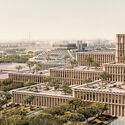
Minoru Yamasaki: The Fragility of Architecture - Image 1 of 4Minoru Yamasaki: The Fragility of Architecture - Image 2 of 4Minoru Yamasaki: The Fragility of Architecture - Image 3 of 4Minoru Yamasaki: The Fragility of Architecture - Image 4 of 4Minoru Yamasaki: The Fragility of Architecture - More Images+ 1

Spotlight: Minoru Yamasaki

Subscriber Access | 
Spotlight: Minoru Yamasaki - Image 3 of 4
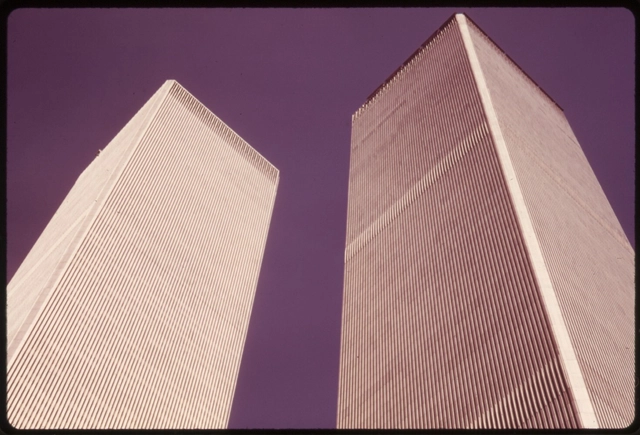
World Trade Center / Minoru Yamasaki Associates + Emery Roth & Sons. Image via Wikimedia. Part of the Carol M Highsmith Archive donated to the Library of Congress and placed in the public domain

Minoru Yamasaki (December 1, 1912 – February 7, 1986) has the uncommon distinction of being most well known for how his buildings were destroyed. His twin towers at the World Trade Center in New York collapsed in the terrorist attacks of September 11th, 2001, and his Pruitt-Igoe complex in St. Louis, Missouri, demolished less than 20 years after its completion, came to symbolize the failure of public housing and urban renewal in the United States. But beyond those infamous cases, Yamasaki enjoyed a long and prolific career, and was considered one of the masters of “New Formalism,” infusing modern buildings with classical proportions and sumptuous materials.

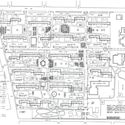
AD Classics: Pruitt-Igoe Housing Project / Minoru Yamasaki

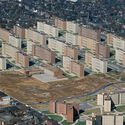
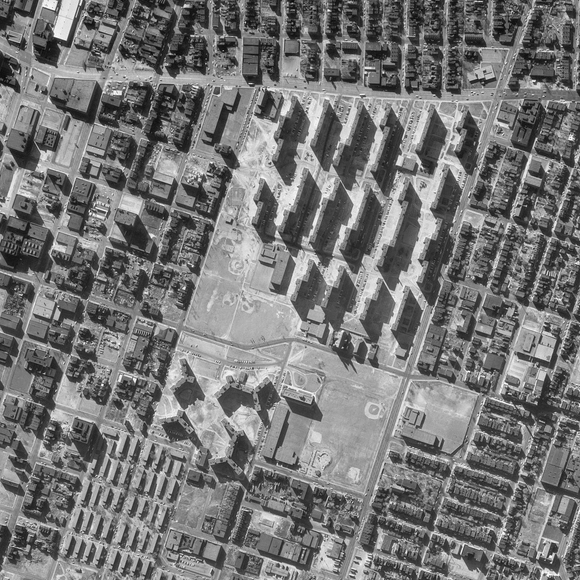
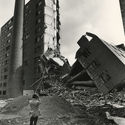
Few buildings in history can claim as infamous a legacy as that of the Pruitt-Igoe Housing Project of St. Louis, Missouri. Built during the height of Modernism this nominally innovative collection of residential towers was meant to stand as a triumph of rational architectural design over the ills of poverty and urban blight; instead, two decades of turmoil preceded the final, unceremonious destruction of the entire complex in 1973. The fall of Pruitt-Igoe ultimately came to signify not only the failure of one public housing project, but arguably the death knell of the entire Modernist era of design.

AD Classics: Pruitt-Igoe Housing Project / Minoru Yamasaki - Social Housing, FacadeAD Classics: Pruitt-Igoe Housing Project / Minoru Yamasaki - Social Housing, Facade, CityscapeAD Classics: Pruitt-Igoe Housing Project / Minoru Yamasaki - Social Housing, Facade, CityscapeAD Classics: Pruitt-Igoe Housing Project / Minoru Yamasaki - Social HousingAD Classics: Pruitt-Igoe Housing Project / Minoru Yamasaki - More Images+ 3

Brooklyn Bridge Park: What a Design by O'Neill McVoy + NVda Says About the State of Architecture

In Mark Foster Gage’s essay “Rot Munching Architects,” published in Perspecta 47: Money, the Assistant Dean of the Yale School of Architecture strove to find meaning in the current design landscape. Taking the essay title from a larger stream of expletives spun across the facade of the Canadian pavilion as part of artist Steven Shearer’s installation at the 54th Venice Art Biennale in 2011, Gage found truth in the vulgarities, arguing that - in a very literal sense - “architectural experimentation has left the building” as the discipline has been made impotent under the hostage of late capitalist ambition.

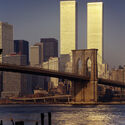
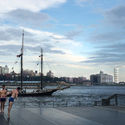
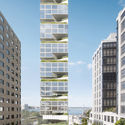
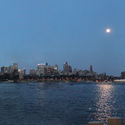
Last summer, when Brooklyn Bridge Park unveiled 14 proposals as finalists for two residential towers at the park's controversial pier 6 site, you could be fooled into thinking that design is alive and well. A caveat of the park’s General Project Plan (GPP) was to set aside land for retail, residential and a hotel development, in order to secure funding and achieve financial autonomy. The plans had already fueled a decade of legal battles and fierce opposition from the local community, with arguments ranging from the environment, to park aesthetics, to money-making schemes, but last year a bright outcome appeared a possibility, when the park unveiled the competing plans including those by Asymptote Architecture, BIG, Davis Brody Bond, Future Expansion + SBN Architects, WASA Studio, and of particular interest, O’Neill McVoy Architects + NV/design architecture (NVda).

Brooklyn Bridge Park: What a Design by O'Neill McVoy + NVda Says About the State of Architecture - ArchBrooklyn Bridge Park: What a Design by O'Neill McVoy + NVda Says About the State of Architecture - Fence, CityscapeBrooklyn Bridge Park: What a Design by O'Neill McVoy + NVda Says About the State of Architecture - Facade, CityscapeBrooklyn Bridge Park: What a Design by O'Neill McVoy + NVda Says About the State of Architecture - Cityscape, CoastBrooklyn Bridge Park: What a Design by O'Neill McVoy + NVda Says About the State of Architecture - More Images+ 10