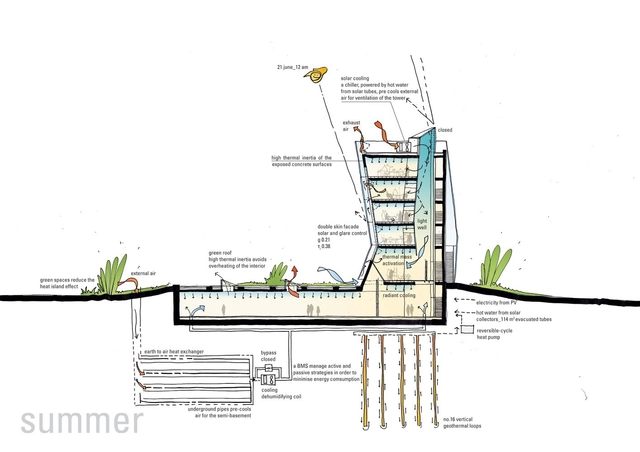
Unlike the air, the temperature in the subsoil varies very little during the year or according to geographical position. A few meters below the surface, the ground temperature is between about 10 to 21°C (50 to 70°F) depending on the region. Dig deeper, and the temperature increases between 20 to 40 degrees centigrade per km, reaching the Earth's core, which approaches 5000 °C. In fact, thinking about how we inhabit a sphere that is orbiting through space with a glowing center can be distressing for some. However, it may be helpful to learn that using Earth's forming energy to generate electricity is a sustainable and efficient way that is already common in some countries. At the same time, we can also take advantage of the mild temperature found a few meters under the ground to acclimatize buildings, whether in hot or cold climates.
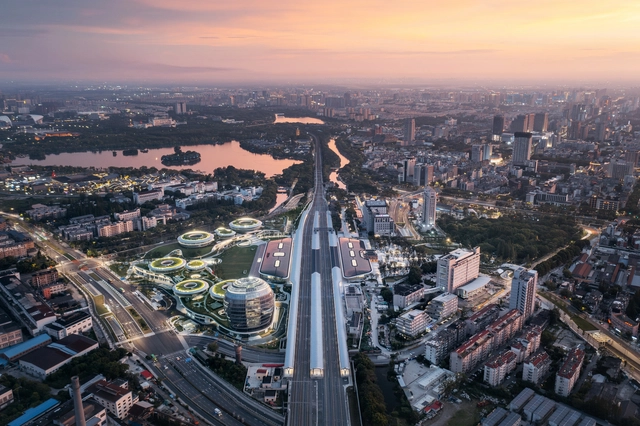
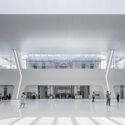
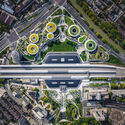
MAD Architects has announced the completion of the Jiaxing Train Station, the first transportation infrastructure project developed by the architecture office. Located in the historic city of Jiaxing, 100 kilometers southwest of Shanghai, the project involves the replacement of a dysfunctional station that had stood at the site between 1995 and 2019. As China has developed significantly in terms of urbanization, its train stations have grown into complicated, widespread, and uninviting infrastructures. Through their project, MAD Architects strive to return to a human scale, to create a facility that responds to the newest developments in transportation technology, while creating spaces that are comfortable and easy to navigate for its users.
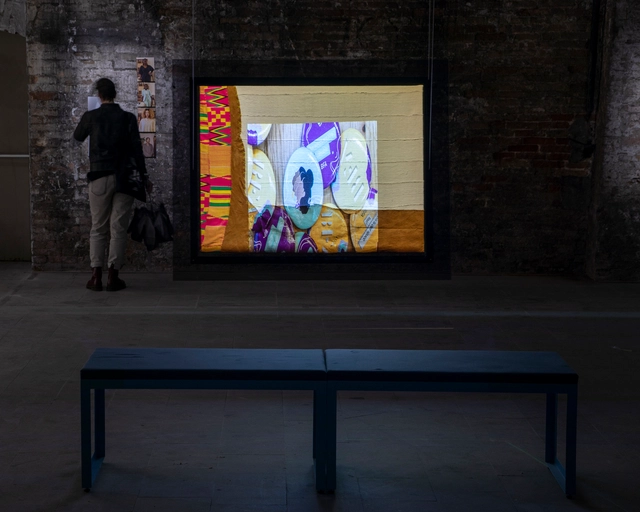
In early 2018, spatial practitioner and Bartlett lecturer Neba Sere hosted a panel discussion at London's Architecture Foundation, where she was one of six young trustees. The topic: beginnings. How to go about them, move ahead, and transform them into something that lasts. Six years later, she looks back on the event as a beginning in itself: that day marked the creation of a WhatsApp group that would turn into Black Females in Architecture (BFA). BFA is now a 500-strong global membership network co-directed by Sere and fellow architects Selasi Setufe and Akua Danso.
BFA was initiated in response to the need for visibility of black women and female-identifying people with black heritage in architecture and the built environment. Last year, the group celebrated its fifth anniversary with the showing of a short film and a panel discussion at the Venice Architecture Biennale. Now, after putting in the groundwork of spreading information about the lack of diversity and equality in the industry and increasing their numbers, BFA is gearing up to drive physical change.
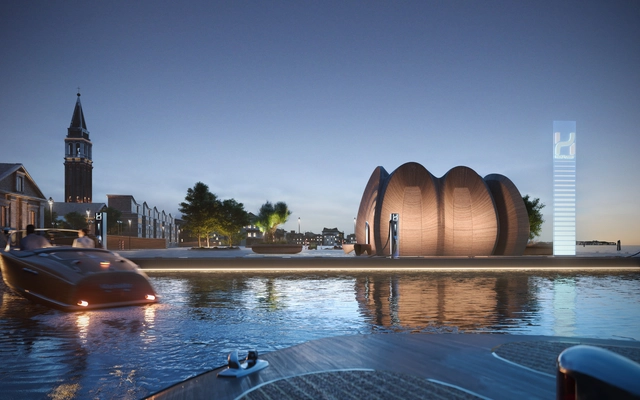
Zaha Hadid Architects have released images of their design for the world’s first hydrogen refueling infrastructure for recreational boating. Continuing ZHA’s experience in maritime designs, the stations are to be installed in 25 Italian marinas and ports. Launched by NatPower H, the stations will begin to be implemented in the summer of 2024, with plans to expand to over 100 locations throughout the Mediterranean Sea in the next six years.
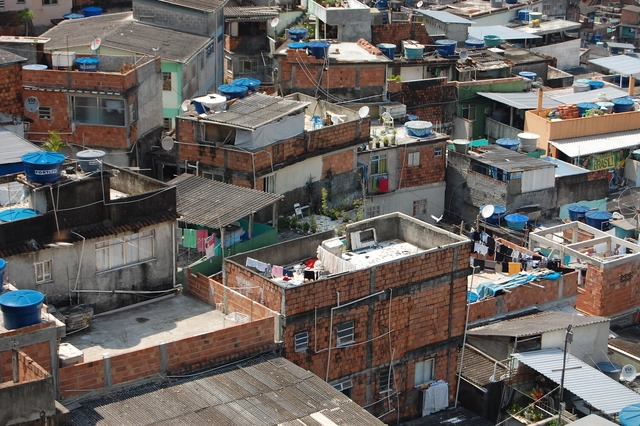
As architectural theory undergoes a process of review and updating, there is a rejection of prevailing binary distinctions found both in common perception and in architectural education. Traditional dichotomies such as center versus periphery, the 'formal' versus 'informal' city, and design as a rigid technique versus construction as improvisation have been persistent architectural themes, with a history of ongoing debates. Despite the dominance of global northern perspectives on what constitutes good architecture or how it should be approached, reality consistently reveals itself to be more intricate, diverse, and multidimensional.
The discipline of architecture has undergone considerable change, primarily driven by advancements in the application of technology. Architects, long viewed as the futurists of the constructed world, are now utilizing progressive techniques and resources and expanding the use cases of technologies such as Augmented Reality (AR) and Virtual Reality (VR). This transition extends beyond professional practices into architectural education, bringing opportunities to redefine the approach of architects toward their craft.
The Forner-Bigatti house workshop, designed by the architect Alejo Martinez in 1937, combines the residence and workspaces of the painter Raquel Forner and the sculptor Alfredo Bigatti, two renowned Argentine artists. It is located in the San Telmo neighborhood of Buenos Aires, on a small plot facing what is now called Plaza Coronel Dorrego, at 443 Bethlem Street.
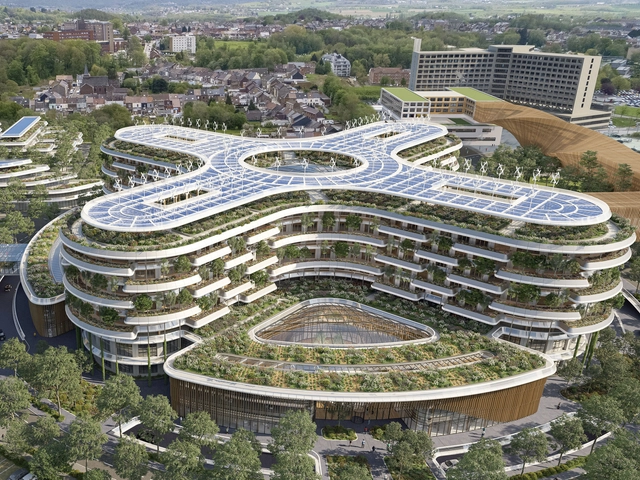
This curated selection of the Best Unbuilt Architecture highlights projects submitted by the ArchDaily community that demonstrate the use of organic shapes in various forms of architecture and program use. Many times, organic architecture stands as a testament to what we are able to make in 2024, innovating in structural and material technology. From Vincent Callebaut’s HospiWood to Zomorrodi & Associates’ Cadence Art Center, these instances showcase this shift in desigin thinking. Whether its a residential villa in the United States or a resort centered around a curved pool in the Netherlands, organic architecture has been trending globally.
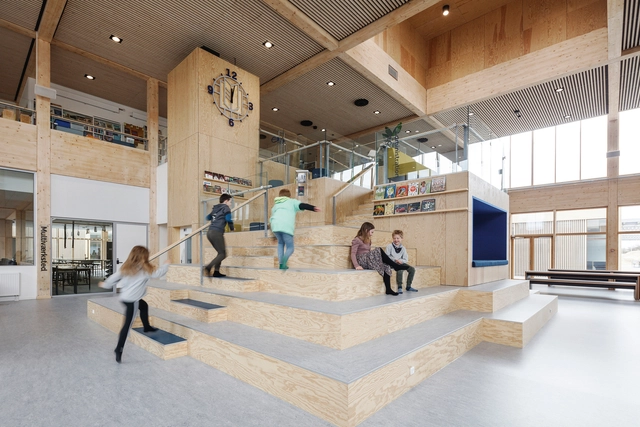
With spaces for children, “you have the opportunity to create architecture that in many ways is unformulated architecture. Children react to spaces completely spontaneously. It is almost an enhanced architecture”, says Dorte Mandrup. The implication is that design can contribute to forming critical thinking, encouraging autonomy, and responsibility, and helping forge future citizens. For the most part, the educational system and its spatial expression haven’t changed significantly in the last hundred years. Nonetheless, with access to information becoming ubiquitous, the focus is slowly moving from accumulating information to nurturing critical thinking, and new teaching methods open up a new area of architectural experimentation. The following explores the impact of space on learning, specifically in primary and secondary education, discussing how architecture could aid the educational process, becoming a teaching tool.
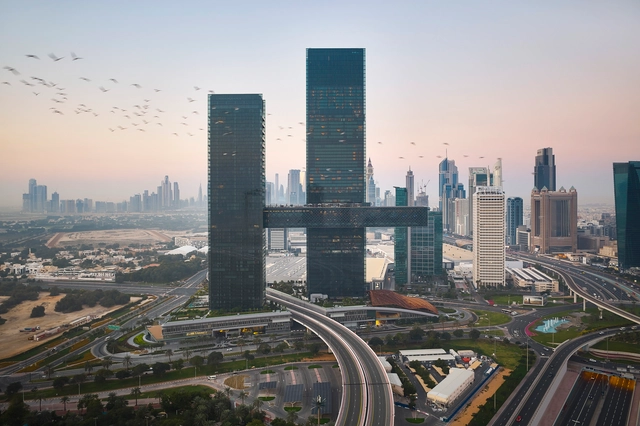
Japanese design firm Nikken Sekkei has just completed a new building in Dubai’s central financial district, encompassing the “World’s Longest Cantilever,” which floats 100m above ground. Compromising two towers connected by an enclosed horizontal bridge, “One Za’abeel” acts as a new point of entry into the city. Designed to be a symbol of Dubai’s growth and expansion, the project offers easy access to the downtown region. The scheme features restaurants, retail spaces, workspaces, and urban hotel accommodations.
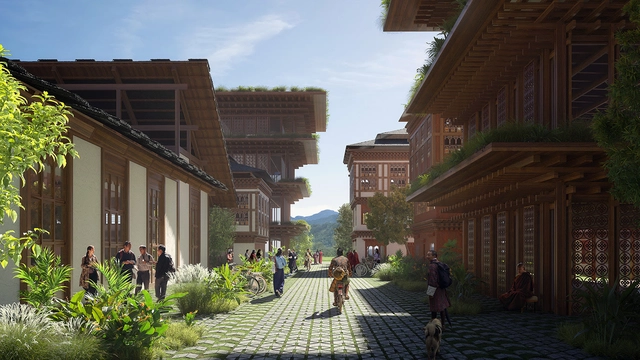
BIG unveils "Mindfulness City", which unites historical heritage and the future of Bhutan. Courtesy of Bjarke Ingels Group
Recently, the renowned Danish office BIG announced the launch of its project for the city of Gelephu in Bhutan. This masterplan is inspired by the country's culture and its principles of happiness. The "Mindfulness City" aims to offer numerous possibilities for public engagement, fostering investments in infrastructure, education, and sustainable technologies—all aligned with the precepts of Gross National Happiness (GNH).
About two weeks ago, I received an intriguing email from Jeff Speck, the author of two of the most influential books on urban planning in the past two decades: Suburban Nation (2010; co-authored by Andrés Duany and Elizabeth Plater-Zyberk) and Walkable City (2012; reissued in 2022 with new material). The press release it contained announced the formation of a new partnership, SpeckDempsey, “a new planning and design firm serving government, non-profit, and private clients.” Prior to this, Speck was a potent and highly visible one-man band spreading the gospel of walkable cities. After spending a decade as director of town planning at Duany and Plater-Zyberk’s firm, Speck served as director of design for the National Endowment for the Arts before setting up Speck & Associates in 2007. Now he has joined forces with Chris Dempsey, a Boston-area transportation advocate, with the joint goal of bringing walkable city practices to scale. Last week, I talked to them about their new partnership, their methodology, and their plans for the future.
We are thrilled to announce our upcoming February workshops in collaboration with our ArchDaily Supporters partner, Parametric Architecture. These workshops have been thoughtfully curated to empower architects, designers, and enthusiasts by providing them with the latest insights and skills in the dynamic realm of parametric design. Guided by industry experts and visionaries, these immersive sessions will explore cutting-edge techniques, innovative tools, and practical applications, creating an inspiring and dynamic learning environment where participants can take their design expertise to unprecedented levels.
As a token of our appreciation, ArchDaily Supporters will be entitled to exclusive benefits, including special discounts on any of the workshops offered by Parametric Architecture and one complimentary monthly workshop. Your commitment to advancing architectural innovation seamlessly aligns with the enriching experiences that these workshops promise to deliver. Stay tuned for more information on how you can fully unlock your creative potential and embark on an exciting journey of design exploration in February.
https://www.archdaily.com/1012858/parametric-architecture-february-workshopsArchDaily Team
The relocation of a capital city is a complex urban decision with various dimensions and consequences for both the old and new capital. It can be driven by political, economic, societal, and other factors, and has urban and architectural implications for residents. These include factors such as location, planning, building design, the purpose of the old capital, climatic conditions, and separating the political/administrative hubs from cultural and economic cities.
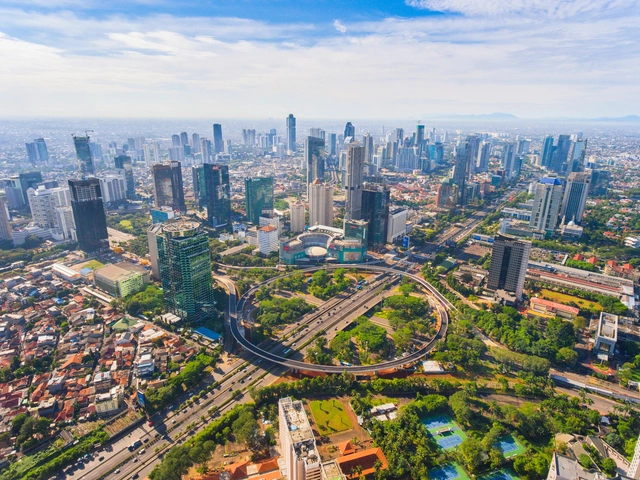
In light of the ongoing urban discourse, countries like Egypt are constructing a new capital city to alleviate population and urban stress on Cairo. Similarly, Indonesia is planning a new capital in response to challenges faced by Jakarta, such as pollution, traffic congestion, and rising sea levels. It is valuable to examine other countries in the global south that have relocated their capital cities, noting the architectural and urban lessons learned from their experiences.
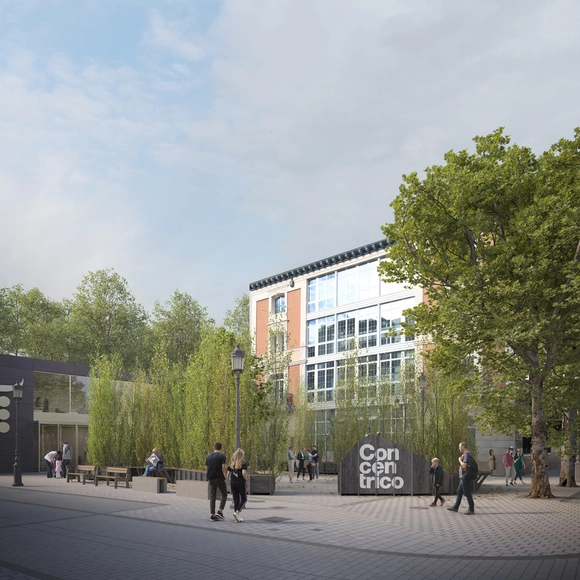
Poplar Assembly / Francisco Javier García García . Image Courtesy of Concéntrico
Now in its 10th edition, Concéntrico, the international festival of architecture and design in Logroño, has announced the winners of the open calls for urban interventions. Responding to the call to ‘Celebrate the City,’ the winning proposals will be temporarily built in Plaza Escuelas Trevijano, in Viña Lanciano of Bodegas LAN, and in Paseo del Espolón in the Spanish town of Logroño. The Festival welcomes visitors between April 25 and May 1, 2024, to explore the city through installations, exhibitions meetings, and performances.
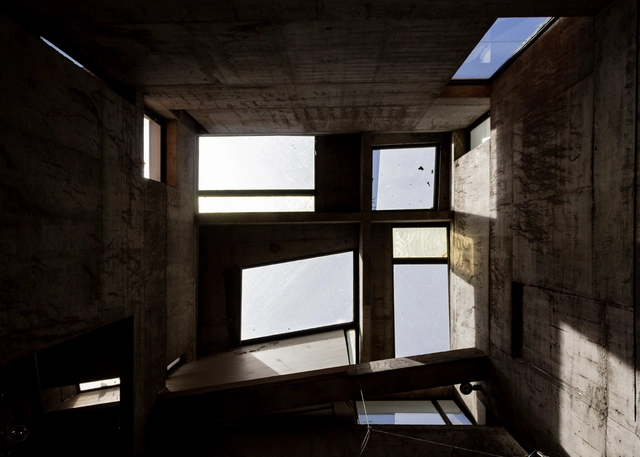
From 1987 to 1993, architect Pablo Tomás Beitía set out to transform the former housing complex and rental houses of Argentine artist Alejandro Xul Solar into a museum. The goal was to create a new space that would adapt to exhibition requirements and engage in avant-garde dialogue with the pre-existing structure. Situated in the Palermo neighborhood within the Autonomous City of Buenos Aires, the Xul Solar Museum was designed to serve as a space for cultural encounters. The remodeling and expansion project was conceived by interpreting the artist's pictorial worldview, maintaining the facade intact, and embracing the painter's house with a new interior architecture.














.jpg?1572637926&format=webp&width=640&height=580)