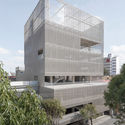
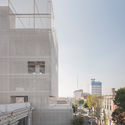
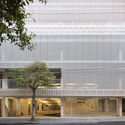
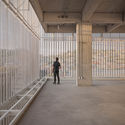
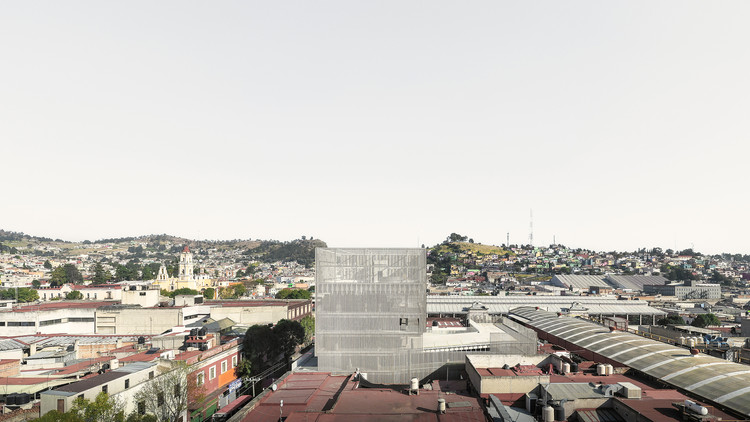
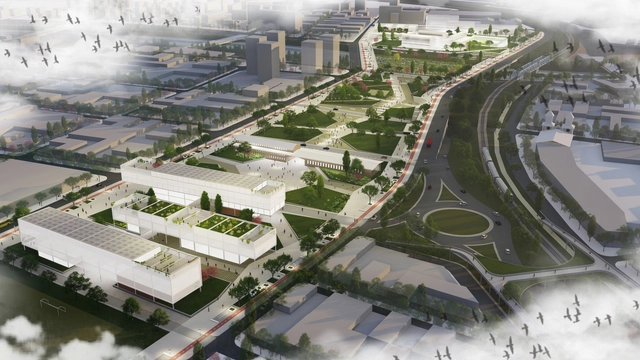
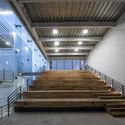
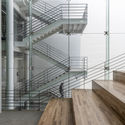
FRPO, the Madrid-based international architecture studio, presents its new mixed-use infrastructure project for the city of Toluca de Lerdo, capital of the State of Mexico. Located at the northern end of Juárez Avenue—which connects the historic district with the university area—the building aims to consolidate the scattered activity around this zone to create a new cultural, economic, and social hub at both the local and metropolitan levels.
https://www.archdaily.com/1128475/frpo-builds-mixed-use-infrastructure-in-toluca-mexicoArchDaily Team
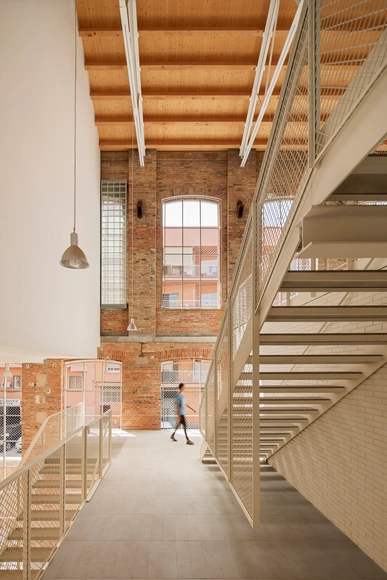
Construction has been completed on the Ricard Ginebreda Sports Complex in Molins de Rei (Barcelona, Spain). Designed by the Barcelona Metropolitan Area (AMB) through the Public Space Services Directorate, this new facility brings together various sports under one roof—such as weightlifting, judo, climbing, and artistic gymnastics—which were previously scattered in venues ill-suited to their specific needs. The project was built around an existing soccer field belonging to a club in the El Canal neighborhood.
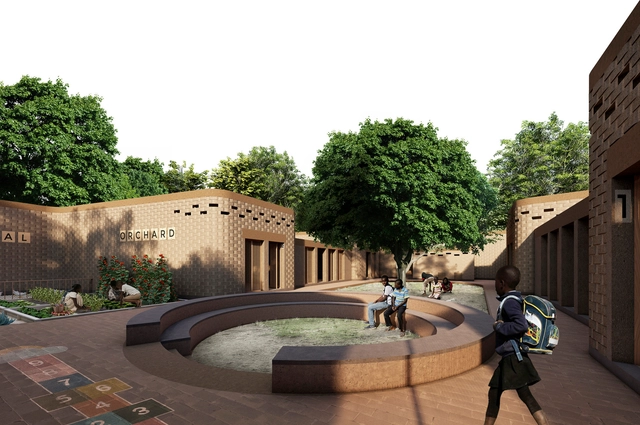
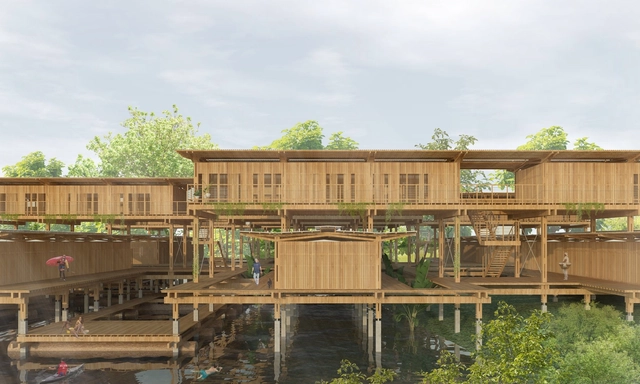
Numerous countries across Africa and Latin America share similar social contexts. One such challenge is the difficulty of accessing remote regions and poorly managed resources, which results in shortages for rural communities. A team from Colombia has won the competition to design innovative, low-cost construction techniques to replace a temporary school with permanent structures in Senegal.
The practice SOMStudio, with a team led by architects Santiago Osorio, Carlos Peña, and Mauricio Suarez, won the Senegal Elementary School competition organized by Archstorming.
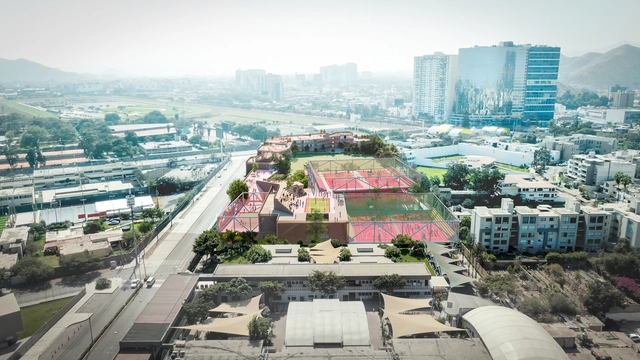
Imagen aérea. Image Cortesía de IDOM / Rosan Bosch Studio
The project by IDOM and Rosan Bosch Studio for Markham College's primary school in Lima, Peru, proposes an open and flexible model designed to allow 750 students to continue their education even during a pandemic.
We invite you to participate in the 2021 Obra do Ano Award. In its fourth edition, we are giving our readers the responsibility of recognizing and rewarding the projects that have made the greatest impact on the profession. By voting, you become part of an unbiased network of jurors recognizing the most relevant projects built in Portuguese-speaking countries over the past year. There are only a few days left to close the nomination stage, which will select the 15 finalists from more than a thousand projects.
Remember, registered users can nominate their favorite project once a day. The nomination stage ends on Tuesday, March 23 at 11:59 PM (Brasília time, GMT-3). Thank you once again for helping us democratize architecture.
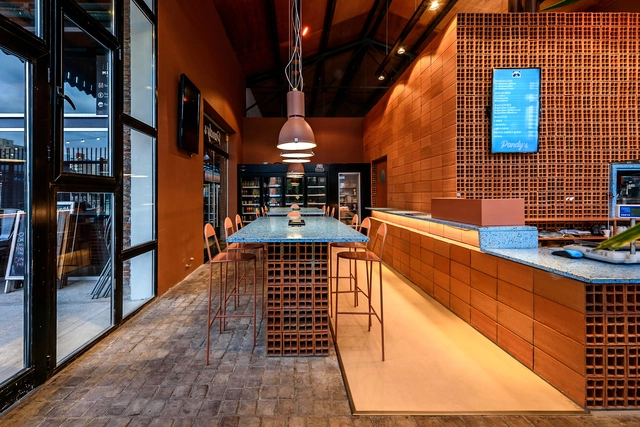
Organized by the Central Society of Architects (SCA) and the Chamber of the Red Ceramic Industry (CICER), this award aims to recognize architectural production focused on the use of ceramic masonry, as well as the work of architects in projects utilizing these materials. Featuring projects where hollow brick is the predominant material, the award seeks to promote its use as a sustainable, long-term solution in both urban and rural settings.
Inspiration and knowledge to help architects build better cities Inspiration and knowledge to help architects build better cities Founded in 2008, ArchDaily was established with a clear mission: to become an online platform providing design inspiration and knowledge to architects worldwide—transcending geography, race, and gender to exchange methodologies, spark inspiration, explore theory, and showcase practice. In 2020, as COVID-19 impacted the world and transformed the architectural landscape, we updated our mission:
Tools, inspiration, and knowledge to help create better cities Tools, inspiration, and knowledge to help create better cities "Tools" has been added. Over 13 years of dedication, our database has grown to include over 27,000 design firms from around the world. Serving a vast community of designers, we believe we should share more than just designs; we should also share "tools"—such as productivity-boosting workflows, cost-effective building materials, high-quality design competitions, and like-minded design communities. "Architects" has been removed, and "build" has become "create." ArchDaily currently operates websites in 5 languages, 2 WeChat public accounts, and 3 social media platforms, reaching 480,000 daily visits and ranking at the top of Alexa's global architecture and design website list. Our readership extends beyond architects to include designers from other fields and design enthusiasts. Consequently, our content should expand beyond construction to encompass more planning, cross-disciplinary, and diverse design. The goal of "better cities" remains unchanged. ArchDaily receives over 100 project submissions and more than 15 advertising inquiries daily. Guided by our high standards of curating content "for better cities," we consistently deliver high-quality articles, bringing the best content to readers, the most international platform to creators, and the most comprehensive exposure to developers.
2021 marks the fifth anniversary of ArchDaily China. Over the past five years, numerous Chinese architects have reached international audiences and gained global recognition through our platform. Meanwhile, China's diverse market has attracted global designers, fostering cultural exchange as the Chinese architectural design industry matures. To support this growth, we are launching services such as Job Postings and Brand Promotion, aiming to offer a more comprehensive suite of solutions that help architects recruit top talent and secure new projects.
https://www.archdaily.com/1128600/archdaily-recruitment-advertising-and-brand-promotion-services-seeking-fellow-travelers韩爽 - HAN Shuang
The FAD Awards 2021, one of the most prestigious architecture accolades on the Iberian Peninsula, has announced the finalist projects for its latest edition.
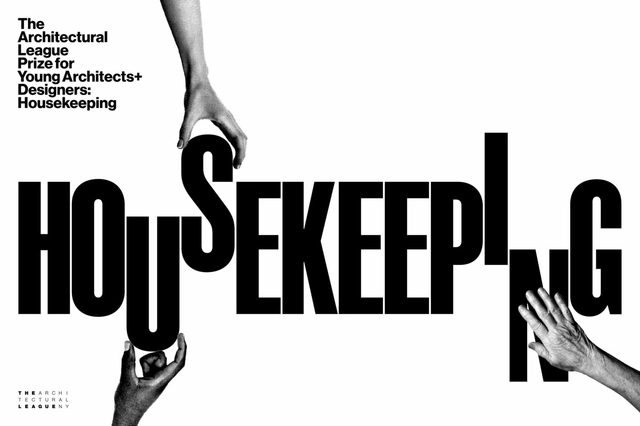
The 2021 Architectural League Prize has announced the selection for the Young Architects + Designers: Housekeeping category. The theme was developed by the 2021 Young Architects + Designers Committee, which included recent League Prize winners Ivi Diamantopoulou, Cyrus Peñarroyo, and Alison Von Glinow. The jury comprised the committee alongside Tatiana Bilbao, Peggy Deamer, Fritz Haeg, and Victor J. Jones. The competition is organized by The Architectural League’s Program Director, Anne Rieselbach, and Program Director, Catarina Flaksman.
Primer Premio. Image Cortesía de Arq. Ezequiel Spinelli
Organized by the Colegio de Arquitectos de la Provincia de Santa Fe DSP y Distrito 1 and promoted by the Argentine Federation of Architects' Organizations (FADEA), the National Preliminary Project Competition for a building for the Center for Experimentation, Innovation, and Development in Design and Construction (CEIDDC) seeks to address an educational program within the Faculty of Architecture, Design, and Urbanism (FADU) at the Universidad Nacional del Litoral (UNL) in Santa Fe, Argentina.
The jury comprised architect Ian Dutari representing FADEA, architect Ma. Isabel Rinaldi representing CAPSF, architect Gustavo Barrirero representing CAD1, architect Roberto Frangella representing the participants, and architect Sergio Cosentino representing the promoter (UNL). A total of 65 entries were received, with three prizes and a series of honorable mentions awarded. The winning projects are presented below.
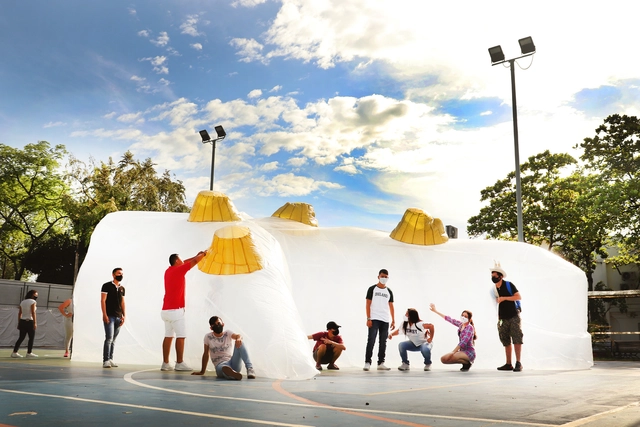
The project “Artificial Topographies: Between the Real and the Unreal” by the architecture studio Ciudad Portátil won the 2021 CLAP Ibero-American International Design Awards for best commercial exhibition or ephemeral architecture design. This temporary intervention arose from the need of a group of students at Corhuila University to carry out practical labs for their Topography course, since these activities were restricted to the university campus for biosecurity reasons—specifically, in this case, on a concrete slab within the sports complex.
Organized by the Jujuy Association of Architects and sponsored by the Argentine Federation of Architects' Organizations (FADEA), the National Ideas Competition for the Former Penitentiary Site in the city of San Salvador de Jujuy is based on reimagining a new purpose for this walled, self-contained architectural and urban complex. Once located on the city's outskirts, the site now occupies a central position within the urban fabric. The goal is to transform it into an urban element that revitalizes and links degraded sectors.
The jury awarded first prize to architect Edgardo Barone, alongside collaborators Valentín Augusto De la Fuente, Juan María Mandalari, Joaquín Mortatti Perez, and Tomas Smachetti, and traffic engineering consultants Eng. Tomás Daels and Eng. Franco P. Di Biase. Discover the project below.
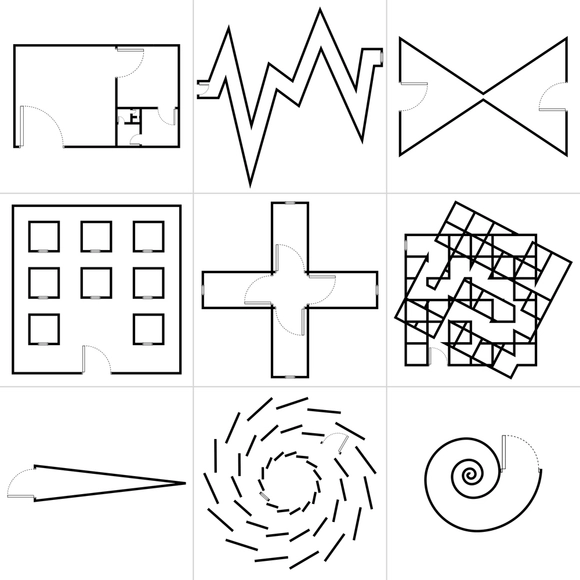
Moradas is a visual-literary project initiated in 2020 by Rafael Baldam, using illustrations based on floor plans and short texts to reflect on domestic space and the act of dwelling. At the beginning of quarantine, the architect and poet began contemplating the domestic sphere, anticipating that it would become a permanent backdrop for the coming months—a reality that indeed materialized and, as of February 2021, still persists.
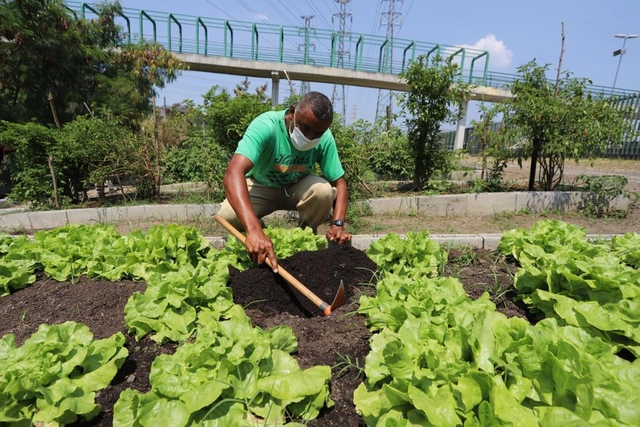
The Rio de Janeiro City Hall has announced the expansion of vegetable farming on municipal land along the Madureira Park railway line. In 2022, the area will host what is set to become the world's largest urban garden, covering 110,000 square meters.
The primary objective is to generate income and food security for 50,000 low-income families per harvest by 2024. The initiative will also establish a green corridor of vegetables running along Madureira Park to Guadalupe, in partnership with Embrapa and the utility company Light, as part of the crops will be located under the company's power transmission towers.
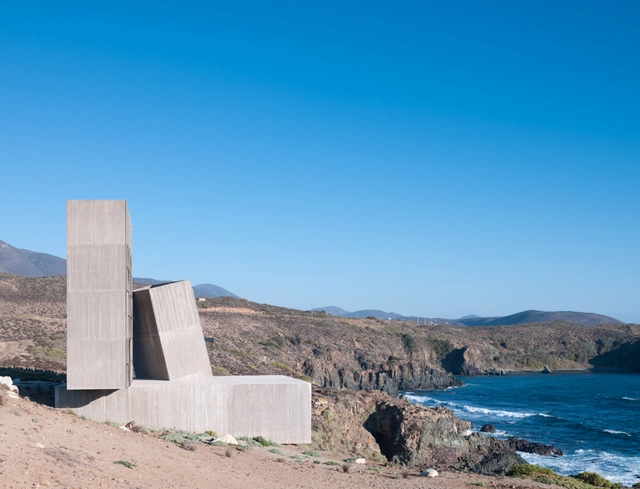
ELEMENTAL's Ochoquebradas House through the lens of Felipe Camus. Image
Arquis, the new HBO Max series about the life and work of six of Latin America's most renowned architects, has premiered. It is no surprise that the first one-hour episode features Alejandro Aravena, the Chilean architect who won the Pritzker Prize in 2016.
Riverside Community and Living Complex / Danielle Gregorio - Universidade de São Paulo (USP). Image via LafargeHolcim Foundation
The winners of the LafargeHolcim Awards Next Generation for Latin America have been announced. The winning projects from Brazil, Argentina, Mexico, and Colombia address key aspects of sustainability. The winners of the LafargeHolcim Awards (Gold, Silver, and Bronze) and Acknowledgements for Latin America will be announced at a hybrid event on November 13, 2021, as part of the 17th International Architecture Biennale in Venice, Italy.
https://www.archdaily.com/1128469/brazil-argentina-mexico-and-colombia-among-the-winners-of-the-2020-lafargeholcim-next-generation-awards-for-latin-americaArchDaily Team
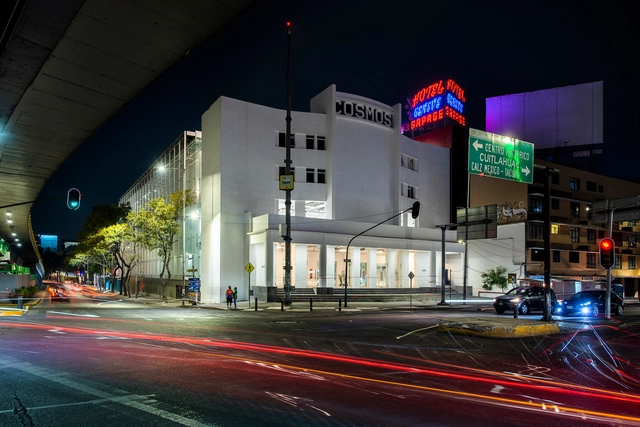
The former Cine Cosmos, designed by architect Carlos Crombé, was built on a 2,000-square-meter lot on the corner of Calzada México-Tacuba and Melchor Ocampo (Circuito Interior) in Mexico City's Miguel Hidalgo borough. Its opening was delayed until 1948 due to a fire. Along with many other theaters like the Ópera, Teresa, and Alameda, it was part of the so-called “Mexican cinema corridor” that stretched from this avenue to the city's Historic Center.
https://www.archdaily.com/1128473/faro-cosmos-by-ten-arquitectos-opens-its-doors-in-mexico-cityArchDaily Team
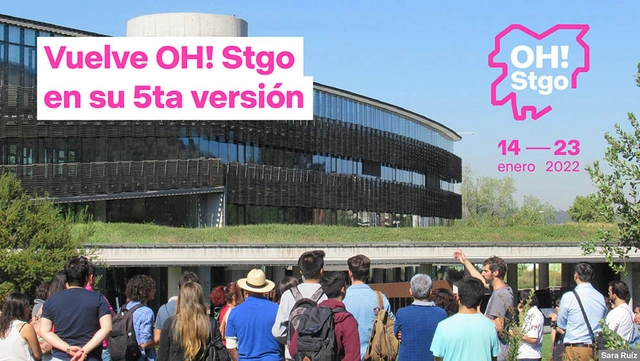
In the context of the current health crisis, the new edition of Open House Santiago (OH! Stgo) will be dedicated to “The City and Care” as a way to create inclusive opportunities that bring people together in buildings that are typically closed to the public. Scheduled from Friday, January 14 to Sunday, January 23, 2022, the event will focus this time on priority groups such as older adults, people with disabilities, and children. Organized by Fundación Aldea, the initiative has celebrated the contemporary city since 2017 through events aimed at providing citizens with practical knowledge about Santiago's architecture, urban design, and environment through its various urban landmarks.