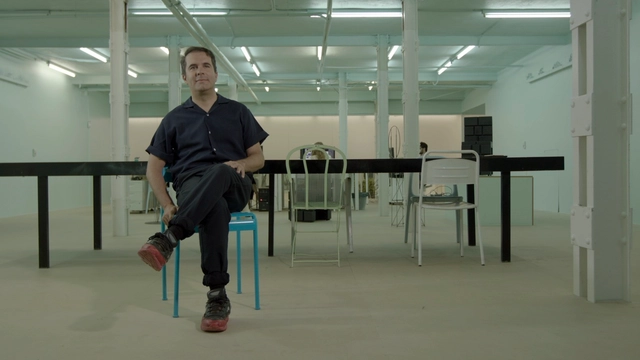
As founder of the “Do Tank” firm ELEMENTAL, Chilean architect Alejandro Aravena (born on June 22, 1967) is perhaps the most socially-engaged architect to receive the Pritzker Prize. Far from the usual aesthetically driven approach, Aravena explains that “We don’t think of ourselves as artists. Architects like to build things that are unique. But if something is unique it can’t be repeated, so in terms of it serving many people in many places, the value is close to zero.” [1] For Aravena, the architect’s primary goal is to improve people's way of life by assessing both social needs and human desires, as well as political, economic and environmental issues.
Award-winning architect Tatiana Bilbao spoke in an interview released by Louisiana Channel about her frustrations with today’s concept of sustainability in architecture. Living in Mexico, which Bilbao describes as a “country with no resources,” she states that people are accustomed to not wasting resources and that “sustainability” is a natural part of daily life. “I hate the word ‘sustainability’ because I think it has become a word that can qualify a type of architecture, and for me it should be embedded.”
Past, Present, Future is an interview project by Itinerant Office, asking acclaimed architects to share their perspectives on the constantly evolving world of architecture. Each interview is split into three video segments: Past, Present, and Future, in which interviewees discuss their thoughts and experiences of architecture through each of those lenses. The first episode of the project featured 11 architects from Italy and the Netherlands and Episode II is comprised of interviews with 13 architects from Spain, Portugal, France, and Belgium.
The goal of the series is to research these successful firms and attempt to understand their methods and approaches. By hopefully gaining a clearer picture of what it means to be an architect in the 21st century, the videos can also serve as inspiration for the next generation of up-and-coming architects and students as they enter the field.
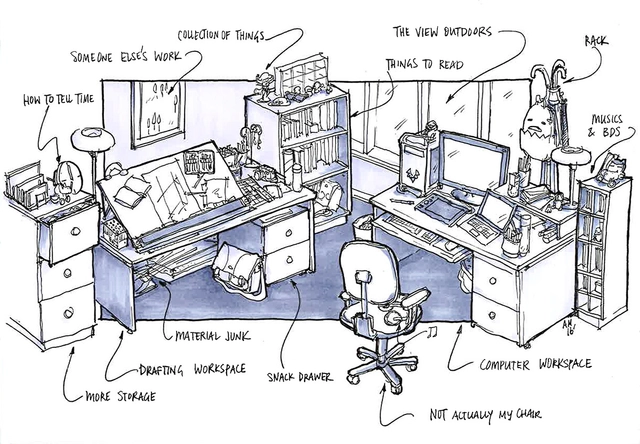
There’s no doubt that architects spend a lot of time in front of a desktop, be it virtual or three-dimensional. In fact, although this statistic is not exclusive to architects, the average time a person now spends sitting down per day is 7.7 hours; in the United States the average is an unbelievable 13 hours. Of course this includes time spent on the train, watching a movie on the sofa, or a whole range of other seated activities, but the vast proportion of this time is likely to be spent working by a desk or laptop.
How can you improve the quality of that time, so it’s both well spent and, ideally, minimized? To have a more efficient, productive—and most importantly, more pleasant—time at work, here are 13 ways to improve your physical and digital workspace.
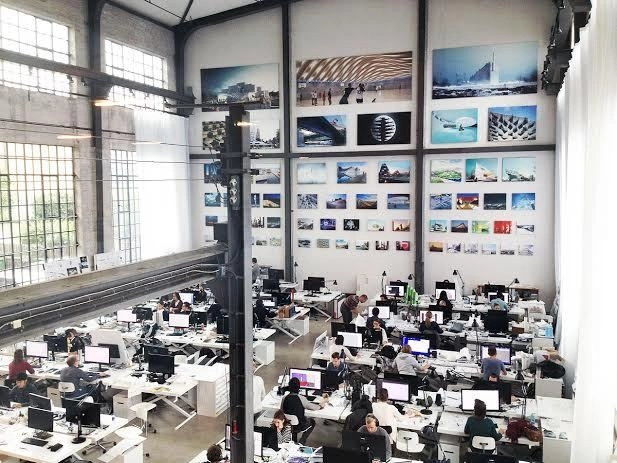
We are delighted to introduce Open More Doors, a new section by ArchDaily and the MINI Clubman that will take you behind the scenes of the world’s most innovative offices through exciting video interviews and an exclusive photo gallery featuring each studio’s workspace.
What happens when the sensor-imbued city acquires the ability to see – almost as if it had eyes? Ahead of the 2019 Shenzhen Biennale of Urbanism\Architecture (UABB), titled "Urban Interactions," ArchDaily is working with the curators of the "Eyes of the City" section at the Biennial to stimulate a discussion on how new technologies – and Artificial Intelligence in particular – might impact architecture and urban life. Hereyou can read the “Eyes of the City” curatorial statement by Carlo Ratti, the Politecnico di Torino and SCUT.
Terrazzo is made by combining a cement base (sand, water, and cement) with a mixture of ground minerals - like marble, granite, and quartz - and can be applied to almost any surface, vertical or horizontal. The technique, produced using a completely hand-crafted method, was used worldwide in the construction of modern buildings and is noted for its durability, resistance (to water and abrasion), and easy maintenance. This made it a go-to material in the creation of flooring for houses and the common areas of residential and office buildings.
Today, terrazzo is experiencing a revival as one of the key trends in contemporary architecture. Here, we will discuss the whats and hows of terrazzo and illustrate some of its uses in current projects.
It is expected that within the next few of decades, Earth will have absolutely nothing left to offer whoever/whatever is capable of surviving on it. Although the human race is solely responsible for the damages done to the planet, a thin silver lining can still be seen if radical changes were to be done to the way we live on Earth and how we sustain it.
Since architects and designers carry a responsibility of building a substantial future, we have put together an A-Z list of every sustainability term that you might come across. Every week, a new set of letters will be published, helping you stay well-rounded on everything related to sustainable architecture and design. Here are the terms that start with letters G, H, and I.
Originally published by Entrepreneur Architect, Associate Professor at Louisiana Tech Kevin J Singh gives his 21-point rundown of how to have a successful and happy life as an architect. The list gives some pointers that will certainly help young students and graduates, but may well be useful to some of the not-so-young practitioners who need to refocus on what's important.
The following is a compilation of my professional practice lecture on the last day of class. Instead of recapping the course or giving a final exam, I share with my students a presentation titled Advice as You Finish School and Start to Practice. I present a series of statements followed up with a brief explanation.
Architects often look for inspiration in anything and everything around them: forms, volumes, artwork, music, nature… But some sources (and projects) are just out of this world. Literally.
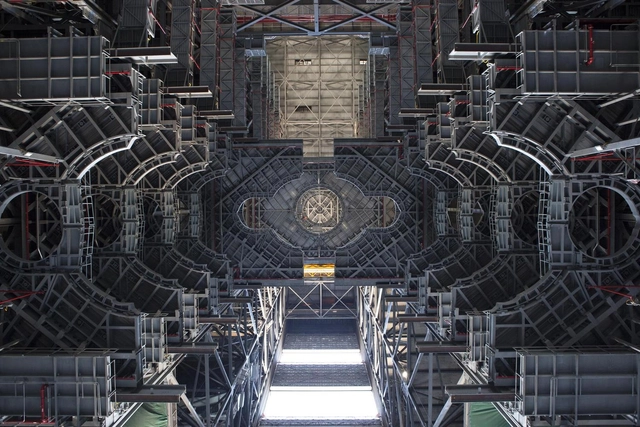
NASA has created an online library of 140,000 high-resolution photos, videos, and sound clips, all free and available for download. Here is a selection of images for your dose of interstellar inspiration.
The mineral material of fiber cement combined with a sanded surface gives Vintago a natural authentic, lively and unique look.
Click here to learn more about the brand new Swisspearl Largo Vintago. Swisspearl will be happy to send you a product sample or arrange a one-on-one consultation with you.
https://www.archdaily.com/918006/swisspearl-largo-vintago-natural-authentic-lively-and-unique-lookSponsored Post
My commitment to pavilions—to the idea of making constructional follies—is connected with needing to develop prototypes and carry out constructional research away from the normal practice of architecture. Without being subject to a client’s brief, the pavilions give me an opportunity to develop and test different methodologies, which is something that has always interested me about teaching. They are investigations into various kinds of context, dealing with urban scenarios and landscapes—they are about making something in space for its own sake, when the guiding idea comes from a reading of place. The pavilions fine tune my engagement with a specific situation, allowing me to see what is essential in terms of an action or construction. I did not set out with the idea of working in series, but as different opportunities came up, the process of designing them became more organic, the language seemed to make sense, and as one thing reinforced another, they took on a life of their own.
Advances in technology have changed the way people work and move around congested cities. Since free space in these urban areas has become scarce, people have shifted their perspective upwards and are now looking to the sky for new means of mobility, transporting their goods via cargo drones and flying ‘taxis’.
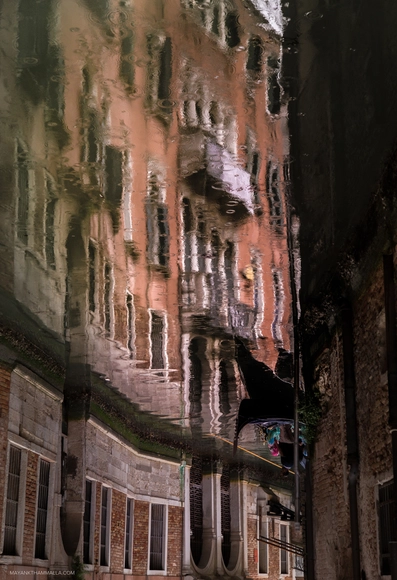
Nothing is ordinary about the Italian city of Venice. Whether it is the vividly-colored architecture that dates back to Gothic and Byzantine eras, or the fact that the city is floating on water, culturally-rich Venice is an intriguing destination for people of all backgrounds and interests.
With every visit to Venice, London-based architect and photographer Mayank Thammalla found himself discovering new scenic views of the city, ones that are often tucked beneath its architecture. In his recent photographic series ‘Echoes of Venice’, Thammalla used the canal ripples as his canvas and displayed the deteriorating architecture of Venice from a unique, inverted perspective.
As architects, we are on an endless journey of discovery, open to new experiences that fuel our creativity. We explore our surroundings and beyond, we travel to expand our views and open our mind, being often exposed to the unexpected. All these experiences are stored in our mental hard drive until the inspiration moment comes, drawing random non-linear connections between them and putting us into a state of divergent thinking, from where new ideas appear.
House in Boliqueime. Image Courtesy of bak gordon arquitectos
Past, Present, Future is an interview project by Itinerant Office, asking acclaimed architects to share their perspectives on the constantly evolving world of architecture. Each interview is split into three video segments: Past, Present, and Future, in which interviewees discuss their thoughts and experiences of architecture through each of those lenses. The first episode of the project featured 11 architects from Italy and the Netherlands and Episode II is comprised of interviews with 13 architects from Spain, Portugal, France, and Belgium.
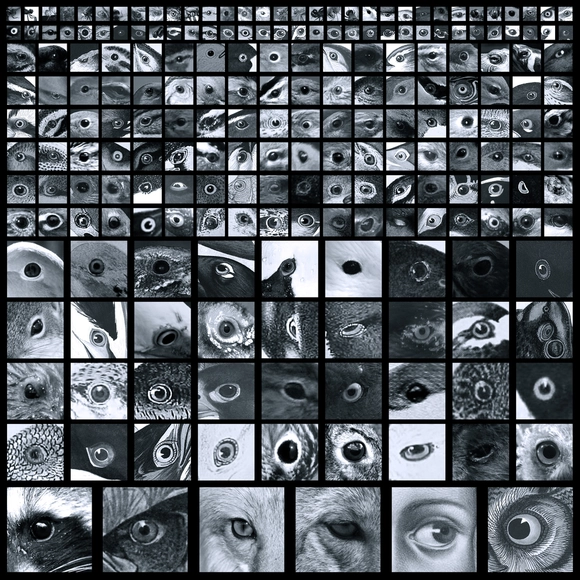
The eyes of the more than 250 animal species who have been observed at Studio Gang’s Nature Boardwalk at Lincoln Park Zoo in Chicago. Image by Studio Gang
What happens when the sensor-imbued city acquires the ability to see – almost as if it had eyes? Ahead of the 2019 Shenzhen Biennale of Urbanism\Architecture (UABB), titled "Urban Interactions," ArchDaily is working with the curators of the "Eyes of the City" section at the Biennial to stimulate a discussion on how new technologies – and Artificial Intelligence in particular – might impact architecture and urban life. Hereyou can read the “Eyes of the City” curatorial statement by Carlo Ratti, the Politecnico di Torino and SCUT.
“We all live in an ecosystem; we just don’t know it. When it comes to urban areas, people have an ecological blind spot.” — Seth Magle, Director, Lincoln Park Zoo Urban Wildlife Institute, Chicago.
The advance of AI technologies can make it feel as if we know everything about our cities—as if all city dwellers are counted and accounted for, our urban existence fully monitored, mapped, and predicted.
https://www.archdaily.com/918968/eyes-of-the-city-seeing-and-designing-beyond-the-human-jeanne-gang-for-the-shenzhen-biennale-uabb-2019Studio Gang
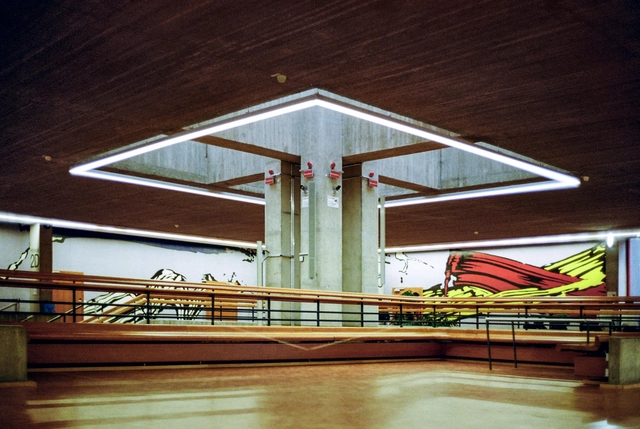
Although Brutalist architecture is often criticized for its raw, unfinished look, it has been frequently used in the design of public buildings, with many becoming iconic landmarks. Some architects chose to break away from typical concrete structures and implemented a pop of color on the walls, window frames, and flooring, adding some dynamism to the monotonous palette.
Shot with a Leica M6 film camera, architecture and interior design photographerLuciano Spinelli photographed the Düsseldorf University campus, displaying the contrast between its brutalist architecture and vibrant design features.
According to a statement published on the UNESCO page, the UNESCO World Heritage List is a legacy of monuments and sites of great natural and cultural wealth that belongs to all of humanity. The Sites inscribed on the World Heritage List fulfill a function of milestones on the planet, of symbols of the awareness of States and peoples about the meaning of those places and emblems of their attachment to collective property, as well as of the transmission of that heritage to future generations.
The island of Manhattan is one of the most recognizable urban centers in the world. For the past four hundred years, the island that so many New Yorkers call home has changed and evolved depending on the needs of its inhabitants – today totaling over 8 million.
https://www.archdaily.com/918446/watch-manhattan-grow-over-400-yearsNiall Patrick Walsh
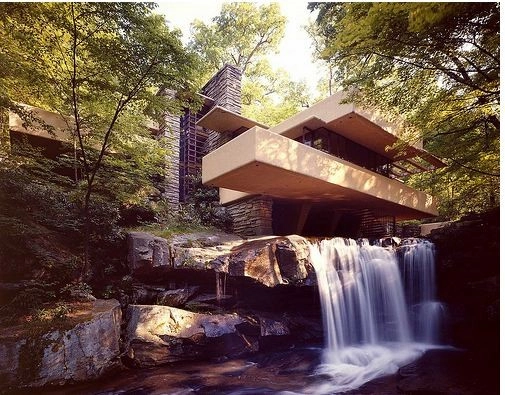
In 1991, the American Institute of Architects called him, quite simply, “the greatest American architect of all time.” Over his lifetime, Frank Lloyd Wright (June 8, 1867 – April 9, 1959) completed more than 500 architectural works; many of them are considered masterpieces. Thanks to the wide dissemination of his designs and his many years spent teaching at the school he founded, few architects in history can claim to have inspired more young people into joining the architecture profession.
In recent months, two events have done more harm to the “brand” of architecture in the public’s perception than anything I’ve experienced in the 40 years that I have been in the profession.
First, there was the grand opening of New York City’s Hudson Yards, a massive $20 billion development on Manhattan’s far west side. This first phase opened after seven years of construction and included an obligatory gathering of “world class” architects—Kohn Pedersen Fox, Diller Scofidio + Renfro, SOM, The Rockwell Group—as well a folly by designer Thomas Heatherwick.
Past, Present, Future is an interview project by Itinerant Office, asking acclaimed architects to share their perspectives on the constantly evolving world of architecture. Each interview is split into three video segments: Past, Present, and Future, in which interviewees discuss their thoughts and experiences of architecture through each of those lenses. The first episode of the project featured 11 architects from Italy and the Netherlands and Episode II is comprised of interviews with 13 architects from Spain, Portugal, France, and Belgium.
The goal of the series is to research these successful firms and attempt to understand their methods and approaches. By hopefully gaining a clearer picture of what it means to be an architect in the 21st century, the videos can also serve as inspiration for the next generation of up-and-coming architects and students as they enter the field.
Andrés Jaque is an architect, academic director, and author, who founded the international architecture firm Office for Political Innovation in 2003. Award-winning OFFPOLINN is based in New York and Madrid, and works on projects of different scales and media, intersecting design, research, and critical environmental practices. In parallel to his career as an architect, Jaque is the director of the Advanced Architectural Design Program at Columbia University Graduate School of Architecture, Planning and Preservation, and a visiting professor at Princeton University and The Cooper Union. The architect is acknowledged for his transectional approach to architectural design, "practicing architecture as the intervention on complex composites of relationships, where its agency is negotiated with the agency unfold by other entities".



_5838.jpg?1559756527&format=webp&width=640&height=580)
_6158.jpg?1559756694 "© Laurian Ghinitoiu")
_6015.jpg?1559756499 "© ArchDaily")
_5936.jpg?1559756682 "© Laurian Ghinitoiu")
_6206.jpg?1559756718 "© Laurian Ghinitoiu")
_5838.jpg?1559756527)







_0001.BOLIQUEIME.PUB-FG01.06.jpg?1560477890&format=webp&width=640&height=580)
_0001.BOLIQUEIME.PUB-FG01.06.jpg?1560477890 "House in Boliqueime. Image Courtesy of bak gordon arquitectos")
_Teatro_Romano_N.Central_Entrada.jpg?1560477635 "FUTURE: Teatro Romano. Image Courtesy of bak gordon arquitectos")
_Casa_na_Costa_do_Castelo_RBG_37.jpg?1560477725 "Casa na Costa do Castelo. Image Courtesy of bak gordon arquitectos")
_School_Romanshorn_BER04.jpg?1560477676 "School Romanshorn. Image Courtesy of bak gordon arquitectos")
_0001.BOLIQUEIME.PUB-FG01.06.jpg?1560477890)




.jpg?1559720126&format=webp&width=640&height=580)