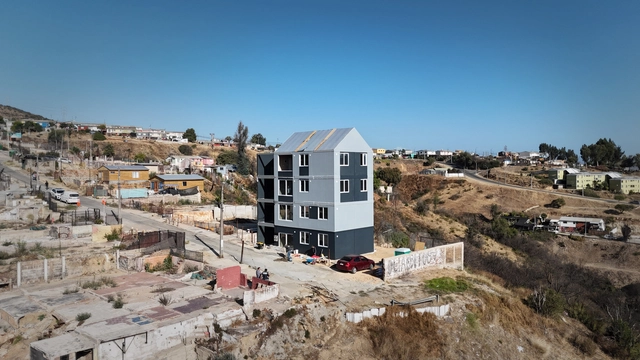
ELEMENTAL: Incremental Housing and Participatory Design Manual

What began as an academic initiative to improve the quality of life of poor strata of the population has meanwhile become a professional “do tank” offering services that cover the entire spectrum of urban development. (1967 Santiago de Chile) founded in 2001 in his hometown with the goal of alleviating social deprivation directly instead of hoping for a balance of income relations. Besides building public facilities and public housing, also develops new approaches for the reorganization of resources and the potential of cities by means of projects devoted to infrastructure and transportation. This publication documents the social activity and history of the international architectural team and sheds light on its financing strategies, for example through participative building.

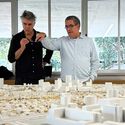
AD Interviews: Alejandro Aravena / ELEMENTAL, Venice Biennale

Alejandro Aravena, Executive Director of ELEMENTAL, tells us more about The Magnet and The Bomb, their exhibit at the Venice Biennale. You can learn more about the projects presented at this installation: PRES Constitución and Calama PLUS.

For more photos, check our previous article.

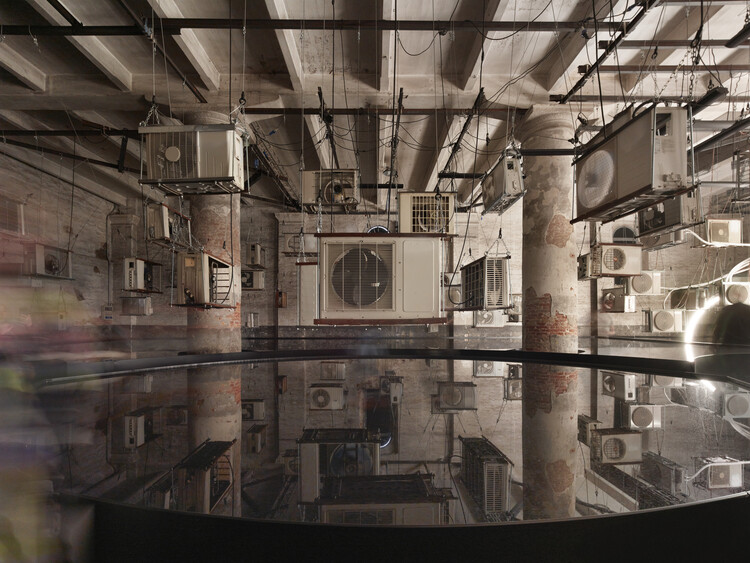
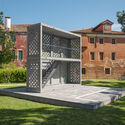
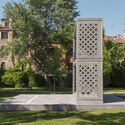
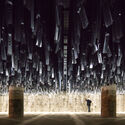
Venice Biennale 2012: The Magnet and the Bomb / ELEMENTAL

© Nico Saieh

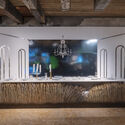
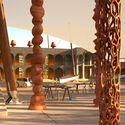
An installation highly commented by the visitors of the Vernissage of the Biennale. The Magnet and the Bomb presents two projects from the Chile based practice Elemental, lead by Alejandro Aravena. These projects are urban interventions that were required for specific social issues, that have required a common ground between several stakeholders. A ticking clock bomb counts down at the entrance of the exhibit, that will last the 100 days fo the Biennale, around the same time that both these projects took.

The projects are presented over big walls of unfinished wood, with projections over them. Each project timeline appear on a wall, carved in the case of Constitución (view the PRES Constitución project), and as a series of cards inserted into slots for Calama (view the Calama Plus project).

© Nico Saieh

Chile is facing a big challenge, as the income has tripled in less than a decade, yet inequalities have remained intact. This is creating popular discontent that is accumulating pressure like a social time bomb. Equally, in order to maintain growth and remain competitive at a global level, the country must attract and retain knowledge creators. Presented here are the projects where architects were required to respond to these profound dilemmas.

INDEX: 2011 Award Winners

Just announced last night, the INDEX: Award winners for 2011 were unveiled highlighting five categories: Body, Home, Work, Play and Community.  The award ceremony was held in the Copenhagen Opera with a diverse audience from 48 countries.

The winners of the awards propose designs that focus on vastly improving the lives of people all over the world.  The non-profit Danish design organization received nearly 1,000 nominations from 78 countries, which were narrowed down to 60 finalist designs with the five award winners announced last evening.
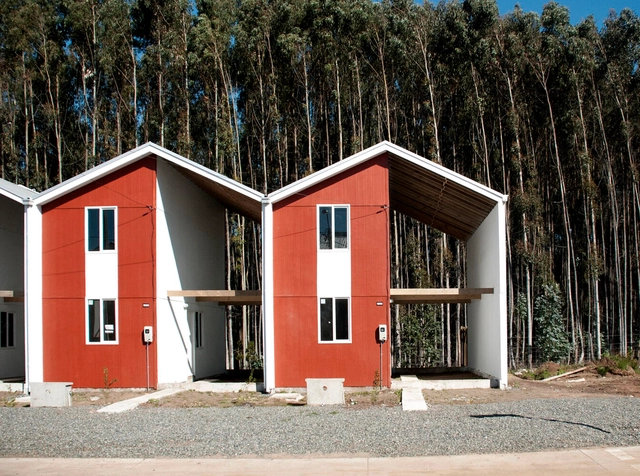
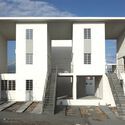
Receiving the INDEX: Award HOME Category  was Chilean architecture firm ELEMENTAL for their project Monterrey, a revolutionary new model for social housing in .  ELEMENTAL’s social housing design for Mexican citizens, provides residents with the opportunity to construct part of the home themselves.  By only building half the house residents, when time, effort and resources permit, personalize the home reflecting the needs and wishes of each individual family.

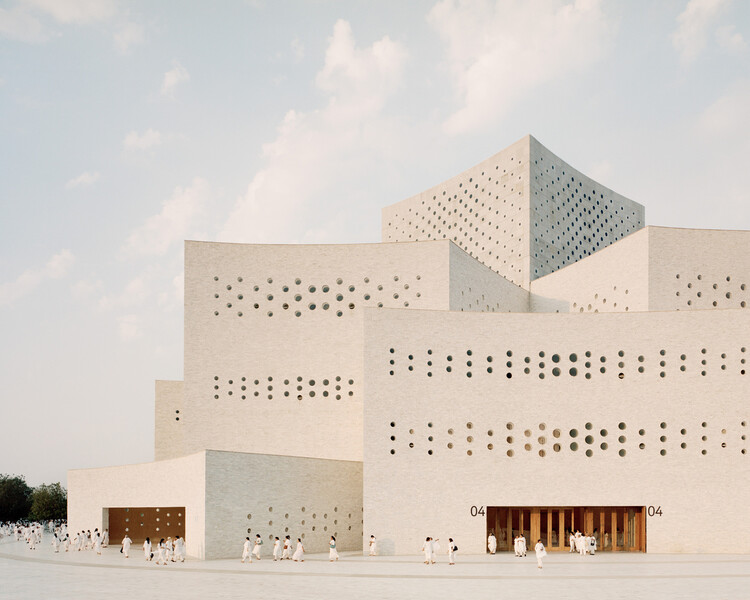
Ruta del Peregrino Phase II Completed

Sneak Peek © Iwan Baan

Looking back at the Easter Pilgrimage 2011 at Ruta del Peregrino, the most important event of the year, we are pleased to announce the final step of the second construction phase (you can check the complete project over here).

This year, for the first time, the pilgrims were able to use the finished viewpoint by HHF Architects, offering a new way to experience the site.

The sanctuary by Tatiana Bilbao and the viewpoint by Christ&Gantenbein are under construction; their presence will mark the completion of the entire Ruta within a few months.

All images by Iwan Baan and you can check his website for the full coverage.

Monterrey Housing / ELEMENTAL

© Ramiro Ramirez

Architects: ELEMENTAL
Location: Monterrey,
Client: Instituto de la Vivienda de Nuevo León (IVNL)
Engineering: Area of projects and technological innovation, IVNL
Urbanization & Specialization: Area of projects and technological innovation, IVNL
Site Area: 6,591 sqm
Initial House Area: 40 sqm
Expanded House Area: 58.75 sqm
Initial Duplex Area: 40 sqm
Expanded Duplex Area: 76.60 sqm
Project Year: 2010
Photographs: Ramiro Ramirez

ELEMENTAL wins Brit Insurance Design Award

ELEMENTAL’s Monterrey housing development has won the architecture category in the 2010 Brit Insurance Design Awards.

The Chile-based practice was nominated by Catherine Ince, new curator of the Barbican Art Gallery, for its social housing scheme in .

The Monterrey housing takes on the “half house” concept that pioneered in the Chilean city of Iquique. The idea is that the basic house is provided for residents who then expand and adapt their property themselves.

Also shortlisted in the architecture category were Zaha Hadid’s MAXXI centre in Rome, Tony Fretton’s British Embassy in Warsaw, David Chipperfield’s Neues Museum in Berlin, 6a Architects’ Raven Row exhibition centre in east London and Herzog & de Meuron’s TEA cultural centre in Tenerife.

Seen at bd online.

Alejandro Aravena wins Marcus Prize for Architecture

Chilean architect Alejandro Aravena has been chosen as the 2009 recipient of the Marcus Prize for Architecture. The Marcus Prize for Architecture is a $100,000 prize funded by the Marcus Corporation Foundation and administered through the University of Wisconsin-Milwaukee School of Architecture and Urban Planning to recognize emerging talent in architecture worldwide.

During the spring 2010 semester (January through May, 2010), will make scheduled visits to the University of Wisconsin-Milwaukee’s School of Architecture and Urban Planning, focusing a graduate studio on specific challenges in architecture that inspire enduring benefits to Milwaukee’s urban fabric.

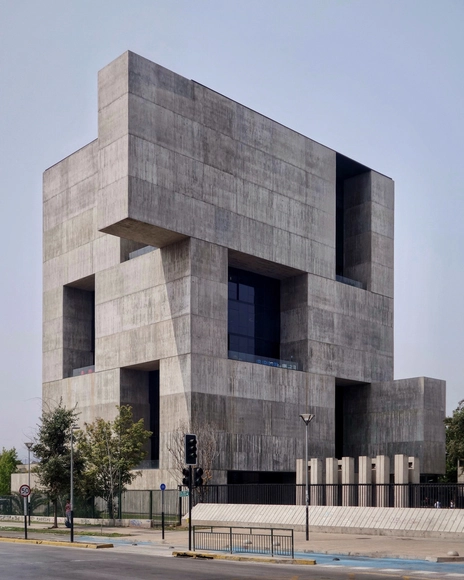
Arevena’s firm, ELEMENTAL, a self-described “Do-Tank,” is affiliated with COPEC, a Chilean oil company and the Universidad Católica de Chile. The affiliation has a social/political agenda and considers architecture a source for building social equity. His work includes the Mathematics Faculty, the Medical Faculty, the Siamese Tower and the Architecture School for the Universidad Católica, dorm facilities for St. Edward’s University in Austin, Texas, new children workshops and training facilities for Vitra in Weil am Rhein, Germany. From 2000-2005, Aravena was Visiting Professor at Harvard GSD.