2018 has been an unprecedented year for ArchDaily’s Building of the Year Awards.
But before we get to shortlisted nominees, we want to emphasize the values embodied by this awards process. As the world’s largest platform for architecture we are acutely aware of our responsibility to the profession, and to the advancement of architecture as a discipline. Since our mission is directly related to the architecture of the future—in inspiring and educating the global community of architects who will design the urban fabric of the future—the trust placed in us by our readers to reflect architectural trends from regions around the whole world creates challenges that we are eager to rise to. The democratically-voted, user-centered Building of the Year Awards is one of the key pillars of our response to these challenges, aiming to tear down established hierarchies and geographical barriers.
By participating in the process, the ArchDaily community decides what it means to push architecture forward. So without further ado, these are the most inspiring building, according to ArchDaily readers.
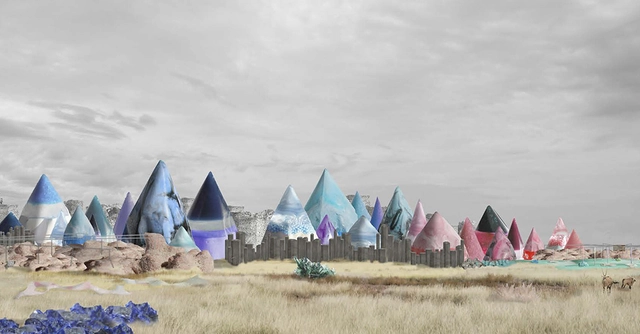
The members of Future Architecture have selected 21 ideas out of more than 200 submissions in this year's open call for ideas. The winners will be invited to the two days Matchmaking Conference in February at the Museum of Architecture and Design (MAO) located in Ljubljana, where they will present their submissions and earn a chance to participate in the conference’s series of events.
Check out the list of winners and their proposals after the break.
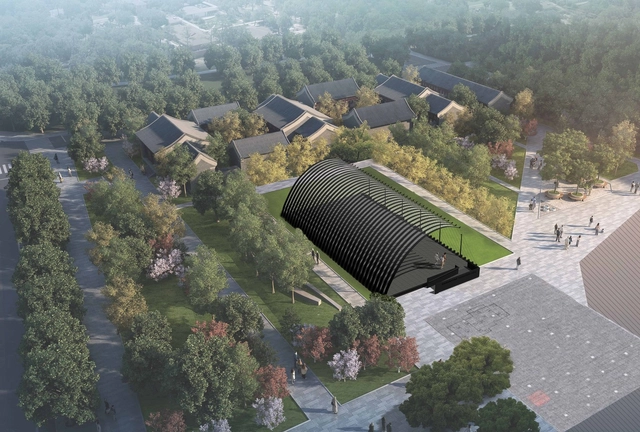
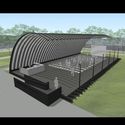
The Serpentine Galleries has announced the expansion of their popular summer pavilion program, collaborating with Beijing’s WF Central to commission the inaugural Serpentine Pavilion Beijing. The first Serpentine Pavilion to be built outside of the Galleries’ Kensington Gardens home in London, the Beijing Pavilion will be located just 600 meters away from the historic Forbidden City in the Dongcheng District, where it will host a program of cultural activities and events.
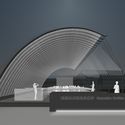
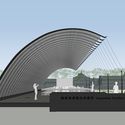
The inaugural pavilion has been designed by emerging Chinese studio JIAKUN Architects, led by architect Liu Jiakun. Drawing both from the historical and social of Beijing and from the storied 17-year history of the Serpentine Pavilion commission, the design features an arched form that balances forces of tensions and compression.
Established in 2011, the competition aims to foster the creativity of young architects by challenging them to complete “innovative, audacious and promising projects” that imagine new methods of sustainable development within the realms of sea and space.
Architectural submissions were awarded this year within three categories: Innovation and Architecture for the Sea, Innovation and Architecture for Space, and Architecture and Sea Level Rise. Within these categories, projects were selected in three disciplines: the overall Grand Prix, the “Focus” theme award, and the Coup de Coeur.
AIA New York and the Center for Architecture have announced five practices as winners of the 2018 New Practices New York awards, founded to identify and promote the city’s emerging young architects. Established in 2006, the awards are given biennially to practices headquartered in New York and in operation for 10 or fewer years.
Under this year’s theme of Consequences, firms were asked to submit portfolios containing design ideas that promoted “the capacity of architectural practice to offer transformative value within the broader context of the city.”
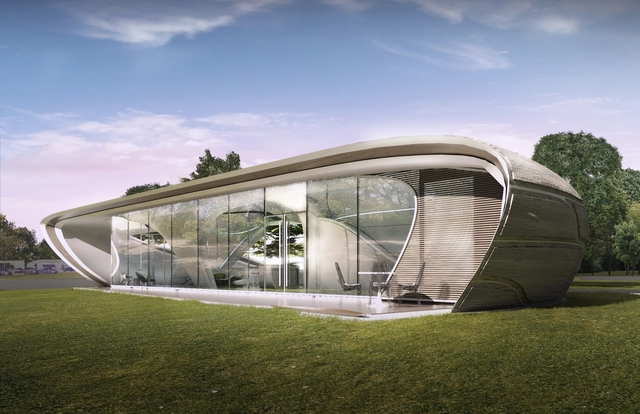
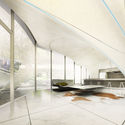
WATG Urban's first prize design for The Freeform Home Design Challenge in 2016 is now moving one step closer to becoming a reality. Since winning the competition, WATG's Chicago office has been developing the winning design, dubbed Curve Appeal, alongside Branch Technology. Curve Appeal is now undergoing the "wall section testing, research and development phase" with an anticipated goal of breaking ground later this year. This revolutionary project could change the way we construct complex, freeform structures.
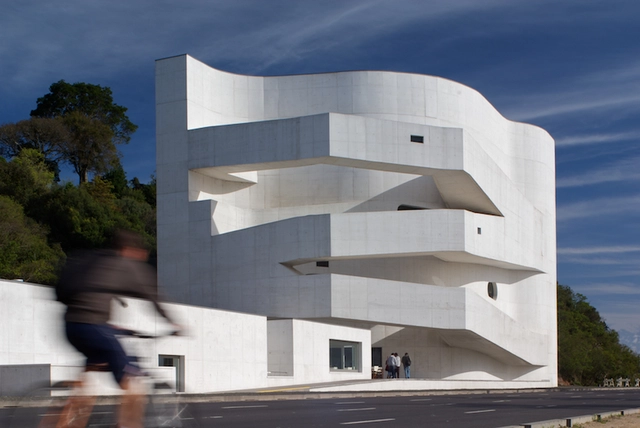
Álvaro Siza's extensive personal archive of built and unbuilt projects is going online with free access, thanks to the collaboration between three institutions – the Serralves Foundation in Oporto, the Calouste Gulbenkian Foundation in Lisbon and the Canadian Centre for Architecture (CCA) in Montreal.
Siza donated his archive to the three institutions in 2014, and after three years of archival work, the first batch of entries are set for public viewing.
Japanese architect Kazuyo Sejima, co-founder of Tokyo-based SANAA, has been appointed as the newest member of the Pritzker Prize Jury.
Sejima, the 2010 Pritzker Prize co-laureate, will help to decide the recipient of the 2018 Prize, the 40th edition of what has become known as the architecture world’s most prestigious honor.
An airplane that skidded off the runway in Trabzon, Turkey, earlier this month (with no injuries) may soon be repurposed into a library for the city.
Five days after the plane was removed from its cliffside perch, Trabzon Mayor Orhan Fevzi Gümrükçüoğlu has reached out to the general manager of airline involved in the incident, Pegasus Airlines, to ask if they will donate the plane as a gift with the condition that it will be used as a library space, explaining that “keeping it here will also erase the bad memories attached to the plane.”
The Harvard Graduate School of Design’s popular free online course, The Architectural Imagination, has returned for 2018, again offering anyone across the globe the opportunity to study the fundamentals of architecture from one of the world’s foremost design schools at absolutely no cost.
Led by professors Erika Naginski, Antoine Picon, and K. Michael Hays, alongside PhD student Lisa Haber-Thomson, the 10-week course will cover topics ranging from learning to “read” buildings as cultural expression to technical drawing and modeling exercises.
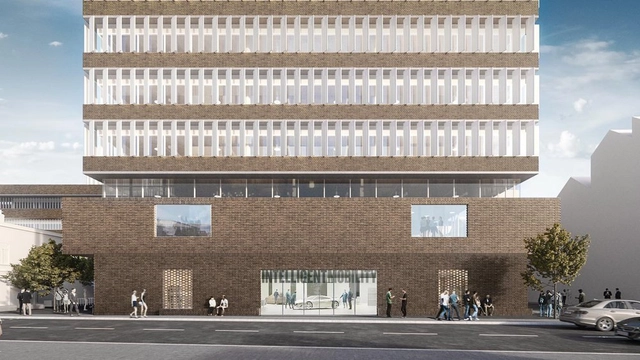
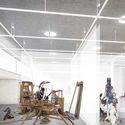
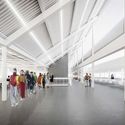
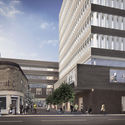
Herzog & de Meuron’s design for the new flagship building of the Royal College of Art’s Battersea campus has been granted planning approval by Wandsworth Council. Unveiled last fall, the £108 million building will mark an “important step” in the evolution of the RCA into a STEAM (Science, Technology, Engineering, Art and Mathematics)-focused postgraduate university.
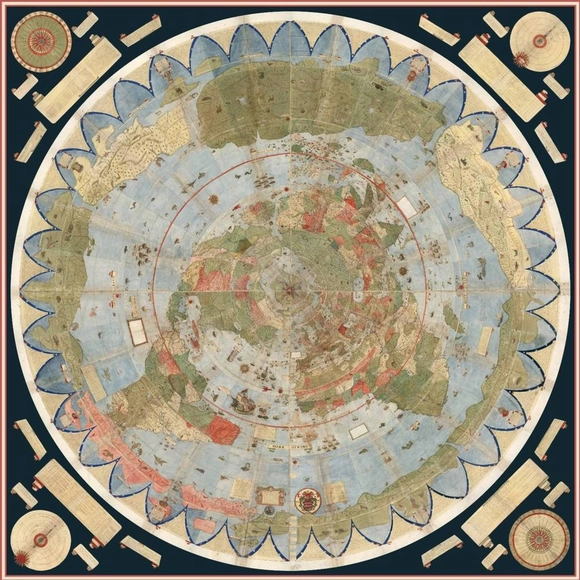
The Urbano Monte World map reconstructed by Stanford University. Image via David Raumsey Map Collection, Stanford University
Stanford University experts digitally assembled what is considered the largest world map produced in the 16th-century. The representation of the world of 1587 by the Milanese cartographer Urbano Monte was divided into 60 pages and published in atlas form, but with clear instructions on how to reassemble it.
David Rumsey, director of the university's historical map collection, acquired the map from a historian in 2017. The publication has only one other handwritten copy in the world and has never been assembled in map form.
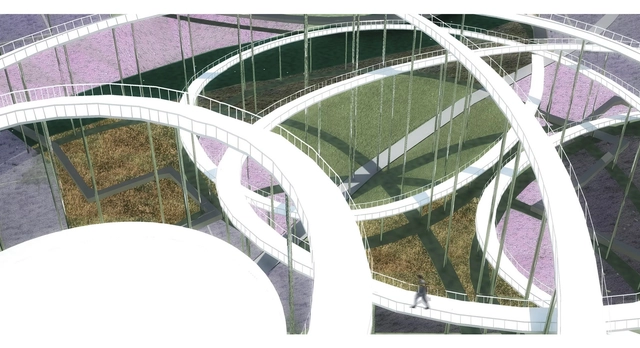
A proposal for the 'NaTian' Cup International Design Competition, "The Gentle Giant" from Stefano Corbo Studio acts as a continuation of the existing bridge providing a unique path for the public, as well as a visual link to the surrounding Flower Farm area. The proposed landmark combines the vertical presence of Chinese "Pagodas and Porcelain Towers" with the dynamic geometry of the Great Wall, whose powerful arrangement has a direct relationship to its changing topography.
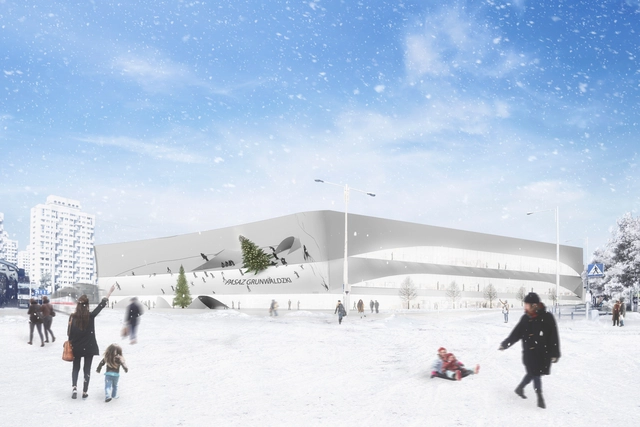
A mirror-clad shopping mall has been awarded the first prize for its innovative materiality and strong connection to the city in the “2017 Unbelievable Challenge” architectural design competition. “Unwrapped”, submitted by Ben Feicht, a recent graduate of the University of Oregon, was chosen as the winner out of the proposals from 22 different countries. Three other projects were awarded as runner-up.
Take a closer look at the winning design, after the break.
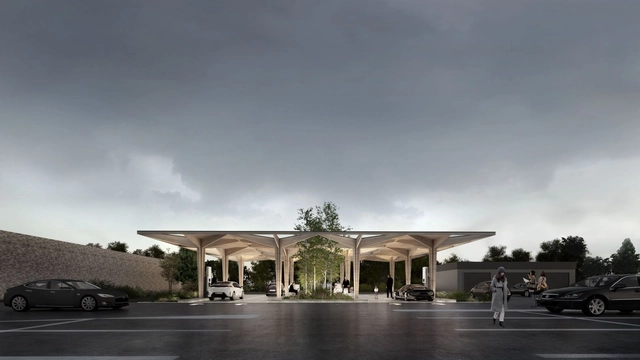
In our modern day society where every minute counts, Danish architecture firm COBE, in collaboration with Danish automotive technology company, CLEVER, has designed a new modular ultra-fast charging station for electric vehicles. These stations will not only aim to reduce the typical 45-minute charging time but also serve as a place where drivers can relax.
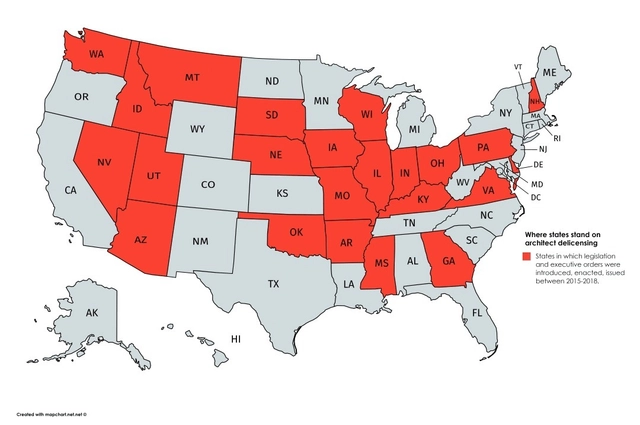
With a growing number of states choosing to rollback professional architectural licensure requirements, the American Institute of Architects (AIA) has issued a “Where We Stand” statement calling for the reinforcement of the practice, which they believe stand to “protect the health, safety and welfare of the public and shield consumers from unqualified practitioners.”
According to the AIA, over the past 5 years, legislative or executive actions have been taken in at least 25 states to impose the “least restrictive regulations” for professional licensure, with several states recommending the elimination of all licenses in the state.
https://www.archdaily.com/887865/aia-responds-to-actions-taken-by-25-states-to-reduce-architectural-licensure-requirementsAD Editorial Team
The 2018 DAM Preis for the best building in Germany has been been awarded to bogevischs buero and SHAG Schindler Hable Architekten for their visionary residential housing project wagnisART in Munich. Selected from a list of 4 finalists, the project was lauded by the jury for setting new “social, architectural, and urban planning standards” in becoming a model for future residential housing projects in Germany.
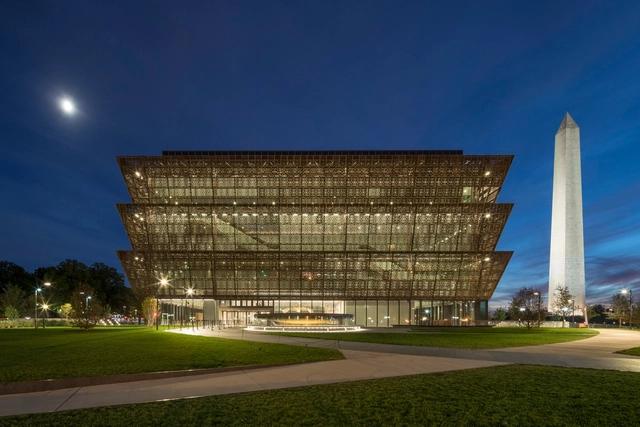
Smithsonian National Museum of African American History and Culture in Washington D.C. / Adjaye Associates, The Freelon Group, Davis Brody Bond, SmithGroupJJR for the Smithsonian Institution. Image Courtesy of The Design Museum in London
Presented by the Design Museum in London, the award is given to the project that best meets the criteria of design that “promotes or delivers change, enables access, extends design practice or captures the spirit of the year.”
See more from the overall winner and each of the category winners, below.
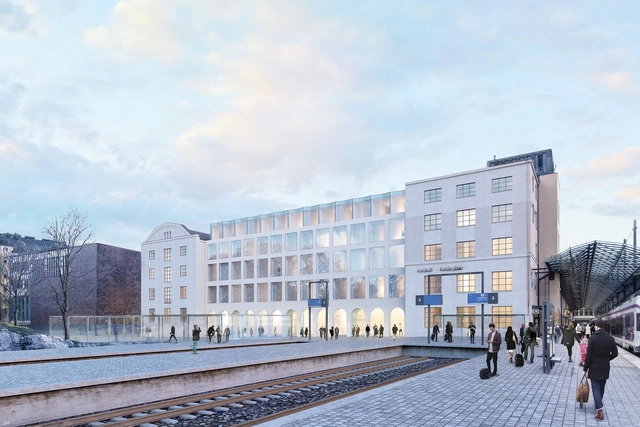
Finland based Futudesign has been announced as the winner of a competition which invited firms to repurpose part of the HelsinkiCentral Railway Station. The design, which will transform the station’s underutilized eastern wing into a hotel, both reinterprets and modernizes Eliel Saarinen's original architectural intent.
Courtesy of ArandaLasch + Marcelo Coelho with Formlabs
The collaboration of Aranda\Lasch + Marcelo Coelho has been selected as the winners of this year’s Times Square Valentine Heart Design competition for their 3D-printed proposal, Window to the Heart.
Envisioned as the “world’s largest lens,” the installation was in response to its location within one of the world’s most instagrammed places, Times Square. The 12-foot-diameter Fresnel lens, designed with 3D-printing manufacturer Formlabs and structural engineer Laufs Engineering Design, will capture the image of the square within the heart-shaped window at its center, bending and distorting the surround myriad lights and colors.
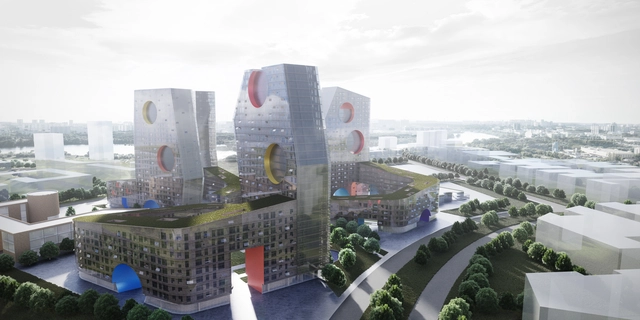
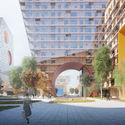
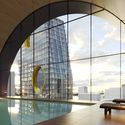
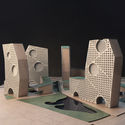
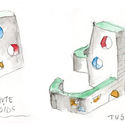
Comprising housing, social spaces and educational facilities, the design of the complex draws inspiration from its historic site, a former paratrooper airfield. In response, Steven Holl Architects proposed a completely new building typology, “Parachute Hybrids,” which “combines residential bar and slab structures with supplemental programming suspended in sections above, like parachutes frozen in the sky.”






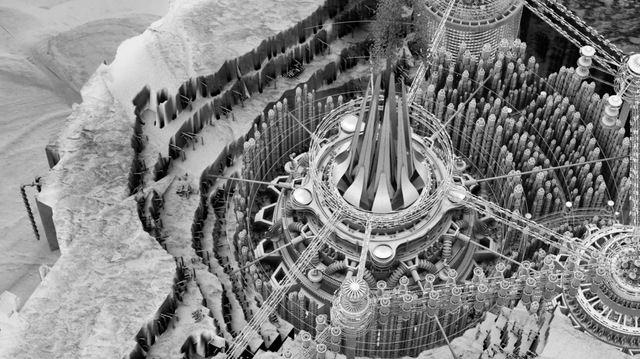
.jpg?1517424651 "SOLAR SPORE, An algae photobioreactor in outer space / Pierre-Jacques Truyman, Alexandre Brassart, Sylve Truyman; France. Image Courtesy of Jacques Rougerie Foundation")
.jpg?1517424637 "Refuge-ground : Towards habitable offshore salt platforms / Lambert David, France. Image Courtesy of Jacques Rougerie Foundation")
.jpg?1517424660 "Currents for Currents, Blue is the new green / Deo Alrashid T. Alam, Robert Andrew P. Galano, Pierre Michael Monjardin; Phillippines. Image Courtesy of Jacques Rougerie Foundation")




_Dean_Kaufman.jpg?1517332084&format=webp&width=640&height=580)


.jpg?1517244654 "© Herzog & de Meuron")


.jpg?1516986032&format=webp&width=640&height=580)
.jpg?1516986056 "WINNER: wagnisART Residential Housing Project, Munich / bogevischs buero and SHAG Schindler Hable Architekten. Image © Julia Knop")
.jpg?1516986009 "WINNER: wagnisART Residential Housing Project, Munich / bogevischs buero and SHAG Schindler Hable Architekten. Image © Julia Knop")
.jpg?1516986022 "WINNER: wagnisART Residential Housing Project, Munich / bogevischs buero and SHAG Schindler Hable Architekten. Image © Julia Knop")
.jpg?1516986070 "WINNER: wagnisART Residential Housing Project, Munich / bogevischs buero and SHAG Schindler Hable Architekten. Image © Julia Knop")
.jpg?1516986032)


.jpg?1516907284&format=webp&width=640&height=580)