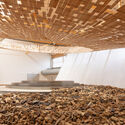
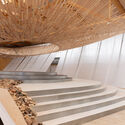
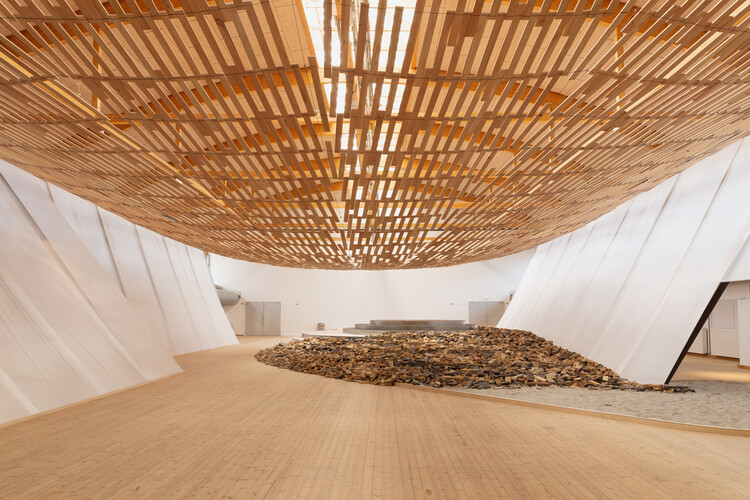
House Vision 2013 Exhibition Hits Tokyo

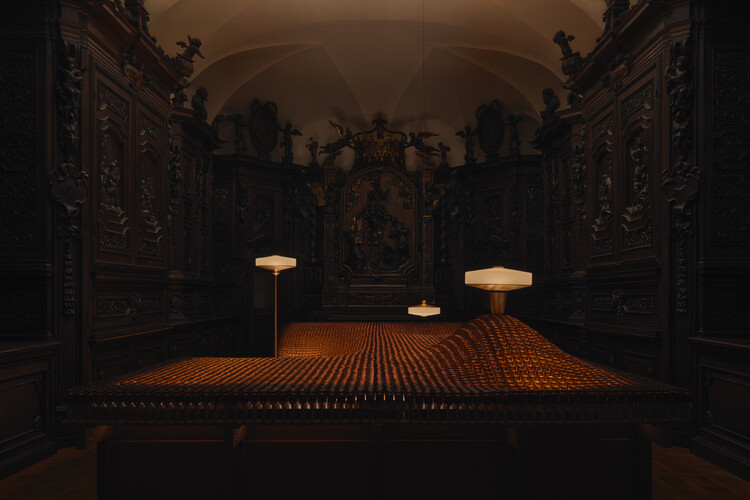
ⓒ Nacása & Partners inc.

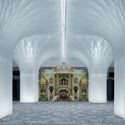
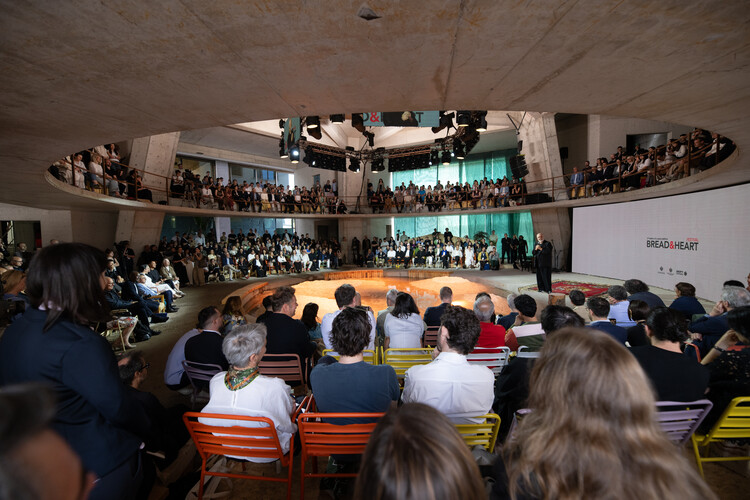
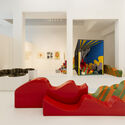
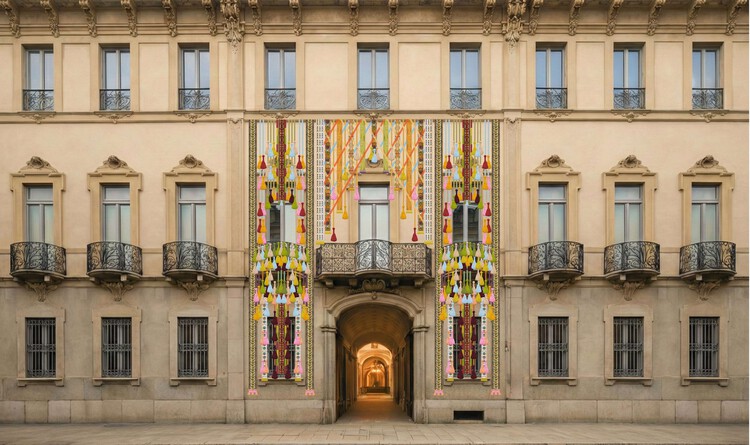
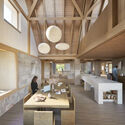
Graphic designer and curator Kenya Hara has put together a three week-long exhibition in Tokyo focusing on the future of the Japanese house. Hara argues that the housing industry can no longer be isolated but must be combined with other industries, technologies and ideas, including energy, transportation, communication, household appliances, the “vision of happiness” pursued by adults, the representation of Japanese traditions and aesthetics as well as a future vision of health. All of these elements he hopes to present and discuss at the House Vision Exhibition where more than ten types of futuristic houses are on display and daily seminars with expert urban planners, developers, contractors, architects, telecom and even gas organizations have been taking place.

Read more about the exhibition after the break.

Lecture: After March 11th / Kengo Kuma

This past Tuesday, Kengo Kuma of Kengo Kuma and Associates, , lectured at the Harvard Graduate School of Design (GSD). His discussion centered around the epochal challenge architecture must respond to following the great disaster of March 11, 2011. The tsunami, which flattened the Tohoku coastline in a matter of seconds, and catastrophic nuclear accident that followed proved our infrastructure to be insufficient in the age of . With this realization, Kuma understands that we must learn from what happened and “start again from scratch”.

Kengo Kuma lectures in San Diego and NYC this week!

Green Cast / & Associates

Tonight, Kengo Kuma will be lecturing at the Woodbury School of Architecture in San Diego at 6:30pm. Shortly following his Woodbury appearance, the Japanese architect will then make his way across the country to Columbia University’s GSAAP (Graduate School of Architecture, Planning and Preservation) Auditorium in New York City to present his lecture, Minimize: Small Architecture after 3/11, on Wednesday the 10th at 6:30pm. Both lectures are free and open to the public.

Learning from the Great East Japan Earthquake

Moving Forward: Life after the Great East Earthquake

Reena Jana of SmartPlanet recently interviewed the award-winning, Japanese architect Hitoshi Abe on the lessons he has learned from the March 11, 2011 earthquake that destroyed his hometown in Sendai, Japan. Abe believes that the memory of the 9.0 magnitude earthquake that hit the coast of northeaster Japan, triggering a tsunami that sent waves as far as six miles inland must remain fresh in our minds. His goal is to educate everyday citizens around the globe, as well as future generations, on how to better cope with large-scale natural disasters. Currently, he is serving as a guest-curator for a travel entitled Moving Forward: Life After the Great East Japan Earthquake. This exhibit brings to life the haunting reality of the devastation through a series of large-scale photographs and photographic essays that reveal individual stories of survival immediately following the disaster. The exhibit commemorates the victims and struggles of the survivors, while highlighting the reconstruction and recovery efforts.

Continue reading for more.

AD Interviews: Kengo Kuma

Through our interview program, I’ve had the chance to meet with some of the world’s most renowned architects, while creating a moment to share their views about the profession with our readers.

During the 2011 National Convention, I had the chance to meet , one of Japan’s most recognized architects, whose work I admire. His recent works use subtle elements with a powerful structural expression, and interesting spatial results for different programs of various scales.

Established in 1990, Kengo Kuma & Associates have become known for their expressive use of materiality and deep connection with nature. The mid-sized firm is involved in a wide spectrum of work, ranging from private residences, to Buddhist temples and art museums. Kengo Kuma & Associates consist of two offices located in Tokyo and Paris.

Principle Architect Kengo Kuma is a professor at the Graduate School of Architecture at the University of Tokyo. His goal is to recover traditional Japanese design and reinterpret it for the 21st century. Inspiration of light and nature guides the design process and influences his unique explorations with glass, wood, concrete and stone. Kuma strives to create architecture that coexists with the natural environment and works in harmony with the human body.

Kengo Kuma has won a multitude of competitions and received many awards, including the prestigious Architecture Institute of Japan Award (1997) and most recently the Spirit of Nature Wood Architecture Award (2002) and the AIA Honorary Fellowship (2011). Major works include the Kirosan Observatory, Water / Glass, Toyoma Center for Performing Arts, Stone Museum and Bato-machi Hiroshige Museum. Recent works include the Mesh / Earth terrace house, the Yusuhara Wooden Bridge Museum and the Suntory Museum of Art.

Projects by Kengo Kuma & Associates at ArchDaily:

Intermediating Patterns Exhibition

YouTube Preview Image

From the Kengo Kuma Lab in the University of Tokyo, we received this video showing an architecture related exhibition on intermediate space and experimental architecture inspired by Japanese traditional patterns that we recently exhibited in Tokyo, curated by , Matteo Belfiore, and Salvator-John A. Liotta, which is part of two exhibitions and a series of symposia organized by The Italian Cultural Center of Tokyo in concomitance with the UIA International Congress of Architecture.

Some more images after the break.

The Evolution of the Japanese Tea House

Photo by Kenta Mabuchi - http://www.flickr.com/photos/kentamabuchi/

Tea ceremonies have evolved a great deal since they first got their start in the ninth century, and as the ceremonies have grown and shifted in purpose, so have the tea that hold them.

Initially tea was seen as a medicine used to cultivate the mind, body and spirit; tea was seen as good for monks because it helped them to stay awake for long periods of meditation. For this reason, the military class sponsored the construction of large zen temples for monks to drink tea in. As tea began to grow in popularity beyond the temple, tea ceremonies became a source of entertainment for members of the upper class who could afford to gamble, read poetry and attend tea parties in extravagant pavilions. More information after the break.

American Institute of Architects 2011 Honorary Fellowship Announced

Courtesy of Kengo Kuma

The American Institute of Architects (AIA) recently announced the recipients of the 2011 Honorary Fellowship (Hon. FAIA). This is given to architects with distinguished achievements, who display exceptional character and are held in high esteem by colleagues. Hon. FAIA members are neither U.S. citizens nor U.S. residents, and do not primarily practice architecture within the domain of the AIA.

The 2011 Hon. FAIA recipients:
Angelo Bucci, Brazil, SPBR Arquitectos
Kristin Jarmund, Norway,
Marcio Kogan, Brazil, Studio mk27
Kengo Kuma, Japan, Kengo Kuma and Associate
Carme Pinós, Spain, Estudio Carme Pinós
Louise Cox, Australia, Professional Organization:

Many of the Hon. FAIA recipients have had featured work on ArchDaily.  Take a look at Kengo Kuma’s winning design for the new landmark building V&A at Dundee, Kristin Jarmund Arkiteckter’s Gjerdrum Secondary School in Norway, Angelo Bucci’s House in Ubatuba, Marcio Kogan’s Osler House, and the Spain Department Building design by Carme Pinós which will be part of the Vienna University Campus.

Video: Kengo Kuma on CCCloud

A month ago we featured CCCloud, Kengo Kuma‘s first built work of architecture in , completed on September this year. Now, we share with you an interview with on his ceramic tiles monument for Casalgrande Padana. Enjoy it!

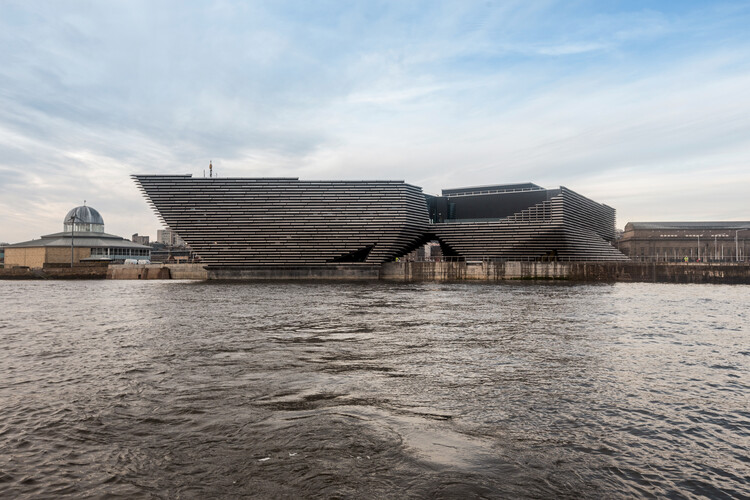
Kengo Kuma awarded V&A at Dundee design

Kengo Kuma Proposal

Just announced today, Kengo Kuma’s design was chosen for the new landmark building V&A at Dundee.  Kengo Kuma beat out the four other shortlisted designs from Steven Holl Architects, REX, Snøhetta, Delugan Meissl Associated Architects, and Sutherland Hussey Architects.

Kengo Kuma will lead the design team which includes the Scottish firms cre8architecture, Optimised Environments Ltd, and CBA, and the engineering firm Arup.

You can check out our ArchDaily article on all five of the shortlisted designs with photographs and a video here.

Bustler broke the news of Kengo Kuma’s win earlier today.

CCCloud / Kengo Kuma

Courtesy of

In May we presented Kengo Kuma’s CCCWall Installation in anticipation for the now completed CCCloud monument. CCCloud, or Casalgrande Ceramic Cloud, Kengo Kuma’s first built work of architecture in was completed September 2010. The monument, located in the middle of a roundabout in front of Casalgrande Padana‘s Headquarters, is the collaborative result of Kengo Kuma’s team, the University represented by Alfonso Acocella and Luigi Alini, and the authorities of Casalgrande Padana. The monument is remarkably made out of unglazed ceramic tiles that have been adapted for structural use that are produced by the client, Casalgrande Padana.
Read on for more information and images after the break.

Update: V&A at Dundee shortlist designs

© Luxigon - REX proposal

Last month we shared with you the six designs from the shortlisted group for the future Victoria & Albert Museum in Scotland:

Delugan Meissl Associated ArchitectsKengo Kuma & AssociatesREXSnøhettaSteven Holl ArchitectsSutherland Hussey Architects

The six designs are now on exhibition at the library of Abertay University on Bell Street in Dundee until November 4th.

We now have more photographs and a short description of each proposal plus a video after the break.

Interview with Kengo Kuma, Alfonso Acocella, and Luigi Alini

On the occasion of the Settimana milanese del Design 2010, during which the Japanese architect presented an impressive installation anticipating the new work of architecture, Kengo Kuma himself gave a video-interview on the meaning of the very “CCCWall” (photos here / video here), its conception and tangible character. The image and voice of the Japanese architect allow the viewers to approach the ceramic masterpiece which will be inaugurated in Casalgrande, .

Video of CCCWall / Kengo Kuma

YouTube Preview Image

A month ago, we told you about CCCWall, an installation realized by Japanese architect Kengo Kuma at the important Milanese Fuorisalone 2010 event. Now, you can see a video of the installation.

CCCWall / Kengo Kuma

© Peppe Maisto

CCCWall is an installation realized by Japanese architect Kengo Kuma at the important Milanese Fuorisalone 2010 event. The installation is an anticipation of Kengo Kuma’s first actual architecture ever done in , currently about to be completed near the headquarters of Casalgrande Padana, in Reggio Emilia, .

More images and architect’s description after the break.

Dellis Cay: Starchitects in the Turks & Caicos archipielago

Oppenheim, rendering by dbox

Super star architects arrive to the Caribbean, specifically to Dellis Cay,  a 560-acre island at the Turks & Caicos archipielago. The project, set to be completed by 2010, will feature works by Shigeru Ban, David Chipperfield, Carl Ettensperger, Zaha Hadid, , Piero Lissoni, and Chad Oppenheim. In addition to the 124 villas and 154 residences, the island will have a 30,000 sq ft Spa operated by the Mandarin Oriental, a five star luxury hotel, a signature restaurant and numerous casual dining experiences.

Below you can see further images of the individual projects, done by d-box.  There aren´t too many images available, but you can certainly notice the hand of each architect on this projects, specially the Zaha and Chipperfield ones.

From this project, two took my attention. First, a house by Chad Oppenheim, pictured above. I really like the public area of this house, which reminds me of contemporary brazilian : A unique concrete volume covering the open public space and an enclosed area for the bedrooms. You can really feel outside while being covered by the structure, which has a big span with no elements that block the views.