1. ArchDaily
  2. Public Spaces

Public Spaces: The Latest Architecture and News

Zaha Hadid Architects Reinterprets Sound Waves for the Sverdlovsk Philharmonic Concert Hall

Zaha Hadid Architects Reinterprets Sound Waves for the Sverdlovsk Philharmonic Concert Hall  - Facade, Cityscape
Courtesy of Zaha Hadid Architects

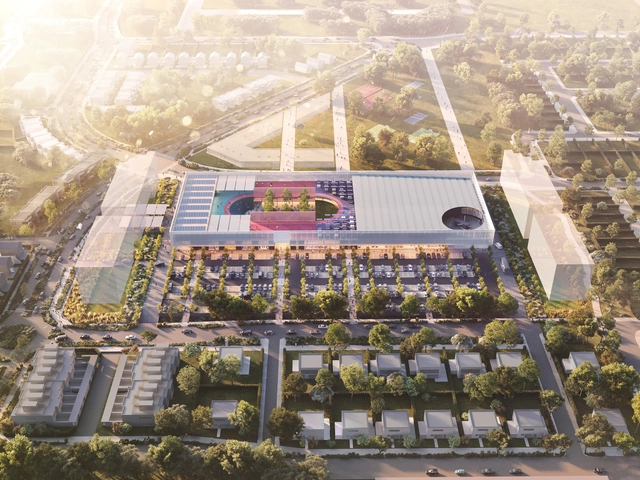
Zaha Hadid Architects has won an international competition for the design of the new Sverdlovsk Philharmonic Concert Hall in Yekaterinburg, Russia. A melting pot of Eastern and Western cultures, talents, and industries, the strategic Ural city hosts a Philharmonic Orchestra which has performed in more than 20 countries, while based in the existing 1936 Sverdlovsk Philharmonic building.

For the design of the Ural Philharmonic Orchestra’s new home, Zaha Hadid Architects “echoed the physical aspects of sound waves” to create an inspirational venue meeting the orchestra’s growing program, and to create a new public plaza for all citizens.

Zaha Hadid Architects Reinterprets Sound Waves for the Sverdlovsk Philharmonic Concert Hall  - ArchZaha Hadid Architects Reinterprets Sound Waves for the Sverdlovsk Philharmonic Concert Hall  - Garden, FacadeZaha Hadid Architects Reinterprets Sound Waves for the Sverdlovsk Philharmonic Concert Hall  - CityscapeZaha Hadid Architects Reinterprets Sound Waves for the Sverdlovsk Philharmonic Concert Hall  - LightingZaha Hadid Architects Reinterprets Sound Waves for the Sverdlovsk Philharmonic Concert Hall  - More Images+ 6

Renovation of Chiayi Railway Station Square / Shen Ting Tseng Architects

Renovation of Chiayi Railway Station Square / Shen Ting Tseng Architects - Interior Photography, Infrastructure, FacadeRenovation of Chiayi Railway Station Square / Shen Ting Tseng Architects - Interior Photography, Infrastructure, FacadeRenovation of Chiayi Railway Station Square / Shen Ting Tseng Architects - Exterior Photography, InfrastructureRenovation of Chiayi Railway Station Square / Shen Ting Tseng Architects - InfrastructureRenovation of Chiayi Railway Station Square / Shen Ting Tseng Architects - More Images+ 9

West District, Taiwan

Awareness of the Importance of Public Spaces is Increasing—Here's How We Can Capitalize On It

This article was originally published by Common Edge as "How Public Space Can Build Community and Rescue Democracy."

Public spaces are having a moment. People from outside the field of urban planning are beginning to notice the vital contributions that they make to our quality of life: inserting nature and cultural memory into the everyday, reminding us of our collective responsibilities, supporting democratic expression. People are also beginning to notice the subtle ways in which those contributions are being eroded by threats of privatization, corporate appropriation, and apathy.

Most acutely, this moment is brought to us by Apple, which has begun an aggressive retail rebranding effort to re-conceptualize its stores as “town squares,” and wrought a wave of well-founded concern. Technology continues to beckon us away from the need to leave our homes or interact face-to-face with other humans. If for every action there is an equal and opposite reaction, it would follow that opportunities for such interpersonal interaction become a luxury we begin to seek, a call to remember our origin as social beings.

How Acoustic Shells Work (And How to Design Them Effectively)

Subscriber Access | 

Acoustic shells are iconic elements seen in public spaces around the world. But beyond their curious form, their operation is highly interesting. Inspired by the design of the human ear, the sound waves produced within acoustic shells are organized by their form, becoming stronger and more vivid for the audience in front of the structure.
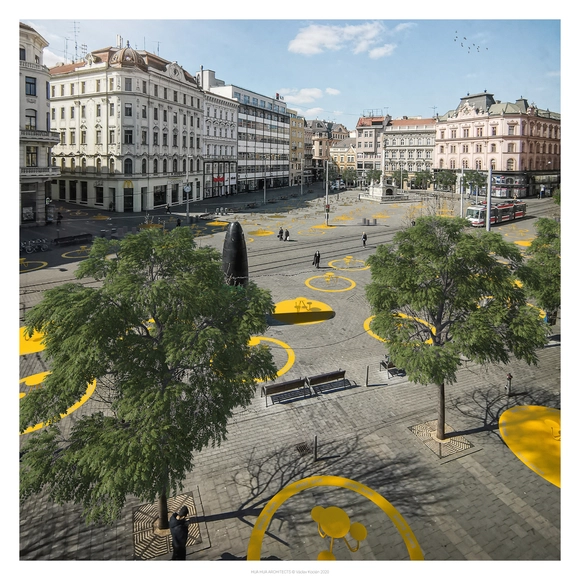
UAE Pavilion at the 2018 Venice Biennale to Explore Human-scale Landscapes and Social Spaces

As part of our 2018 Venice Architecture Biennale coverage we present the proposal for the UAE Pavilion. Below, the participants describe their contribution in their own words.

The National Pavilion UAE will present “Lifescapes Beyond Bigness,” an exhibition exploring human-scale architectural landscapes, at the 2018 Venice Biennale. The exhibition aims to highlight the role of architecture and urban design in forming the choreography of people’s daily routines. It particularly investigates the role of ‘quotidian’ (every day) landscapes in accommodating, enhancing, and facilitating social activities across different places in the UAE.

A Close Look at the Gehl Institute's Free Toolkit for City Planning

This article was originally published by Common Edge as "The Gehl Institute’s Toolkit for the Creation of Great Urban Spaces."

Jane Jacobs was arguably the most important “citizen” planner in the 20th century. If we were setting up a related category for credentialed planners, then the great Danish urbanist Jan Gehl might just top that list; inspired by the ideas of Jacobs, the architect and urban designer has spent nearly a half-century studying and writing about public space. He helped his home city of Copenhagen become a kind of model for walkable urbanism and has consulted for cities all over the world.

Two and a half years ago his firm, Gehl, launched a nonprofit arm, Gehl Institute, dedicated to public engagement, and the use and creation of public urban space as a tool of both economic development and political equity. Recently the institute published what it describes as “tools for measuring public space and public life, in the form of free, downloadable worksheets.” The toolkit is beautifully executed. Last week I talked to Shin-pei Tsay, executive director of the Gehl Institute, about the tools and what her group hopes to accomplish with them.

Call for Ideas: Unbox 2017 Architecture Competition

The world today has become aware of the reckless utilization of natural resources and is now making conscious efforts to move towards a sustainable future. In this endeavor, it has become imperative to rethink our approach towards building materials to ease the pressure on the conventional ones. The Shipping Container is one such potential building material that boasts of good structural quality, can be recycled easily and is universally available.

Kleinewelt Architekten and Citizenstudio Envision Moscow's Gateway to the Five Seas

Kleinewelt Architekten in partnership with Citizenstudio / Gorozhane Group, created a re-design proposal for the Northern River Boat Station Park, also known as the Park of Five Seas, in Moscow. Built in the 1930’s, the current park is supposed to act as the city’s gateway to the five seas: the White, Baltic, Black, Azov, and Caspian Sea. However, the park is removed from city life and separates Moscow from it’s historic waterways.

Kleinewelt Architekten and Citizenstudio Envision Moscow's Gateway to the Five Seas - MonumentsKleinewelt Architekten and Citizenstudio Envision Moscow's Gateway to the Five Seas - MonumentsKleinewelt Architekten and Citizenstudio Envision Moscow's Gateway to the Five Seas - MonumentsKleinewelt Architekten and Citizenstudio Envision Moscow's Gateway to the Five Seas - MonumentsKleinewelt Architekten and Citizenstudio Envision Moscow's Gateway to the Five Seas - More Images+ 15

Paris Opens Its First-Ever Public Swimming Pools

On July 15, the city of Paris announced the opening of three natural swimming pools that receive their water supply from the Seine River, located in the La Villette Basin in the 19th arrondissement of the city. Spanning a total of 1,600 square meters, the new attraction is divided into a children's area, with depths of up to 40cm; an area of medium depth of 1,2m; and a larger pool, with depths of about two meters.

The swimming pools are part of the "Swimming in Paris" project, presented for the first time by the City Council of The French Capital in June 2015, with the goal of "encouraging the practice of swimming for Parisians and Tourists." According to an official statement from the city government, the project aims to allow, by 2020, the "modernization of water parks and the creation of new swimming pools and areas for bathing."

Chiang House / 2BOOKS design

Chiang House / 2BOOKS design - Interior Photography, Apartment Interiors, LightingChiang House / 2BOOKS design - Interior Photography, Apartment Interiors, Door, FacadeChiang House / 2BOOKS design - Interior Photography, Apartment Interiors, Bedroom, Door, BedChiang House / 2BOOKS design - Interior Photography, Apartment Interiors, Kitchen, TableChiang House / 2BOOKS design - More Images+ 16

Hsinchu City, China
  • Architects: 2BOOKS design
  • Area Area of this architecture project Area:  128
  • Year Completion year of this architecture project Year:  2017

Community, History and Art Collide in Illuminating Michigan Pavilion

Cairo-based architect Mohamed Elgendy has won an international competition for the design of a new community pavilion in Roseville, Michigan. The Pavilion at Utica Junction competition, organized by the Roseville DDA, sought to attract proposals for a public pavilion on the site of an old tavern, creating a gathering space for residents and visitors to stage events, socialize, and play. The vision behind Elgendy’s winning scheme was for a dialogue between three elements – a plaza, a ramp, and an indoor pavilion.

Community, History and Art Collide in Illuminating Michigan Pavilion  - Image 1 of 4Community, History and Art Collide in Illuminating Michigan Pavilion  - Featured ImageCommunity, History and Art Collide in Illuminating Michigan Pavilion  - Image 2 of 4Community, History and Art Collide in Illuminating Michigan Pavilion  - Image 3 of 4Community, History and Art Collide in Illuminating Michigan Pavilion  - More Images+ 4

Public Pools or Private Houses - How Should Stockholm Use its Cliffs?

Public Pools or Private Houses - How Should Stockholm Use its Cliffs? - Image 5 of 4
Courtesy of UMA / Manofactory. Image Infinity Pool vs Nestinbox

One of architecture’s most delightful anomalies is the diversity of solutions generated by any given site. From hypothetical university projects by architecture students to professional international design competition entries, the differing perspectives, stances, and experiences brought to rest on one site by several design teams can wield a bounty of contrasting ideas.

Recently, we reported on Nestinbox, a proposal by Swedish architecture firm Manofactory to attach a series of simple, functional houses to a cliff face in Stockholm, addressing the demands of increased populations and land prices in cities across the world. Now, the cliffs of Stockholm have been the subject of an entirely different, though just as evocative concept by Swedish firm UMA. Rather than private housing, UMA proposes the Stockholm Infinity Pool, a public pool 1km along the Sodermalm cliffs of Sweden’s capital.

Public Pools or Private Houses - How Should Stockholm Use its Cliffs? - Image 1 of 4Public Pools or Private Houses - How Should Stockholm Use its Cliffs? - Image 2 of 4Public Pools or Private Houses - How Should Stockholm Use its Cliffs? - Image 3 of 4Public Pools or Private Houses - How Should Stockholm Use its Cliffs? - Image 4 of 4Public Pools or Private Houses - How Should Stockholm Use its Cliffs? - More Images+ 8

Sweco's Kulturkorgen Offers Gothenburg a Basket of Culture

Growing like an outcrop amongst the hills of Gothenburg, the Kulturkorgen by Swedish firm Sweco Architects offers the public an opportunity to watch, engage, and perform. The scheme is a result of an architectural competition for a new Culture House in the city, run in collaboration with Architects Sweden. The winning proposal, who’s name translates to ‘Basket of Culture’, acts as both a building and a square – a social arena where flexible interior spaces act in tandem with a generous public green landscape for recreation and gathering.

Sweco's Kulturkorgen Offers Gothenburg a Basket of Culture - SustainabilitySweco's Kulturkorgen Offers Gothenburg a Basket of Culture - SustainabilitySweco's Kulturkorgen Offers Gothenburg a Basket of Culture - SustainabilitySweco's Kulturkorgen Offers Gothenburg a Basket of Culture - SustainabilitySweco's Kulturkorgen Offers Gothenburg a Basket of Culture - More Images+ 8

Parkorman / Dror

In Istanbul, a city with few existing green spaces, studio DROR is proposing something radical – a park filled with innovative interventions as a way to encourage collective experience and gathering. Envisioned as “a love story between people and nature,” the Parkorman forest park will give people a chance to swing through the forest, play in giant ball pits, relax by reflecting pools, and even bounce several stories above the ground on canopy-level trampolines.

Parkorman / Dror - Image 1 of 4Parkorman / Dror - Image 2 of 4Parkorman / Dror - Image 3 of 4Parkorman / Dror - Image 4 of 4Parkorman / Dror - More Images+ 6

Call for Participants: urbanactionsHK - International Symposium and Workshop

The inadequate provision of open spaces in urban areas is one of the most recurrent challenges for the Hong Kong government. High-quality open public spaces can significantly increase a city’s attractiveness by encouraging business investment and improving living conditions.

Topio7's Competition-Winning Eco-Corridor to Transform Greek Coal Mines

Greek architecture firm topio7 has released image of their competition-winning proposal to create an eco-corridor across former lignite mines in the Western Macedonia region of Greece. Despite its past coal mining activity, the 180,000 Ha region has retained its natural beauty, partly due to the site's inaccessibility and fragmentation. Topio7’s winning proposal, through a measured, sensitive approach, seeks to enhance the area’s natural beauty whilst creating a variety of nodes and eco-corridors to enable public interaction.

Topio7's Competition-Winning Eco-Corridor to Transform Greek Coal Mines - GardenTopio7's Competition-Winning Eco-Corridor to Transform Greek Coal Mines - CoastTopio7's Competition-Winning Eco-Corridor to Transform Greek Coal Mines - ForestTopio7's Competition-Winning Eco-Corridor to Transform Greek Coal Mines - BenchTopio7's Competition-Winning Eco-Corridor to Transform Greek Coal Mines - More Images+ 9

Utopia Arkitekter Proposes Public Park in Stockholm Shrouded in Glass

Subscriber Access | 

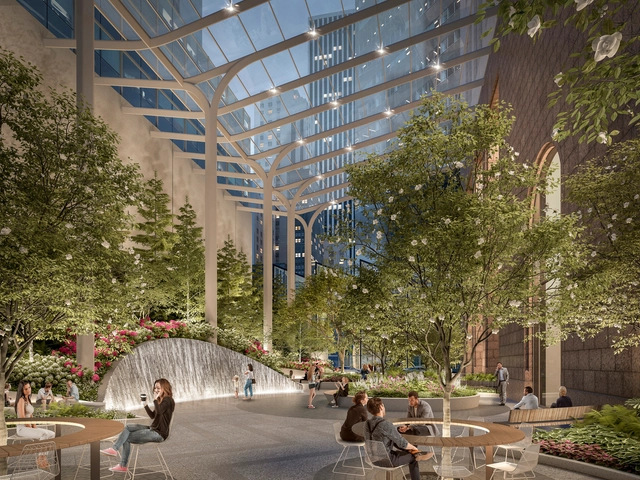
Utopia Arkitekter wants to start a discussion in Stockholm: how do we manage and develop our public spaces? The definition of the word public, according to the Oxford Dictionary, is something “open to or shared by all the people of an area or country.” However, as commercialism continues to rise, Utopia Arkitekter has a problem with our new applications of indoor “public” spaces. As architecture critic Rowan Moore writes in Why We Build, “Identity, desire and stimulation become things you have to buy, as clothes, restaurant meals of calculated diversity, and rides on the ski slope or up the Burj Khalifa.” The problem is that as our inner cities adopt more commercial indoor

The problem is that as our inner cities adopt more commercial indoor public spaces such as shopping malls, cafés or restaurants, the “public” is no longer represented by “all the people of an area,” simply due to economic restrictions. In a city like Stockholm, where darkness and temperatures below 10 degrees celsius prevail for 6 months of the year, the economic boundaries set up around indoor public spaces mean reduced opportunities for people to socialize outside of the home. Utopia Arkitekter’s proposal in response to this conundrum? An indoor park.

Utopia Arkitekter Proposes Public Park in Stockholm Shrouded in Glass - Image 1 of 4Utopia Arkitekter Proposes Public Park in Stockholm Shrouded in Glass - Image 2 of 4Utopia Arkitekter Proposes Public Park in Stockholm Shrouded in Glass - Image 3 of 4Utopia Arkitekter Proposes Public Park in Stockholm Shrouded in Glass - Image 4 of 4Utopia Arkitekter Proposes Public Park in Stockholm Shrouded in Glass - More Images+ 9

The Next Great Public Spaces Will Be Indoors. Are Architects Prepared?

This article by Kjetil Trædal Thorsen, the cofounder of Snøhetta, was originally published by Metropolis Magazine as "Opinion: The Next Great Public Spaces Will Be Indoors."

Maybe with the sole exception of railway stations, public space is generally understood as outdoor space. Whether in the United States or in Europe, especially now with heightened concerns around security, there seems to be this determined way of privatizing everything that is indoors, even as we are increasingly aiming to improve access to public space outdoors. But in the layered systems of our cities of the future, we will need to focus on the public spaces that are found inside buildings—and make them accessible.