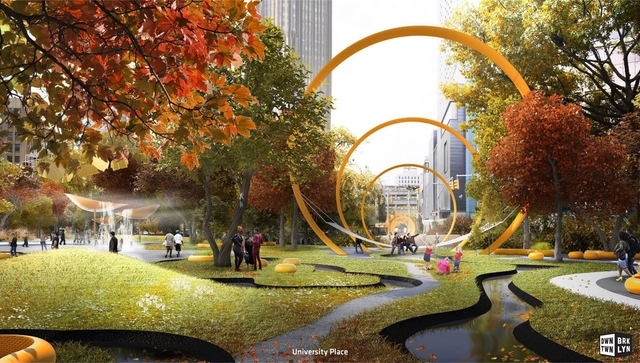
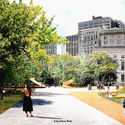
Bjarke Ingels Group and WXY architecture + urban design, in collaboration with the Downtown Brooklyn Partnership, imagined a new future for Downtown Brooklyn. The proposal introduces a greener, safer approach for a pedestrian-friendly neighborhood.


Bjarke Ingels Group and WXY architecture + urban design, in collaboration with the Downtown Brooklyn Partnership, imagined a new future for Downtown Brooklyn. The proposal introduces a greener, safer approach for a pedestrian-friendly neighborhood.
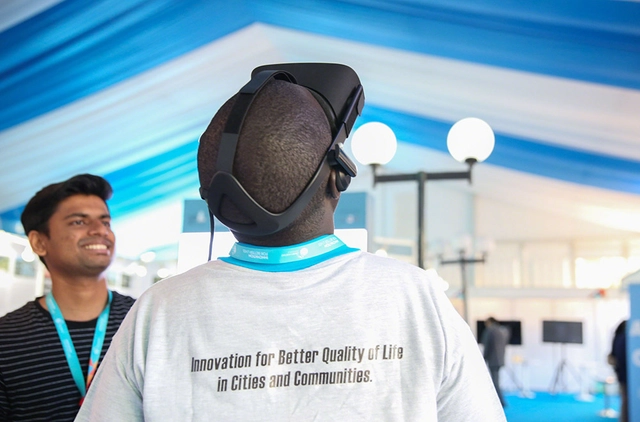
The Un-habitat or the United Nations agency for human settlements and sustainable urban development, whose primary focus is to deal with the challenges of rapid urbanization, has been developing innovative approaches in the urban design field, in order to encourage the active participation especially of children, women and underprivileged individuals.
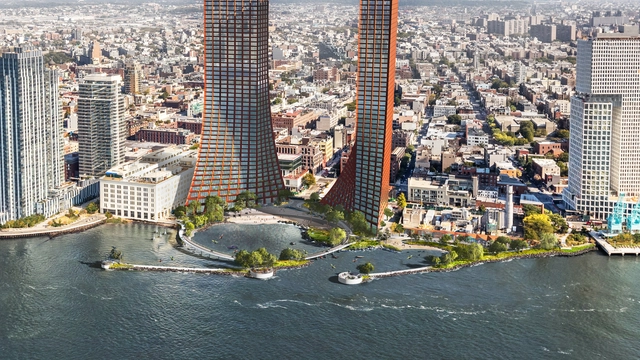
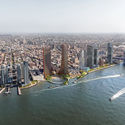
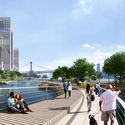
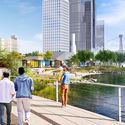
Two Trees Management Company, a New York-based real estate development firm, has presented a master plan for the Northern Brooklyn waterfront, a new approach to urban resiliency. Designed by BIG and Field Operations, the project puts in place a mixed-use development and a resilient park.
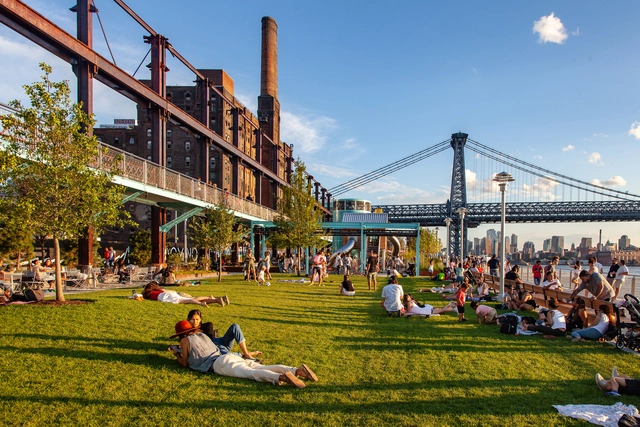
Public Spaces are an issue all over the world — approaches to designing them differentiate across countries, while successful examples always involve heavy research and working closely with communities. At ArchDaily, we always try to explore different opinions on common issues, hoping that our input will add to the clarity of architecture debates. Read on for our best articles on the topic.
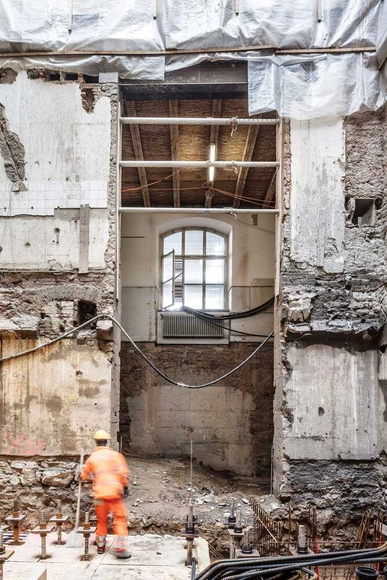
A historic site in the heart of Basel will soon be revived as Kaserne Cultural Center, the city’s new urban hub by Focketyn Del Rio Studio.
The 45 million CHF (44.7 million USD) transformation project is the first publicly-funded large facility in the Kleinbasel district, and will unite and unlock two previously disconnected and enclosed spaces on the Rhine River. The 9,000 sqm project by the Swiss firm is currently under construction and is expected to be complete in 2021.
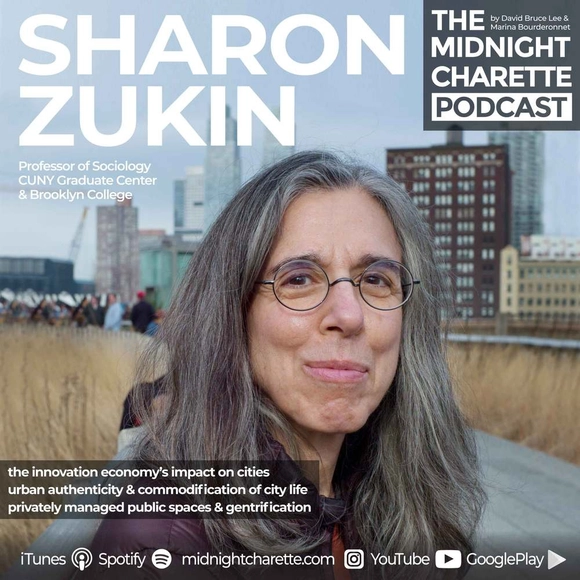
The Midnight Charette is an explicit podcast about design, architecture, and the everyday. Hosted by architectural designers David Lee and Marina Bourderonnet, it features a variety of creative professionals in unscripted and long-format conversations that allow for thoughtful takes and more personal discussions. Honesty and humor are used to cover a wide array of subjects: some episodes provide useful tips for designers, while others are project reviews, interviews, or simply explorations of everyday life and design. The Midnight Charette is available for free on iTunes, YouTube, Spotify, and all other podcast directories.
On this episode of The Midnight Charette Podcast, Sharon Zukin discusses the economic and social impact the technology industry has had on cities around the world, the relationship between gentrification and the commodification of modern life, building improvement districts and the increasing securitization of public spaces, and the desire to live in authentic neighborhoods.

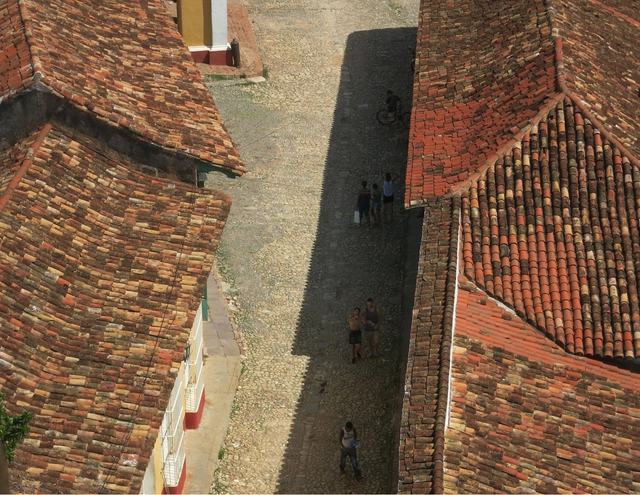
This article was originally published on CommonEdge as "What Landscape Architects and Urban Designers Can Learn About Public Space From Cuba."
It was certainly what I had come for: I was sitting on broad, cobbled steps, watching people interact in the public realm. It was an August afternoon in Cuba, and I had found temporary respite from the harsh sun beneath a haphazard array of trees. My design work as a landscape architect focuses on urban parks, streetscapes, and academic campuses, and I wanted to see how differently the open spaces of Cuba might function.


Within the framework of Espacios Oscuros research project, focused on observing and analyzing the experience of sexual diversity in public spaces of Santiago de Chile, architects María González and José Tomás Franco spoke with Nikos Salingaros, a mathematician and thinker known for his alternative theoretical approach to architecture and urbanism. Salingaros promotes design focused on human needs and aspirations, combining rigorous scientific analysis with a deep intuitive experience.
Our cities are, for the most part, hostile to the sensibilities of their citizens. (...) Almost everything has been aligned, standardized, emptied. So, how to meet different people, and how to expect a mix between strangers?

When we think of energy from renewable sources, the first that probably come to mind are solar and wind. And decentralizing power generation is something that has inspired engineers and inventors from all over the world.
So what about turning the mechanical energy generated when people walk into electrical energy? It can be done thanks to technology developed by Laurence Kemball-Cook,founder of Pavegen. Using platforms inserted within sidewalks Pavegen converts steps into electric power (while also generating data and even rewards). But before you go out there feeling like Michael Jackson in Billie Jean, you should understand how this system works.
.jpg?1548884950&format=webp&width=640&height=580)
It is, once again, the time of year where we look towards the future to define the goals and approaches that we will take for our careers throughout the upcoming year. To help the millions of architects who visit ArchDaily every day from all over the world, we compiled a list of the most popular ideas of 2018, which will continue to be developed and consolidated throughout 2019.
Over 130 million users discovered new references, materials, and tools in 2018 alone, infusing their practice of architecture with the means to improve the quality of life for our cities and built spaces. As users demonstrated certain affinities and/or demonstrated greater interest in particular topics, these emerged as trends.
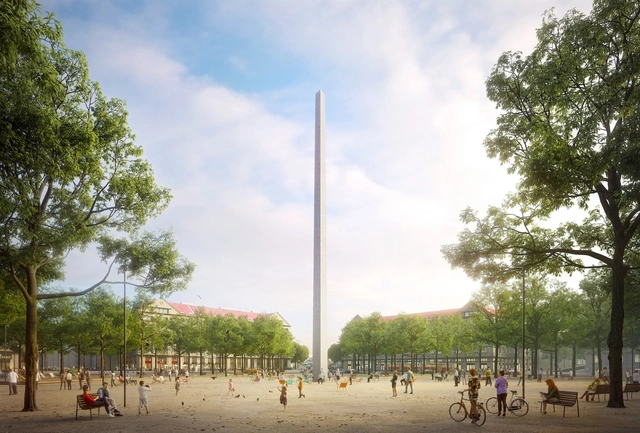
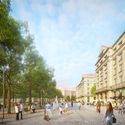
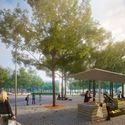
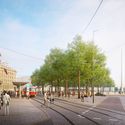
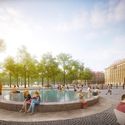
Pavel Hnilicka Architekti is set to design Prague’s Victory Square, having been announced as winners of an international competition. Led by Pavel Hnilička, Eva Macáková, and Josef Filip, the winning scheme seeks to divert all existing traffic away from the square, transforming the space with a striking central monument.
The scheme sees the removal of tram tracks through the square, which will instead be relocated to the west side and Evropská Street. While traffic will be removed from the square, a new traffic plan will, in fact, accommodate more cars than the existing layout, while the center of the existing roundabout will become a “functioning space for universal use.”
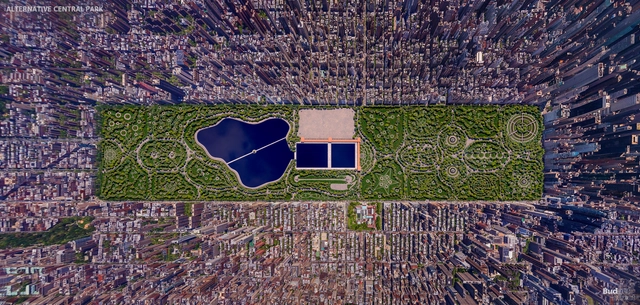
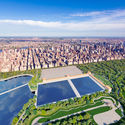
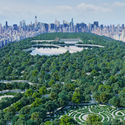
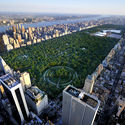
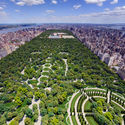
New York’s iconic Central Park was designed in 1858 by F.L Olmsted and C. Vaux, having been chosen in a competition against 32 other entries. The competition called for the design of a park including a parade ground, fountain, watchtower, skating arena, four cross streets, and room for an exhibition hall.
Of the 32 alternative entries, only one survives to this day. The sole survivor was drawn up park engineer John J. Rink. To give an indication as to how Rink’s plan would have aged in the Big Apple, NeoMam Studios and Budget Direct have published a set of visualizations derived from the design. Find out below what one of the world’s most iconic green spaces could have looked like if a 160-year-old decision had been different.

Zaha Hadid Architects has won an international competition for the design of the new Sverdlovsk Philharmonic Concert Hall in Yekaterinburg, Russia. A melting pot of Eastern and Western cultures, talents, and industries, the strategic Ural city hosts a Philharmonic Orchestra which has performed in more than 20 countries, while based in the existing 1936 Sverdlovsk Philharmonic building.
For the design of the Ural Philharmonic Orchestra’s new home, Zaha Hadid Architects “echoed the physical aspects of sound waves” to create an inspirational venue meeting the orchestra’s growing program, and to create a new public plaza for all citizens.
.jpg?1521632435&format=webp&width=640&height=580)
This article was originally published by Common Edge as "How Public Space Can Build Community and Rescue Democracy."
Public spaces are having a moment. People from outside the field of urban planning are beginning to notice the vital contributions that they make to our quality of life: inserting nature and cultural memory into the everyday, reminding us of our collective responsibilities, supporting democratic expression. People are also beginning to notice the subtle ways in which those contributions are being eroded by threats of privatization, corporate appropriation, and apathy.
Most acutely, this moment is brought to us by Apple, which has begun an aggressive retail rebranding effort to re-conceptualize its stores as “town squares,” and wrought a wave of well-founded concern. Technology continues to beckon us away from the need to leave our homes or interact face-to-face with other humans. If for every action there is an equal and opposite reaction, it would follow that opportunities for such interpersonal interaction become a luxury we begin to seek, a call to remember our origin as social beings.

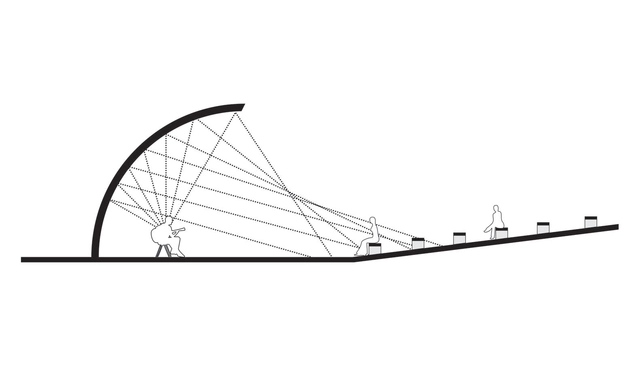
Acoustic shells are iconic elements seen in public spaces around the world. But beyond their curious form, their operation is highly interesting. Inspired by the design of the human ear, the sound waves produced within acoustic shells are organized by their form, becoming stronger and more vivid for the audience in front of the structure.





.jpg?1550747759 "Cortesia de Pavegen")





.jpg?1528343756&format=webp&width=640&height=580)
.jpg?1528343496 "Courtesy of Shen Ting Tseng architects")
.jpg?1528343740 "Courtesy of Shen Ting Tseng architects")
.jpg?1528343534 "Courtesy of Shen Ting Tseng architects")
.jpg?1528343725 "Courtesy of Shen Ting Tseng architects")
.jpg?1528343756)