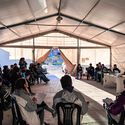
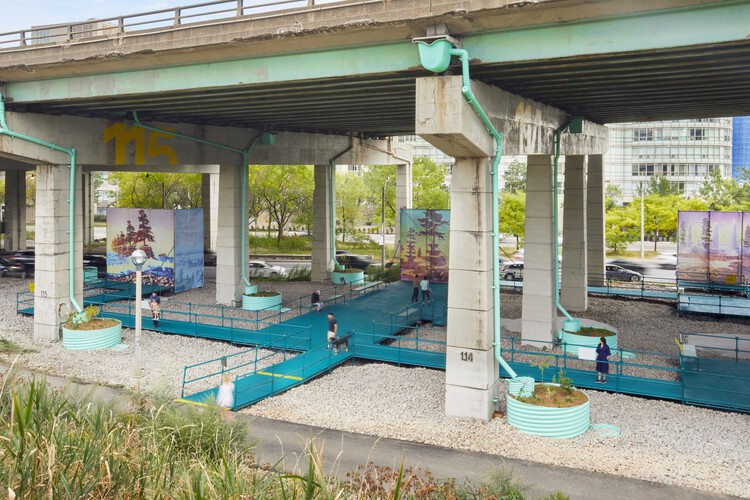
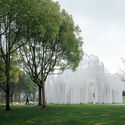
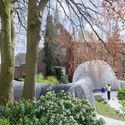
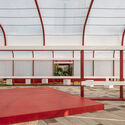
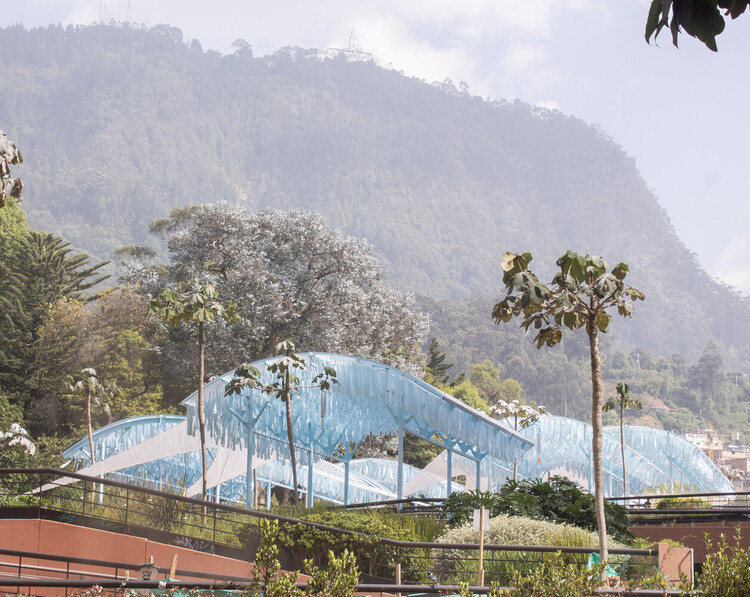
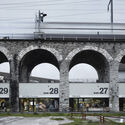
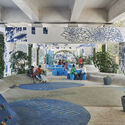
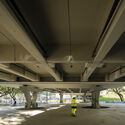
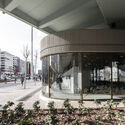
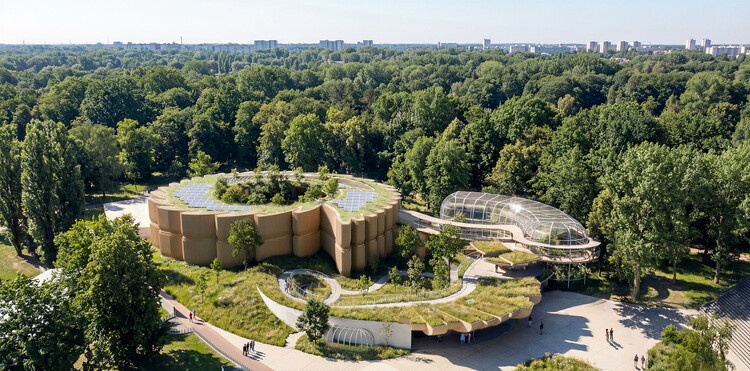
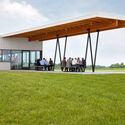
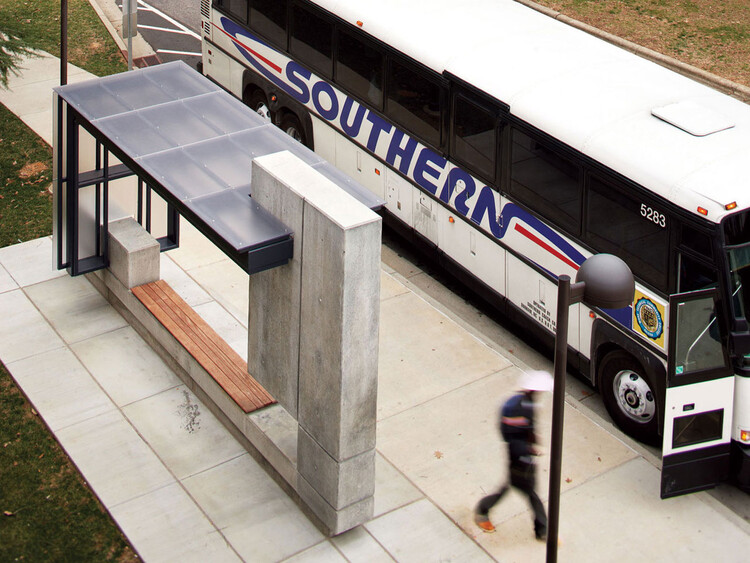
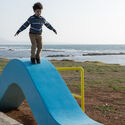
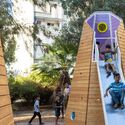
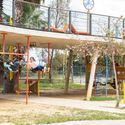
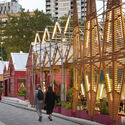
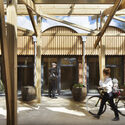
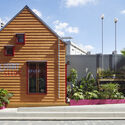
Superior Shade at University of West Georgia. Image Courtesy of Superior Recreational Products
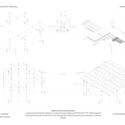
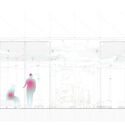
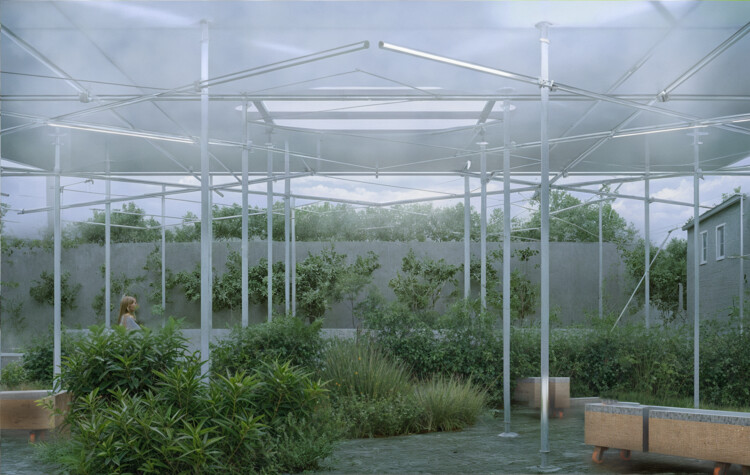
In any successful architectural project, it is essential to provide users with a comfortable outdoor space. At any time of the year, modular shade structures can create spaces that protect from wind, dust, sun, rain, snow, and noise in a light, flexible and aesthetically pleasing way.
With this in mind, what should we look for when choosing shade structures for outdoor spaces? Below, we've provided you with Superior Recreational Products's top recommendations.
The New York City Privately Owned Public Space (POPS) Logo Design Competition is being held to solicit a design for a new POPS logo that may be featured on signage at over 550 POPS located across the city. A new POPS logo would be seen by millions of residents, workers, and visitors on any given day and encourage the public to take full advantage of these valuable, but sometimes unknown, public spaces.
Architecture is powerful, and like nuclear energy, it all depends on how it is used. While it can create uninhabitable municipalities, it can also create safer cities that improve quality of life.
In various examples, urban design has provided a response to deteriorated or abandoned public spaces. It has shown that distribution and lighting are essential, but that it is also necessary to consider who will be using the space and how to make it an environment that generates community.
Artist Janet Echelman has unveiled her latest site-specific work of public art, with the activation of the first phase of “Pulse” in Philadelphia’s Dilworth Park. Pulse seeks to reshape urban space “with a monumental, fluidly moving sculpture that responds to environmental forces including wind, water, and sunlight.
Inspired by the square’s history as a water and transportation hub, Echelman’s work traces the paths and trolley lines of the subway beneath, with four-foot-tall curtains of colorful atomized mist traveling across the park’s fountain surface in response to passing trains underneath.
Hello Wood has revived its highly-successful POP-UP Park, bringing a touch of vibrancy to an underused square in downtown Budapest. Having built the structures in the summer of 2017, the park has returned one year later to provide “a democratic space for all social groups embedded within the everyday movement of the city.”
Open 24 hours per day, the park acts as a free-to-use space for people from all walks of life. Supported by the Municipality of Budapest, the scheme is situated in a frequented though empty spot beside the Budapest City Hall.
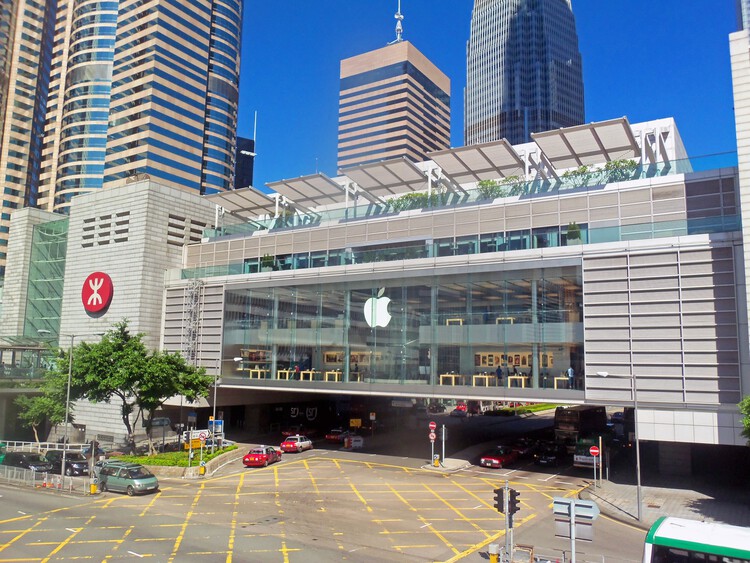
The store is defined by a dramatic waterfall which surrounds the entrance while forming the backdrop to a large outdoor amphitheater. Piazza Liberty is the first Apple Store to be constructed in Italy following their retail design collaboration with Foster + Partners.
https://www.archdaily.com/898994/foster-plus-partners-milan-apple-store-opens-to-the-public-with-dramatic-waterfall-entranceNiall Patrick Walsh
The winning collaboration saw off competition from JCFO, SWA, and TCL, with the competition jury praising the scheme for its “fresh approach and [for] being highly attentive to local ecology [while] meanwhile incorporating romantic techniques and realistic urban visions.”
OOPEAA (Office for Peripheral Architecture) has won an invited competition for the design of the Allas Sea Pool Family in Helsinki, Finland. Constructed on floating platforms, and designed as a modular, flexible, adjustable system, the Allas Sea Pool Family is intended to be a new global typology for coastal sites, where building on land is not feasible.
The invited competition asked entrants to submit proposals which responded to varying environmental and seasonal conditions, with OOPEAA ultimately chosen for their “strong concept that places the floating spa in a central location in the city.”
Eduardo Souto de Moura, in collaboration with META architectuurbureau, has released images of a proposed urban renewal project in the Belgian city of Bruges. The Beursplein & Congresgebouw consists of a new exhibition hall and covered public square on the site of a recently demolished trade fair complex.
The $46million (€40million) scheme seeks to act as a catalyst for urban renewal at the center of Bruges, with a dual role of exhibition hall and conference center capable of receiving business delegates on weekdays, and tourists on weekends.
Brussels-based architecture firm 51N4E have won first prize for their Skanderbeg Square project in Tirana, Albania. The European Prize for Urban Public Space is a biennale competition that promotes creating, restoring, and improving public spaces within European cities, and have chosen this year’s winners for their impressive transformation of the city’s central square.
51N4E’s restructuring and renovation of the Skanderbeg Square is a result of winning an international architecture competition back in 2008. After the project was paused in 2010 for administrative changes, and resumed in 2015, the end result is a series of urban interventions, “inviting public and semi-public neighboring functions to spread into the exterior space”.
The BETA competition and its related exhibition supports and promotes quality architecture in all its forms and manifestations, being conceived as a relational interface both within the profession and between the profession and the socio-cultural environment in which it operates.
A team comprising Schauman & Nordgren Architects, MASU Planning, and Schauman Architects have been announced as winners of an invited competition for the design of a new exhibition, shopping, and housing scheme in an old customs area of Tampere, Finland. The “Tulli Halls” scheme is defined by a red brick materiality referencing the industrial heritage of the area, and a central tower forming a “beacon and focal point for Tampere.”
The scheme seeks to balance old and new, as well as public and private, with a form which has a “grounding in Tampere’s heritage as well as aspiring future” and public space to improve living conditions of residents and offer meeting places for the general public.
Zaha Hadid Architects has won an international competition for the Admiral Serebryakov Embankment masterplan in the city of Novorossiysk on Russia’s Black Sea coast. Connecting Russia with the Mediterranean, Atlantic Ocean, and Suez Canal, the industrial city is home to the nation’s largest shipping port, and the third busiest in Europe by turnover.
The ZHA masterplan, designed in collaboration with Russian studio Pride TPO, seeks to integrate new public space and amenities into the rich maritime history and traditions of Novorossiysk, achieved through careful consideration of building orientation, views, and landscape.
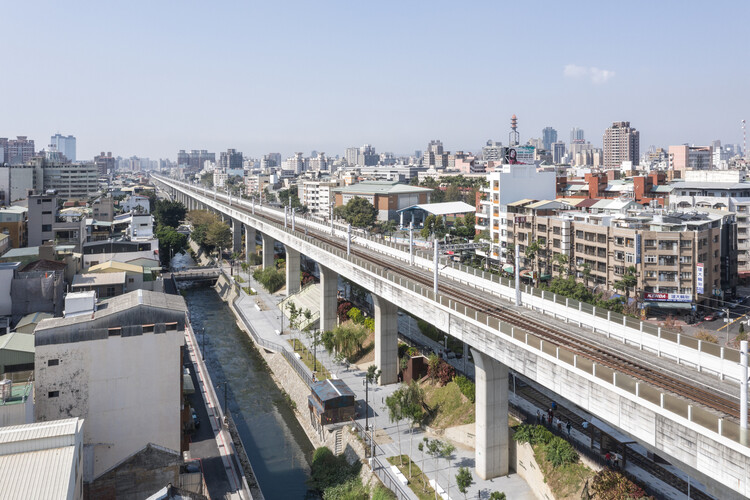
Mecanoo has released images of their proposed Taichung Green Corridor in Taiwan, set along a mile-long (1.7-kilometer) former railway line cutting through the city center. Once a valuable means of connection, the railway currently acts as a barrier due to its awkward position along a dyke, impeding circulation across the railway lines.
The Mecanoo scheme seeks to reuse the railway line to connect different parts of the city through a green corridor centered on biodiversity, cycling, and walking. Throughout the design process, Mecanoo addressed factors including urban regeneration, public participation, historic preservation, and green and water resources along the Green River waterfront.
Sou Fujimoto, Michel Rojkind, Jeanne Gang, Assemble, MINI Living, Airbnb, WeWork/WeLive and OMA’s Reinier de Graaf are among the confirmed speakers at reSITE 2018 ACCOMMODATE, one of Europe’s top annual international forums showcasing top solutions for cities and attended by the region’s top design, business, and civic leaders, happening in Prague.
The Dubai-based firm, X-Architects, have found inspiration in the cultural and architectural heritage of Islam for their new design. The Revelation Mosque, a +2500 square meter project, aims to create a new "heart of the neighborhood" in Abu Dhabi, UAE. In creating a generous urban void among a towering context, the proposal offers an immersive escape from everyday life, where the public (regardless of religion) can gather, communicate, and interact with one another.
C.F. Møller Architects have collaborated with Kristin Jarmund Architects and Rodeo Architects in the design of a new urban realm at Oslo Central Station in Norway, comprising a square, hotel, and high-rise building. The scheme seeks to create an attractive recreational area around the transport hub, connecting different areas and terrain differences in an organized, efficient flow.