-
Architects: BNIM, Ennead Architects
- Area: 186111 ft²
- Year: 2017
-
Professionals: Walter P. Moore & Associates, BG Consultants Inc., Confluence, el dorado inc, Henderson Engineers Inc., +1


This article was originally published on December 5, 2016. To read the stories behind other celebrated architecture projects, visit our AD Classics section.
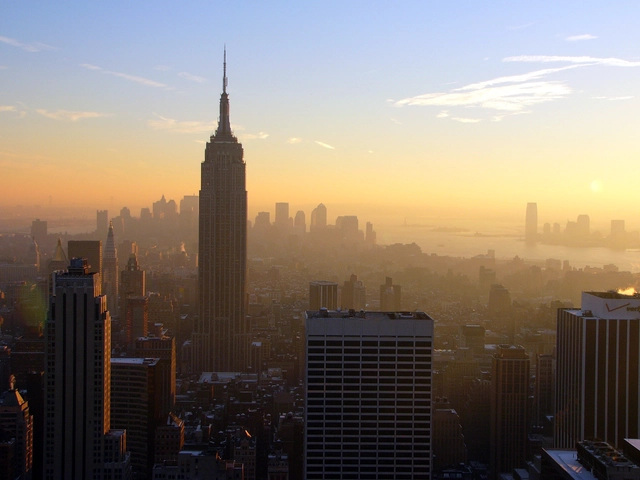
Even in Manhattan—a sea of skyscrapers—the Empire State Building towers over its neighbours. Since its completion in 1931 it has been one of the most iconic architectural landmarks in the United States, standing as the tallest structure in the world until the Twin Towers of the World Trade Center were constructed in Downtown Manhattan four decades later. Its construction in the early years of the Great Depression, employing thousands of workers and requiring vast material resources, was driven by more than commercial interest: the Empire State Building was to be a monument to the audacity of the United States of America, “a land which reached for the sky with its feet on the ground.”[1]

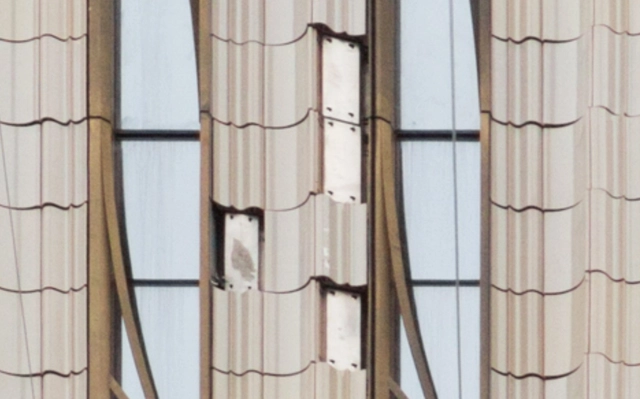
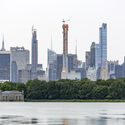
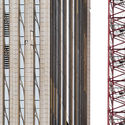
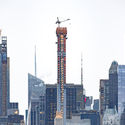
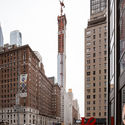
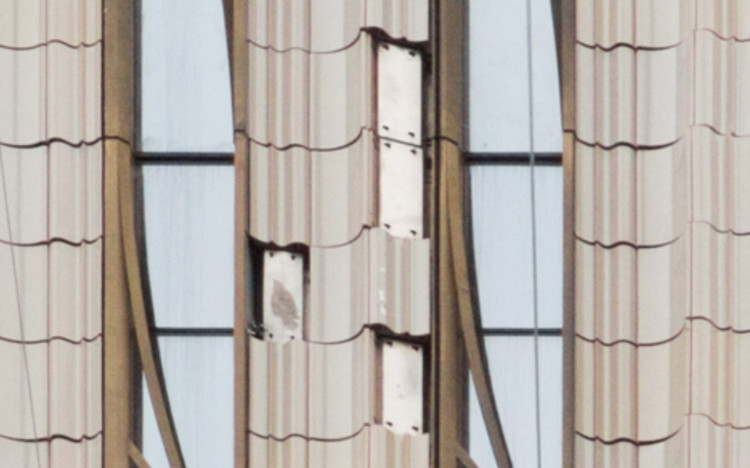
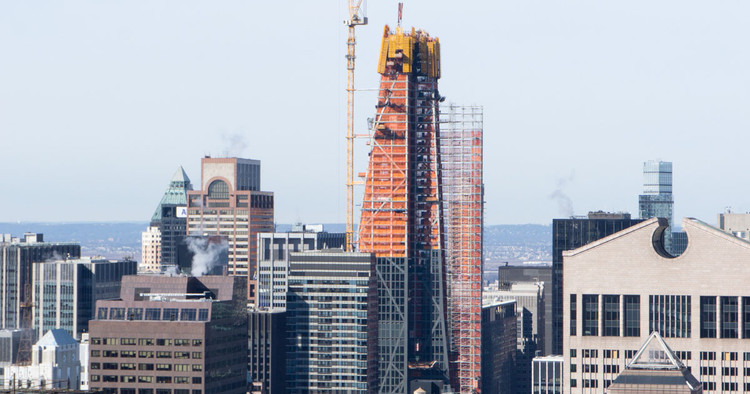
SHoP Architects' super-slender tower at 111 West 57th Street has reached supertall height, but the tower has begun missing pieces of its façade. As New York YIMBY revealed, sales have already started for the Manhattan skyscraper as new photographs show missing fragments of the terracotta façade. Located in Billionaire's Row just south of Central Park, the supertall is being created by JDS Development and Property Markets Group. The project aims to become an iconic terracotta skyscraper in Midtown as it passes its third setback.

The New York City Department of Building has created a real-time interactive map detailing every major construction project currently underway in the Big Apple. Covering Brooklyn, Queens, Staten Island, Manhattan, and the Bronx, the map also ranks projects by cost, size, and height.
While most city planning portals are already freely accessible to the public, the new interface of the “NYC Active Major Construction” map presents detailed information in a clean, fast, user-friendly manner, giving architects and residents-alike a deeper insight into construction trends in what Bjarke Ingels refers to as “a capital of the world.”
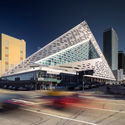
Since moving to New York in 2010, BIG founder Bjarke Ingels has built an impressive portfolio, from developed projects such as VIA 57 West and The Eleventh to propositions such as West 29th Street and The Spiral.
In a new interview with Louisiana Channel, Ingels steps back from the pragmatism of individual projects, and instead reflects on his view of New York, from multiculturalism and inequality to regeneration and skyscrapers.

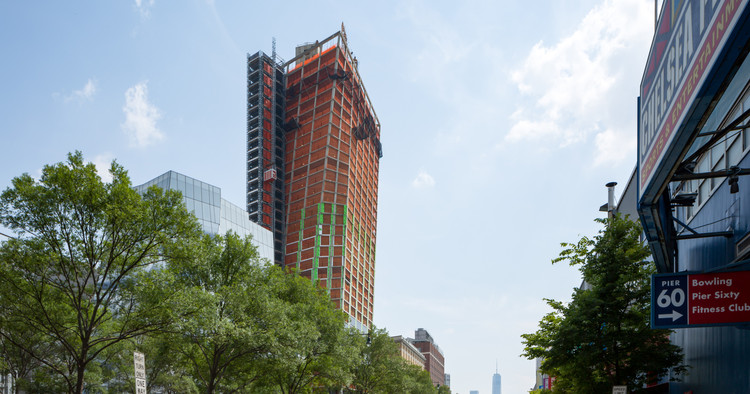
Bjarke Ingels Group’s “The Eleventh” has marked a major milestone, with the first of the scheme’s two twisting High Line towers topping out in Chelsea, Manhattan. New images show construction moving quickly along, with the taller 35-story tower now topped out, and work on the cladding steadily progressing.
The 400-foot-tall structure will twist alongside a second 300-foot-tall sister tower, standing out even amongst notable neighbors including Frank Gehry’s IAC Building, Jean Nouvel’s 100 11th Avenue and Foster + Partners’ 551 West 21st Street.

Jean Nouvel’s 53 West 53rd Street (53W53) has topped out in Midtown Manhattan, New York City. Rising 73 floors, the 145-condominium scheme is topped by a $70 million duplex, where celebrations were held last week attended by Nouvel, as reported by New York YIMBY.
Once the scheme has reached its peak of 1,050 feet, it will be tied with the Chrysler Building and New York Times Building as the sixth-tallest in New York City.

New images have been released of Rogers Stirk Harbour + Partners’ 3 World Trade Center in Manhattan, in advance of its June 2018 opening. The 1,080-foot-high (330-meter-high) building will be the fifth-tallest in New York City, and will feature the tallest private outdoor terrace in Lower Manhattan.
The scheme forms part of a larger development of the World Trade Center site, including SOM’s One World Trade Center, BIG’s 2 World Trade Center, and a Transportation Hub by Santiago Calatrava.

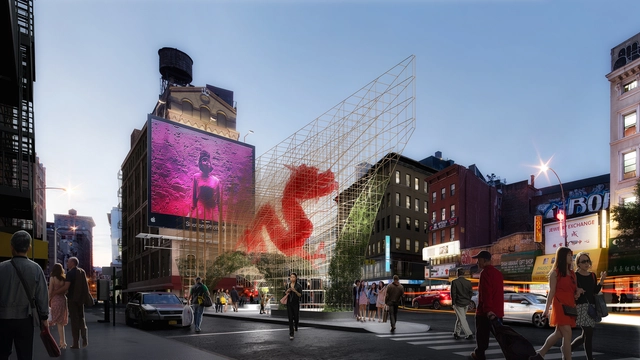
ODA New York has released images of its proposed “Dragon Gate” pavilion for New York’s Chinatown, seeking to act as a symbolic gateway to the famous Manhattan neighborhood. Using modern materials and forms to invoke symbols of traditional Chinese culture, the scheme seeks to capture Chinatown’s remarkable duality: a community of tradition resistant to change, yet one regarded as a uniquely contemporary phenomenon showcasing New York’s inclusive diversity.
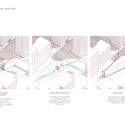
Situated on a triangular traffic island at the intersection of Canal, Baxter, and Walker Streets, ODA’s scheme seeks to activate a currently-underused pedestrian space. The Dragon Gate consists of a triangular form adhering to a three-dimensional, gridded structure formed from interwoven, tubular, bronze steel inspired by bamboo scaffolding. As the structure densifies, selected pieces will be painted red to create the illusion of a dragon in mid-flight.
.jpg?1521824916&format=webp&width=640&height=580)
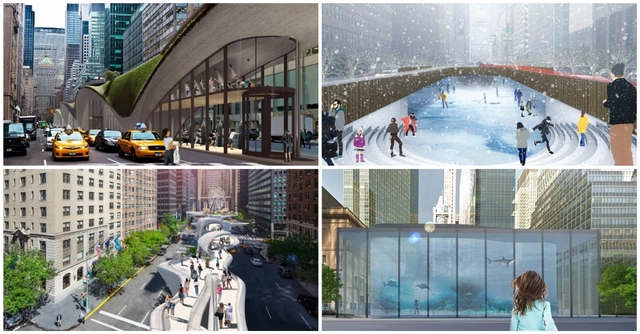
The development company Fisher Brothers' "Beyond the Centerline" competition was launched in October 2017 as an open call to "enliven and activate the medians for a new generation of New Yorkers." The competition addresses the Park Avenue commercial district, which sits between 46th and 57th Streets.
Out of nearly 150 submissions, an eight-person jury narrowed the field down to 17 finalists, details of which can be found here. Two designs have since been selected as winners, with "Park Park" by Maison winning the jury selection, and "Park River" by Local Architects winning the popular vote.

Hudson Yards’ first condominium tower, 15 Hudson Yards, has topped out at its full architectural height of 914 feet, with exterior cladding also more than halfway complete. Designed by Diller Scofidio + Renfro (the firm’s first true skyscraper) in collaboration with Rockwell Group and executive architects Ismael Leyva Architects, the tower will contain a total of 285 residences, half of which have already been sold.

Following last week’s announcement of JPMorgan Chase’s plans to demolition the historically significant modernist masterwork 270 Park (formerly known as the Union Carbide Building), the US chapter of international non-profit Modernist architecture advocate Docomomo has penned a letter to New York City Landmarks Preservation Committee chair Meenakshi Srinivasan arguing for the structure’s preservation.
In the letter, Docomomo US President Theodore H.M. Prudon and Docomomo US NY/Tri-State President John Arbuckle highlight the structure’s critical acclaim and essential place within Modernist architectural history, urging the Commission to calendar the building for designation as quickly as possible.
Find the letter reprinted in full, below.

Seventeen entries have been selected as finalists in the “Beyond the Centerline” competition, which is seeking ideas for how to “re-envision and enliven the traditional traffic medians of the Park Avenue commercial district between 46th and 57th Streets."
Organized by development company Fisher Brothers, the ideas competition asked architects to submit their “most ambitious and creative visions unencumbered by zoning code, cost, weight limit, or other restrictions.”

Just months after plans were announced for a major transformation of Philip Johnson’s AT&T Building at 550 Madison, another iconic midtown Manhattan skyscraper is at risk – and this time, it would mean the demolition of the entire building.
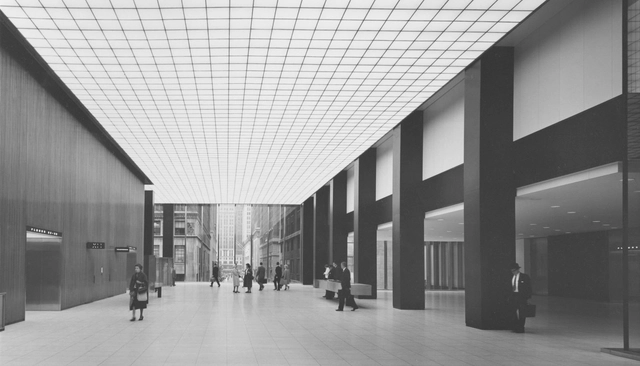
Designed by Natalie de Blois and Gordon Bunshaft of SOM and completed in 1961, 270 Park Avenue (formerly known as the Union Carbide Building) is considered a key example of the International Style in New York City that extended and even improved upon the precedent set by Mies van der Rohe’s Seagram Building.
But after new zoning legislation for the neighborhood was passed last year, the building’s current owner, JPMorgan Chase, has announced plans to raze the 707-foot-tall building in favor of a new, hi-tech supertall replacement. If plans go through, it would be the world’s largest and tallest building ever to be intentionally demolished.

New York City’s most buzzy megaproject, Hudson Yards, may have just added two more huge names to their list of notable architects, if a new report from the Wall Street Journal is to be trusted.
According to a source the WSJ describes as “a person familiar with the matter,” Santiago Calatrava and Frank Gehry will both design new residential towers for the second phase of the 28-acre complex, located at the north end of the High Line in west Manhattan.

At one of the last remaining waterfront sites in Manhattan, the topping out of a luxury, five-acre, three tower mega-structure dubbed Waterline Square marks the end of a 25-year process for the 77-acre Riverside South Master Plan. Each of the three towers has been conceptualized by a different architect, with One Waterline Square by Richard Meier & Partners Architects, Two Waterline Square by Kohn Pedersen Fox Associates (KPF) and Three Waterline Square by Viñoly Architects. The towers were developed concurrently, but each reflects the vision of its architect, contributing to a harmonious complex while still remaining distinct.

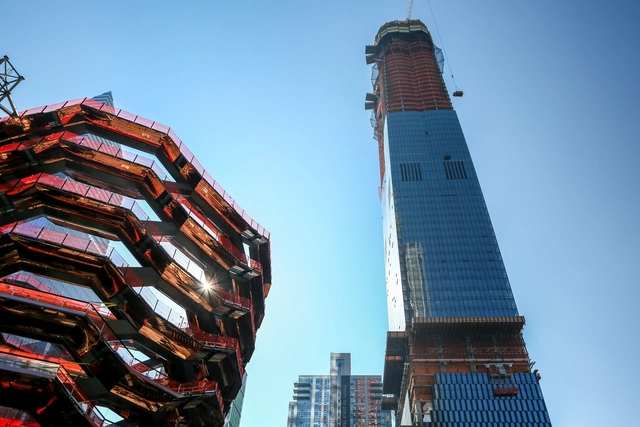
Heatherwick Studio’s glimmering staircase monument, ‘Vessel,’ has topped out after eight months of construction at New York City’s Hudson Yards development. Consisting of 154 flights of stairs, 2,500 individual steps and 80 landings, the sculptural public space has now reached its full height of 150 feet, which will allow it to offer sweeping views of Manhattan’s west side when it opens in early 2019.

Snøhetta has unveiled the design of a new residential skyscraper to be built in Manhattan’s Upper West Side that will feature a unique, multi-level amenity terrace carved from the tower’s form. Located at 50 West 66th Street just steps from iconic New York City landmarks including Lincoln Center and Central Park, the tower aims to sensitively respond to the historic architecture of its context through its intricate form and refined material palette.