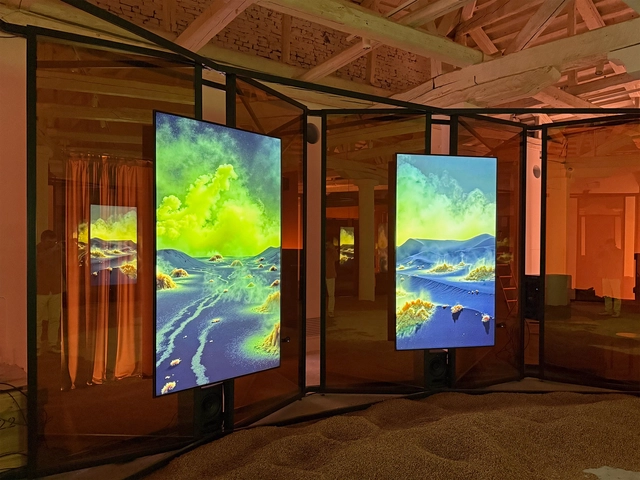
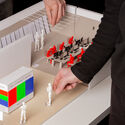
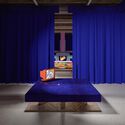
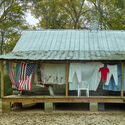
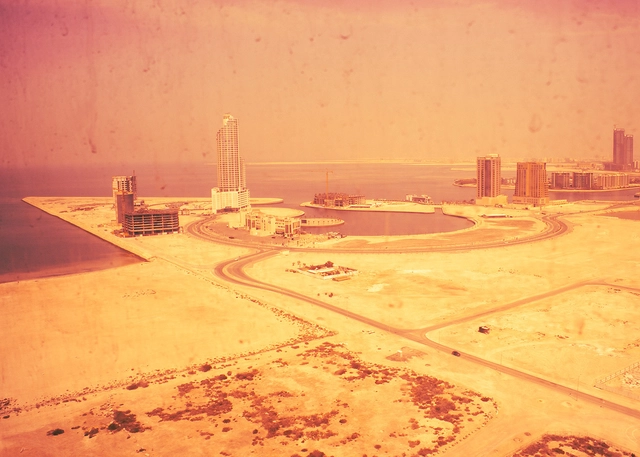
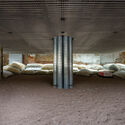
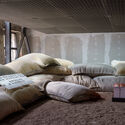
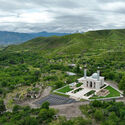
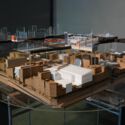
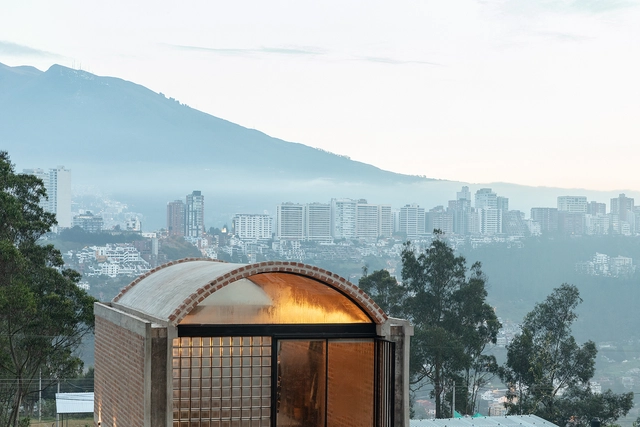
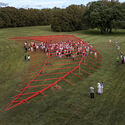
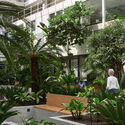
Titled Paraíso, hoje. [Paradise, today.], the exhibition representing Portugal at the 19th International Architecture Exhibition – La Biennale di Venezia addresses architecture as a cultural construction of landscape. Curated by architects Paula Melâneo, Pedro Bandeira, and Luca Martinucci, landscape architect Catarina Raposo, and video artist Nuno Cera, it offers an immersive installation featuring videos created using new digital technologies and artificial intelligence, along with an Atlas of images. Together, they construct a critical exploration of the proposed theme, the allegory of a "Paradise." This year, the Portuguese exhibition changed location, moving from Palazzo Franchetti to the Fondaco Marcello building, next to Venice's Grand Canal. It will remain open to visitors and host a series of debates until 23 November 2025.
When we talk about the future intelligence of architecture, much of the historical effort has centered on pushing boundaries—challenging norms, exploring alternatives, and projecting bold visions of what architecture could become. The advent of modernism exemplified this approach: radical new materials and construction methods gave rise to a vastly reimagined architectural future. This momentum continues today, with research institutions and leading practices constantly exploring innovative techniques, materials, and systems of making.
Yet one method of imagining architectural futures often remains overlooked: the act of critically revisiting the past. Learning from, uncovering, and documenting lesser-known spatial and communal practices is just as essential. These quieter forms of knowledge—how spaces have been used, adapted, and inhabited—can reveal enduring insights that shape more grounded, culturally resonant futures. Rather than chasing novelty for novelty's sake, perhaps an equally meaningful path lies in building a cohesive architectural archive that bridges the past and future.
The 2025 edition of the VeniceArchitecture Biennale is hosting a total of 65 National Pavilions. Among them, four countries, Azerbaijan, Oman, Qatar, and Togo, will be participating for the first time. The exhibition will unfold across three main locations: 26 pavilions at the Giardini, 22 at the Arsenale, and 15 spread throughout Venice's city center. The exhibition will bring together over 750 participants, forming interdisciplinary and multi-generational teams, and is anticipated to be the largest in the Biennale's history.
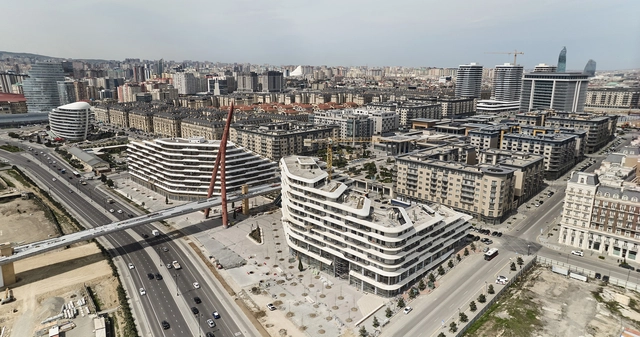
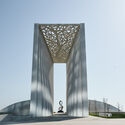
The Azerbaijan national pavilion, participating in the Venice Architecture Biennale for the first time, presents Equilibrium. Patterns of Azerbaijan. Curated by Nigar Gardashkhanova, the exhibition aligns with the overarching theme of this year's Biennale Intelligens. Natural. Artificial. Collective. Focusing on innovative design responses to the climate crisis, the pavilion emphasizes the principles of Regenerate. Innovate. Preserve. Featuring projects commissioned by Rashad Aslanov, the exhibition showcases contributions from the Azerbaijan Development Company (ADEC), Simmetrico Architettura, and Adalat Mammadov. Organized by the Heydar Aliyev Foundation and the Ministry of Culture of the Republic of Azerbaijan, with support from the Embassy of Azerbaijan in Italy, the exhibition will run from May 10 to November 23, 2025, at Castello 2127/A, near the Arsenale.
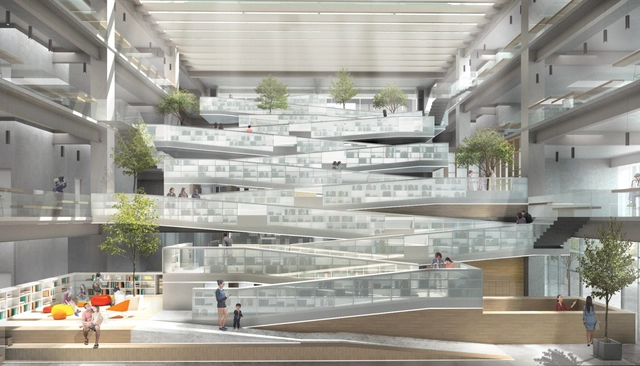
Path of Knowledge - Southern Branch of the National Central Library Exhibitor Name: Bio-architecture Formosana, CRA Carlo Ratti Associati. Image Courtesy of National Taiwan Museum of Fine Art.
ArchDaily, in collaboration with the European Cultural Center (ECC), is curating its first-ever exhibition as part of the seventh edition of Time Space Existence, the biennial architecture exhibition held alongside the 19th Venice Architecture Biennale. Running from 10 May to 23 November 2025, this edition invites practitioners to explore the themes of Repair, Regenerate, and Reuse, emphasizing innovative and sustainable approaches to the built environment. ArchDaily's contribution will be presented in a dedicated space at Palazzo Mora, complementing other exhibition venues including Palazzo Bembo, Marinaressa Gardens, and Palazzo Michiel.
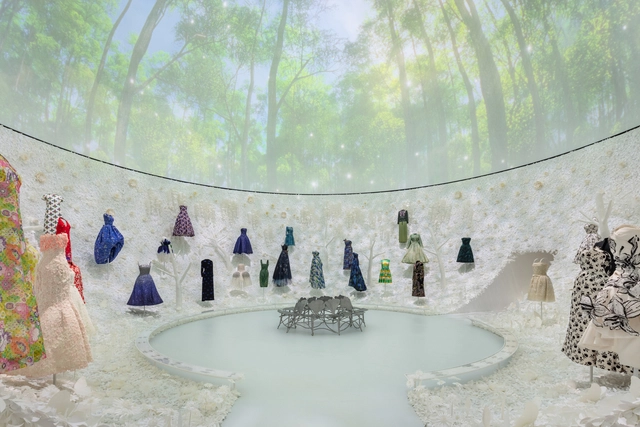
OMA has unveiled its latest exhibition design for "Christian Dior: Designer of Dreams" in Seoul, South Korea. Held at Dongdaemun Design Plaza (DDP), the exhibition marks the fifth collaboration between OMA and Dior. Previous designs include Dior: From Paris to the World at the Denver Art Museum (2018) and Dallas Museum of Art (2019), as well as Christian Dior: Designer of Dreams at the Museum of Contemporary Art Tokyo (2022). The Seoul exhibition presents over 80 years of Dior's creative history and the cultural heritage of Korea.
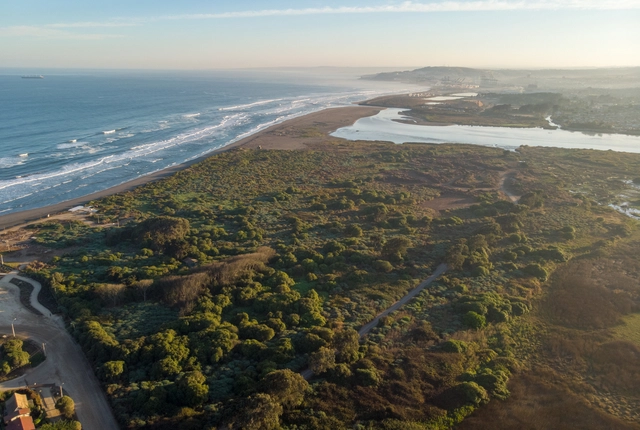
Santuario de la Naturaleza Humedal Río Maipo.. Image Courtesy of Fundación Cosmos
On Earth Day 2025, observed annually on April 22, we are once again reminded of the urgent environmental and sustainability challenges that face our planet—challenges that continue to evolve alongside global economic, political, and cultural shifts. The building and construction industry remains one of the most critical sectors in the effort to manage and reduce global carbon emissions. This year, these issues are being addressed through increasingly diverse lenses, calling for more holistic and integrated approaches. It's vital that we view sustainability not as a one-size-fits-all solution, but as a multi-scalar effort—one that spans from large-scale urban development and strategic planning, to the advancement of sustainable materials, and even to temporary, thought-provoking interventions like exhibitions and installations. In doing so, we reaffirm our commitment to reducing our collective carbon footprint, while shaping a built environment that promotes human well-being and planetary health.
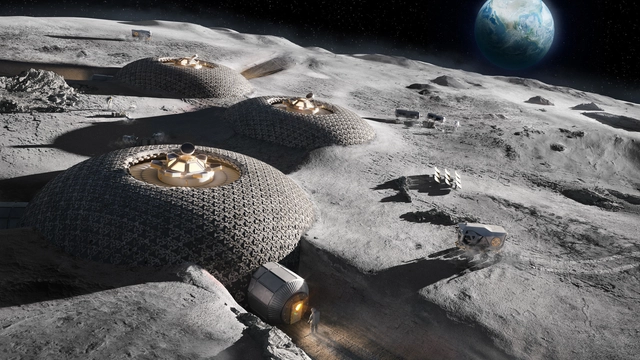
For three weeks, from March 28 to April 20, 2025, the John F. Kennedy Center for the Performing Arts in Washington, D.C. will host the art festival "EARTH to SPACE: Arts Breaking the Sky." Curated by Alicia Adams, Vice President of International Programming, and Gilda Almeida, Director of International Programming, the festival includes a full agenda of performances, film screenings, talks, panels, and exhibitions. As part of the festival, Foster + Partners has designed an exhibition titled "From Earth to Space and Back," inviting visitors to imagine a future where humans have experienced life on Mars, where exploring new worlds is within reach, and where technological advancements in space revolutionize life on Earth. The festival is based on the idea that imagining life in space can inspire solutions for living on Earth, a perspective reflected in the projects presented by Foster + Partners.
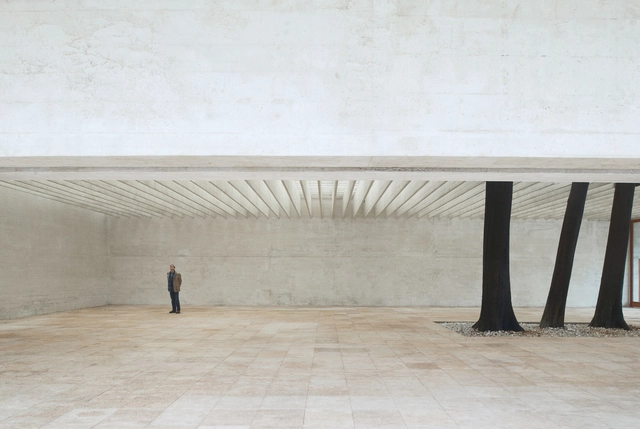
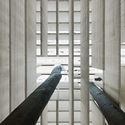
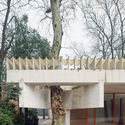
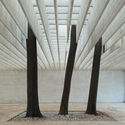
As a result of the ideas competition organized by the governments of Sweden, Finland, and Norway in 1958, Sverre Fehn's Nordic Pavilion won first prize, becoming one of the most significant works of his career and one of the most outstanding Scandinavian architectural achievements during the mid-20th century. Designed to create a space at the Venice Biennale for the biennial exhibitions of these countries, Fehn's proposal addressed several key architectural challenges—ranging from its integration with the site and incorporation of pre-existing elements to the handling of physical boundaries and uniform natural lighting. His design explored the interaction between architecture and trees, the flexibility in the exhibition space, the filtering of light, the connection between interior and exterior, the concept of movement through space, and the display of artworks.
Videos
Courtesy of Katia Sei Fong, Ken Sei Fong, Luis Sei Fong
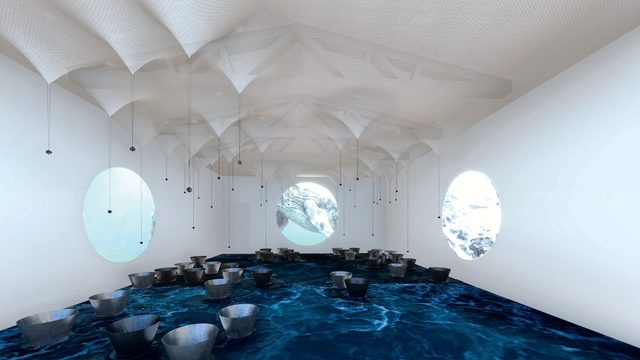
The national exhibition of Uruguay at the 2025 Venice Architecture Biennale, titled "53.86% Uruguay, Land of Water," explores the intrinsic relationship between architecture, territory, and water. Curated by architects Katia Sei Fong and Ken Sei Fong, along with visual artist Luis Sei Fong, the exhibition proposes that we may be entering the age of water, the "Hydrocene", and that the way humanity manages and conserves this resource will shape its future. In this context, the project highlights that Uruguay's maritime territory (53.86%) is larger than its land territory. Water, therefore, is not only a natural resource but a fundamental element of the country's history and culture, essential to its development.
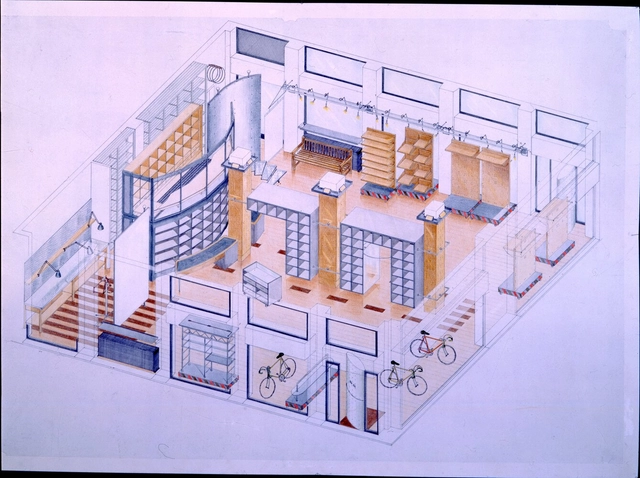
Axonometric drawing of the Granciclismo showroom (with Daniela Puppa), 1988. Image Courtesy of Archivio Franco Raggi
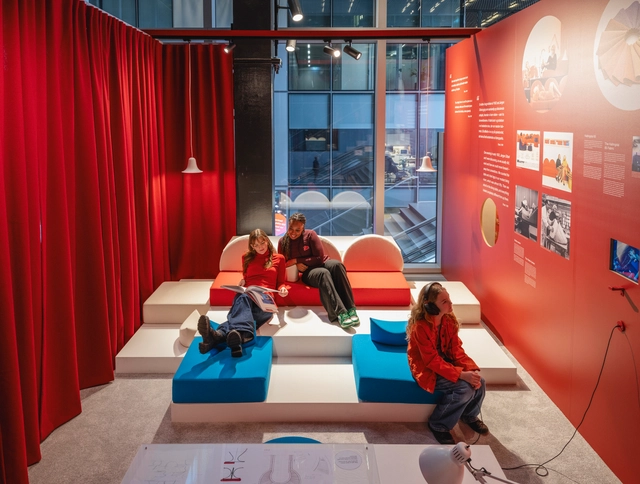
"Franco Raggi. Unstable Thoughts" (Franco Raggi. Pensieri Instabili) offers an in-depth exploration of the work of Italian architect, designer, and intellectual Franco Raggi. Curated by Marco Sammicheli and Francesca Pellicciari, the exhibition provides visitors with an experimental and immersive experience that traces Raggi's creative journey. Designed by the architecture studio Piovenefabi, the installation is hosted in the Design Platform space at the Museo del Design Italiano in Milan, a museum dedicated to key themes and figures in contemporary design. Held from February to April, the event is part of the prelude to the 24th edition of the Milan Triennale International Exhibition, titled Inequalities, which will run from May to November 2025.
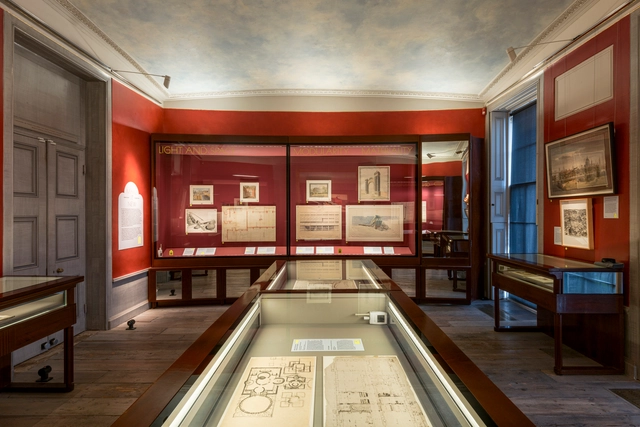
"Soane and Modernism: Make it New" brings together architectural drawings from Sir John Soane's extensive collection in dialogue with works by renowned modernist figures, including Le Corbusier, Frank Lloyd Wright, Adolf Loos, and Ernő Goldfinger. Curated by Dr. Erin McKellar, Assistant Curator of Exhibitions at Sir John Soane's Museum, the exhibition highlights the presence of 20th-century modern architectural design ideals in the work of 19th-century architect Sir John Soane. The selection of works is based on the idea that Soane's designs can be considered a precursor to many architectural principles adopted in the twentieth century.
Salone Satellite 2024. Image Courtesy of Salone del Mobile
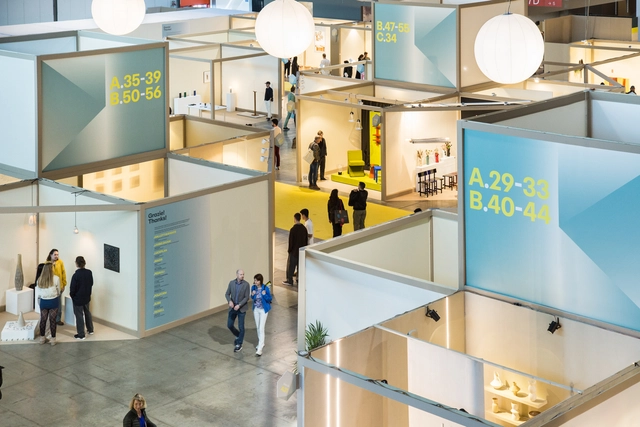
The 2025 edition of Salone del Mobile.Milano has just announced its opening dates and events program. The 63rd edition is set to take place from April 8 to 13 at Fiera Milano, Rho. This year's event will bring together over 2,000 exhibitors from 37 countries, reinforcing its role as a strategic platform for the design industry. The fair will highlight industrial manufacturing, sustainable innovation, and emotional intelligence as key themes, aiming to shape the future of design.
From January 24 to May 11, 2025, the Danish Architecture Center (DAC) will host an exhibition dedicated to the work of designer Nanna Ditzel. Crowned "The Grand Dame of Danish Design," Ditzel remains a significant figure in the field, known for her iconic creations such as the Hanging Egg Chair, Hallingdal Fabric, and the Trinidad Chair. Born in 1923, she established herself as a pioneer in furniture design, experimenting with unconventional materials, including the then-untested foam rubber, polyester, and fiberglass. She also transformed traditional materials such as wicker, laminated wood, and silver into innovative furniture and jewelry pieces that became icons of modern design, many of which will be showcased in this retrospective exhibition.
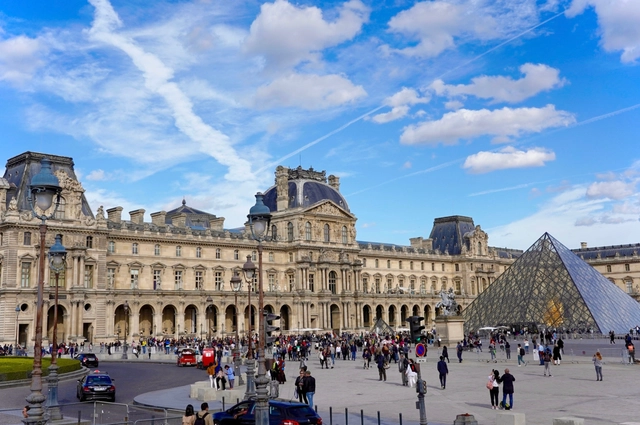
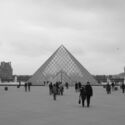
French President Emmanuel Macron has announced a significant renovation plan for the Louvre, following concerns from the museum's director about the building's deteriorating condition. The project includes the creation of a new grand entrance and broader refurbishments across the historic site.
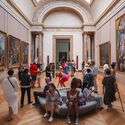
The renovation comes after a letter from Louvre director Laurence des Cars to the French Cultural Ministry highlighted serious maintenance issues affecting both visitors and staff. According to the letter, first published in Le Parisien, conditions inside the museum have become increasingly difficult, with visitors lacking space to rest, insufficient food and restroom facilities, and outdated signage in need of a complete redesign. The letter also pointed to climate control issues, describing a greenhouse effect inside the 36-year-old glass Pyramid designed by I.M. Pei, as well as hazardous temperature fluctuations and leaks in other parts of the building.