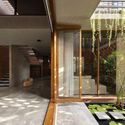
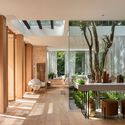
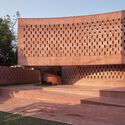
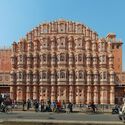
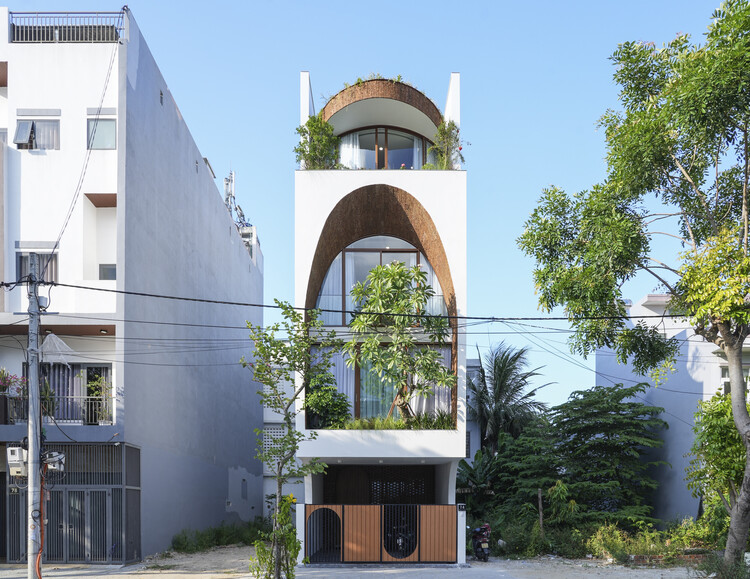
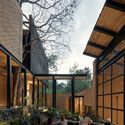
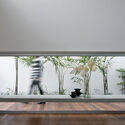
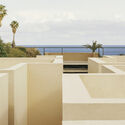
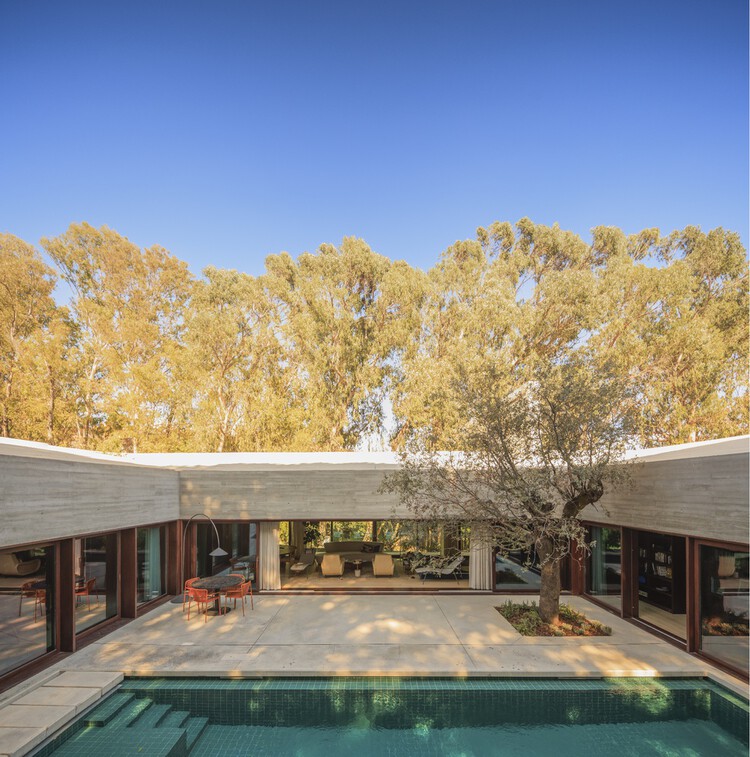
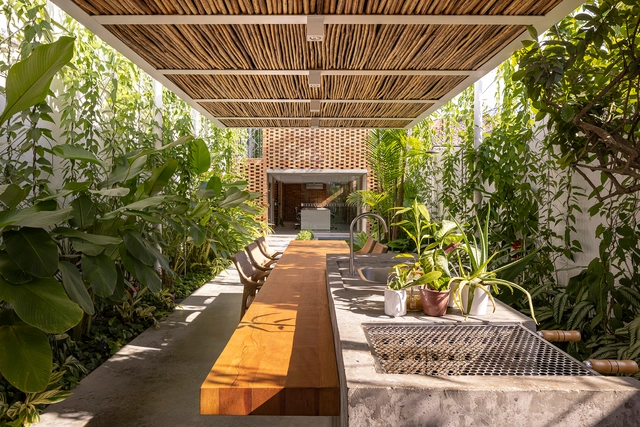
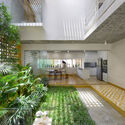
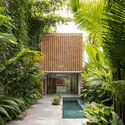
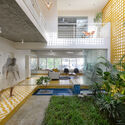
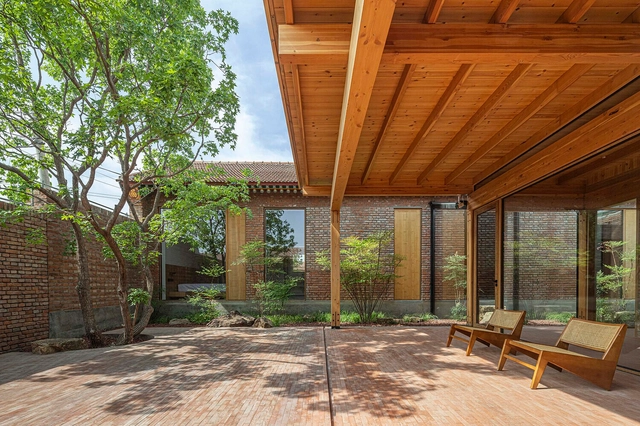
In Vietnam, the tube house has almost become a vernacular form in densely populated cities like Hanoi and Ho Chi Minh City. This typology originated from ancient façade taxes and as a strategic response to urban land scarcity and optimization of street frontage for commerce. Their traditional structure typically relies on the front façade for daylight and ventilation. People living there often face the challenge of designing in a space defined by the deep plots, limited street frontage, and close neighboring buildings, restricting natural light and airflow. To counter this fundamental lack of perimeter exposure, Vietnamese architects usually employ several strategies oriented towards internal environmental manipulation. This curated collection explores tube houses under 100 m2, where their small size increased the need for absolute spatial economy and the verticalization of function, which directly influenced design decisions across all projects.
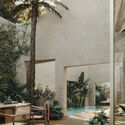
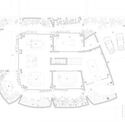
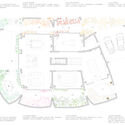
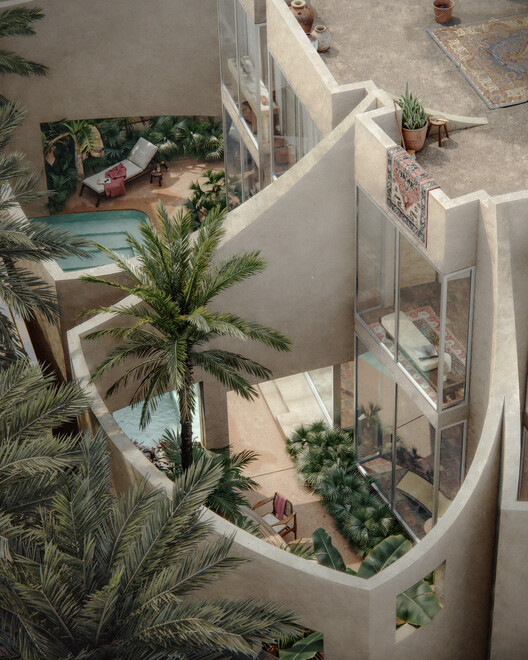
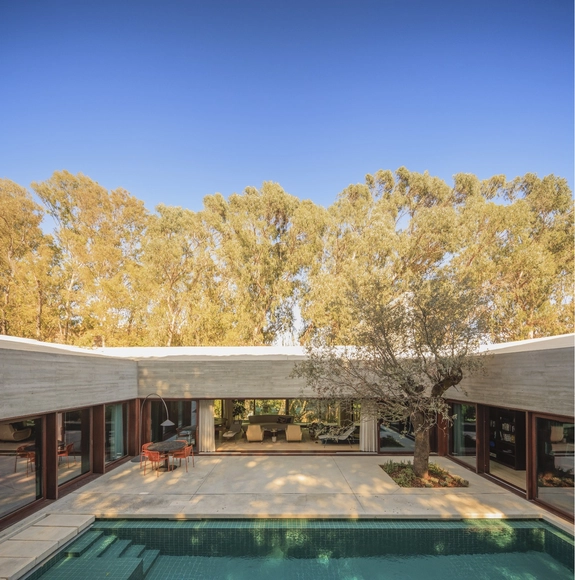
Patio houses embody one of the most enduring architectural typologies, encapsulating the duality of openness and seclusion while nurturing a profound connection with nature. While the term is also used in contemporary American real estate to describe low-maintenance, single-story dwellings on small lots, its classic architectural meaning refers to an introverted design organized around a private, central courtyard. It is this traditional form, the subject of this article, that traces its origins back thousands of years. Patio houses emerged independently in various regions, responding universally to fundamental human needs: privacy, climatic adaptability, and spatial coherence. Despite diverse geographic and cultural expressions, the core principles of introversion, controlled openness, and environmental sensitivity remain remarkably consistent throughout the evolution of this typology.
Situated in one of the fastest-developing regions over the past decade—the southern part of China, including Hong Kong and the Greater Bay Area—urban growth has been driven by an overwhelming wave of commercial ambition. Projects here are often designed for maximum density, height, and efficiency, resulting in developments of enormous scale that can easily span several acres. Prioritizing transit-oriented development, these complexes frequently take the form of sprawling malls built directly above major transportation hubs. Designed to disorient and prolong foot traffic to encourage economic activities, these mega-structures have become commonplace in cities like Hong Kong and Shenzhen.
While this typology of megastructures offers clear advantages—economic efficiency, high development returns, and convenience for transit users—it almost invariably ignores its urban context and environment. These developments often turn a blind eye, deliberately so, to their environmental footprint and the city's walkability. At such overwhelming scales, the human walking experience is diminished, if not outright neglected. Pedestrians become interiorized—trapped within the insulated world of these complexes.
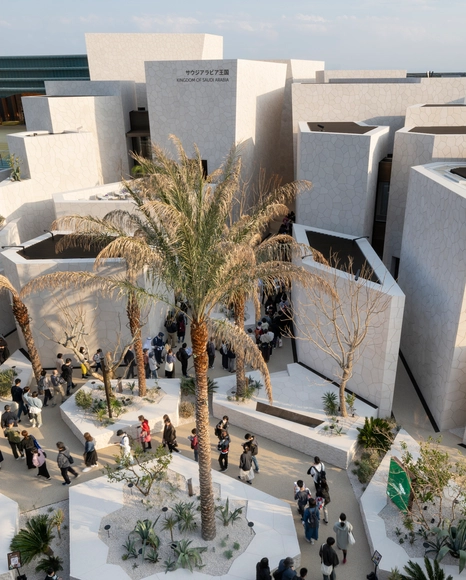
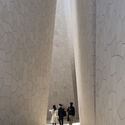
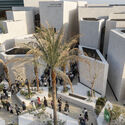
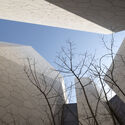
The national pavilion of the Kingdom of Saudi Arabia welcomes its first visitors at Expo 2025 Osaka. The latest photographs showcase Foster + Partners's design, aiming to create a spatial experience that evokes the character of Saudi Arabian towns and cities. Positioned at the Yumeshima waterfront, the pavilion offers visitors an engaging journey of discovery through the 'village' of meandering streets that alternate spaces of quiet reflection with venues for performances and cultural experiences.
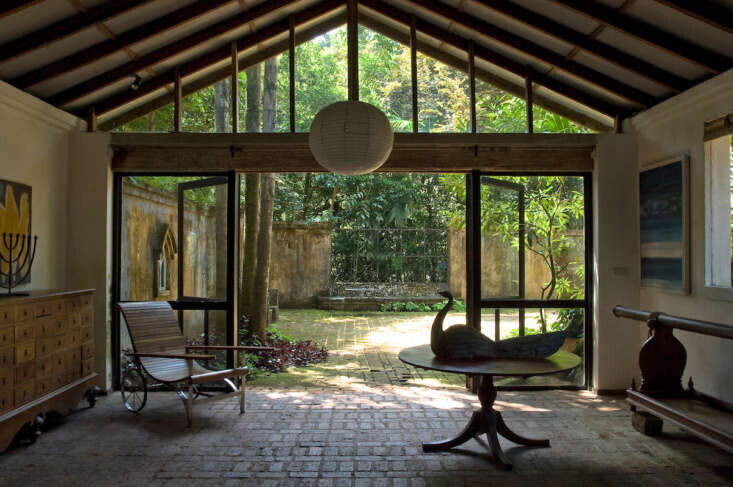
Humid environments present some of the most complex challenges in architectural design. From the tropical monsoon season of Southeast Asia to the equatorial heat of Central Africa, these environments demand solutions that account for intense moisture, high temperatures, and the constant battle against mold, decay, and stagnation. Yet, for centuries, communities in these regions have developed architectural techniques that do not fight against humidity but instead work with it, leveraging local materials, climate-responsive design, and passive cooling techniques to create sustainable and livable spaces. By considering atmosphere as a sensory and climatic phenomenon, architects will craft spaces that are not only evocative but also responsive, adaptive, and sustainable.
Courtyards have long been a fundamental aspect of traditional Chinese architecture, serving as central spaces around which domestic life is organized. These spaces play a vital role in creating a harmonious living environment, offering benefits that range from regulating indoor temperatures to enhancing social interactions and fostering a close connection with nature.
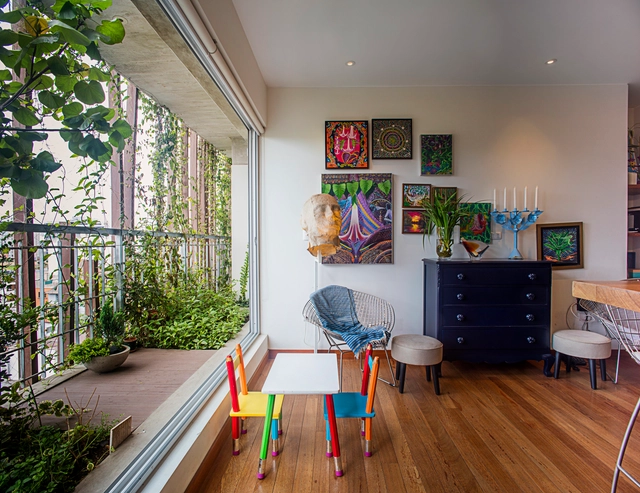
Urban living has become synonymous with limited space and creativity for compact apartments. As cities become more dominated by concrete and steel, there is an exciting, yet unsurprising, rise in interest in embracing the green thumb, even within the constraints of a dense urban environment. This interest is not purely to tend aesthetic tastes, as studies consistently show that exposure to nature reduces stress, improves focus, and enhances overall well-being. However, in dense urban environments, the challenge lies in finding innovative ways to make this vision a reality for apartments where every inch matters.
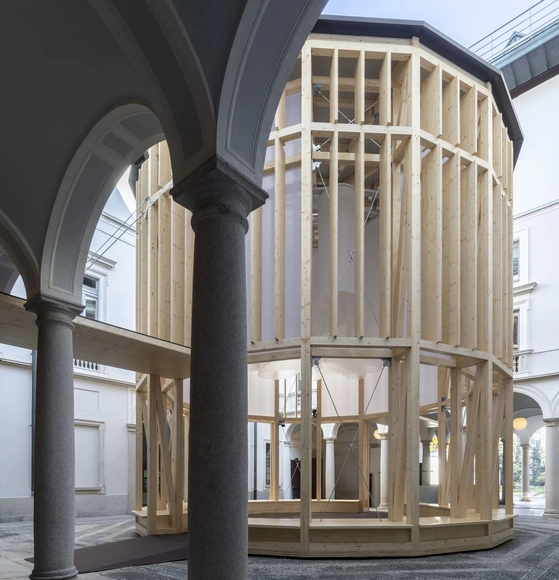
Mario Cucinella Architects (MCA) has reimagined the architectural design of Palazzo Citterio in Milan, Italy, integrating historical and contemporary elements to create a dynamic cultural space. As part of the Grande Brera initiative, which seeks to unify key cultural institutions such as the Pinacoteca di Brera and the Braidense National Library, the palazzo now stands as a hub for modern and contemporary art. Ultimately, the project aims to reestablish Palazzo Citterio as a significant cultural and social landmark, fostering community engagement and interaction.
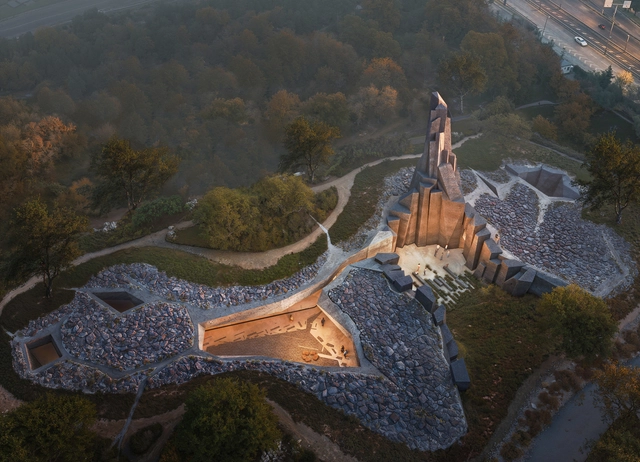
Küçükçekmece Djemevi. Image Courtesy of EAA-Emre Arolat Architecture
EAA-Emre Arolat Architecture has recently released its design for the Küçükçekmece Djemevi, a new concept for a civic space in Istanbul designed to combat social exclusion and provide a comfortable and inviting environment for the Alevi community. The building is comprised of a series of interconnected spaces and structures that generate a complex topography, offering ample recreational areas and a space of identity for the local community. The concept was recognized during the World Architecture Festival 2024, earning them the award of Future Project of the Year in recognition of its social inclusivity and careful adaptation to local traditions and needs.
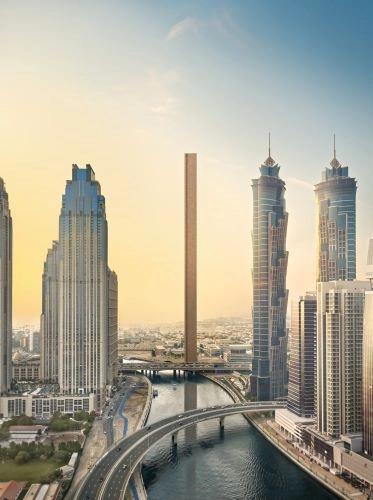
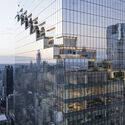
Muraba and RCR Arquitectes, recipients of the 2017 Pritzker Prize, have collaborated on Muraba Veil, a modern architectural project in Dubai that aims to incorporate traditional elements alongside contemporary innovation. This 380-meter-high tower is the latest result of a decade-long partnership between Muraba, a Dubai-based developer, and RCR Arquitectes, a Spanish architectural firm. The project introduces a skyscraper designed to engage with the local environment and culture, seeking to combine modern architectural techniques with regional heritage.
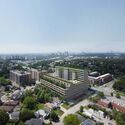
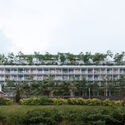
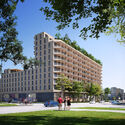
Celebrating groundbreaking projects that showcase sustainable construction practices, this year’s winners of the Holcim Foundation for Sustainable Construction 2023 highlight innovative approaches across various scales, forms, geographies, and forms. The Gold Prize for North America was awarded to Partisans Architects and Well-Grounded Real Estate with their high-tech, low-cost modular housing solution for urban living in Toronto. In a video interview for ArchDaily, Jonathan Diamond from Well-Grounded Real Estate discusses the development of the winning project and the forces that shaped it.
While hybrid working and flexible hours represent the most obvious ways to improve work/life balance for many, because of the missed social interactions and the lack of space or functionality at unproductive home workspaces, the majority of 16-24-year-olds are the only age group who prefer to work from the office.
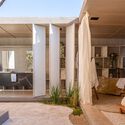
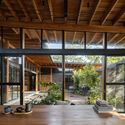
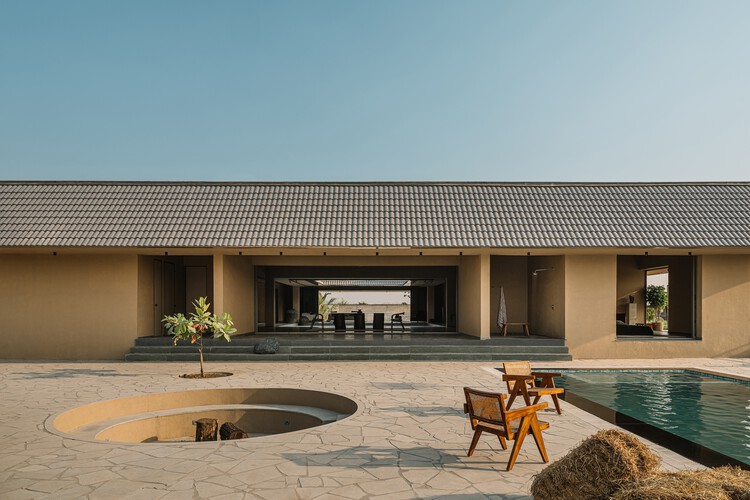
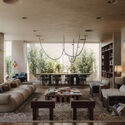
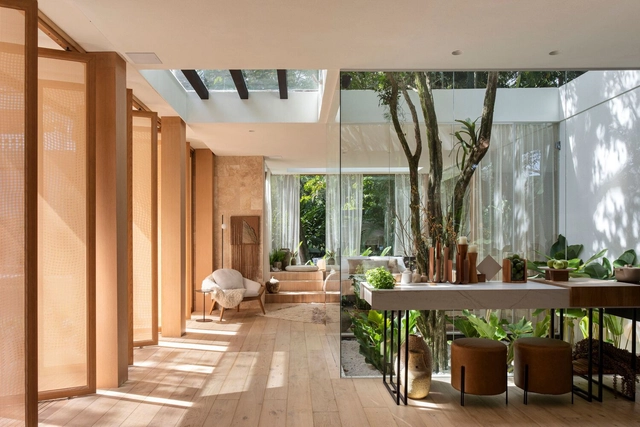
The early 20th century marked a pivotal era in Brazilian architecture with the advent of the modernist movement. Architects like Oscar Niemeyer or Lúcio Costa introduced avant-garde designs characterized by sleek lines, reinforced concrete, and a focus on functionality. What's more: residential projects of the era, in particular, blurred the lines between indoor and outdoor, flawlessly merging interior and exterior spaces to reflect a lifestyle that harmonizes with nature. Fast forward to the present day, and contemporary architects and designers in Brazil continue to embrace the challenge of creating indoor-outdoor homes that nod to the country's tropical climate. These residences often feature open floor plans, expansive glass walls, and strategic positioning of courtyards, gardens, or terraces with a design philosophy that emphasizes natural light, ventilation, and the incorporation of greenery for increased well-being. We take a detailed look at four recently completed residential projects in Brazil that fuse contemporary architecture, sustainable living, and a deep appreciation for their natural surroundings.
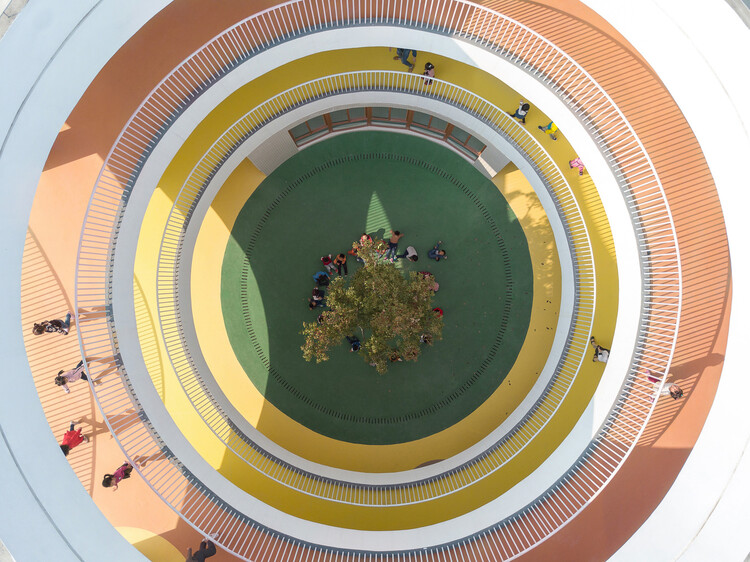
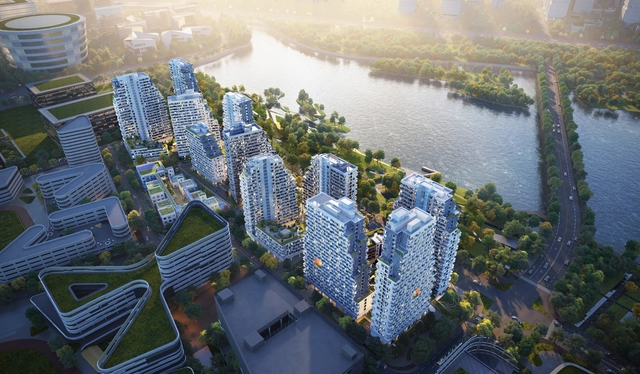
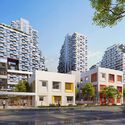
MVRDV has revealed a large-scale residential complex to take shape as part of a new smart city campus built by technology company Tencent in Qianhai Bay, Shenzhen, China. MVRDV’s intervention, named Tencent P5, is comprised of 11 apartment towers arranged around four courtyards. The project also includes amenities such as an adjacent kindergarten, to offer all the necessary facilities for the company’s employees. Construction began in early 2022 and is scheduled for completion in 2024.
The Mysk Al Badayer Retreat in the desert outside Dubai, United Arab Emirates. Image Courtesy of Mysk Al Badayer Retreat
Set deep within some of the most isolated desert landscapes across the Middle East and further afield, these desert camp hotels offer a way to connect with their surroundings through the solitary experience of open and expansive scenery.
As the temperature drops in the Northern Hemisphere, cold outdoor spaces are overcome with frost, ice, and snow, and we find ourselves rushing from one heated indoor environment to the next, less willing or less able to stop and appreciate the natural world around us.
Apart from dragging a spruce or fir tree inside and dressing it up in yuletide costume, we tend to leave the real natural world to its own seasonal devices until it reemerges in Spring. However, by inviting the positive effects of plant life into our homes, we can improve both our mental health and the air we breathe by filling them with peace and joy all year round, not just at Christmas.
Living in a tropical country means cherishing outdoor experiences, whether feeling the gentle breeze, connecting with nature, or basking in the sunlight. We have grown up with a cultural tradition of playing in our yards, gathering with family and friends on balconies, enjoying barbecues, or simply admiring the beautiful landscape. Numerous Brazilian residences integrate wooden decks for these purposes. They are versatile spaces that fulfill various functions.
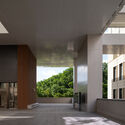
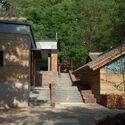
Beit Rumman Hotel, Damascus. Image via Tumblr Account syrian-courtyard
We have seen in recent residential projects the need for bringing the outdoors inside, whether it's through green walls, biophilic designs, or interior courtyards, especially in countries with dry and hot climates. When it comes to countries of the Arab world, creating these outdoor-inspired inner spaces is a lot more than just bringing in some sunlight and fresh air, it is an architectural expression of a rich culture that transcended generations and inspired nations beyond their borders. In this article, we will explore how cultural and social norms influenced the creation of traditional courtyard houses in Arabian countries and how their unique architectural features were reimagined in modern contexts.