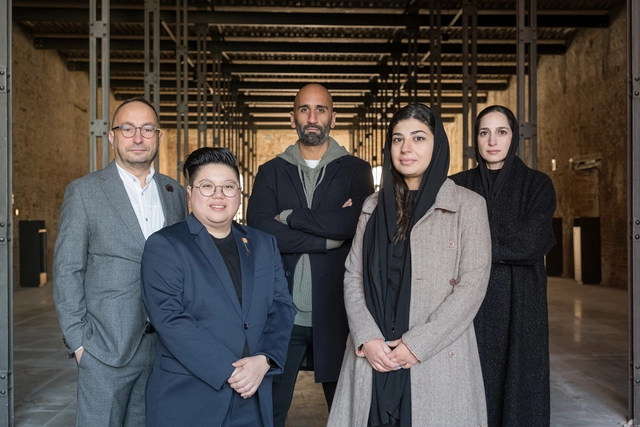
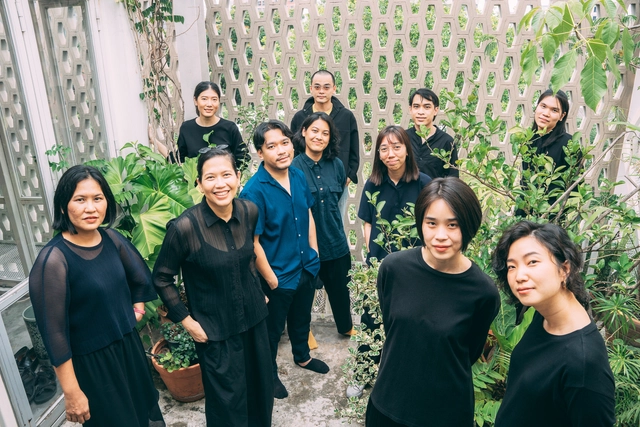
Saudi Arabia announced its participation at the 18th International Architecture Exhibition – La Biennale di Venezia, with an exhibition titled IRTH إرث,legacy in Arabic, exploring qualities of materials in relation to the Saudi landscape. The third round of participation the Saudi Pavilion will have at the International Architecture Exhibition, this year's edition is represented by architect AlBara Saimaldahar and curated by the duo Basma and Noura Bouzo. The Pavilion will be on display at the Arsenale – Sale d’Armi 2023.
Although the circular economy involves other principles such as the regeneration of natural systems, the reuse or recycling of materials plays an important role in contributing to the reduction of waste generation by giving a second useful life to elements that could be considered waste. Wood, metal sheets, bricks, and stones, among others, can be reused, bringing sustainability and efficiency criteria to the projects, helping to consolidate this concept that still has a long way to go.
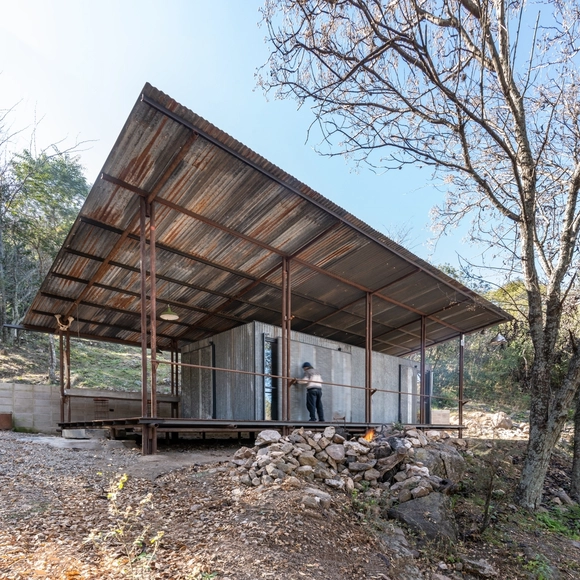
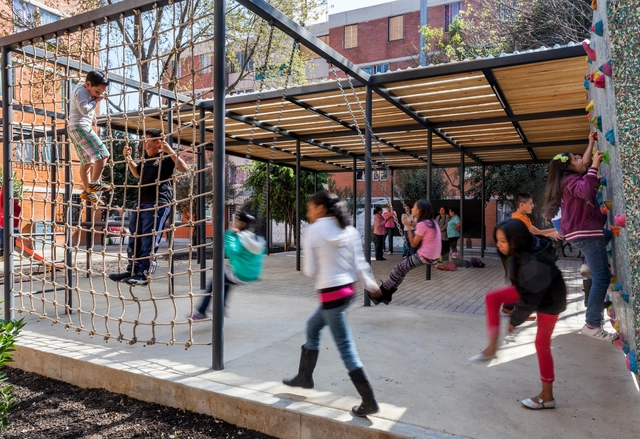
Within the Latin American territory, many architecture professionals have proposed to apply in their design and construction processes the implementation of strategies that collaborate with the use of resources, either by reusing, recycling, or restoring different materials and elements in search of satisfying the needs and concerns of those who inhabit the spaces.
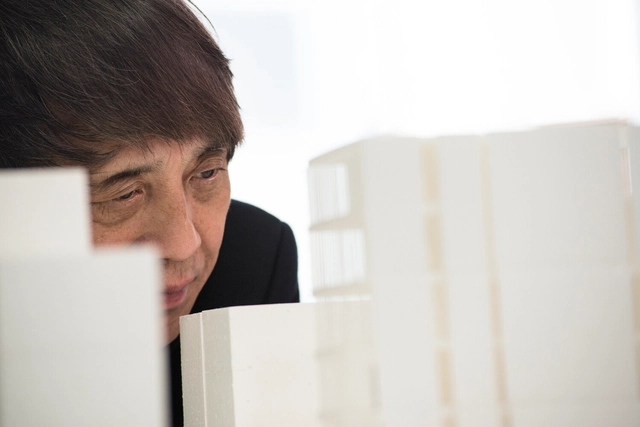
Tadao Ando. Image Courtesy of Tadao Ando Architect & Associates
The Naomi Milgrom Foundation announced Tadao Ando as the winner of the commission to design the MPavilion 10 in Queen Victoria Gardens in Melbourne. This will be Ando’s first project in Australia, as he will be taking part in the country’s foremost annual architecture commission and design festival. Now in its 10th edition, the MPavilion gives complete freedom to the designers to create their concepts and realize their vision, hoping to encourage new and unique design languages to further develop this vital site in the cultural and community life of Melbourne. Details of Tadao Ando’s design will be revealed in May, and the pavilion is scheduled to open to the public on November 16, 2023.
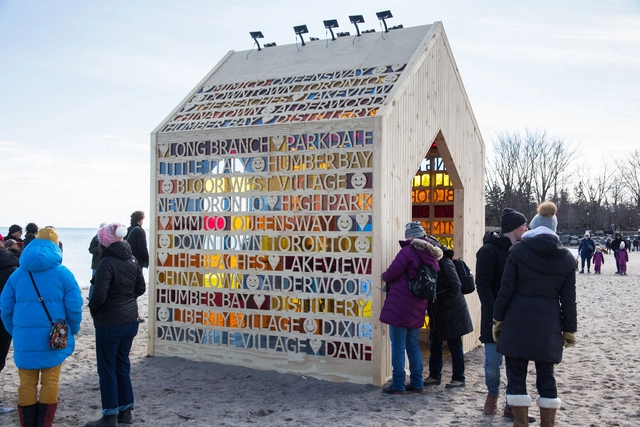
The 2023 Winter Stations has just announced eight winning projects for their 9th annual international competition. The winners were chosen from hundreds of entries from around the world, along with three student designs from Toronto Metropolitan University, Waterloo Department of Architecture, and Guelph University. The competition was first launched at Woodbine beach by RAW design,Ferris + Associates, and Curio, to capture the imagination of designers and architects to create bold designs that spark conversation, transforming lifeguard stations at Toronto’s Woodbine beach. Furthermore, since these lifeguard stations are usually dormant throughout the winter, the exhibition inspires artists to bring the public back outdoors with their unique designs.
The International Placemaking Week, presented by Project for Public Spaces (PPS) is an inspiring and engaging event designed as a global gathering of placemakers from different sectors to discuss thoughts and share strategies in order to push forward the concept of placemaking in the host city and on an international level. Previous editions took place in Vancouver in 2016, Amsterdam in 2017, and Chattanooga, Tennessee in 2019.
PPS, the nonprofit organization behind Placemaking Week, helps people create and sustain public spaces that build strong communities. In 1999, they elaborated “How to turn a place around”, a book that defined the placemaking movement, creating a guideline of 11 principles to follow in order to create vibrant community spaces.
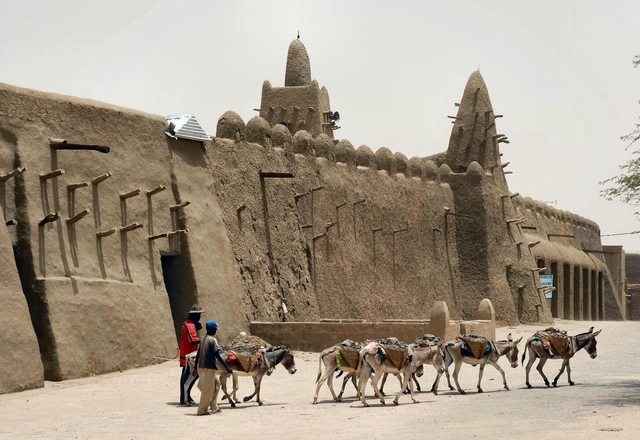
A mud mosque in Mali, West Africa. Image Courtesy of Emilio Labrador
Earth architecture is built on a far-reaching history. Its story continues to be told through aged structures that have stood the test of time. Across the world, indigenous earth construction techniques have been pioneered by many ancient civilizations. Communities originally built shelters from earth - the most readily available material to them - and have passed on their construction techniques through generations. Earth architecture evolved with a careful understanding of land and location. With practices perfected decades ago, it is fascinating to see earth architecture remaining resilient through adversities
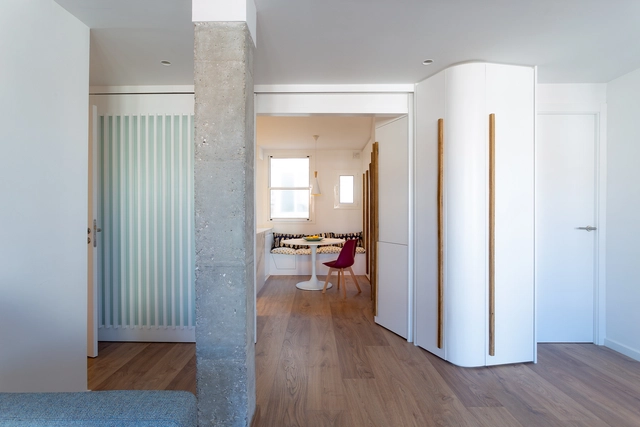
Sanmartín Guix, an architectural firm based in Barcelona, aims to enhance the value of the built heritage through rehabilitation and adaptation according to the needs of new generations, providing comprehensive architectural services as well as real estate advice. In this way, the conditions and aesthetics of the buildings are improved, seeking to adapt them to the requirements of all those who wish to visit or inhabit these spaces.
Videos
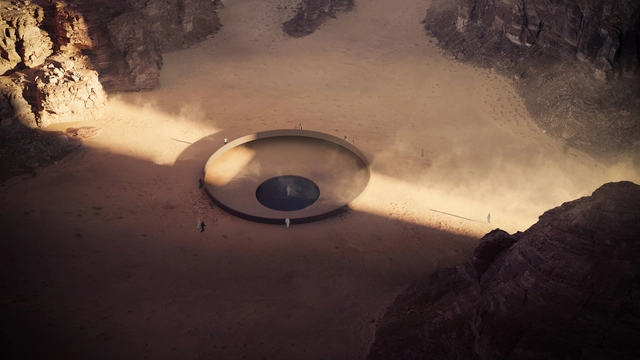
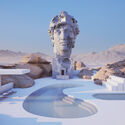
Visualization by Atelier Monolit. Image Courtesy of ATHR Gallery
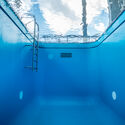
The new cultural destination Wadi AlFann, Valley of the Arts in AlUla desert, Saudi Arabia, unveiled its first permanent large-scale installations by some of the world's most compelling contemporary artists. Agnes Denes, Ahmed Mater, James Turrell, Manal AlDowayan, and Michael Heizer will be the first five to be completed and unveiled by 2024, starting a program of commissions with more renowned artists to be announced.
The site, a vast valley spanning approximately 39 square kilometers with a millennial legacy, aims to become the new global cultural destination for contemporary art, contemplating another 15-20 artworks by 2035. The plan builds upon the success of two editions of the international art exhibitionDesert XAlUla, in 2020 and most recently the 2022 edition, featuring work by Ayman Zedani, Jim Denevan, and Zeinab Al Hashemi.
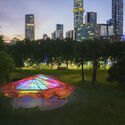
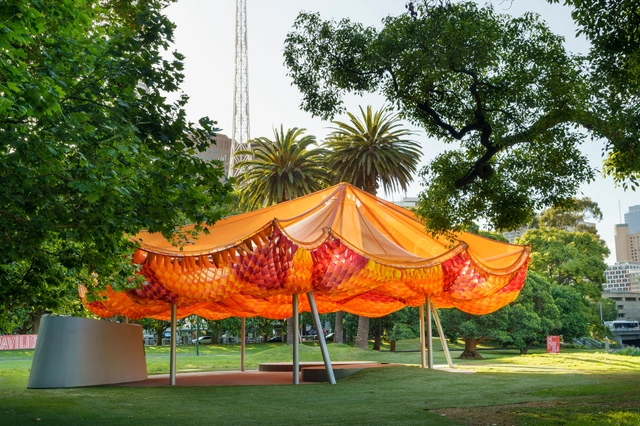
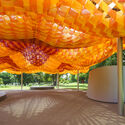
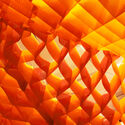
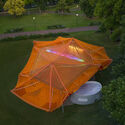
The ninth edition of the MPavilion opened with an orange canopy installation designed by Bangkok-based practice all(zone) in collaboration with AECOM and Schiavello Architects. From December 2022 to April 2023, visitors will experience a vibrant and joyful setting made of upcycling materials, featuring an architectural lighting program by Melbourne-based design practice Bluebottle.
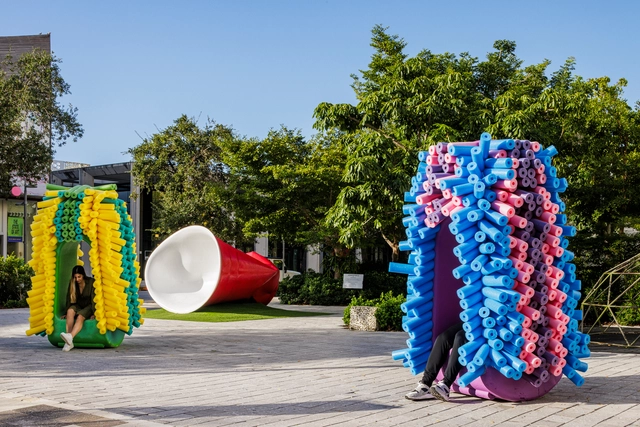
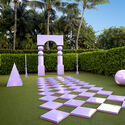
Rock | Roll by Germane Barnes. Image Courtesy of Miami Design District
Distinguished for its quality, depth, and diversity, Design Miami 2022 has concluded, giving worldwide collectors and locals the best in contemporary and emerging art and design. Kicking off at the end of November and running through the first week of December, this event ran alongside the annual Art Basel Miami Beach. The ultimate international art fair ranged from interactive installations to art exhibitions by promising up-and-comers to 20th-century masterworks, including Daniel Arsham and Andrés Reisinger, and Stefano Boeri. Also during this event, MetaMundo has presented their Top 50 Creators of the Metaverse - a hand-picked collection of some of the world’s best 3D artists.
For this edition, The Miami Design District has awarded Miami-based architect and designer Germane Barnes and commissioned a multifaceted installation that honors the city's polyethnic culture. Along with other relevant architectural installations during the Miami Art Week, the following selection includes work by Leandro Erlich at Perez Art Museum Miami and Pilar Zeta.
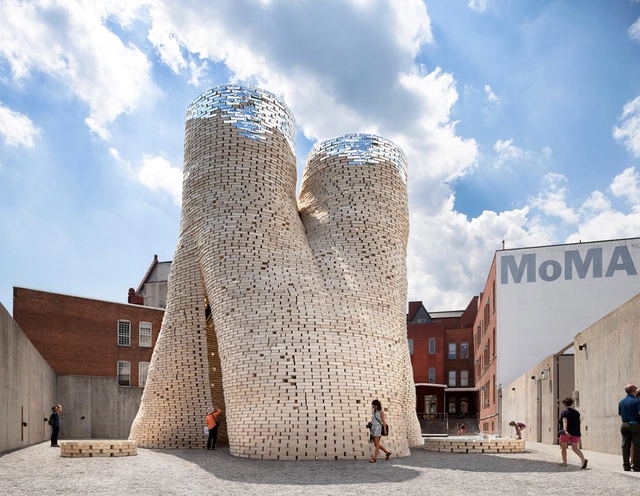
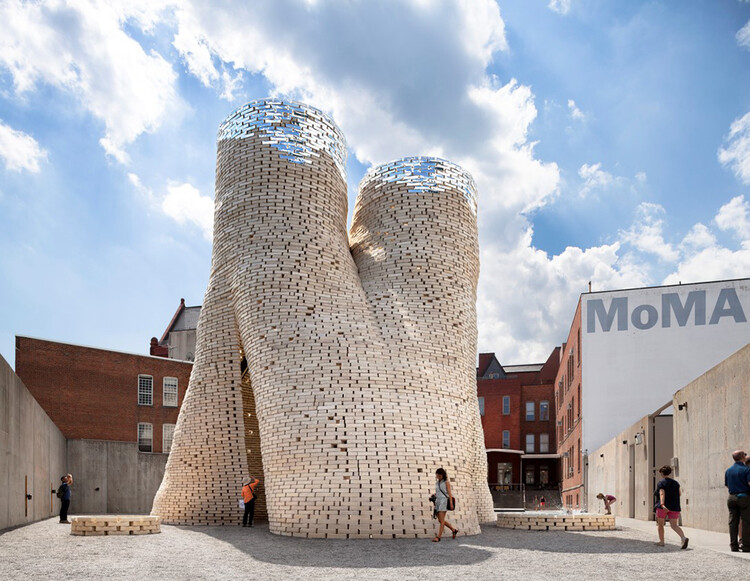
Mycelium-Grown Bio-Bricks / Evocative Design & The Living. Image Courtesy of The Living
The building industry is one of the biggest generators of carbon emissions, with some estimates suggesting that 38% percent of all CO2 emissions are linked to this field. As a response to the current crisis, architects, designers, and researchers are taking measures to reduce their carbon footprint during and after construction. Many initiatives and research teams are looking at building materials to find low-carbon solutions and reduce the impact of building materials during production.
One of the most prominent fields of research is concerned with biofacture, the type of process that involves using biological organisms to manufacture materials. By understanding the abilities of organisms such as algae of fungi, alternatives to widely used materials can become carbon neutral or even carbon negative. Other initiatives are researching novel ways to use untapped, yet readily available resources such as desert sand, soil, or waste from demolitions.
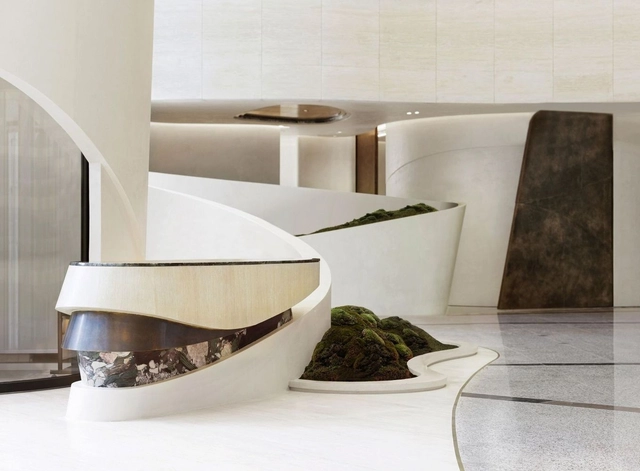
When thinking of marble, we often associate the material with ancient Greek sculptures, Classical architecture, or the Italian Renaissance. Monumental landmarks such as the St. Peter’s Basilica or the Taj Mahal, have positioned marble as an elite and timeless material that stands the test of time. And in today's conversations about the future of construction materials, amid sustainability, feasibility, and affordability, the natural stone remains high-caliber. In this interior focus, we’re taking a look at marble between the past, present, and future.
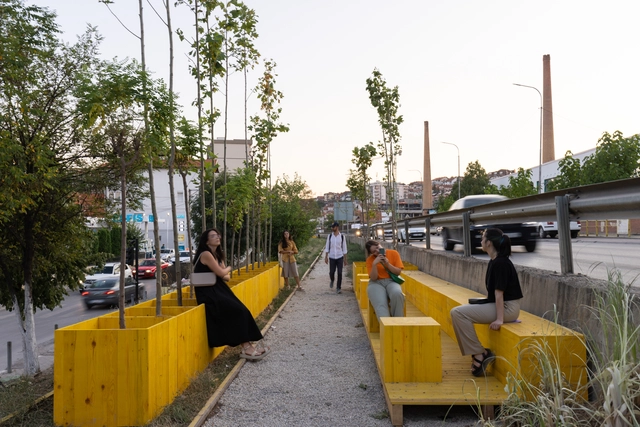
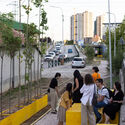
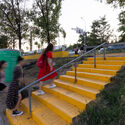
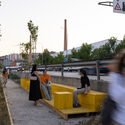
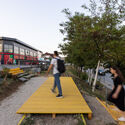
Design and innovation office CRA - Carlo Ratti Associati unveils the result of its Urban Vision and Urban Program for Manifesta 14, the European Nomadic Biennial in Prishtina, Kosovo, between July 22 and October 30, 2022. CRA’s project proposes a new methodology for reclaiming public space in the city. It starts with a series of open-ended design interventions to encourage citizen participation and foster feedback loops to create long-term effects on the built environment. During the 20th century, regime changes and political clashes brought considerable turbulence to Kosovo and its cities. As a result, Prishtina currently suffers from a substantial shortage of public space, but a large group of disenfranchised residents is eager to reverse this situation.
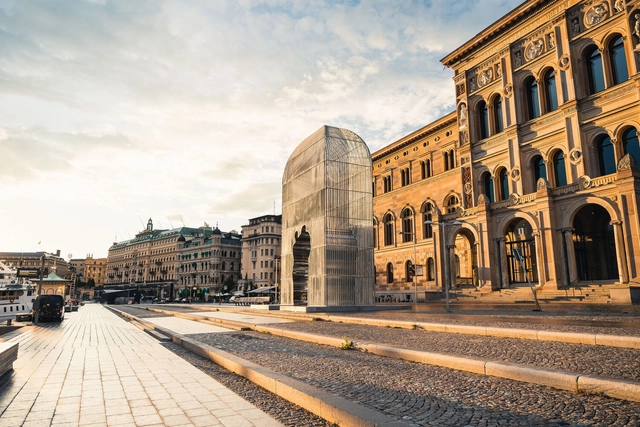
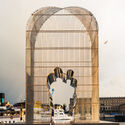
Chinese artist and activist Ai Weiwei unveiled the Arch, a cage-like sculpture in front of the National Museum of Stockholm. The 12-meter-tall stainless steel structure features at its center silhouettes of two people holding one another, appearing to break through the steel bars of the cage. The artwork was created to symbolize refugee stories and is seen as an ode to freedom. The sculpture is installed outside Nationalmuseum national gallery on the Blasienholmen peninsula in Stockholm’s archipelago. It will remain there for one year, after which, it will be moved to a yet undisclosed location in the city.
Only a few days left until the annual inauguration of Milan Design Week 2022, one of the biggest international design events which features the Fuorisalone and Salone del Mobile. From the 7th till the 12th of June 2022, the streets of Milan will be hosting an array of architectural interventions and exhibitions curated by local and international designers as part of the Fuorisalone. And at the Fiera Milano | Rho, Salone del Mobile 2022, the awaited furniture and interior design event of the year, will be celebrating its 60th anniversary with themes and projects that reflect on “inclusive” design, fostering "autonomy, comfort, movement, usability, interaction and safety for all".
The Naomi Milgrom Foundation has announced that internationally renowned architecture and design practice all(zone) is the the recipient of the MPavilion 2022 commission. Demonstrating how architecture and design can contribute to creating equitable cities, the Bangkok-based studio was commended for its commitment to designing built environments where people can feel at home in the world, reusing and recycling local materials in bold and innovative new ways.
Tallinn Architecture Biennale (TAB 2022) announced the programme for its 6th edition that brings forward circularity in architecture. Under the theme "Edible; Or, The Architecture of Metabolism", this year's edition explores "architectural strategies for local production and self-sufficiency" and highlights ways of reusing waste resulting from urban environments. Curated by Lydia Kallipoliti and Areti Markopoulou, in collaboration with local advisor Ivan Sergejev and assistant curator Sonia Sobrino Ralston, TAB 2022 reflects on the possibilities that natural metabolical processes can bring to cities and buildings when transferred to the domain of architecture.