Nowadays, the role of architects exceeds the limits of construction, reaching fields that are often unthinkable, but which nonetheless demonstrate a close relationship with the profession. If we go back in time, the fact is that many buildings, houses, monuments and even cities have been built intuitively without urban planning or renowned architects. Undoubtedly, today's architects are facing a great challenge that goes beyond demonstrating our skills and knowledge and extends to other areas that involve us, but we still don't know it. So we ask ourselves, what will be the profile of the architect of the future?
Tsz Yan Ng is a Michigan-based firm principal, professor, researcher, and artist whose interdisciplinary and collaborative work seeks to challenge and improve upon modern fabrication and manufacturing practices. “We haven’t changed the way we build in so long,” Ng said. “We need to think of it more productively—not just economically—but as a collection of different voices. Architecture is a global ecosystem of people, where the sum is greater than the parts.”
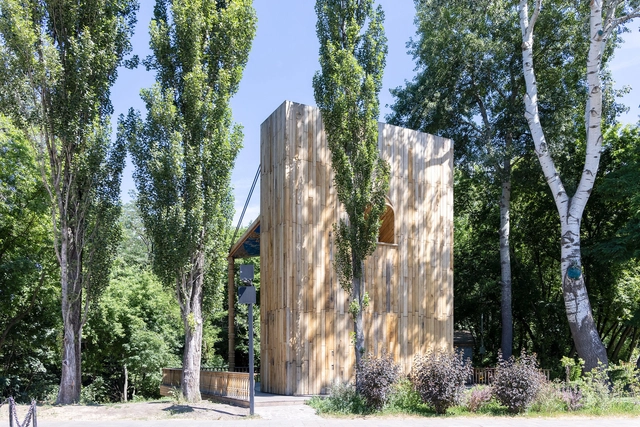
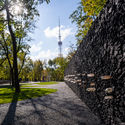
Babyn Yar Synagogue by Manuel Herz, image by Iwan Baan. Image Courtesy of BYHMC
Babyn Yar, a ravine in the Ukrainian capital Kyiv, witnessed the killing of more than 33,000 Jewish men, women, and children, on September 29 and 30, 1941. The site of one of the largest single massacres perpetrated by occupying German troops against Jews during World War II, Babyn Yar became a symbol of the Holocaust by Bullets.
While the main tragic event took place in 1941, throughout the occupation, the site was used as a killing location by the German forces. In fact, it is reported that 70 to 100 000 people lost their lives in Babyn Yar. With no architecture to the tragedy and only a remaining “broken” landscape, people struggled with achieving memorialization and public recognition.
Videos
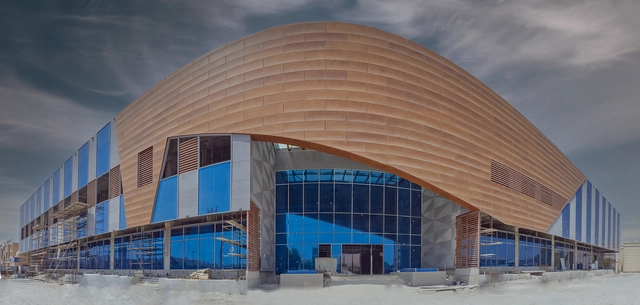
Hospital Mirdiff, Dubai, U.A.E. Image Courtesy of Equitone
Made of cement reinforced with cellulose fibers, fiber cement cladding is a building material used to cover the exterior of a wide range of buildings, including hotels, schools, office buildings, retail centers, hospitals, corporate centers, and residential buildings. Fibre cement panels are aesthetically pleasing, long-lasting, and highly resistant to fire and weathering.
Architect Diana Najib Hamad provides interesting case studies for the use of fiber cement in three recent Dubai-based commissions.
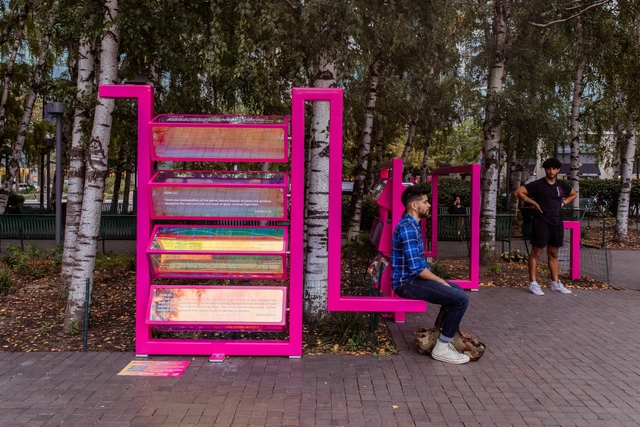
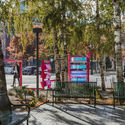
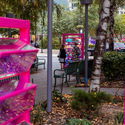
The Urban Conga has collaborated with HIVE Public Space and Long Island City Partnership on a new urban intervention titled "Ribbon", a vibrant and interactive installation for people to connect, share, and learn about each other's experiences in Long Island City, New York. Each unit includes kinetic pieces that rotate, reflecting the surrounding context and revealing different love notes written by locals to the city.
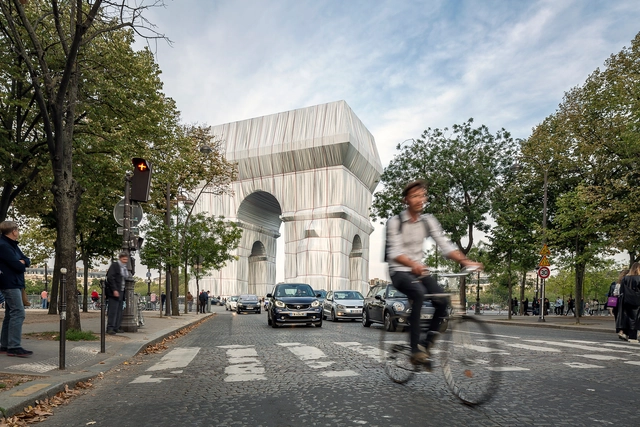
Andreas Ruby, Director of the Swiss Architecture Museum shares his thoughts on the wrapped Arc de Triomphe installation by Christo and Jeanne-Claude, in a 3 part essay, converting a monument glorifying war into a monument of decolonization. The temporary installation opened to the public on September 18, 2021, and will be dismantled starting October 3, 2021.
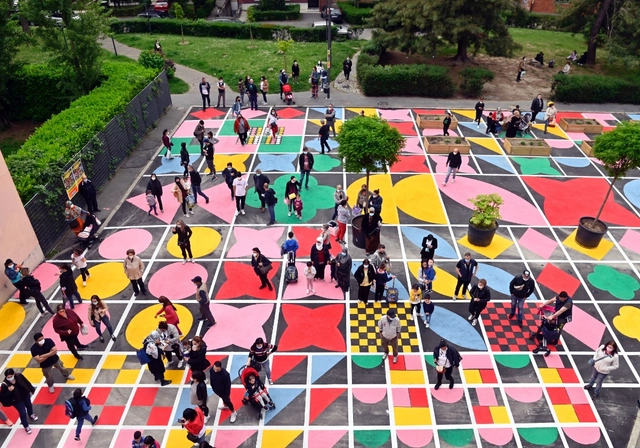
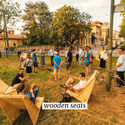
Designer and art director Serena Confalonieri, along with a team of students and volunteers have created “Quadra”, a graphic installation that is part of the initiative “Piazze Aperte” promoted by the Municipality of Milan. The urban intervention is a graphic art project in a former parking lot in the Quarto Oggiaro district that aims to enhance and characterize tactical urban interventions in all cities.
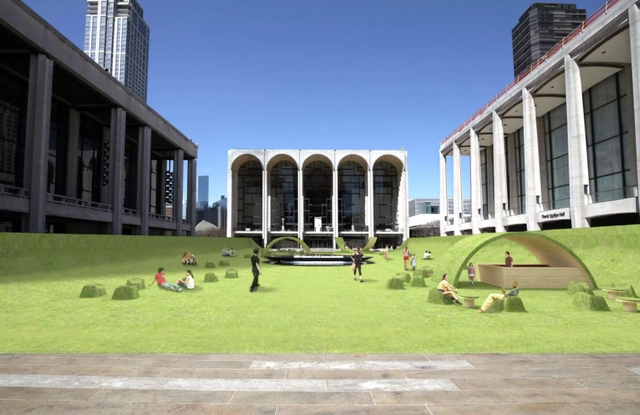
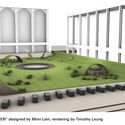
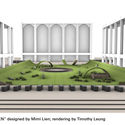
The Green. Image Courtesy of Mimi Lien/Rendering by Timothy Leung
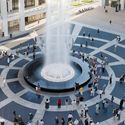
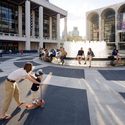
After several event cancellations due to the pandemic, Manhattan’s Lincoln Center for the Performing Arts complex have transformed their outdoor plaza into a green park and outdoor performance venue called The Green. As of May 10, the Restart Stagesinitiative will add fake grass across the 14,000-square-foot (1,300 sqm) Josie Robertson Plaza. The plaza, which was originally designed by Philip Johnson, Wallace K. Harrison, and Max Abramovitz, and renovated by award-winning architecture firm DS+R in 2010, will transform into a public urban space of gathering, leisure, and entertainment.
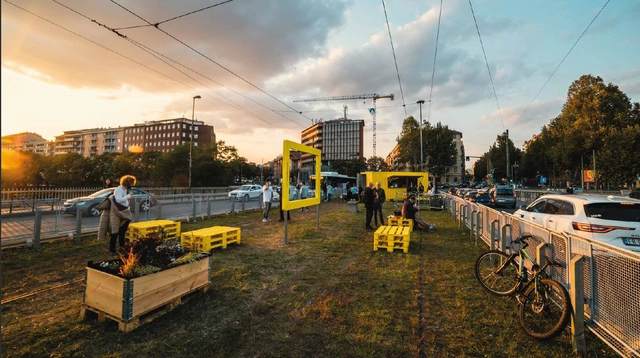
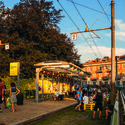
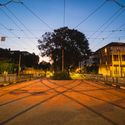
Ever since the tramline’s closure, the 800-meter-long strip in the center of Corso Gabetti and Ponte Regina Margherita in Turin, has been abandoned. To make use of the dead area and give residents an extra space outdoors following Italy's severe pandemic repercussions, non-profit cultural association Torino Stratosferica has transformed the tree-lined strip into Precollinear Park, a temporary public space fit for socially-distanced leisure.
Being in confinement has produced unconventional means of exploring architectural spaces and installations. Instead of putting everything on hold until life goes back to normal, designers and curators found inspiration from practices like performance arts and theatre, breaking down the walls between the subject and viewers but from a distance.
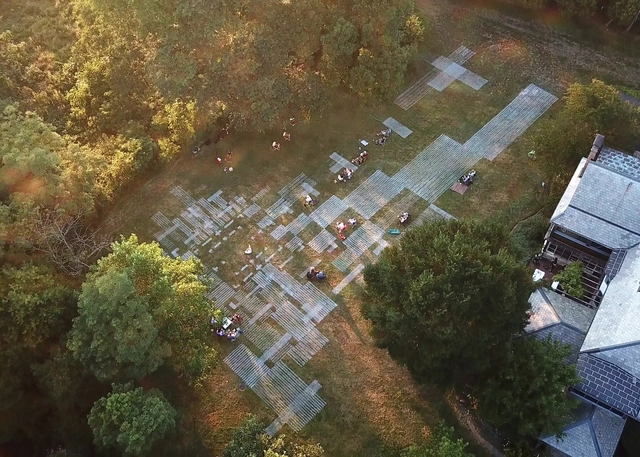
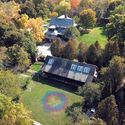
Ashley Bigham and Erik Herrmann of Outpost Office reimagined the theme of "mobility" by creating 1:1 scale drawings on the Ragdale campus using GPS-controlled field marking robots. Their unique urban installation, which addressed modern-day concerns such as public spaces, how we are engaging with them, and physicality, won first place in the 2020 Ragdale Ring competition.
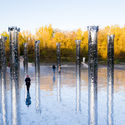
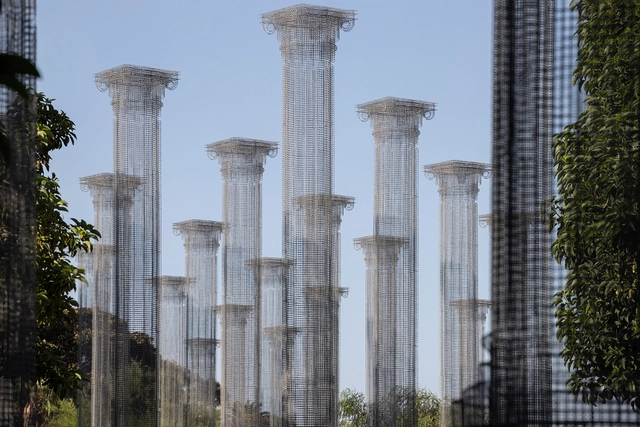
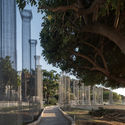
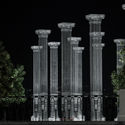
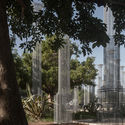
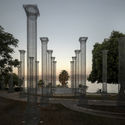
Edoardo Tresoldi has inaugurated a permanent installation on Reggio Calabria’s seafront, in Italy entitled Opera. Commissioned by the local Municipality and the Metropolitan City, the public art intervention “was created to celebrate the contemplative relationship between place and human beings through the language of classical architecture and the transparency of the Absent Matter”.
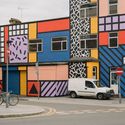
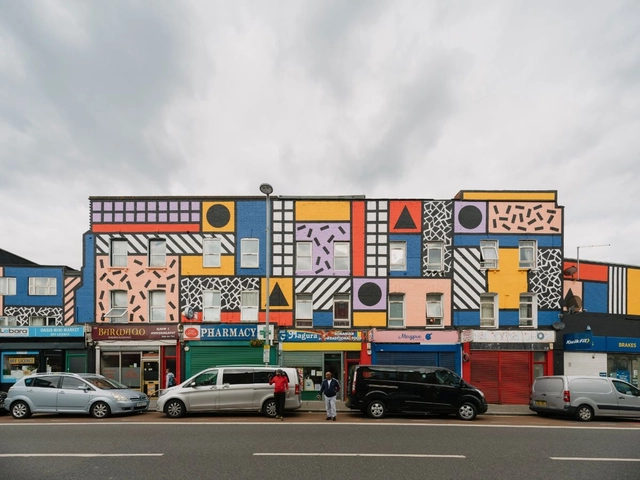
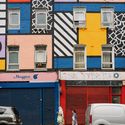
"Les Jumeaux" or The Twins is a new large-scale public urban intervention by French artist and designer Camille Walala in White City, West London. The project encompasses two pedestrian crossings and seven striking murals, created with geometric patterns and primary colors, Walala’s signature style. Moreover, Camille Walala also unveiled this month her East London intervention, a giant work of art aiming to breathe new life into the street and boost the local economy, entitled "Walala Parade".
The concept of Design for Disassembly (DfD for short) gained increasing traction in recent years, as it addresses the growing concern around the high consumption of resources and low recycling rate within the construction industry. The following article details on the method and features guidelines for a design process that facilitates the dismantlement of future buildings, with the scope of providing a better understanding of this principle within the broader framework of the current practice and circular economy.
Manufacturers: AutoDesk, Induzir, Nuno Cardoso Serralharia, Oficinas do Convento - Centro de Investigação Cerâmica + Telheiro da Encosta do Castelo, Oficinas do Convento - Laboratórios da Terra, +3Robert McNeel & Associates, Sobreira e Serras, Vitruvius FabLab ISCTE-IUL-3
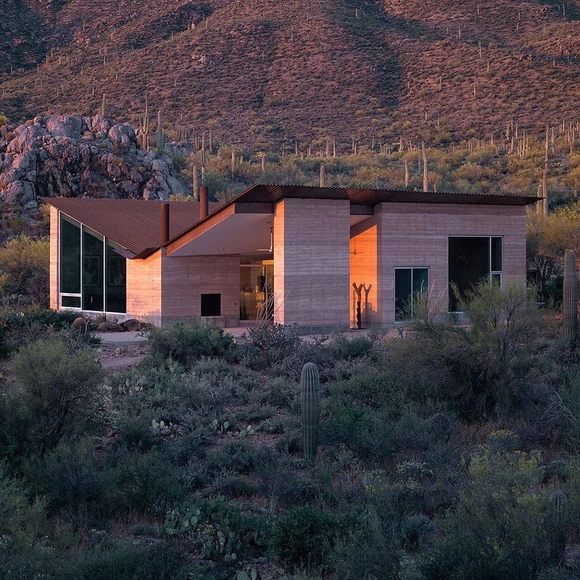
The author gained a grasp for innovative architectural materials and their application while working for architects such as Rick Joy, whose Mountain House in Tucson, Arizona, employed rammed-earth walls. (Creative commons/Flickr user designmilk)
There is a slide I like to show at the beginning of the architecture courses I teach that provides an overview of the last hundred years or so in design and technology. In the left column, a car from the beginning of the 20th Century (a Ford Model T) is poised over a contemporary car (a Tesla). The middle column contains a similar juxtaposition, showing a WWI-era biplane and a modern-day stealth fighter (an F-117A). In the right column, Walter Gropius’s 1926 Bauhaus Dessau building is seen next to an up-to-date urban mixed-use building. The punch line, of course, is that the two buildings—separated by roughly 100 years—look basically the same, whereas the cars and planes separated by the same timespan seem worlds apart. What is the reason for this?
Plastic has a huge contribution in the making of the modern man. It has revolutionized human activity and living because of its versatility as a material. It made space travels possible. It has revolutionized medicine. Daily, it saves millions of people making food resources safe and accessible to the poorest populations of the planet. Modern life is addicted to and dependent on this versatile substance, which is found in everything from cars, planes, computers and equipment to clothes made of polyester and nylon, to the adhesive seal on most teabags.
Since 1950’s, plastic production has almost outpaced that of almost
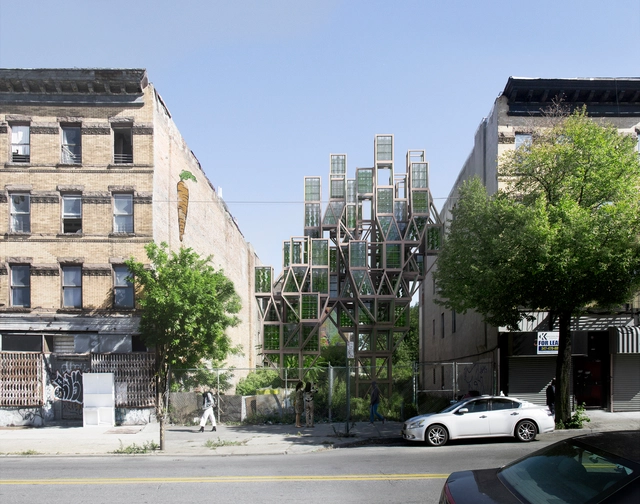
Framlab, an innovation studio based in Bergen and New York City has created Glasir, a community-based system for urban farming. The proposed modular structure relies on aeroponic growth systems to provide local products.


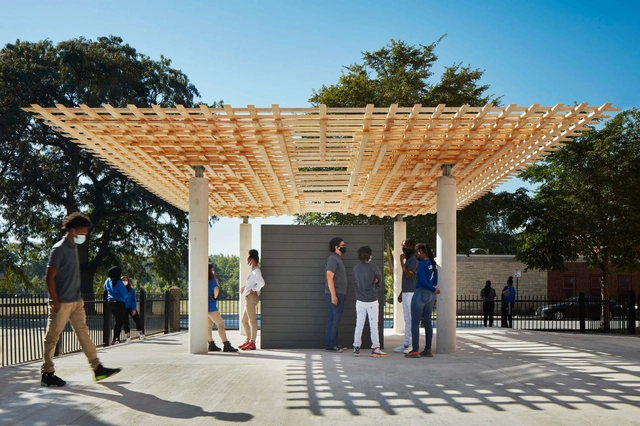


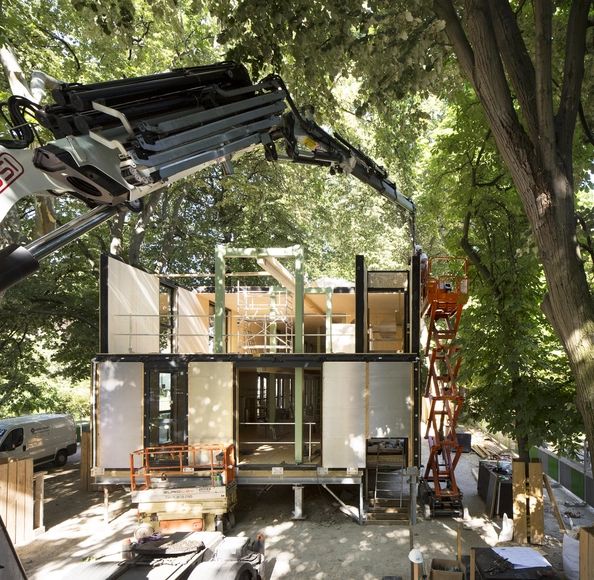
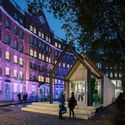
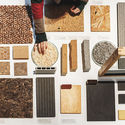
.jpg?1646040749 "SOM Explores Future Timber Construction Methods at the 2021 Chicago Biennial. Image © Kendall McCaugherty © Hall+Merrick Photographers")
.jpg?1646040755 "SOM Explores Future Timber Construction Methods at the 2021 Chicago Biennial. Image © Kendall McCaugherty © Hall+Merrick Photographers")



















__by_Camille_Walala__in_White_City_Place__London_2020_Photography_Charles_Emerson_HighRes_004.jpg?1597595156 "Les Jumeaux. Image Courtesy of Camille Walala")
__by_Camille_Walala__in_White_City_Place__London_2020_Photography_Charles_Emerson_HighRes_002.jpg?1597595028 "Les Jumeaux. Image Courtesy of Camille Walala")