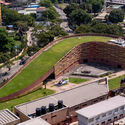
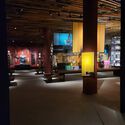
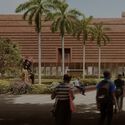
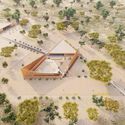
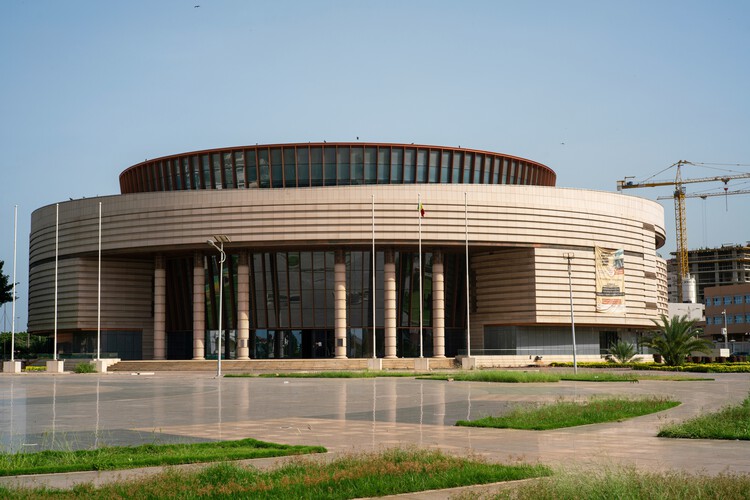
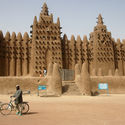
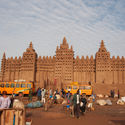
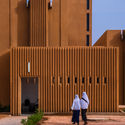
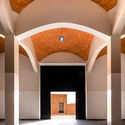
As countries in Africa emerged from colonialism in the mid-twentieth century, many expressed their independent identities through architecture. This process continues several decades later, exemplified by several new museums in West Africa, recently completed or in planning. Although varying in purpose and form, they have some common goals: addressing the need for restitution of many artifacts taken during colonialism and mostly kept in European museums; and defining a museum with local identity as opposed to a non-contextual import.
At a time of ecological collapse and rising food insecurity, architecture is increasingly called upon to engage not only with landscapes but with the systems that sustain and regenerate them. Among these systems, agriculture occupies a paradoxical role, as both a leading contributor to environmental degradation and a potential agent of ecological recovery. Industrial farming has depleted soils, fragmented habitats, and driven climate change through monocultures, fossil-fuel dependency, and territorial standardization. In response, agroecology has emerged as a counter-practice rooted in biodiversity, local knowledge, and the cyclical rhythms of nature. It reframes farming not as extraction, but as regeneration of ecosystems, communities, and the soil itself.
This reframing opens space for architecture to contribute meaningfully. To align with agroecology is not only to support food production, but to engage with the broader cultural, spatial, and ecological conditions that sustain it. It implies designing with seasonal variation, supporting shared use, and building in ways that respect both the land and those who work it. Architecture becomes more than enclosure — it becomes a mediator of cultivation, reciprocity, and coexistence.
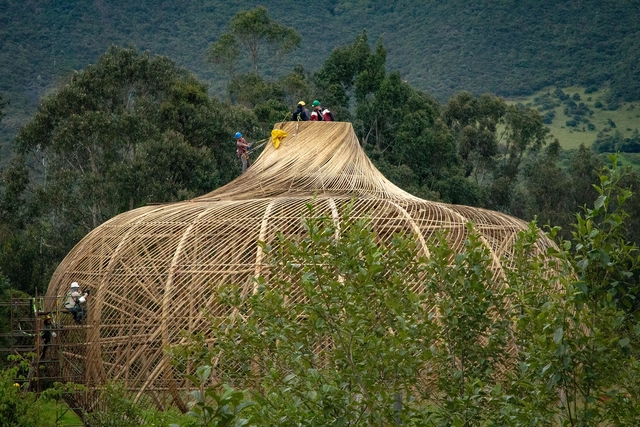
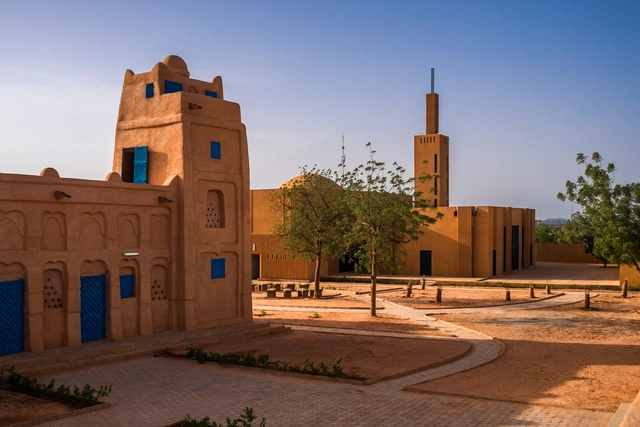
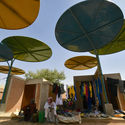
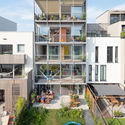
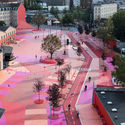
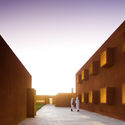
This curated collection unfolds the narratives of some of the most compelling architectural projects by women from the Global South. From the unique streets of Dubai to the rural landscapes of Niger, each project serves as a testament to the power of architecture to transcend gender boundaries and create meaningful designs that connect people and their surroundings.
Copenhagen-based philanthropic association re:arc institute has announced the cohort of nonprofit organizations, people, and practices they will support throughout 2024. The organization founded in 2022 works at the intersection of climate action and architectural philanthropy, aiming to support the development of solutions that address the root causes and consequences of climate change.
The architectural field often adheres to conventional industry models, either client-based or competition-based, which can perpetuate problematic or extractive motivations. The re:arc institute hopes to rethink the architecture discipline’s potential for addressing social and environmental concerns by providing a blueprint for pioneering philanthropic projects. To do so, they provide funding to nonprofits, individuals, and community-led projects exploring innovative approaches that prioritize planetary well-being. Their focus is on hyper-local, grassroots initiatives that address climate crises with a strong emphasis on the unique needs of specific places and communities.
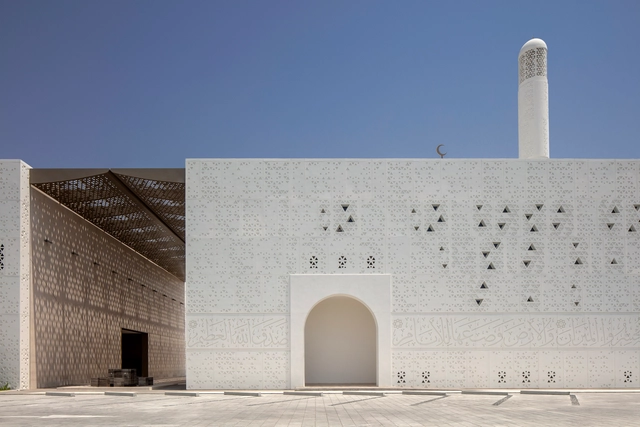
Sub-Saharan Africa is home to an enormous number of religious adherents – within which there is extraordinary diversity in religious expression. Iconic buildings serving a religious purpose are found throughout the continent, such as The Cathedral Basilica of the Holy Family in central Nairobi or the Hare Krishna Temple in South Africa. What is evident is that architecture that hosts religious gatherings makes up a key part of the urban fabric of sub-Saharan African cities and that in a lot of cases, religious structures go against the grain – leaving aside or tweaking classical models in favor of a unique architectural approach.
EJS Presidential Center. Image Courtesy of Atelier Masōmī
Atelier Masōmī has just revealed its design for The Ellen Johnson Sirleaf Presidential Center for Women and Development (EJS Center). President Ellen Johnson Sirleaf chose an all-female team to work on the project with lead architect Mariam Issoufou Kamara of Atelier Masōmī, exhibition's architect Sumayya Vally of Counterspace, and the local architect Liberian architect Karen Richards Barnes. The EJS Center, located in Liberia’s capital Monrovia, will provide digital access to former President Ellen Johnson Sirleaf’s personal and professional archives.
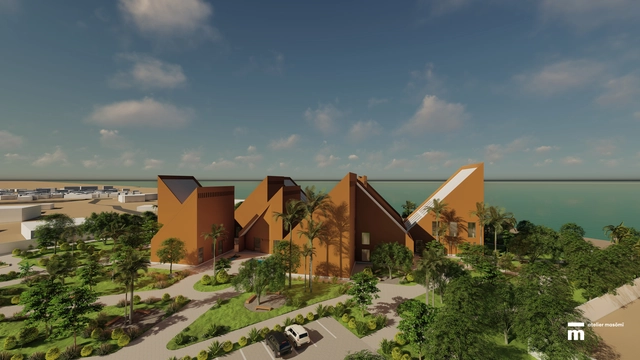
Rendering of the proposed Bët - b i museum and center for culture and community in Senegal. Image Courtesy of Atelier Masōmī
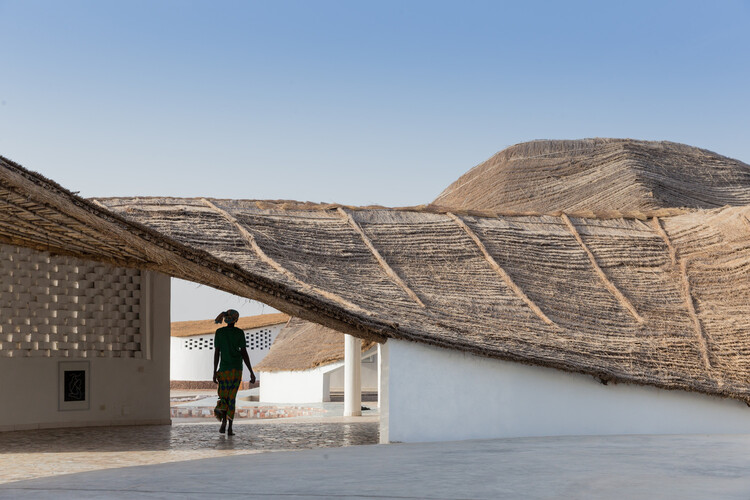
The Josef and Anni Albers Foundation/Le Korsa has announced that Niger-born architect Mariam Issoufou Kamara, founder of award-winning practice atelier masōmī, has been selected to design Bët-bi, a new museum and center for culture and community in southwestern Senegal. Located near a series of megaliths in the vicinity of the historic city of Kaolack, Bët-bi is set to be a state-of-the-art museum that sits at the forefront of West Africa’s flourishing arts scene and wider cultural renaissance.
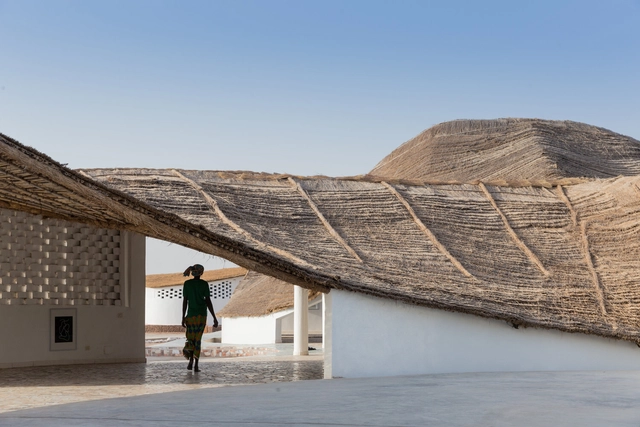
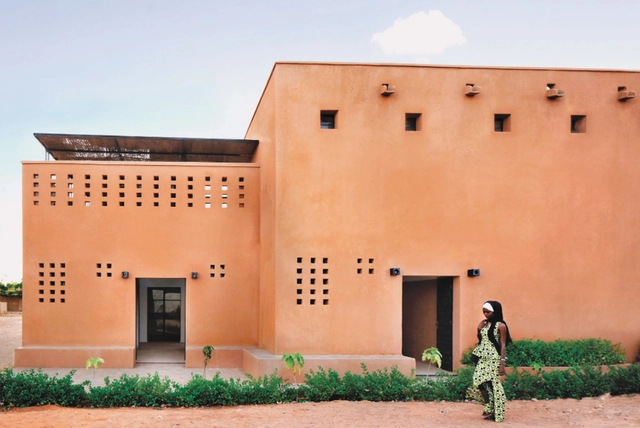
Architect Mariam Kamara—founder of Niamey, Niger-based firm Atelier Masōmī—is a contrarian of design pedagogy as it is largely practiced today. To Kamara, modern is not synonymous with European forms, architecture is not only for Westerners to define, and the so-called canon of great buildings actually ignores most of the built world. The Niger-based architect's rapidly growing practice informs a series of lectures she has delivered recently at MIT, Columbia University GSAPP, the African Futures Institute in Ghana, and Harvard GSD.
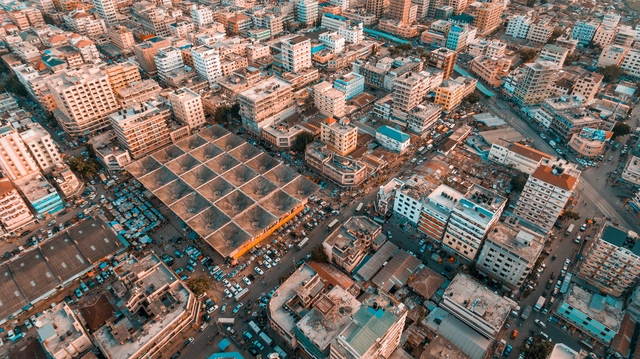
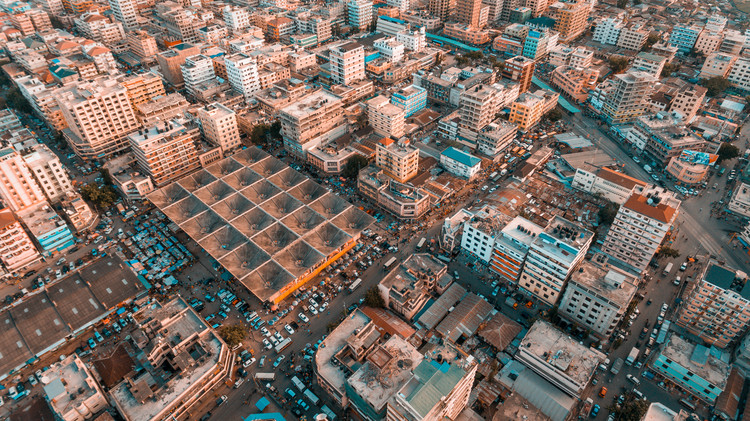
A few months ago – in July 2021, the 47-year-old Kariakoo Market went up in flames in Dar es Salaam. Designed by Tanzanian architect Beda Amuli, the market is a central landmark – a key part of Dar es Salaam’s commercial hub. Early images of a new Kariakoo Market show a taller structure, with six floors compared to the three in Amuli’s design. Conversations on social media have abounded on the new design, and if a “tower” typology is really the appropriate choice considering the unpopular nature of other similar “tower” market halls in Dar es Salaam.
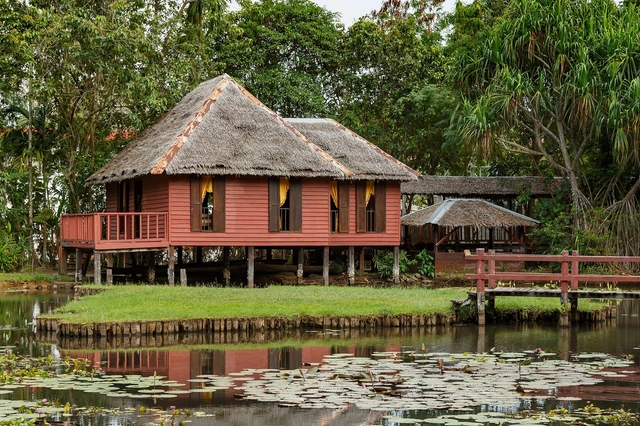
When we talk about vernacular architecture, we’re talking about an architectural style specific to a region – architecture that relies on the use of local knowledge and materials to construct buildings. It’s the Beehive Houses of Harran in Turkey, to the traditional Malay Houses found throughout southeast Asia. The vernacular architecture of various places continues to be a source of inspiration for contemporary architects, as they look to create sustainable architectural responses well-suited for their context.
SPACE10 and EFFEKT Architects . Image Courtesy of Space 10- The Ideal City
The world is constantly changing, and our built environment is continuously evolving and adapting. As we find ourselves immersed with challenges, experts and thinkers are re-examining the approaches humanity has adopted so far, in order to set new ideas for a better tomorrow.
“Cities are at the heart of the problem, and therefore also at the heart of the solution." Space 10, a research and design lab centered on people and the planet, has just released its latest publication, The Ideal City, in collaboration with gestalten. Gathering insights from around the globe, the book rethinks cities, investigating how to create spaces that support the well-being of the residents and contribute to a better world. Compiling projects and expert opinions, it highlights 5 main pillars that help in shaping the future of the urban realm.
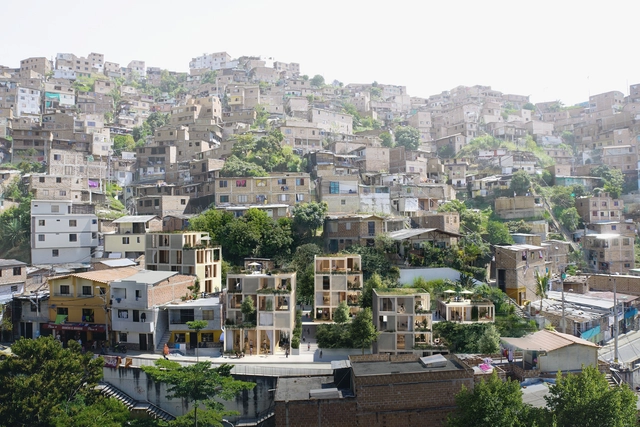
Countries that are part of the so-called “global south” have undergone many transformations in their cities and urban contexts in recent years due to the economic and social challenges they face. Urban growth, sustainable development, quality of life and health in emerging cities, and the development of their own cultural identity have been some of the issues that local architecture had to incorporate.
Young architects have understood the importance of making an architecture that is deeply rooted in their own territory while giving this architecture a clear local identity. By generating new typologies and using their own resources and materials, they have presented innovative, site-specific, and, above all, solutions with a new fresh focus towards what represents them as creators of this architecture.
The Royal Academy has revealed the shortlist for their annual prize recognizing young talent in architecture, the Dorfman Award. The award is given to those "...reimagining the future of architecture and whose work demonstrates a high degree of sensitivity to local and global context." The 2019 shortlist comprises four emerging architects practicing across the globe.