Milan Design Week has long been one of the most significant events in the global design sphere, showcasing groundbreaking concepts and visionary talent and fostering critical discourse in the design community. From the expansive trade fair Salone Del Mobile in Rho Fiera to design districts scattered across the city, Design Week brings together diverse voices, perspectives, and talent. According to Salone del Mobile's press statement, this year’s fair had 17.1% more visitors than in 2023, with a record turnout of 361,417 visitors overall.
With visitors from China, Germany, Spain, Brazil, India, Turkey, Japan, and many more, the design week showcases a plethora of exhibitions, installations, talks, and panels. As the week comes to a close, running from April 15-21st, 2024, this article highlights diverse installations throughout the city relevant for architects and designers globally. Whether it is Mario Cucinella’s exploration of regeneration, Google’s display experimenting with sensory and color, or MAD architects investigating the boundaries of natural and man-made landscapes, the week was filled with fruitful collaborations that showcase the future of design.
Every year, Earth Day, celebrated on April 22, presents us with an opportunity to contemplate the conditions of our planet and our impact upon it. Generating around 37% of global carbon emissions, the construction industry has an important, often detrimental, role to play, thus placing an increasingly urgent responsibility on architects and builders to devise strategies for reducing this number. Still, the built environment represents the habitat for most of humanity, and so it has the potential to protect and shelter people from the risks posed by the changing climate. Read on to discover a collection of articles delving into the strategies available at urban and architectural scales for mitigating the effects of climate change and minimizing the industry’s impact upon it.
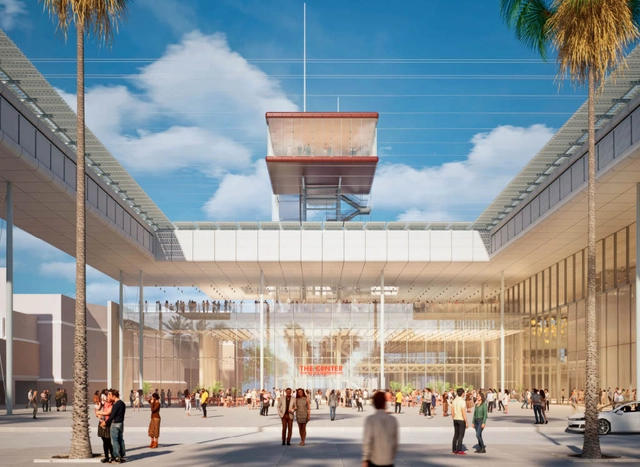
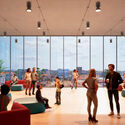
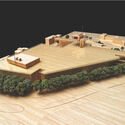
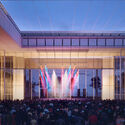
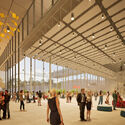
Pritzker Prize Laureate Renzo Piano has just revealed designs for Boca Rotan’s new creative campus, The Center for Arts & Innovation in Florida. The Center seeks to transform Boca Raton into an internationally recognized destination for culture, arts, innovation, and technology. In fact, the three-story structure features functions that bridge creativity across the realms of arts, education, business, and community.
Still in its early and iterative stages, the Center aims to pioneer a new approach to how the world designs, imagines, programs, and embraces its cultural infrastructure. Catalyzing future leaders and visionaries, the scheme offers a dynamic platform for new ideas, AI integration, and end-to-end STEAM education. Seeking to cultivate knowledge and community engagement, The Center is dedicated to shaping tomorrow’s cultural landscape through equipping its future leaders and occupants with the resources they need today to build a better tomorrow.
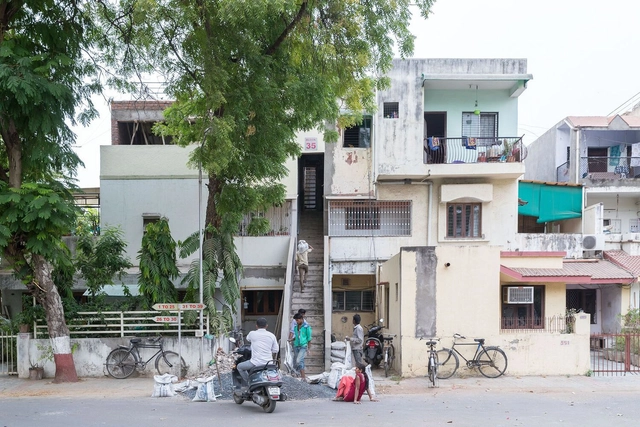
In a nation grappling with a severe housing shortage for its economically weakest sections, the concept of "low-cost housing" has surprisingly faded from public consciousness and policy discourse. A crisis impacting millions of the nation's poorest, the need for affordable housing has become even more pressing as India's population overtakes China to emerge as the most populous nation. If left unaddressed, the housing crisis may result in mass homelessness and undignified living conditions for citizens.
The opening scenes of the award-winning Brazilian film "City of God" (2002) portray a newly constructed housing complex situated on the outskirts of Rio de Janeiro. Subsequently, this complex evolves into a hub of poverty and violence. Despite the film being set in the 1960s, the housing development depicted was a recent construction.
This choice made no difference because, despite the 40-year difference between the depicted era in the film and the time of filming, the architectural solutions employed by housing programs in the country remained stagnant. They continued to replicate outdated models, showcasing a lack of progress in the sector.
The Second Studio (formerly The Midnight Charette) is an explicit podcast about design, architecture, and the everyday. Hosted by Architects David Lee and Marina Bourderonnet, it features different creative professionals in unscripted conversations that allow for thoughtful takes and personal discussions.
A variety of subjects are covered with honesty and humor: some episodes are interviews, while others are tips for fellow designers, reviews of buildings and other projects, or casual explorations of everyday life and design. The Second Studio is also available on iTunes, Spotify, and YouTube.
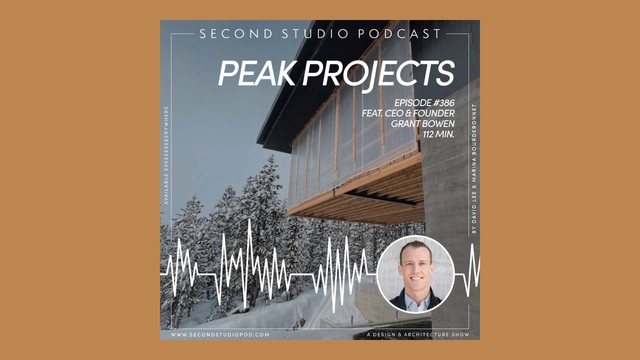
This week David and Marina of FAME Architecture & Design are joined by CEO & Founder of Peak Projects, Grant Bowen, to discuss how clients can have a successful project, Grant’s background; the role of an owner’s representative throughout design and construction; working with clients and different professionals; construction costs; fees; different project types; and more.
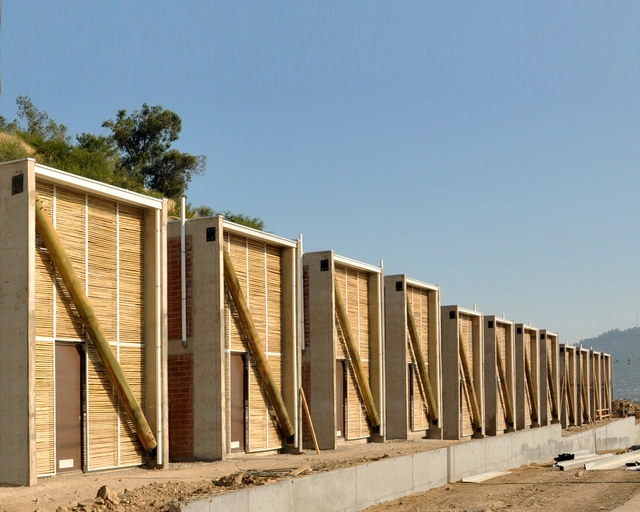
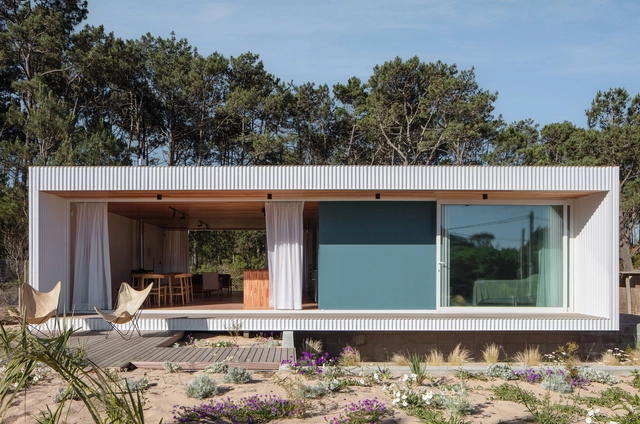
How can industrialization and environmental responsibility go hand in hand? What siting, technological, or constructive strategies can be developed without harming the surrounding landscape? The application of modular design in architecture has been in practice for years, with a history involving the pursuit of standardization and modular coordination among materials, products, and more. Over time, it has been complemented by various environmental, sustainable, ecological, and economic factors to achieve the adaptability and functionality desired by its inhabitants.
Throughout various historical civilizations and art movements, from Classical Greece and Rome to the Renaissance and the Bauhaus, the collaboration between art and architecture has been a significant societal expression. However, the 20th-century ideals of modernism and mass production resulted in the decline and near disappearance of art within buildings.
In response, many European countries have taken on the responsibility of promoting the collaboration between art and architecture. Schemes were created mandating that a percentage of the total cost of a new public building, place, or space must be spent on art. This legislation, commonly known as 'Percentage for Art', originated in France and has been explored by artists and architects over the years to create new architectural experiences.
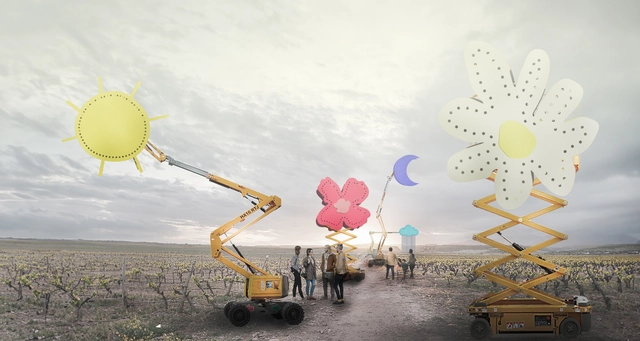
Cuaderno de surcos / ji arquitectos + Blas Antón. Image Courtesy of Concéntrico
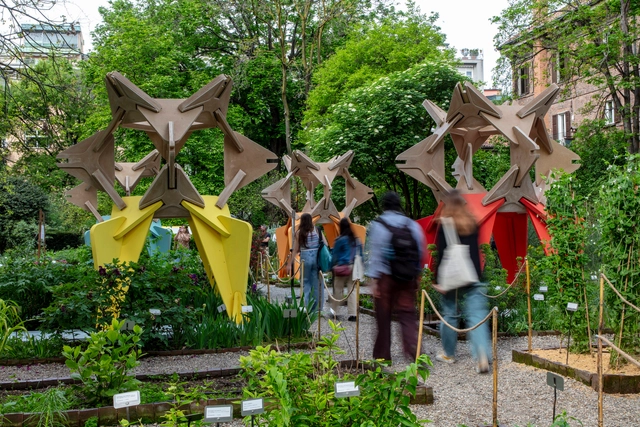
From April 25th to May 1st, 2024, in the Spanish city of Logroño, Concéntrico prepares for its 10th anniversary edition. Envisioned as a contemplation of changing urban environments and an opportunity to share insights about these processes, this year’s International Festival of Architecture and Design incorporates new formats to engage a wider audience and explore time as a catalyst for change in urban and social design. The festival expands its program, featuring 21 installations by designers of 20 different nationalities, in addition to several other initiatives and explorations.
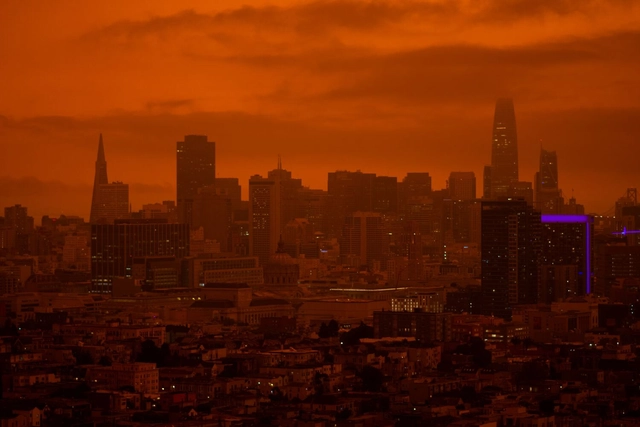
In June 2023, the planet experienced its hottest month on record. In Iran, the heat index reached a staggering 66.7 degrees Celsius, pushing the boundaries of human endurance. This alarming trend is not an anomaly. It is a stark reminder that temperatures will continue to rise as climate change intensifies.
Scientists are linking the rise to human-induced climate change and the El Niño phenomenon. Additionally, the natural warming of Pacific Ocean waters is being further intensified by global warming.
I am by no means an expert on public-private partnerships. But for about 10 years, as the University of California Berkeley’s campus planner and then campus architect, I watched these developments play out in higher education—sometimes from a front-row seat, sometimes as a participant. During that time, this strategy, promoted with great enthusiasm and optimism, was touted as the answer to whatever problem arose. And yet the definition of a public-private partnership was slippery. The concept itself seemed to be all things for all people, depending on what was needed, who was recommending it, and what equivalents (if any) existed outside the university. The bandwagon continues to play today, making it ever more important to nail down the pros and cons of this development strategy, not only for colleges and universities, but for all public decision-making.
https://www.archdaily.com/1015830/are-for-profit-developments-consistent-with-the-values-of-a-public-universityEmily B. Marthinsen
We are thrilled to announce our upcoming May workshops in collaboration with our ArchDaily Supporters partner, Parametric Architecture. These workshops have been thoughtfully curated to empower architects, designers, and enthusiasts by providing them with the latest insights and skills in the dynamic realm of parametric design. Guided by industry experts and visionaries, these immersive sessions will explore cutting-edge techniques, innovative tools, and practical applications, creating an inspiring and dynamic learning environment where participants can take their design expertise to unprecedented levels.
https://www.archdaily.com/1015811/parametric-architecture-may-workshopsArchDaily Team
Simone Farresin from the Italian studio Formafantasma talks about his practice, together with his partner Andrea Trimarchi, their work, and the different approaches to projects. He also tackles their participation in the MilanDesign Week, and the political role of creatives in the world.
https://www.archdaily.com/1015806/simone-farresin-from-formafantasma-talks-on-milan-design-week-and-the-responsibility-of-the-designersArchDaily Team
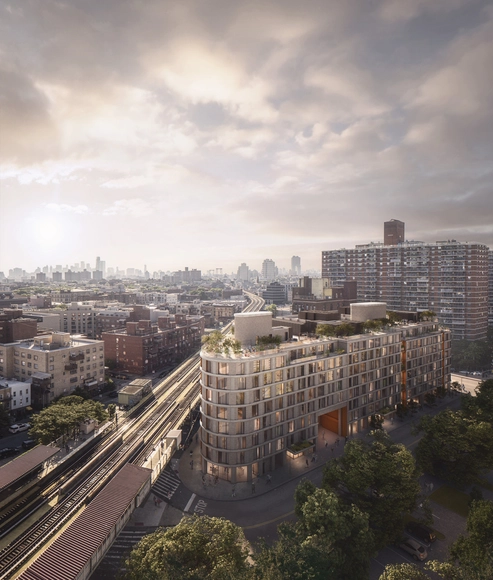
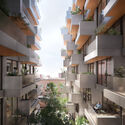
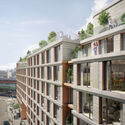
New York-based architecture office ODA has unveiled its design for Lorimer House and Copper Lofts, a development comprised of two residential buildings located in East Williamsburg in New York City. The design takes advantage of the triangular shape of the plot, employing rounded corners throughout the building to soften its image and create contextual references to its urban surroundings. Containing a total of 336 residential units, in addition to various amenities, the construction is slated for completion in 2024.
While hybrid working and flexible hours represent the most obvious ways to improve work/life balance for many, because of the missed social interactions and the lack of space or functionality at unproductive home workspaces, the majority of 16-24-year-olds are the only age group who prefer to work from the office.
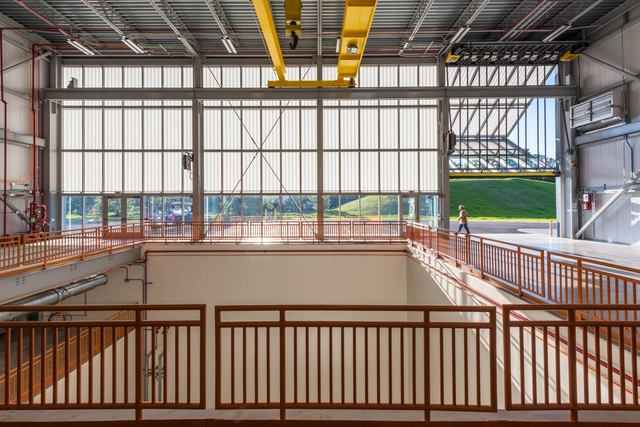
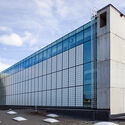
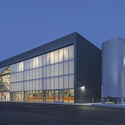
The question, "How can we control natural light in interior spaces?" is fundamental in architecture. Unregulated direct sunlight can cause discomfort such as visual strain and undesirable heat gains. Therefore, it is crucial to control its entry effectively. Some design solutions include installing shading devices, planning spatial orientation, and building forms for indirect natural light. Window treatments like films or heat-reflective glazing can also be used.
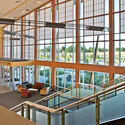
However, there are innovative strategies to control natural light more efficiently through advanced glazing panels like the Kalwall 175CW. This translucent insulated glazing unit is compatible with most third-party curtain wall systems. By manipulating the translucency of the glazed material, it's possible to influence the visual and thermal comfort of spaces. At the same time, this can enhance the architecture of modern spaces, adding substantial aesthetic and emotional value.
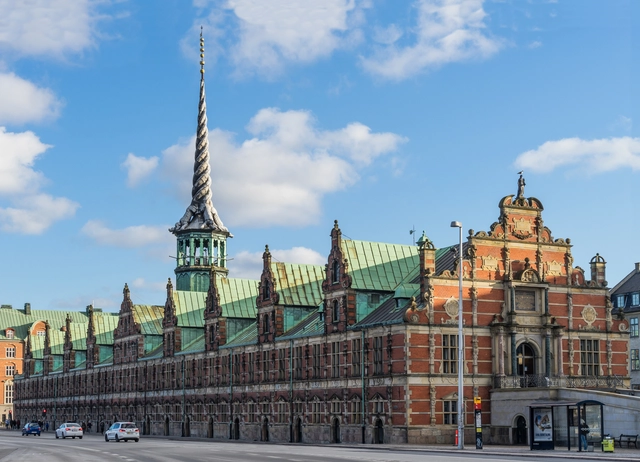
In the early morning of April 16, a fire broke out in the capital of Denmark, engulfing Copenhagen’s Old Stock Exchange, one of the oldest landmarks in the city. In the fire, the 56-meter-tall Dragon Spire, shaped as the tails of four entwined dragons, collapsed. In just a few hours after the fire begun, half of the 17th century Børsen building was destroyed according to authorities. The structure was undergoing renovation works at the time of the event. Emergency workers, staff members and passers-by collaborated to rescue the historic artworks housed in the former stock exchange.