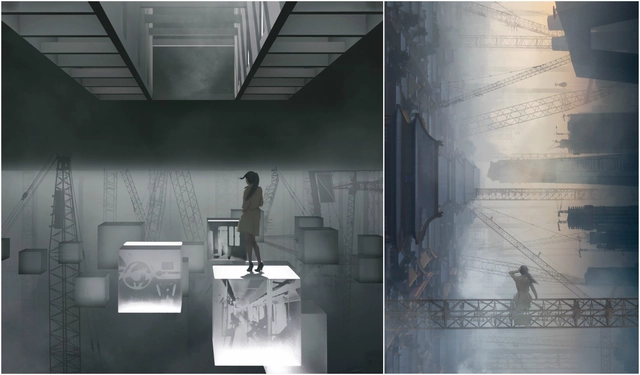
1st Place: Deep Pool That Never Dries. Image Courtesy of Blank Space
Blank Space, in collaboration with The National Building Museum, has announced winners of their fifth annual Fairy Tales competition, unveiled in front of a live audience at the Washington D.C. National Building Museum. The competition saw submissions from 65 countries, with 3 prize winners, a runner-up, and 9 honorable mentions chosen for their exploration of current events and the creative process through well-crafted short stories and artwork. The winners were chosen by a jury of 20 leading architects, including Daniel Libeskind, Bjarke Ingels, and Maria Aiolova.
https://www.archdaily.com/891849/a-tale-of-misplaced-trust-in-news-media-wins-2018-fairy-tales-competitionNiall Patrick Walsh
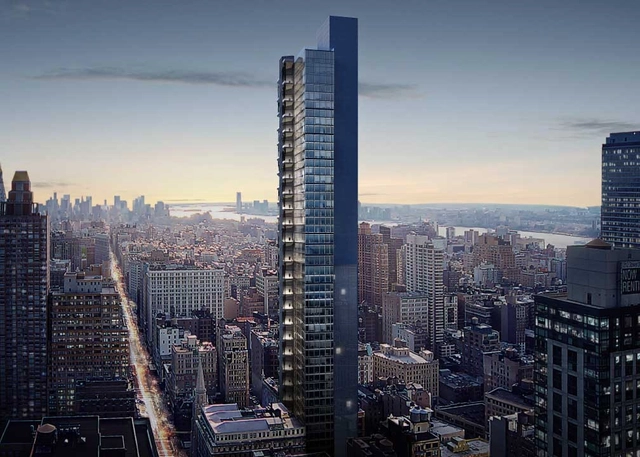
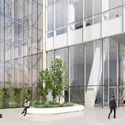
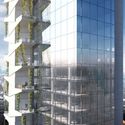
New York YIMBY has revealed initial renderings of BIG’s proposed office skyscraper at West 29th Street, New York, on the site of the old Bancroft Bank Building. Officially named “29th and 5th,” the scheme will offer a LEED-certified design focused on wellness and sustainability, featuring outdoor terraces stacked alongside a glass curtain façade.
Homes may be the most powerful projection of architectural value. Because shelter is essential for all of us, the home is architecture’s universal function. We’re all experts on what our own home must be, to us.
But architects often have a different view of home. Twenty years ago—during the recession before the last recession—I remember hearing an architect declare that he could earn a living designing houses until “real work came along.” Another architectural meme is the classic first job: designing a house for your parents.
Since the devastating Grenfell Tower fire in June 2017, the people of London have been searching for an answer to the exact cause of the fire that killed 71 people. Now Forensic Architecture—the Goldsmiths, University of London-based research group headed by Eyal Weizman—seeks to aid in the search for answers with their new Grenfell Media Archive. This online crowdsourcing database intended to collect people's first-person accounts in order to map them onto a 3D model of the tower and analyze exactly what happened to the tower.
Digital technology has broken into the timber construction scene at ETH Zurich, where a research team is using programmed robots to construct load-bearing timber modules. These modules are being used to stabilize the top two levels of their DFAB HOUSE project, a three-story residential unit located in Dübendorf, which aims to bring a variety of digital construction methods together under one roof.
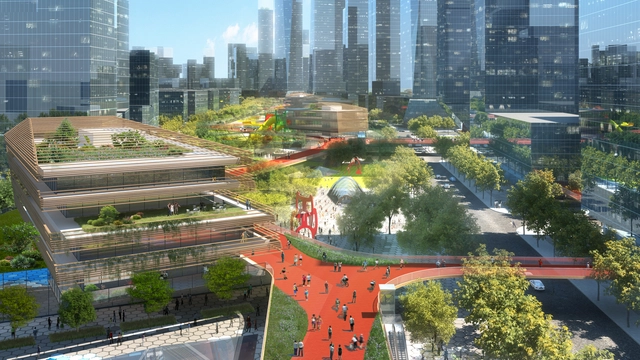
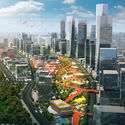
HASSELL has won a competition for the design of the Qianhai Mawan Mile, a business district for the Chinese “gateway city" of Shenzhen. Stretching over one mile (1.6 kilometers), the masterplan seeks to combine “lush parklands, new cultural buildings, and a meandering skydeck” in a vision centered on human-wellbeing.
Aimed particularly at attracting young, mobile residents in a rapidly-changing urban environment, the Mawan masterplan consists of integrated public spaces, neighborhood zones, pavilion buildings, and a mile-long (1.6-kilometer-long) skydeck weaving throughout the development.
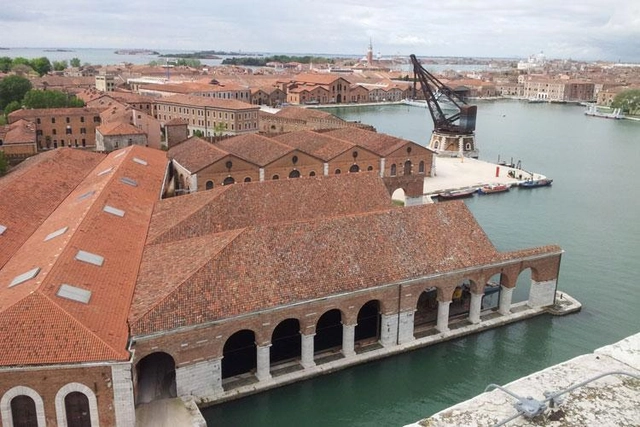
The Venice Biennale has released a list of 13 Collateral Events that will take place alongside the 16th International Architecture Exhibition, FREESPACE, curated by Yvonne Farrell and Shelley McNamara and chaired by Paolo Baratta. Previews of the main event begin May 24th and 25th, with the exhibition open to the public from May 26th to November 25th, 2018.
The collateral events, each promoted by a non-profit sponsor, will take place across the city in an attempt to enrich the diversity of voices that characterize the Biennale.
The complete list of events can be found below, and make sure to follow ArchDaily's complete coverage of the Venice Biennale.
https://www.archdaily.com/891768/venice-biennale-2018-collateral-events-announcedNiall Patrick Walsh
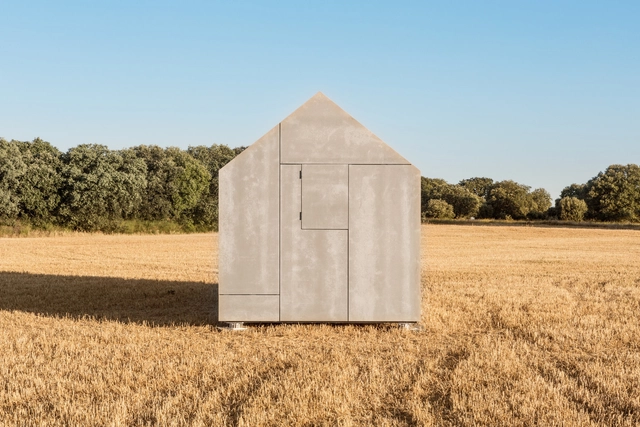
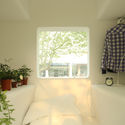
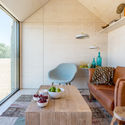
Tiny houses have become popular in recent years as housing prices continue to soar. Whether as an off-the-grid retreat or a way to live more simply and economically, tiny homes offer a more flexible way to live. They are even being used by charity organizations such as the Tiny Homes Foundation in Australia as a way to tackle the issue of homelessness in cities and the need for social housing. As the popularity and need for tiny homes become ever more prevalent, knowing the necessary skills to design a tiny house for yourself or a client is a useful skill to have.
Below are 6 tips to keep in mind when designing and building a tiny house:
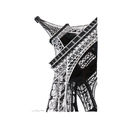
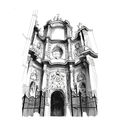
Lorenzo Concas, an architect, photographer and light designer based in Florence, creates tiny sketches which are layered with an incredible amount of detail. The width of these drawings only spans the length of a fineliner, yet Concas manages to fit in detailed recreations of elaborate ornament. His drawings accentuate the play of light and dark on these Gothic cathedrals and other famous monuments.
Using fineliners and Copic sketch markers, Concas captures these works of architecture from unique angles, allowing us to see the beauty and potential of these buildings in new ways. From intimate details of the Basilica di Santa Maria Novella to low angles which bring attention to the awe-inspiring height of the Eiffel Tower, these drawings exhibit the power of the sketch and how architecture can come alive through pen and paper.
Since 1996, the Royal Institute of British Architects (RIBA) has hosted awards for exemplary buildings across the UK by RIBA Chartered Architects and RIBA International Fellows. This year, 93 projects were shortlisted out of 203 entries for the 2018 RIBA London Awards; including designs by Foster + Partners, Hawkins\Brown, Allford Hall Monaghan Morris, and Make Architects. Each project will be visited by one of five London juries during the month of April. Winners will be announced at the award ceremony on May 15th at the RIBA headquarters at 66 Portland Place, London.
Scroll down to see a complete list of the shortlisted architectural works.
Small spaces often need to accommodate essential functions. How can you incorporate a kitchen into your design in the best possible way when floor space is limited? We've carefully reviewed our published projects to select seven houses where architects have effectively addressed this challenge through intelligent and innovative configurations.
These kitchens manage to appear larger than they actually are by being connected to adjacent spaces such as living rooms or dining rooms. They occupy very small areas themselves, taking a different approach from the traditional kitchen, which usually occupies a separate and exclusive room.
In the 1920s, Dutch-born artist Piet Mondrian began painting his iconic black grids populated with shifting planes of primary colors. By moving beyond references to the world around him, his simplified language of lines and rectangles known as Neo Plasticism explored the dynamics of movement through color and form alone. Though his red, yellow and blue color-blocked canvases were important elements of the De Stijl movement in the early 1900s, almost a century later Mondrian’s abstractions still inspire architects across the globe.
But, what is it about these spatial explorations that have captivated artists and designers for so long?
As the profession becomes more aware of the variety of users who will use their architectural creations it is necessary to consider certain basic rules. In the end, the idea is that a building or space can be used comfortably, effectively and (if necessary) quickly by all users. Today the use of BIM technology encourages the incorporation of pre-modeled products in projects, which facilitates the processes. However, if pre-modeled products are not inclusively designed, there is an increased possibility of overlooking these accessible considerations–especially when their architects have no experience or are unaware of accessible design guidelines.
Bradley Corporation USA, a manufacturer of plumbing fixtures and bathroom accessories, has developed standard models of bathrooms for people with disabilities, delivering the basic requirements that must be incorporated according to the guidelines specified by organizations such as the ADA and the ANSI. Below we present an example of an accessible bathroom for a single person, incorporating, among other things, a touchless handwashing sink (all-in-one: soap, water, and hand dryer) and a series of safety bars. Before including it in your project, don't forget to check the local regulations of your country/region.
The development company Fisher Brothers' "Beyond the Centerline" competition was launched in October 2017 as an open call to "enliven and activate the medians for a new generation of New Yorkers." The competition addresses the Park Avenue commercial district, which sits between 46th and 57th Streets.
Out of nearly 150 submissions, an eight-person jury narrowed the field down to 17 finalists, details of which can be found here. Two designs have since been selected as winners, with "Park Park" by Maison winning the jury selection, and "Park River" by Local Architects winning the popular vote.
Spanish architect Anna Puigjaner has revealed how she is applying her “Kitchenless” housing typology within her own projects in a recent interview with Metropolis Magazine as one of their 2018 Game Changers. After receiving funding from the Harvard GSD Wheelwright Prize for her controversial proposition in 2016 (after which ArchDaily published an interview with her), Puigjaner talks about the time she spent traveling the world and visiting the many different cultures that share her idea of communal cooking, adding that millennials are more inclined to co-habit or share resources.
The kitchen is the most provocative part of the house. It has been used as a political tool for a long time, to the point that nowadays we can’t accept living without a kitchen.
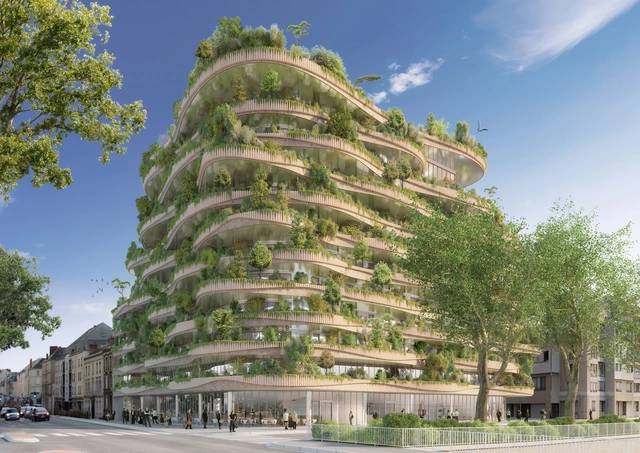
For the "Imagine Angers"international design competition, Vincent Callebaut Architectures worked in collaboration with Bouygues Immobilier group to submit a proposal for the French city at the intersection of social and technological innovation, with a focus on ecology and hospitality. Named Arboricole, meaning “tree” and “cultivation,” this live-work-play environment gives back as much to the environment as it does its users. Although WY-TO prevailed in the competition, the Callebaut scheme succeeded in winning the public vote.
Proyectos 9, a Monterrey real estate developer, announced Sordo Madaleno Arquitectos as the winners of the international architectural design competition for the construction of Constitución 999, a new mixed-use complex to be erected in the downtown area of Monterrey.
OMA New York has released initial details of its design for the Audrey Irmas Pavilion, a new addition to the Wilshire Boulevard Temple in Los Angeles, California. The OMA scheme, currently seeking planning approval, seeks to “forge new connections within the existing campus and create a new urban presence to engage Los Angeles.”
Having won a competition for the pavilion's design in 2015, the OMA scheme represents the firm’s first commission from a religious institution and their first cultural building in California. Designed in collaboration with Gruen Associates, the Audrey Irmas Pavilion will form the newest addition to the Wilshire Boulevard Temple, the oldest Jewish congregation in Los Angeles. The scheme will serve as a multi-purpose gathering space in what Rabbi Steve Leder regards as “the city’s most diverse neighborhood.”
https://www.archdaily.com/891674/oma-reveals-pavilion-design-for-wilshire-boulevard-temple-in-los-angelesNiall Patrick Walsh
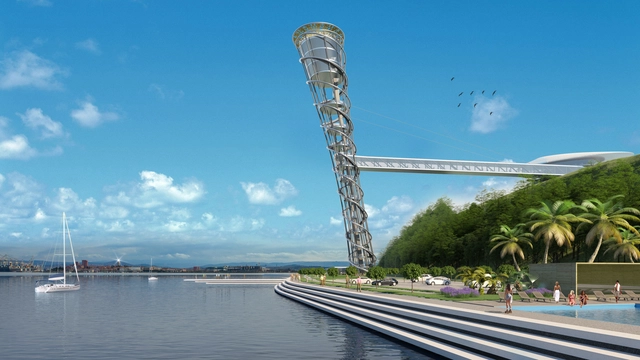
Massimiliano and Doriana Fuksas have released images of their competition-winning “Capo Grande Tower,” a tower and bridge situated on the Slovenian coastline linking Giusterna Beach to Monte San Marco. Designed in collaboration with Slovenian architect Sandi Pirš, the scheme consists of a 365-foot-high (111-meter-high) double-ellipse structure inclined slightly towards the sea, seeking to “immediately become a new symbolic element of the city.”
With the unconventional, undulating forms of his buildings—and the fact that his path to architectural success included a stint working for Zaha Hadid—Ma Yansong is often miscategorized as an architect of the latter generation of Deconstructivists, interested only in futuristic forms that push the boundaries of technology for the sake of innovation as an end in itself. But in fact Ma’s designs, especially those in his home country of China, are deeply rooted in nature and tradition, as he explains in the latest interview from Vladimir Belogolovsky’s “City of Ideas” series.
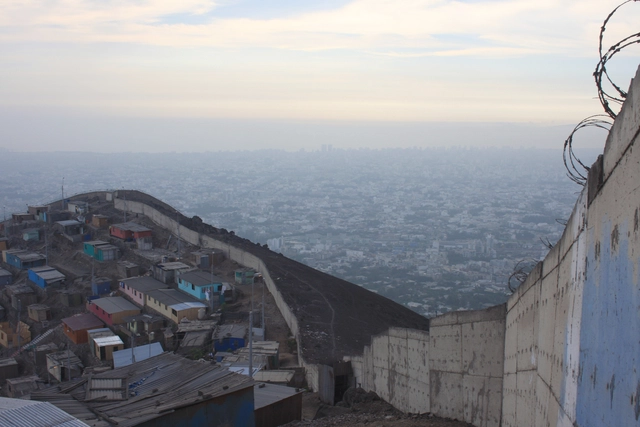
Warning: this article proposes a narrative according to the route taken from one side to the other of the wall, from the predictable to the most unpredictable. To better situate ourselves, the narrative will be told through my personal experience.
"Do you know the wall that divides the rich from the poor?," asked three Greek travelers who, after visiting the "pretty" side of Lima, suspected that something was hiding behind appearances. But, "how is it that from, even though you're from the other side of the world, you knew about the wall?" Well, news travels. And "why is this wall something that has to be seen in our city?" if it's not a cause for pride. I knew exactly what they were talking about. I spelled it out: the wall of shame. Certainly, I wasn't familiar with it in situ either, since I hadn't left my urban bubble, like many of those who live in these parts, so with the same curiosity, as a tourist of my own city, we made our way.
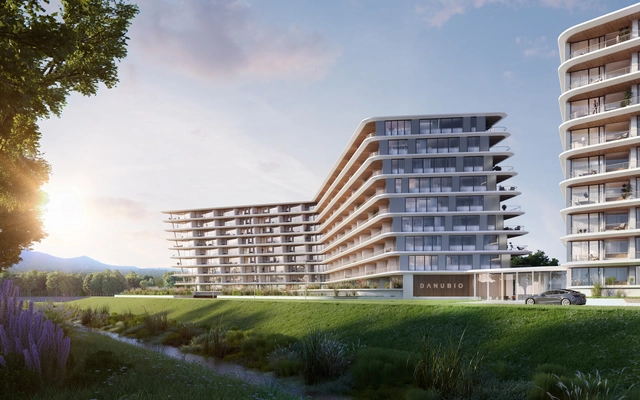
Imagine having input in the design process for your custom apartment built alongside the second largest river in Europe. T2.a Architects has unveiled their design for DANUBIO, a new residential development in Budapest, which aims to do just that.
The driving concept behind the development of DANUBIO is to give the freedom of design back to the residents, inviting them to give input into the configuration of units within the building. Using Grasshopper, a Rhinoceros plug in, a script was developed to allow creative flexibility in the design of each resident’s future home. This algorithm is altered every time a new resident enters the community by allowing them to define the typology, orientation, and location of their future home during the design process.
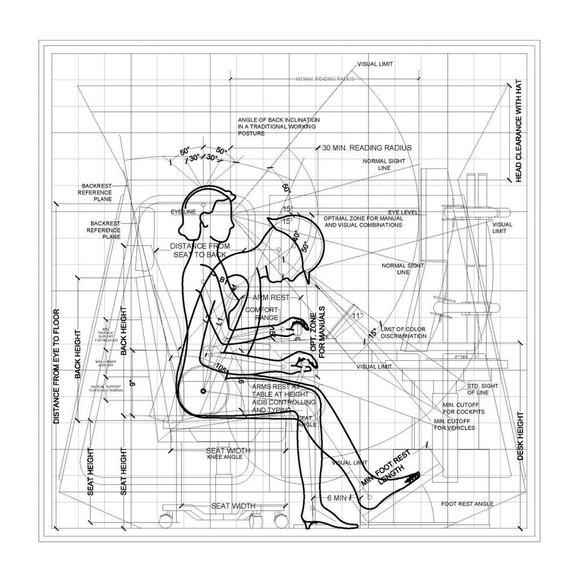
Anthropometric Data - Crane Cabin Operator vs Remote Control Operator. Drawing by Het Nieuwe Instituut 2017. Image Courtesy of Het Nieuwe Instituut
As part of our 2018 Venice Architecture Biennale coverage we present the proposal for the Dutch Pavilion. Below, the participants describe their contribution in their own words.
Het Nieuwe Instituut, the Netherland’s leading museum and scholarly institution focused on architecture, design and digital culture, will present WORK, BODY, LEISURE, the Dutch exhibition for “FREESPACE”, the 16th International Architecture Exhibition of La Biennale di Venezia. Commissioned by Het Nieuwe Instituut and curated by architect and researcher Marina Otero Verzier, the 2018 Dutch Pavilion exhibition addresses the spatial configurations, living conditions and notions of the human body provoked by disruptive changes in contemporary labor ethos and conditions. The project seeks to foster new modes of creativity and responsibility within the architectural field in response to emerging technologies of automation.
https://www.archdaily.com/891658/dutch-pavilion-at-2018-venice-biennale-work-body-leisure-to-address-automation-and-its-spatial-implicationsAD Editorial Team



















.jpg?1521824916&format=webp&width=640&height=580)
.jpg?1521824976 "Park Park. Image © Maison")
.jpg?1521824927 "Park Park. Image © Maison")
.jpg?1521824988 "Park River. Image © Local Architects")
.jpg?1521825000 "Park River. Image © Local Architects")
.jpg?1521824916)