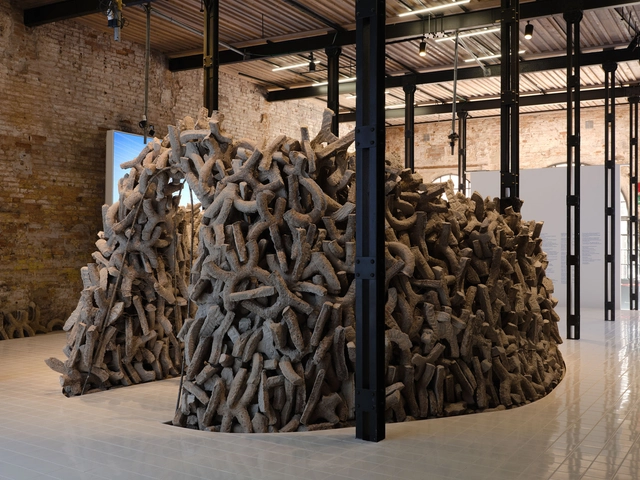
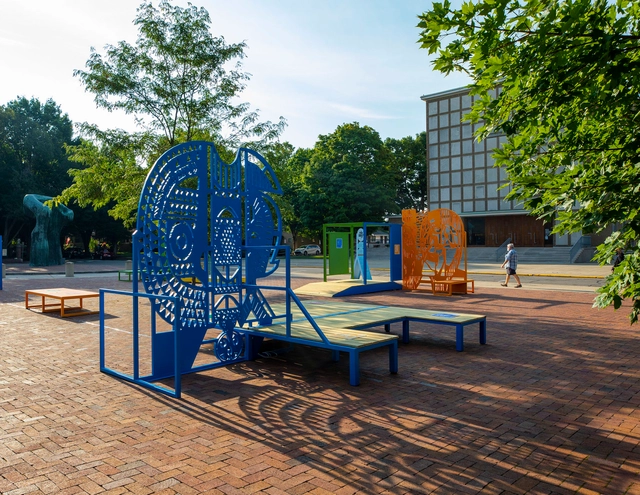
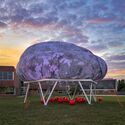
This year’s Exhibit Columbus explores the conditions of middle places as interconnections between ecosystems and the built environment through 13 temporary installations that highlight various aspects that make up the identity of the Mississippi watershed. Now at its third edition, the event builds on the Modernist cultural legacy of the Indiana city through a series of artistic and architectural explorations that activate public spaces and engage the community of Columbus.
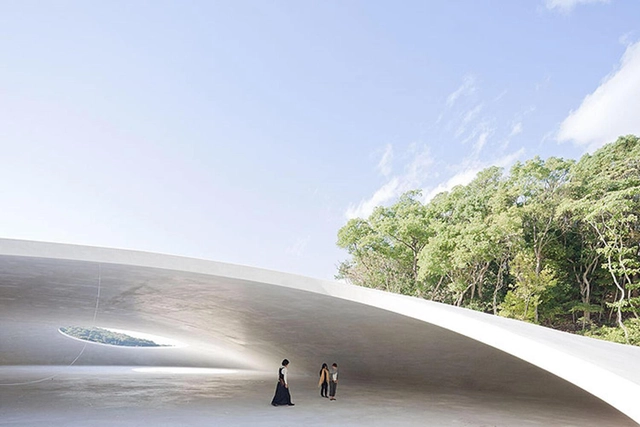
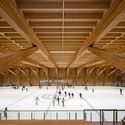
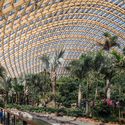
In architecture, ‘span’ is the term given to the length of a structural component that extends between two supports, or the continuous space created between two pillars of a building structure, and when we think of this element, one cannot help recalling classics such as Lina Bo Bardi's MASP, Álvaro Siza's Expo'98 Portuguese National Pavilion, and the Roman Pantheon. However, there are several other buildings with this feature, and recent projects have been using innovative and bold structures to create even more unexpected designs.
https://www.archdaily.com/967697/long-span-buildings-that-defy-gravityEquipe ArchDaily Brasil
Architecture 2030 is calling on all architects, engineers, planners, and individuals involved in the building sector worldwide to design all new projects, renovations, landscapes, cityscapes, and infrastructure to be zero carbon starting now.
Cradle to Cradle is the name of the design concept in which the recycling of a product´s components at the end of its life cycle is already planned for. GROHE is a sanitary-industry pioneer and is launching its first Cradle to Cradle Certified® products. Image Courtesy of Grohe
With the building industry responsible for 50 per cent of material consumption worldwide, GROHE sees huge potential for innovation here and is putting the Cradle to Cradle® design concept at the heart of its product development.
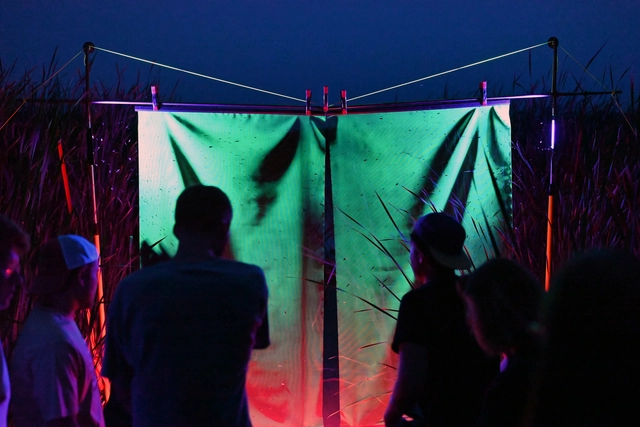
Artist collective Space Saloon recently completed the inaugural Public Art and Ecology Artists-in-Residence in the Okoboji region of Northwest Iowa. Observing local landscapes and diverse ecosystems, the team created a series of temporary installations, site-specific sculptures and multi-species performances. Working in association with Imagine Iowa Great Lakes and the Iowa Lakeside Lab, the process led to a series of public events reimagining how to engage regional ecologies.
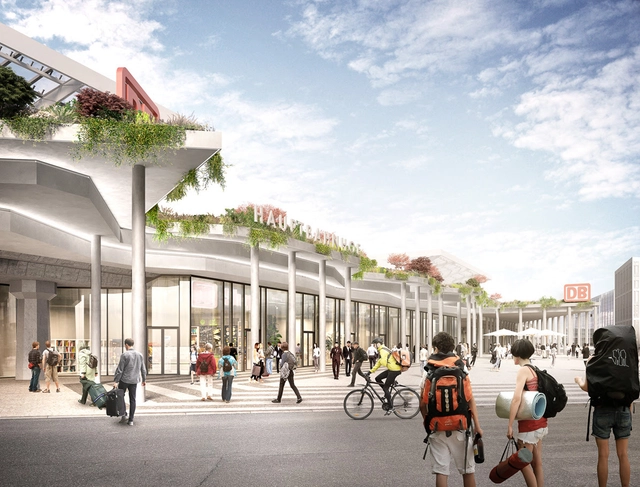
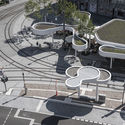
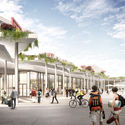
J. Mayer H. has won a competition to design the new façade of Cologne Main Station on Breslauer Platz in Germany. The design proposal frames the sides of the rail station with an all-around façade that offers an innovative use of space by making the best of the site's circulation and natural resources. The intervention will feature rooftop landscaping with local flowers and greenery, rainwater collection, protection from rain, wind, and sunlight, and a visual emphasis on the station's points of access.
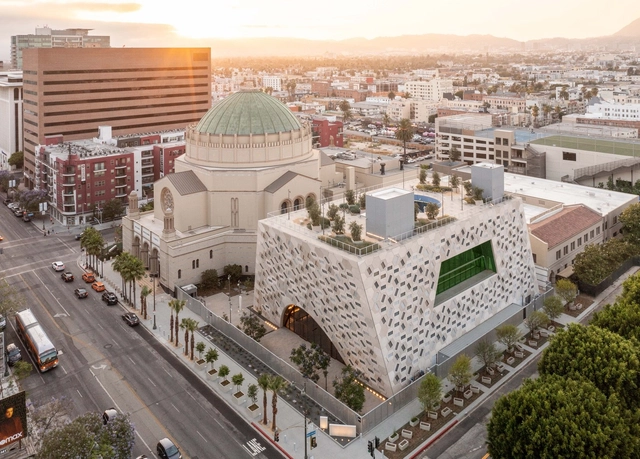
Courtesy of OMA New York, Photography by Jason O’Rear
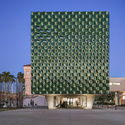
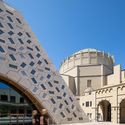
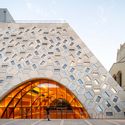
OMA / Shohei Shigematsu has completed its Audrey Irmas Pavilion at Wilshire Boulevard Temple, the firm’s first commission from a religious institution and first cultural building in California. Expected to open in January 2022, “the new 55,000 square foot Pavilion is a response to the Wilshire Boulevard Temple’s vision for its campus to create a much-needed space to convene”.
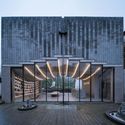
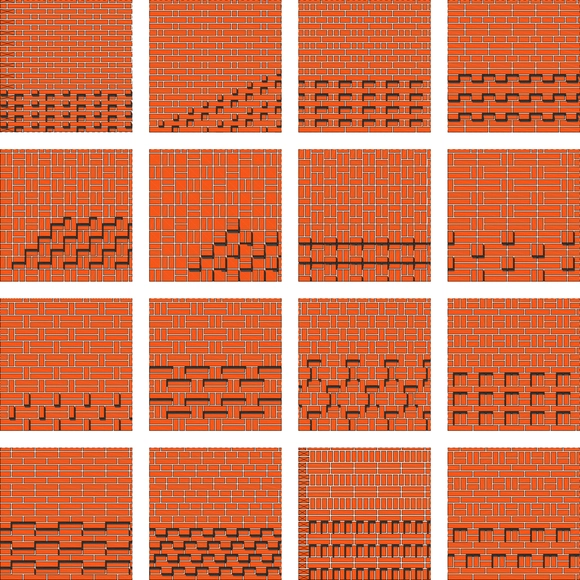
"Welcome to this strange book. With all the drawings, it might appear like a manual, but it isn't. The book is as much about joints as it is about pieces. Above all, it seeks the order that is inherent in things". These words are part of the introduction to Koen Mulder's book, "The lively surface: Masonry associations as a pattern art and tool of composition". Available in German, the 160-page manual, rigorously illustrated, presents a universe of possible pattern variations that can be created when you start designing.
We interviewed Koen to find out what inspired him to talk about this topic and to understand how he managed to gather all this information, while also figuring out the impact that this type of study can have on architecture students and architects.
Questioning the new now, especially with the new challenges of Covid-19, around the world, cities are advocating for structural change and collective action. Berlin questions, an annual, multi-day conference and a platform for transdisciplinary dialogue, in its 2021 edition “Metropolis: The New Now”, tackled the immediate present, creating a place for debate. Dedicated to local solutions to global challenges, the event took on a hybrid format, at various locations in Berlin and online, resembling the world we live in.
ArchDaily had the chance to meet up with the winner of the Iconic Awards 2021 in the Architects of the Year category Dorte Mandrup, architect, founder, and creative director of Dorte Mandrup Arkitekter at Berlin Questions, to discuss the firm’s latest project in the German capital, the Exile Museum and to reflect on her career and visions.
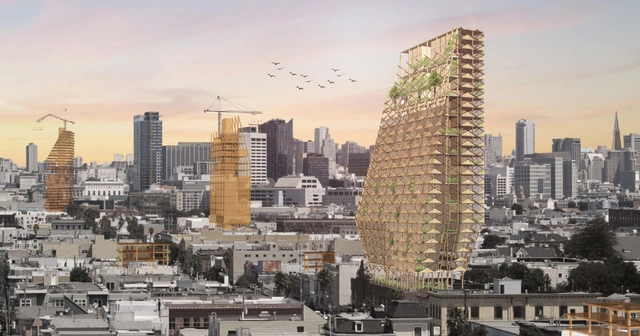
The potential for mass timber to become the dominant material of future sustainable cities has also gained traction in the United States throughout 2018. Evolving codes and the increasing availability of mass timber is inspiring firms, universities, and state legislators to research and invest in ambitious projects across the country.
https://www.archdaily.com/905601/4-projects-that-show-mass-timber-is-the-future-of-american-citiesNiall Patrick Walsh
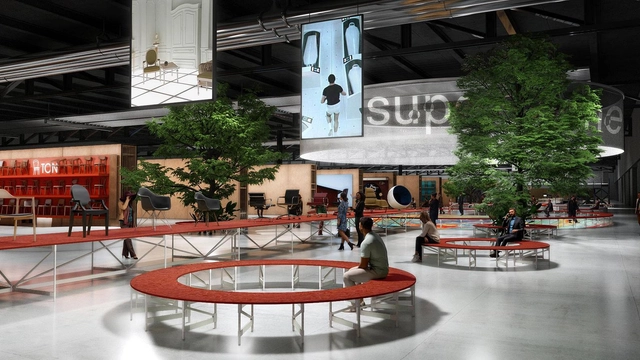
After a year of absence in light of the pandemic, Milan Design Week, one of the most anticipated design events to take place in Italy, will finally open its doors to visitors. From the 5th to the 10th of September, more than 350,000 architects, designers, artists, and craftsmen from all around the world will have the chance to explore new design innovations and exchange ideas about the interior design, furniture, and lighting. During the week-long event, Salone del Mobile, the awaited furniture and interior design event of the year, will be hosting local and international exhibitors at the Fiera Milano, Rho, along with interventions by world-renowned architects across the city.
ArchDaily will be attending the Salone del Mobile so stay tuned for exclusive interviews and collaborations, and read on to discover what to expect during the week-long exhibition and how architects are taking part of the event.
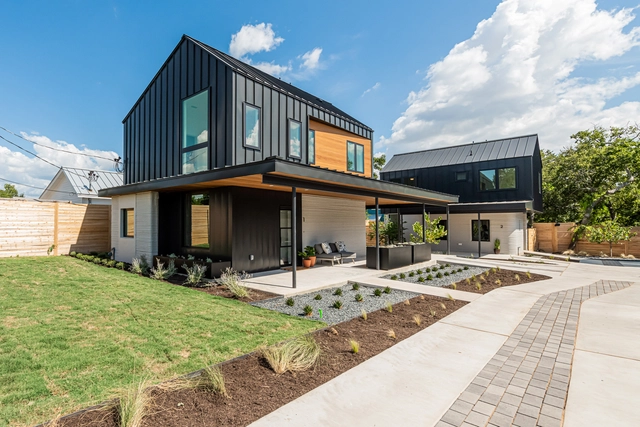
Developer 3Strands and construction company ICON have completed new 3D-printed houses for sale in the United States, showcasing the possibilities of additive manufacturing for mass-market housing. Located in Austin, Texas, within a fast-growing neighbourhood, the East 17th St Residences development is designed by Logan Architecture and comprises four units with 3D-printed ground floors whose tectonics reflect the construction technology.
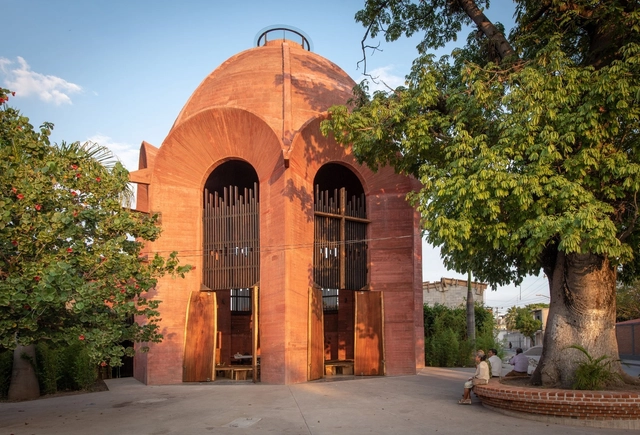
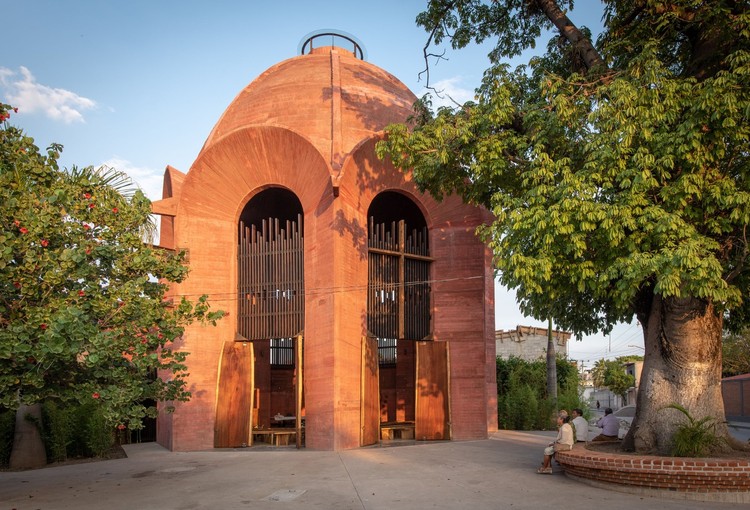
Morelos is a state nestled in the south-central region of Mexico, surrounded by the states of Puebla, Guerrero, Estado de México, and Mexico City. With just over 4,893 km² of territory, it's Mexico's second smallest state. It's capital and largest city is Cuernavaca.
The historical Roman town has been busy at work and new exciting buildings, squares, and public parks have bloomed across the city. Since my first trip to Zürich in 2014, a lot has happened around good old Turicum.
After a compelling trip organized by Visit Zürich and my friend Philipp Heer, we were able to visit some of the newest, most interesting and uplifting places of the city. Flitting hither and thither, Roc Isern, David Basulto, and I enjoyed the privilege of a tailored itinerary, access to Zürich's gems, and perhaps the most inspiring, the architects behind these amazing structures.
D Residence. Image Courtesy of Jemma Chidiac Achitects _ By JPAG.co
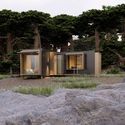
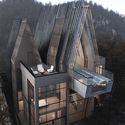
This week’s curated selection of Best Unbuilt Architecture highlights private residential projects submitted by the ArchDaily community. From futuristic private retreats on the coast of Hawaii to a mini-housing concept on the rocky cliffs of Montenegro, this article explores residential architecture and presents projects submitted to us from all over the world.
Featuring a secluded private residence that sits between a Persian mountain and river, an interior renovation of an 80's Mediterranean house, and a minimalist forest retreat, this round-up explores the diversity of private homes and how each design responds to its site's topography, context, and to the occupants spatial needs. The selection also includes villas in Lebanon, Iran, Tanzania, Netherlands, Ivory Coast, Kosovo, and Vietnam.
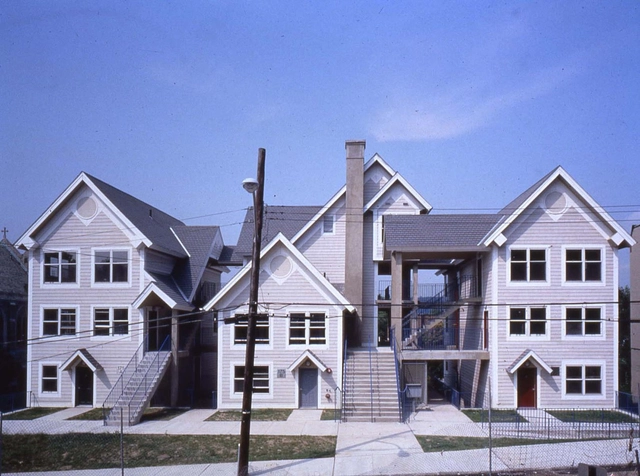
Courtesy of Duo Dickinson Cephas Housing, Yonkers, New York
In the 14th century, Geoffrey Chaucer wrote “Familiarity breeds contempt”. By definition “local” is “familiar”. Why are humans so thrilled to go beyond the familiar, the local, and reach for what is new, universal, and salvational? The word “local” has the weight of true value, like “density” or “sustainable” But the lure of connection between all humans is powerfully seductive, and that desire to connect almost always falls short of our hopes.
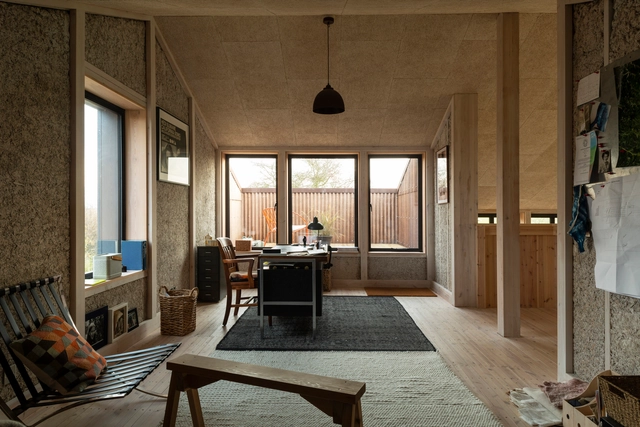
Every time we publish an article about Hempcrete, we get a lot of comments on social media - with a certain level of irony - about what would happen if the material caught fire. This is actually a legitimate question, as there is still a lot of confusion about the differences between marijuana and hemp, both of which come from the same plant species (Cannabis Sativa). But while marijuana has psychoactive effects due to tetrahydrocannabinol (THC), mainly present in the flowers of the plant, hemp-based building materials are produced from its stem, which contains small amounts of THC. To quickly answer the title question: no, the building won't be destroyed in the event of a fire. In fact, some tests have shown that these materials have excellent behavior against fire, dissipate flames, maintain structural integrity, and don't emit toxic smoke.
CRA-Carlo Ratti Associati has merged architecture with urban agriculture in the firm's newly-unveiled Jian Mu Tower in Shenzhen, China. The 218-meter high building incorporates a large-scale vertical hydroponic farm across its entire facade, producing vegetation that can feed up to 40,000 people per year. The 51-storey tower will also include housing offices, a supermarket, and a food court with inner gardens for recreation and social gatherings.
Videos
Brainport Smart District Master Plan. Image Courtesy of UNSense
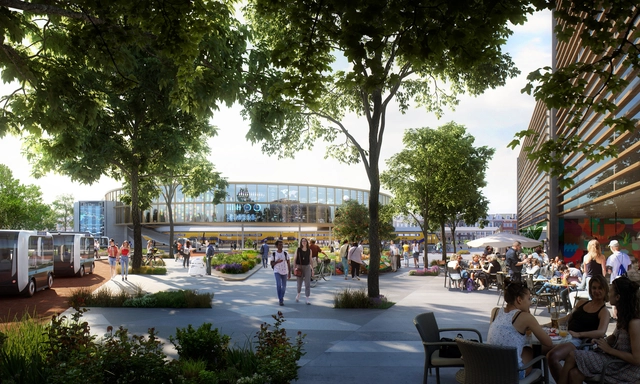
UNStudio has recently published a report exploring the broader scope of community building and placemaking in the post-pandemic urban environment. Through examples from their practice, UNStudio highlights various design strategies currently incorporated in architecture and urban planning that cater to the universal and crucial need to connect socially. In addition, the practice stresses the importance of “ third spaces” and human-scale connectivity, as well as the blending of digital and physical spaces of interaction.
A building stands out along the maritime walkway in Palma, Mallorca's capital. Designed by José Ferragut Pou and completed in 1960, the building was a poster child for the modern architectural movement sweeping the globe at that time. Today, like many of its brethren, it stands in abandoned disrepair.
Lluís Bort is the Spanish architect and photographer behind "Empty Architecture," a photographic compilation of abandoned buildings from throughout the island of Mallorca, Spain.
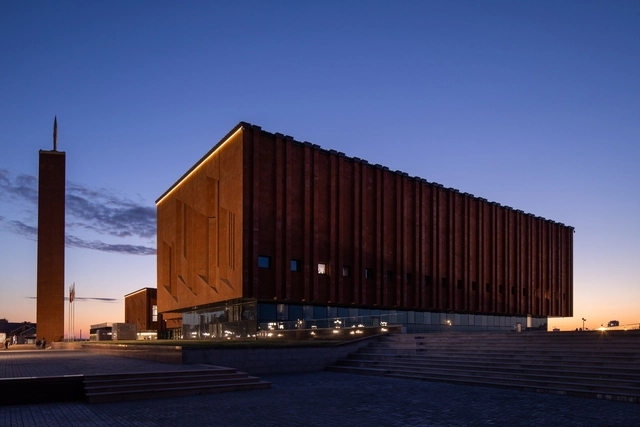
Few materials are as timeless, durable and beautiful as terracotta. With a range of inherent properties, terracotta is being specified to redefine building envelopes. Used for its many colors and textures, as well as its flexibility, this ceramic can be constructed as cladding, rain screens and a variety of components. Dating back to the Babylonians, terracotta has been used throughout history, and it continues to be a material selected for diverse building types around the world.











.jpg?1630568377 "Courtesy of Bloomimages")
.jpg?1630568367 "Courtesy of Bloomimages")














.jpg?1630414739&format=webp&width=640&height=580)

.jpg?1630414689 "D Residence. Image Courtesy of Jemma Chidiac Achitects _ By JPAG.co")
.jpg?1630414739)

.jpg?1630490207 "© Henry-Fussell Hitchcock, Jr and Philip Johnson")
.jpg?1630490219 "Courtesy of Weißenhofsiedlung Stuttgart")
.jpg?1630490299 "Courtesy of Bauhaus, Dessau, Germany")

.jpg?1630396129&format=webp&width=640&height=580)
.jpg?1630396086 "Courtesy of CRA - Carlo Ratti Associati")
.jpg?1630396078 "Courtesy of CRA - Carlo Ratti Associati")
.jpg?1630396021 "Courtesy of CRA - Carlo Ratti Associati")
.jpg?1630396025 "Courtesy of CRA - Carlo Ratti Associati")
.jpg?1630396129)