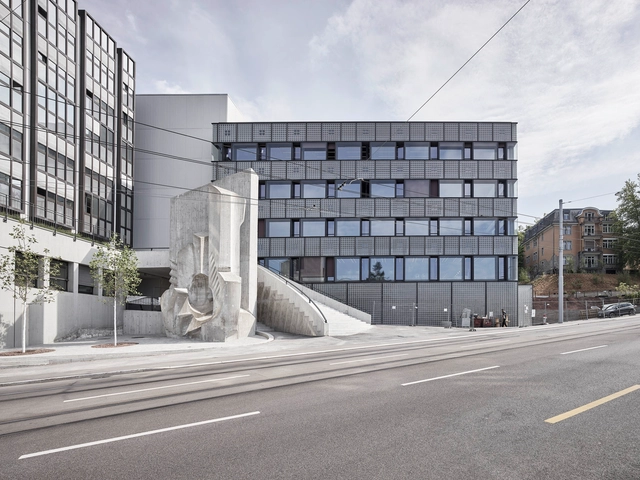
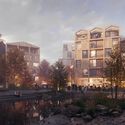
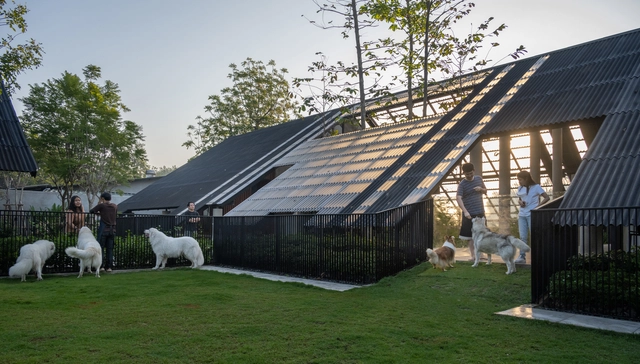
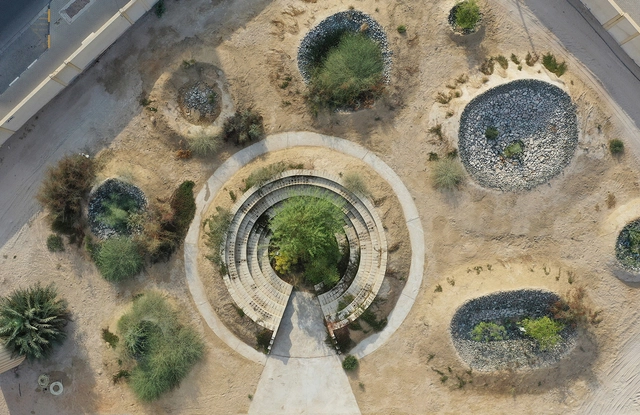
The second round of award winners of the 2024 World Architecture Festival have been announced, following Day Two of live presentations at Marina Bay Sands in Singapore, in which hundreds of shortlisted projects were presented by practices from around the world. Amongst today's category award winners in the Completed Buildings section of the world's largest international live-judged architectural event are Warren and Mahoney, CONTEXTO, and fitzpatrick+partners.
Australia led the way with seven projects announced as winners and highly commended across the categories. The United Kingdom secured four wins and highly commended projects, following Australia.
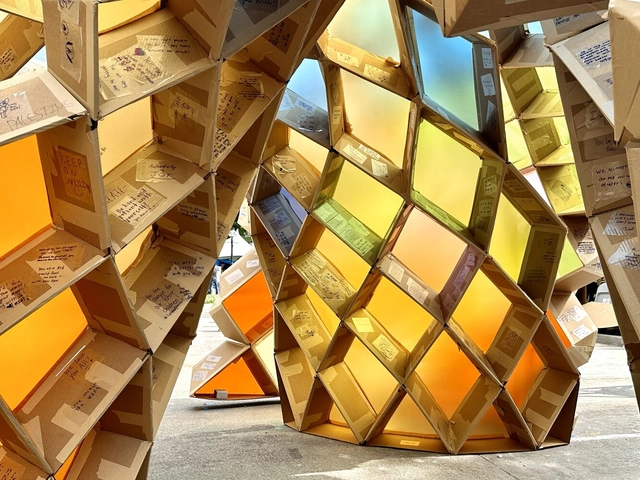
Here's a question: what part of a building stands firm and unmovable? While walls, floors, and structural supports may spring to mind, in today's world, even architecture is getting in on the action. Movable walls, sliding doors, and retractable roofs were the early ambassadors of kinetic design, allowing structures to become more flexible without losing strength. What started in ancient civilizations has now evolved into a futuristic dance between practicality and nature. Buildings aren't just set in stone anymore—they're evolving, responding, and adapting.
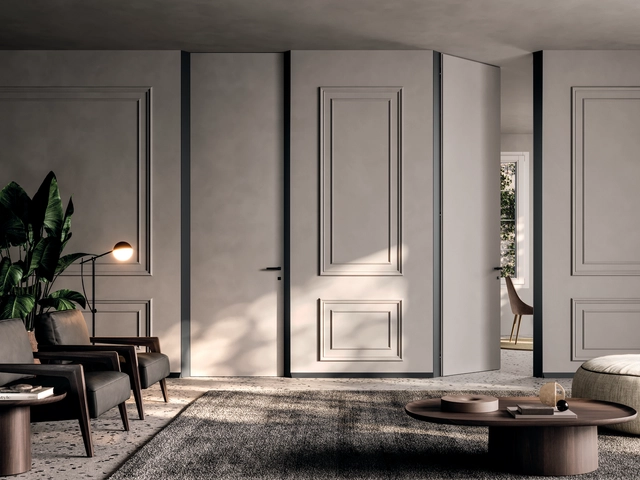
Creating an unbroken line between floor and ceiling is one of the most elegant ways to manipulate the spatial qualities of a contemporary interior. Floor-to-ceiling glass is a recurrent motif in the modern high-rise home, offering views out to some of the most spectacular skylines in the world. Full-height doors, meanwhile, are just as contemporary and sensational, but have more nuance and engineering involved. They don't draw the eye outside and beyond a space; instead, they create an immediate impact when you enter it. Instead of creating a frame to pass through, from room to room, these doors rise vertically and occupy the whole span of a wall. They represent cutting-edge holistic interior architecture, creating a sweeping, art-directed shift as you glide through them.
https://www.archdaily.com/1022530/flush-to-wall-transforming-doors-into-architectural-chameleonsMark C. O'Flaherty
The Second Studio (formerly The Midnight Charette) is an explicit podcast about design, architecture, and the everyday. Hosted by Architects David Lee and Marina Bourderonnet, it features different creative professionals in unscripted conversations that allow for thoughtful takes and personal discussions.
A variety of subjects are covered with honesty and humor: some episodes are interviews, while others are tips for fellow designers, reviews of buildings and other projects, or casual explorations of everyday life and design. The Second Studio is also available on iTunes, Spotify, and YouTube.
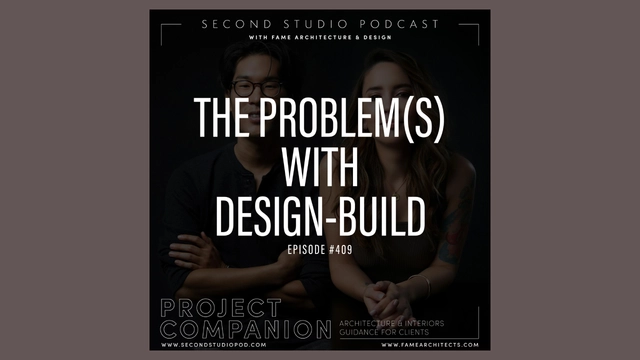
This week David and Marina of FAME Architecture & Design discuss the Design-Build model of home construction. They cover the definition of the Design-Build model; lack of licensed architects in Design-Build companies; efficiency and economy; quality of construction; how costs are lowered; lack of transparency; who should / shouldn't engage with Design-Build companies; and more.
https://www.archdaily.com/1022287/the-second-studio-podcast-the-problem-s-with-design-buildThe Second Studio Podcast
In the post-pandemic era, an oversupply of underutilized churches is a growing reality. Besides offering explorations in adaptive reuse, what does this trend say about modern spirituality? Have humans lost interest in the sacred? In a recent article on Common Edge, Duo Dickinson addressed this concern by claiming that "the cultural change that is causing the abandonment of churches does not end the human search for the sacred."
While correctly stating that no formula can turn architecture into "the holy," he seemed to indicate that a new spirituality might still be found in architectural form. As we consider what changing forms of sacred space mean for the modern era, looking for a revitalization of spirituality through architecture alone risks a repeat of an error made in the last century: expecting too much of aesthetics.
The Second Studio (formerly The Midnight Charette) is an explicit podcast about design, architecture, and the everyday. Hosted by Architects David Lee and Marina Bourderonnet, it features different creative professionals in unscripted conversations that allow for thoughtful takes and personal discussions.
A variety of subjects are covered with honesty and humor: some episodes are interviews, while others are tips for fellow designers, reviews of buildings and other projects, or casual explorations of everyday life and design. The Second Studio is also available on iTunes, Spotify, and YouTube.
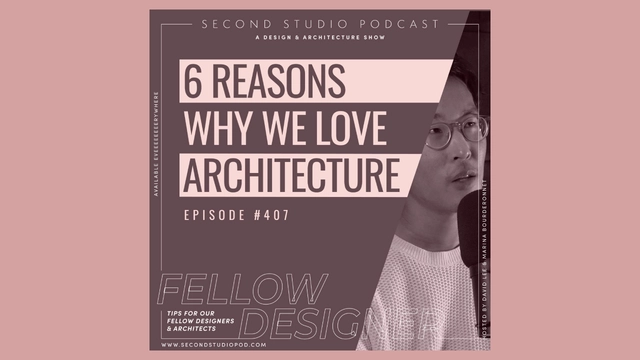
This week David and Marina of FAME Architecture & Design share their favorite aspects of being an architect. They discussed ongoing learning opportunities; building something from nothing; architecture comradery; construction; appreciation for man-made and natural objects; technical drawings; when architecture projects are finished; and more.
https://www.archdaily.com/1021748/the-second-studio-podcast-6-reasons-to-love-architectureThe Second Studio Podcast
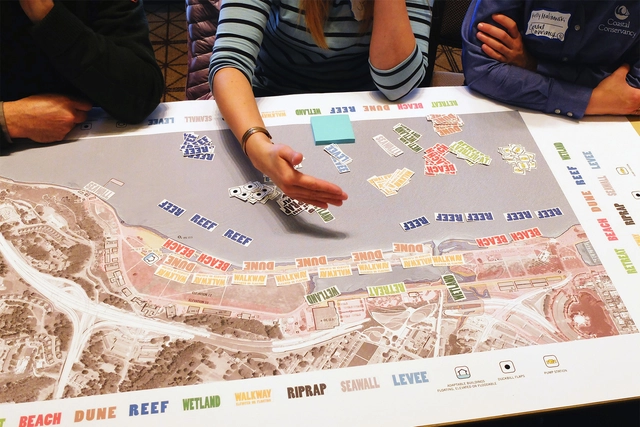
About a decade ago, the term "resilience planning" became ubiquitous in climate circles. That shift, in the wake of increasingly unpredictable events, was shaped in part by the Rockefeller Foundation's 100 Resilient Cities program, a six-year, $160 million effort to establish chief resilience officers in cities all over the world. Out of that program, which ended in 2019, emerged its successor, Resilient Cities Catalyst (RCC), a New York–based nonprofit engaged in what it calls "capacity building" projects. For Climate Week, I talked to Sam Carter, one of RCC's founding principals, about his definition of resilience, the organization's planning and philanthropic method, and the challenge of scaling up climate efforts.
It's that time of year again: students and their families are busy preparing for the start of school, while some of us are gearing up to step in front of the classroom. While preparing to teach an intro course on climate, I'm reminded of why we use the term climate change and not global warming.
Yes, the Earth is warming from a thickening layer of greenhouse gases in the atmosphere caused by us. But climate changes range from sea level rise to increasing storms, floods, fires, and drought, which are all negatively impacting biodiversity as well. So, not just warming. Recent storms that battered the eastern U.S. coast and Bermuda remind us of this difference. While some communities face extreme heat, others brace for storms and rising waters, and many face multiple impacts.
The Second Studio (formerly The Midnight Charette) is an explicit podcast about design, architecture, and the everyday. Hosted by Architects David Lee and Marina Bourderonnet, it features different creative professionals in unscripted conversations that allow for thoughtful takes and personal discussions.
A variety of subjects are covered with honesty and humor: some episodes are interviews, while others are tips for fellow designers, reviews of buildings and other projects, or casual explorations of everyday life and design. The Second Studio is also available on iTunes, Spotify, and YouTube.
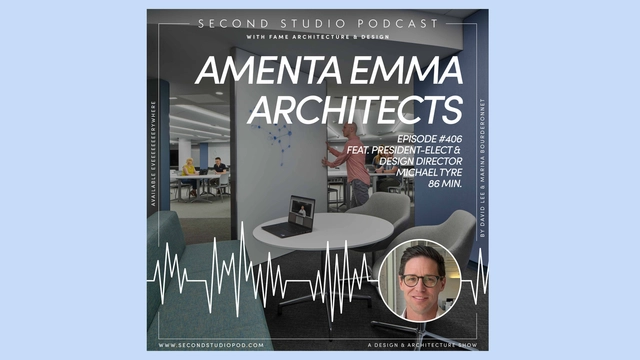
This week David and Marina of FAME Architecture & Design are joined by Michael Tyre, President-Elect and Design Director of Amenta Emma Architects to discuss his childhood interests; education and early career; neurodiversity in design; the Smith College Young Classroom project; fixed variation vs segregation design model; the shift from ego-driven design to co-creation; reframing social discourse to create inclusive spaces; and more.
https://www.archdaily.com/1021219/the-second-studio-podcast-an-interview-with-michael-tyre-of-amenta-emma-architectsThe Second Studio Podcast
The vast majority of practitioners I've known over the years seek well-trained graduates who are ready on Day One to be productive employees. But that's not all an architectural education needs to deliver. Michael Monti—who for the past 20 years has served as executive director of the Association of Collegiate Schools of Architecture (ACSA), which represents 5,000 architecture faculty teaching more than 30,000 students—stresses that architectural education needs to rest on strong foundation of shared values and ethics in order for graduates to make meaningful contributions to what he describes as a "civilized life," promoting the dignity, freedom, health, and well-being of the people who interact with architecture every day.
https://www.archdaily.com/1021154/architecture-schools-are-responsible-for-educating-the-whole-studentMichael J. Crosbie
Videos
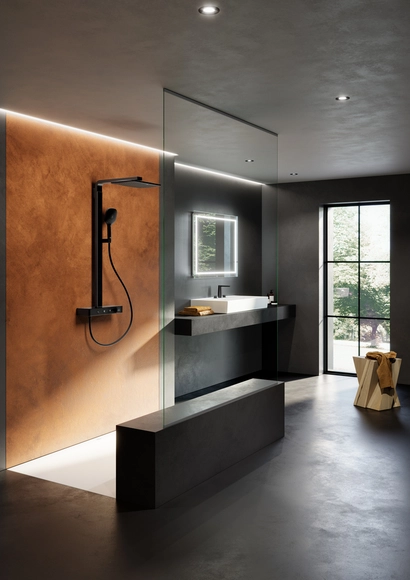
The fitting collections from Villeroy & Boch impress with their high-quality materials and are ideal for exclusive bathrooms. Image Courtesy of Villeroy & Boch
In addition to elegantly designed ceramics, stylish furniture and practical accessories, Villeroy & Boch's bathroom range also includes elegant fittings. As with all the company's products, the extensive range offers durable quality and reliable functionality, ensuring long-lasting usability through high-quality materials and meticulous craftsmanship. Furthermore, the fittings are perfectly coordinated with the company's own bathroom collections in terms of design and functionality, with the Top-Together label, as presented by Villeroy & Boch, showcasing particularly harmonious combinations for architects and bathroom planners. A total of 13 fitting collections are available, offering a wide range of styles, sizes and shapes.
"O beautiful, for spacious skies, for amber waves of grain, has there ever been another place on earth where so many people of wealth and power have paid for and put up with so much architecture they detested as within thy blessed borders today?"
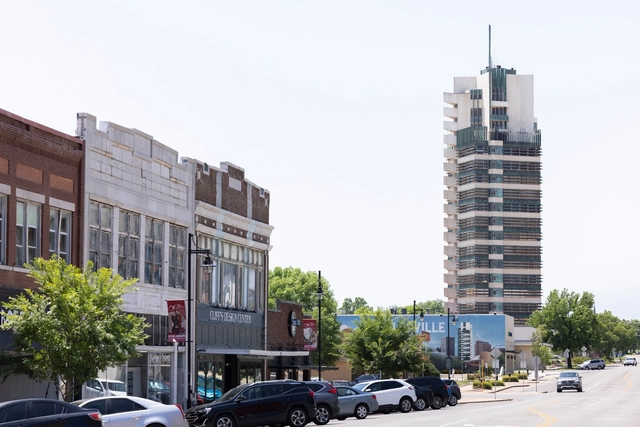
Tom Wolfe wrote this in his 1981 book From Bauhaus to Our House. The conflict between modern and traditionaldesign has barely abated since, as is evident in this recent article. In the U.S., modern buildings are often met with community aversion, for familiar reasons: their perceived coldness and lack of contextual sensitivity, the impact on local character, and the loss of historical continuity. But on another level, the critique against modern design finds even more purchase on the larger scale: the city. Modern U.S. cities reek of traffic congestion and pollution, social inequality and gentrification, a loss of community and cultural spaces, and a lack of usable open space.
https://www.archdaily.com/1020898/contemporary-architecture-and-the-modern-cityGerhard W. Mayer
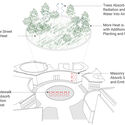
Are humans the only stewards of the built environment? For many architects and planners, spaces are designed with a focus on the needs, comfort, and health of humans. A spatial ordering, in constructed spaces and the urban fabric, designates humans as the default, singular user in this scenario. However, as much as humans have influenced the trajectory of the world, other species play a crucial role in designing, forming, and maintaining the urban landscapes of the twenty-first century.
Anyone who walks during the summer in a city like Boston knows that a significant amount of time is spent charting routes with shade. But I can’t use that as my only excuse for being off-task. Honestly, I’m distracted. The swirling headlines of the U.S. presidential election, an unprecedented UN climate conference looming, and the phrase “decade of decisive action” weighs heavy on my shoulders. While it’s easy to get caught up in current events, those of us with solutions must stay focused.
A perhaps helpful Japanese phrase to call upon is “kotsu kotsu,” essentially meaning to slow down and focus on the task at hand, and do it well. Temperatures are soaring, people are suffering. As a recent UN COP letter stated, “time lost is lives, livelihoods, and the planet lost.” Cooling our cities and communities is more important than ever.
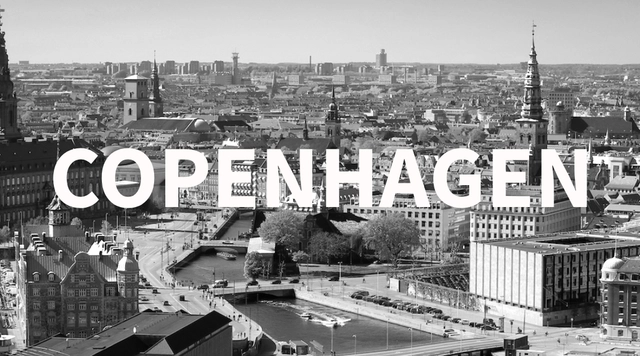
Copenhagen was founded around the 11th century, from a small fishing village called "Havn" (harbor), which served as a strategic point for trade and navigation. Over time, this settlement transformed into an industrial city and eventually became the capital of Denmark. Though small in size, Copenhagen exerts significant global influence as a model of urban living. Spread across two islands, it is recognized as one of the most livable cities in the world, compensating for its modest size with an imposing character, reflected in its vibrant urban life and a skyline punctuated by historic towers, low-rise buildings, and a mix of old and modern architecture.
The Second Studio (formerly The Midnight Charette) is an explicit podcast about design, architecture, and the everyday. Hosted by Architects David Lee and Marina Bourderonnet, it features different creative professionals in unscripted conversations that allow for thoughtful takes and personal discussions.
A variety of subjects are covered with honesty and humor: some episodes are interviews, while others are tips for fellow designers, reviews of buildings and other projects, or casual explorations of everyday life and design. The Second Studio is also available on iTunes, Spotify, and YouTube.
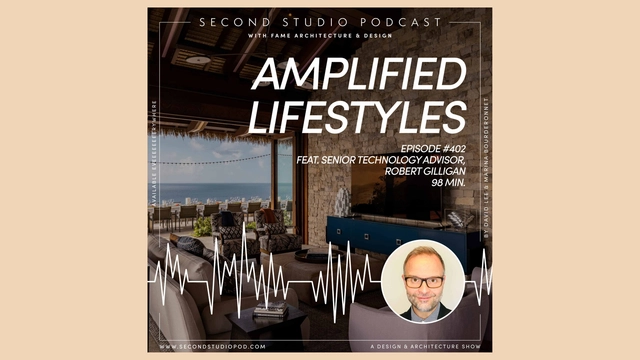
This week David and Marina of FAME Architecture & Design are joined by Robert Gilligan, Senior Technology Advisor at Amplified Lifestyles to discuss his background in audio-visual technology; advancements in smart home technology; home audio-visual system management; the role of audio-visual engineers in architecture projects; home security systems; the future of audio-visual technology; and more.
https://www.archdaily.com/1020465/the-second-studio-podcast-av-design-in-architectureThe Second Studio Podcast