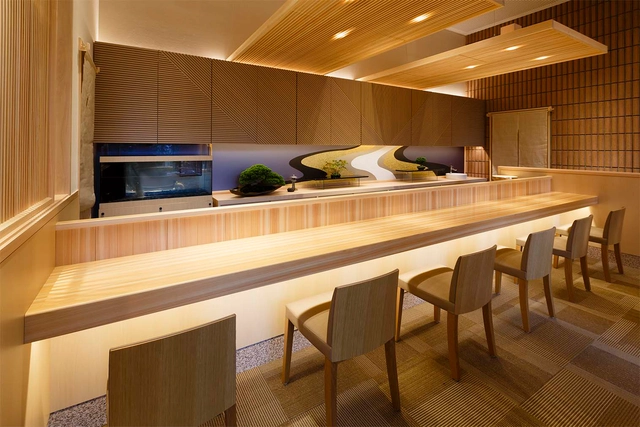
There are various ways to remodel interior spaces, and it is not always necessary to break down walls or make structural changes that generate dust, noise, and odors. Sometimes a space can be greatly improved with simple yet significant touches that can be carried out quickly and easily, without the need for skilled labor or excessive expenses.
3M architectural vinyls allow for radical renovations, completely changing the look of a space without producing debris. Thanks to their adhesive technology, they can be applied to walls, ceilings, elevators, furniture, panels, and other existing surfaces, replacing their previous appearance with patterns and textures such as wood, concrete, carbon fiber, marble, solid colors, textiles, and more.
Until a few years ago, the direct relationship between architectural design and the various viruses we live with went largely unnoticed. At 0.00001 millimeters in size—a hundred times smaller than bacteria—their presence is as invisible as it is threatening. Due to the emergence of COVID-19, we are now more aware that their existence and transmission can be controlled through intelligent design decisions and the proper selection of materials.
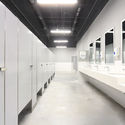
While not all viruses are harmful to human health, bathrooms can be particularly conducive to the spread of viral pathogens due to their function as spaces for bodily hygiene and waste disposal. Which materials and products can help maintain the hygiene and health of these spaces?
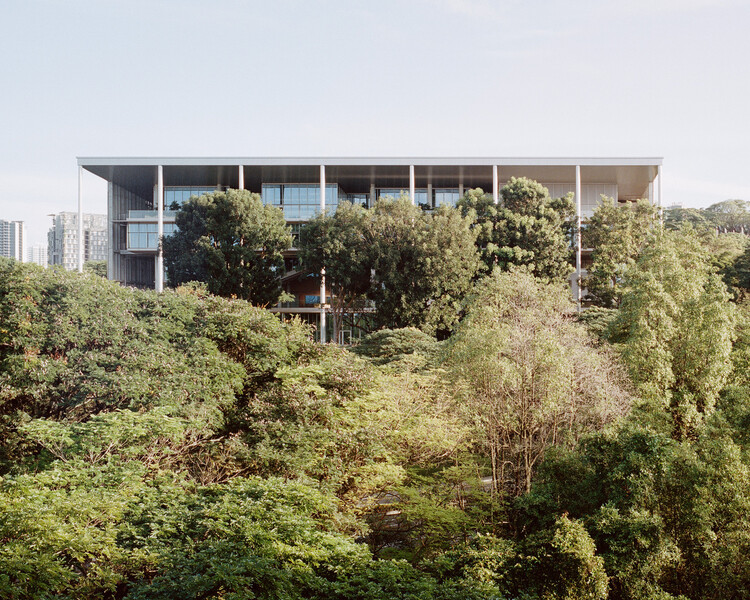
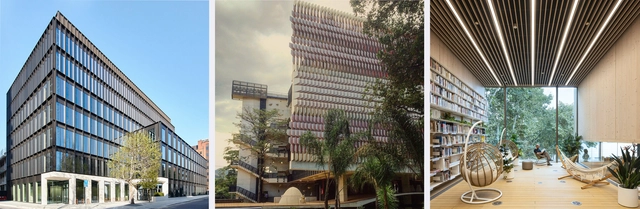
NUS School of Design & Environment / Serie Architects + Multiply Architects + Surbana Jurong. Image Courtesy of Serie Architects + Multiply Architects + Surbana Jurong
This article is part of our new Opinion section, a format for argument-driven essays on critical questions shaping our field.
Before architecture students become authors of space, they are subjected to one. For years, they work inside a building that teaches without announcing itself as a teacher. It organizes their exhaustion, their ambition, their visibility, their solitude, their friendships, their sense of scale, and their relationship to judgment. Long before a student can articulate a position on architecture, the school has already offered one in its implicit built environment.
This is not to suggest that buildings determine architects. The influence is slower and less complete than that. A school building operates more like a hidden curriculum: a spatial discipline that works alongside faculty, syllabi, institutional culture, and student life. It teaches through access and obstruction, program adjacencies, daylight exposures, and scale. It produces habits of attention before it produces explicit beliefs.
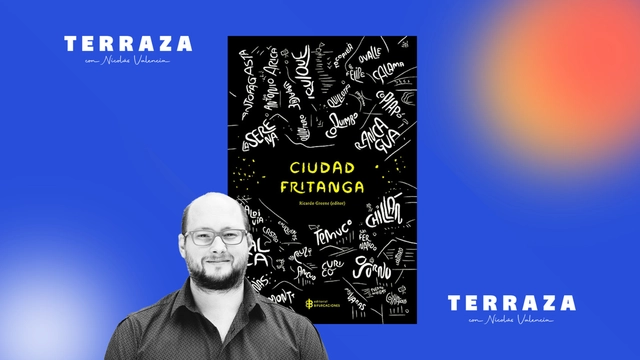
This week on the TERRAZA podcast, Nicolás Valencia speaks with Chilean sociologist and Universidad San Sebastián academic Ricardo Greene, editor of the landmark book "Ciudad Fritanga," published by Editorial Bifurcaciones in 2014.
"Ciudad Fritanga" compiles 34 chronicles of non-metropolitan Chilean cities like Arica, Talca, and Punta Arenas through the lens of poets, artists, and writers such as Lina Meruane, Jorge Baradit, Marcelo Mellado, and María José Navia.
"When people write about cities, they write about London, Berlin, and New York. That is the urban chronicle. However, non-metropolitan cities are also cities," Greene comments in this interview.
https://www.archdaily.com/1078822/ricardo-greene-perhaps-boredom-defines-non-metropolitan-citiesArchDaily Team
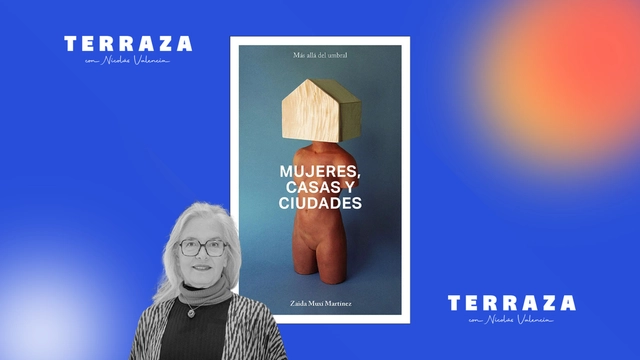
This week on the TERRAZA podcast, Nicolás Valencia speaks with Argentine-Spanish architect Zaida Muxí, author of the book “Mujeres, casas y ciudades” (Women, Houses, and Cities), published by dpr-Barcelona in 2018.
In “Mujeres, casas y ciudades”, Muxí proposes rewriting the history of architecture and urbanism by incorporating the contributions of the many women who have been silenced in mainstream historical accounts.
“If we want to play by market rules, housing will never be a right,” Muxí posits in this interview.
https://www.archdaily.com/1078787/zaida-muxi-no-one-resolves-a-family-life-in-35-square-metersArchDaily Team
The rise of sustainability and the circular economy is transforming the construction industry, driving a growing demand for new specialized roles. Positions such as sustainability managers or circular economy consultants are becoming increasingly common in contemporary projects.
A exclusiva tecnologia Mineral LAB eleva a estampa a um patamar ainda mais sofisticado por conta dos relevos e efeitos surpreendentes. A granilha utilizada neste processo oferece ainda resistência ao escorregamento, sem a aspereza dos produtos convencionais. Image Cortesia de Roca Brasil Cerámica
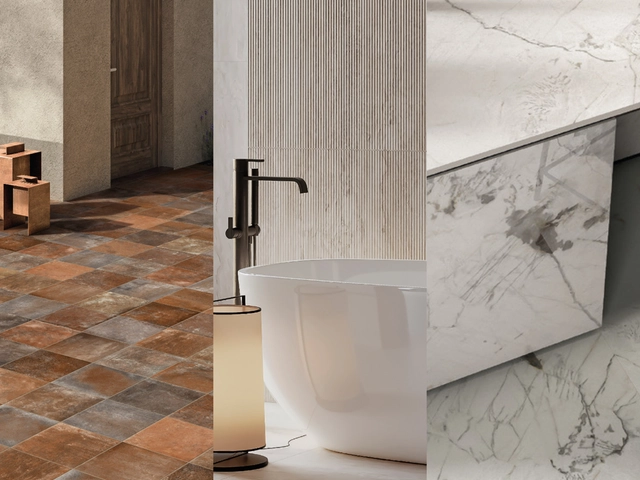
In 2024, the evolution of porcelain tiles has elevated the tactile experience to a new level, transforming them into true works of art. Produced with mineral texture printing technology, the collections feature striking reliefs in dimensions of 120 x 120 cm, 100 x 200 cm, 120 x 250 cm, 160 x 160 cm, and 160 x 320 cm, designed to awaken all the senses. Behind this advancement is Roca Brasil Cerámica, part of the Mexican LAMOSA Group, leading the Roca Cerâmica and Incepa brands.
"Drinking Caracu is drinking health." This is what read on the massive blank wall of a building in downtown São Paulo on the morning of May 1, 2018. Hidden for decades, the advertisement for the famous beer brand now loomed before a massive heap of concrete, twisted metal, and shattered glass. This was the rubble to which the iconic Wilton Paes de Almeida Building had been reduced—a modernist landmark designed by architect Roger Zmekhol and the subject of the documentary Skin of Glass, directed by his daughter, Denise Zmekhol.
The film transcends traditional architectural documentation by blending a personal narrative with the political complexities of contemporary Brazil, a country shaped by deep inequalities and erased memories. At the heart of the story is the building itself, considered a landmark of Brazilian modern architecture, which collapsed in 2018 after a tragic fire.
This Wednesday, October 9, the 19th edition of the Buenos Aires International Architecture Biennale will open to the public. The event, held once again at the Faena Art Center, will run until Sunday, October 13. Over the course of five days, the city will serve as a stage for reflections on sustainability, the environment, and new technologies applied to architecture and design. Alongside the central exhibition, the program will feature international lectures, workshops, and various installations distributed across key locations throughout Buenos Aires.
The Latin American Architecture Biennale (BAL) has opened submissions for its 2025 edition, aiming to highlight young talent in Latin American architecture. Held in Pamplona, Spain, the event seeks to provide international visibility to emerging professionals and promote cultural and technical exchange between Latin American architects and the European public.
https://www.archdaily.com/1078762/latin-american-architecture-biennale-2025-open-callArchDaily Team
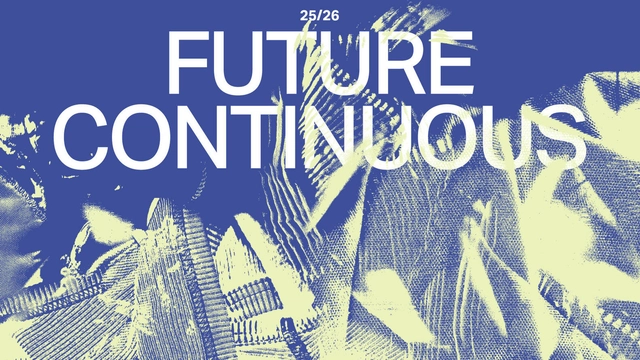
Curated by Alcova Milano under the theme "Future Continuous," Heimtextil Trends 25/26 offers an exciting new perspective on the textile industry. This trend showcase will be presented in the Trend Arena at Heimtextil from January 14 to 17, 2025.
https://www.archdaily.com/1078774/the-future-starts-in-the-past-heimtextil-trends-25-26韩爽 - HAN Shuang
The Edifica 2024 International Construction Exhibition, an essential event for the sector in Latin America, will take place from October 15 to 17 at Espacio Riesco in Santiago, Chile. In this edition, the fair will not only showcase the latest advances in construction but will also serve as a platform to highlight how innovation and sustainability are transforming the industry landscape through concrete case studies and outstanding solutions.
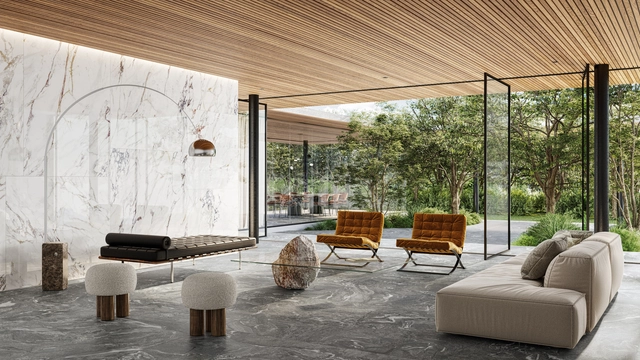
Stone and marble continue to establish themselves as essential materials in architecture and design, for both interiors and exteriors worldwide. CHC offers a curated selection designed to create spaces with a timeless, elegant character. Discover how to incorporate marble and stone into your projects to add a touch of modern style.
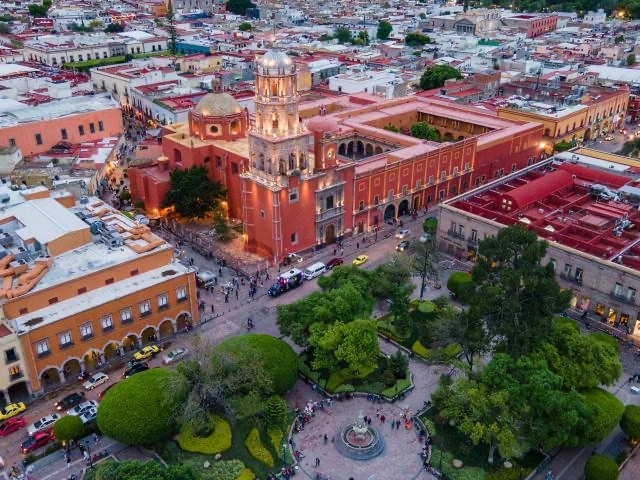
In 2024, the official celebration of World Habitat Day and the presentation of the Scroll of Honour award is in Querétaro, Mexico. Photo: Shutterstock
As the world rapidly urbanizes, cities are becoming home to a new generation of leaders and changemakers. Youth are at the center of this transformation, especially in regions like Africa, Asia, and the Americas. On Monday, October 7, the United Nations Human Settlements Programme (UN-Habitat) invites everyone interested in sustainable urban development to celebrate World Habitat Day, which this year centers on the theme "Engaging youth to create a more inclusive urban future."
https://www.archdaily.com/1078753/world-habitat-day-the-leading-role-of-youth-in-citiesArchDaily Team
Choosing between vinyl and laminate flooring is no longer necessary, as resilient hybrid flooring combines the best features of both materials. Kiwi is a natural flooring made of 80% wood, utilizing a premium impregnation technology that makes it 100% waterproof. This product features 80% wood, while the remaining 20% is composed of plant-based resins. Consequently, it is 100% PVC-free, making it an entirely eco-friendly choice.
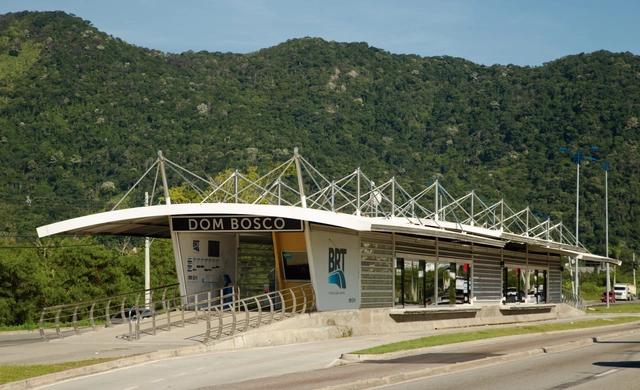
Jozé Candido is an architect and urban planner from Rio de Janeiro with extensive experience in the public sector, particularly in transportation. His design for the BRT (Bus Rapid Transit) stations in Rio de Janeiro was recognized as a "Gold Standard BRT" in 2013 by the ITDP. The BRT is a public transit system that crosses the city in the center-west direction and was implemented in Rio de Janeiro between 2012 and 2024.
Urban mobility architecture and its infrastructure — stations, terminals, pedestrian overpasses, etc. — are spaces of collective, daily use for the population of Brazilian metropolises. Aiming to expand knowledge and repertoire regarding these spaces, this interview explores the technical, political, and logistical challenges faced during the design and implementation of the BRT in the city, as well as the legacy of Jaime Lerner. The following interview highlights the impact of this project on urban development, transit modal integration, and the role of architecture in the functionality and sustainability of transportation systems.
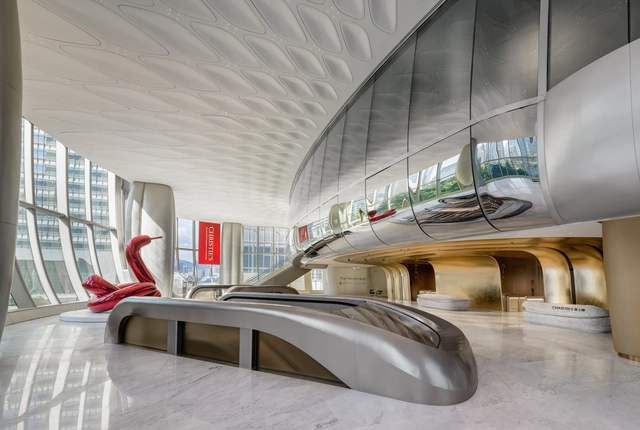
In Central, the bustling hub of Hong Kong's commercial, financial, cultural, and entertainment activities, what kind of synergy can emerge between a landmark skyscraper and a world-renowned art auction house? Can they break free from the traditional convention-center framework of art auctions to pioneer an entirely new spatial and operational model? Christie’s, one of the world's oldest art auction houses, has made a bold and successful attempt at its new Asia-Pacific headquarters in Hong Kong's landmark building, The Henderson—
The design strategy and spatial features of the new Asia-Pacific headquarters center on four key elements: 1. Large-scale motorized movable walls 2. Automated lighting and smart building control systems 3. A vertical gallery 4. Open-plan workspaces
https://www.archdaily.com/1078882/within-a-hong-kong-skyscraper-a-spatial-dialogue-between-art-and-the-future-finds-its-voice韩爽 - HAN Shuang
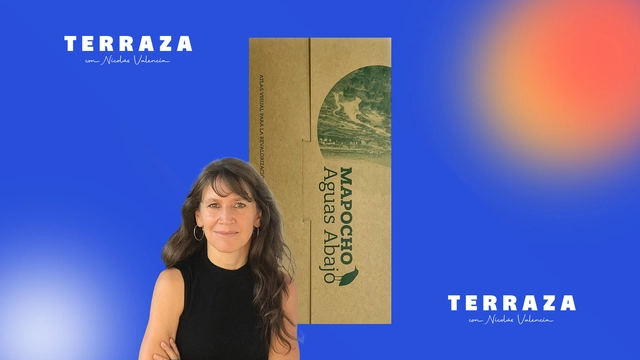
On this week's episode of the TERRAZA podcast, Nicolás Valencia speaks with Chilean architect Sandra Iturriaga about the book Mapocho Aguas Abajo (Ediciones ARQ), a publication developed by the Mapocho 42K Lab at the Pontificia Universidad Católica de Chile that proposes revaluing the heritage and landscape of the downstream stretch of the Mapocho River in Santiago, Chile.
https://www.archdaily.com/1078867/sandra-iturriaga-the-city-must-be-thought-of-as-an-ecosystemArchDaily Team
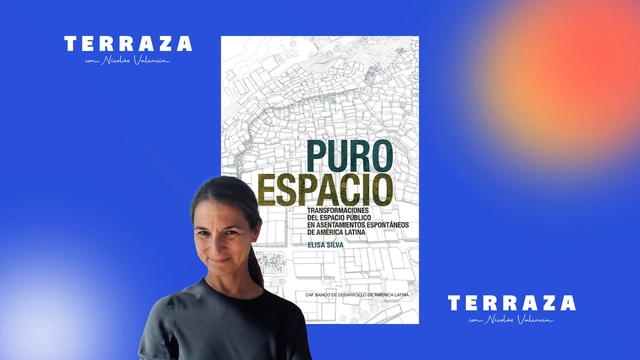
This week on the TERRAZA podcast, Nicolás Valencia talks with Venezuelan-American architect Elisa Silva about her book, "Pure Space: Public Space Transformations in Latin American Spontaneous Settlements" (Actar Publishers), an analysis of a series of public space interventions in communities across Mexico, Colombia, Venezuela, Brazil, Argentina, Peru, and Chile.
https://www.archdaily.com/1078783/elisa-silva-spontaneous-settlements-do-not-need-to-be-integrated-because-they-are-already-part-of-the-cityArchDaily Team
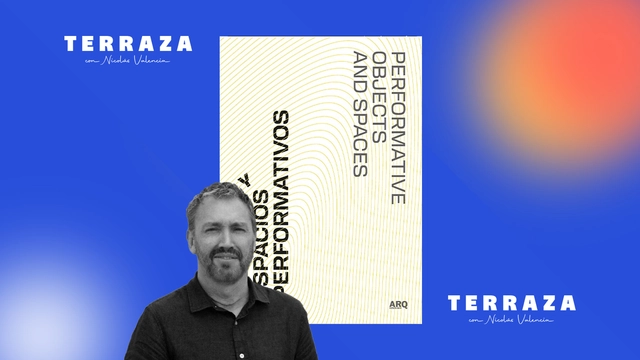
Nicolás Valencia talks this week on the TERRAZA podcast with Chilean architect Rodrigo Tisi about his book Objetos y espacios performativos (Ediciones ARQ), research that examines key moments to observe, explain, and establish the possibilities of certain performance practices in academia and creative environments.
https://www.archdaily.com/1078873/what-are-performative-spaces-in-architecture-according-to-rodrigo-tisiArchDaily Team
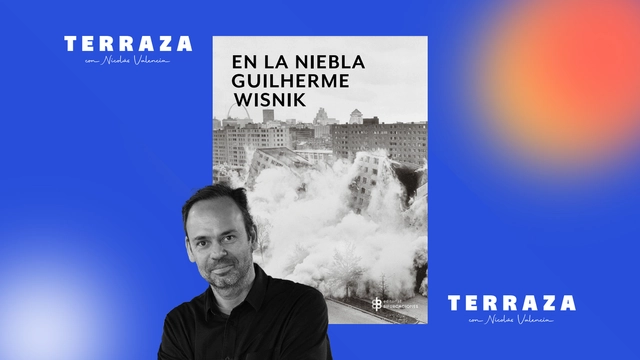
This week on the TERRAZA podcast, Nicolás Valencia talks with Brazilian architect and critic Guilherme Wisnik about his book En la niebla (Editorial Bifurcaciones), a series of essays where fog serves as a metaphor for the state of uncertainty in today's world, weaving together contemporary debates on space, art, and politics.
https://www.archdaily.com/1078849/guilherme-wisnik-in-an-ephemeral-world-architecture-has-to-become-an-imageArchDaily Team
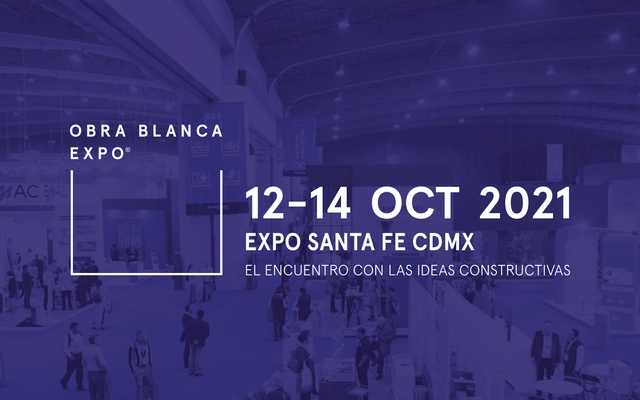
Conceived as an initiative to meet the construction sector's demand for all types of finishes, the Obra Blanca exhibition is set to celebrate its second edition. Designed as a meeting point for both professionals looking to showcase their products and those seeking to compare different finishing options, this specialized trade show will focus on the visitor experience and the professionalization of an increasingly comprehensive and sophisticated industry.
May 3 is a holiday originating from the Finding of the Holy Cross, May Cross, or Festival of the Crosses, which traces its roots to the Roman rite celebrating the Cross of Christ. This commemoration has evolved over time, being adopted in cities across Mexico, Chile, Spain, Ecuador, El Salvador, Guatemala, Paraguay, Peru, Trinidad and Tobago, Argentina, Colombia, and Venezuela, where the celebration typically includes floral decorations, processions, and dances.
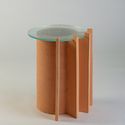
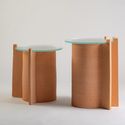
The design studio PECA—led by Mexican architect Caterina Moretti—launches its new collection titled "Impronta Terracota," made from clay and fused glass. Comprising two vessels that offer an unexpected twist on their purpose, they transform into table pedestals rising to two different heights. This exploration was developed at the Taller de Locos pottery workshop in Guadalajara.