1. ArchDaily
  2. Metal

Metal: The Latest Architecture and News

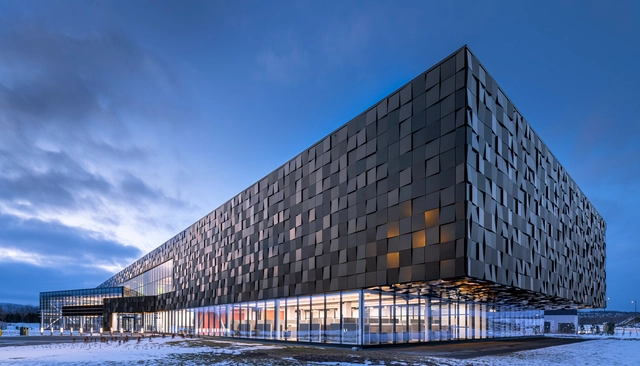
Metal Façade Systems with Community Resonance: The Case of Africatown Plaza

 | Sponsored Content

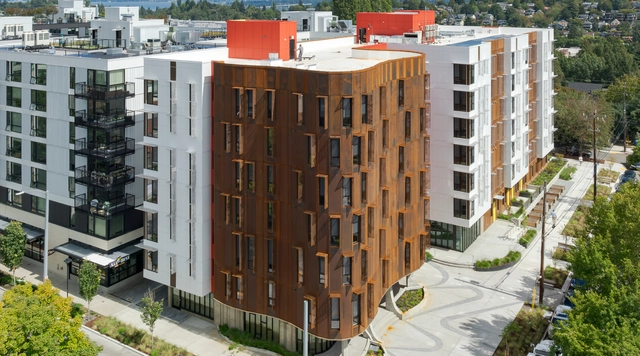
As urban neighborhoods continue to evolve, design plays a key role in shaping how buildings respond to urbanization, functional demands, and the character of their surroundings. Intertwined, these elements guide the transformation of urban life and influence how new developments engage with their context—a dynamic clearly visible in Seattle's Central District. Long considered a historic hub for the city's African American community, the Africatown Plaza project proposes a comprehensive approach that integrates architectural performance with community resonance, using the building envelope as a primary medium.

Building Methods in Focus: The Solid vs Hollow Partitioning Debate

Subscriber Access | 

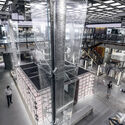
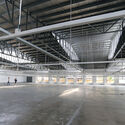
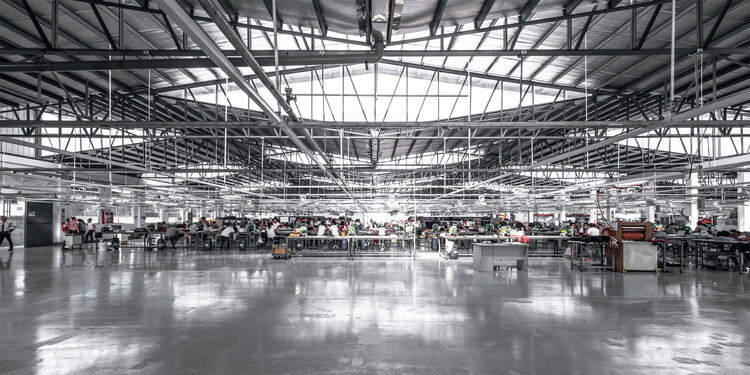
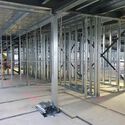
Two primary building approaches are commonly identified in architecture and design: solid versus hollow construction. These methods vary significantly across different cultures and regions, specifically for interior partitioning systems, when they appear interchangeable. Each has its own established practices influenced by local materials, labor preferences, climatic conditions, and cultural traditions. When architects and designers focus on their local context, it is easy to overlook the broader construction assumptions, limiting design flexibility and methodology. This raises an important question: How do these two building approaches differ?

Focusing mainly on interior systems, the distinctions between solid and hollow construction largely stem from the availability of materials and workforce preferences. For example, in the United States and Japan, stud walls, both wood and metal, are frequently used for partitioning. Conversely, brick remains the predominant material for partition walls in regions such as Hong Kong and southern China. Why do we build differently, and what are the benefits and challenges of each building methodology?

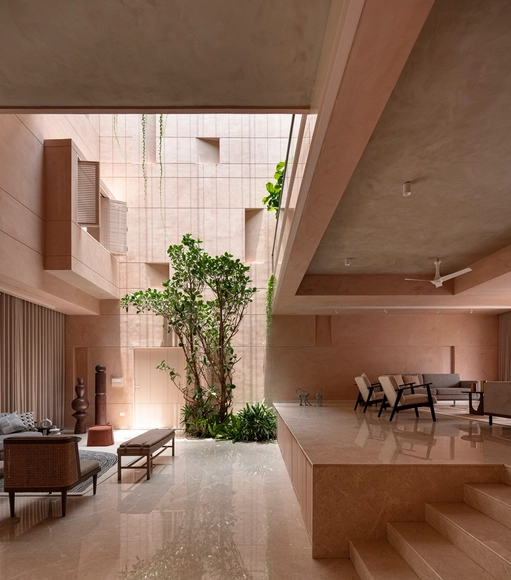
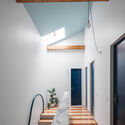
Building Methods in Focus: The Solid vs Hollow Partitioning Debate - Image 1 of 4Building Methods in Focus: The Solid vs Hollow Partitioning Debate - Image 2 of 4Building Methods in Focus: The Solid vs Hollow Partitioning Debate - Image 3 of 4Building Methods in Focus: The Solid vs Hollow Partitioning Debate - Image 4 of 4Building Methods in Focus: The Solid vs Hollow Partitioning Debate - More Images+ 14

30 Japanese Homes that Use Metal for Interior Accents

Subscriber Access | 

Contemporary Japanese interiors incorporate elements both of tradition and modernity to embody the country's innovative spirit while maintaining a profound respect for its history and cultural heritage. Though traditional materials like wood, paper, and bamboo continue to hold significance, modern Japanese interiors also often feature a fusion of glass, steel, concrete, and metals. The juxtaposition of smoother, sleeker textures and finishes with warmer and more organic ones reflects a dynamic synthesis of old and new, and results in visually striking and functional spaces that honor the essence of the country's design principles.

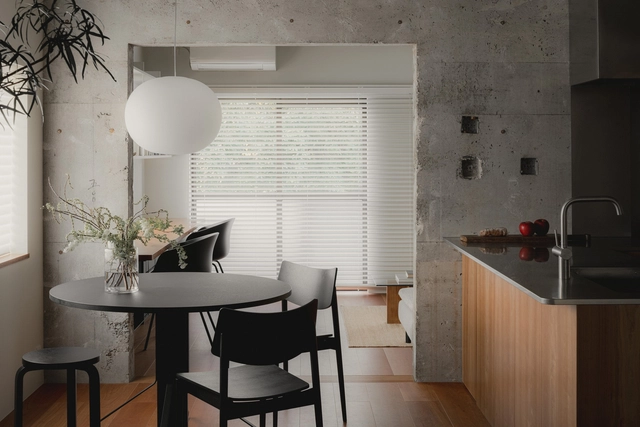
30 Japanese Homes that Use Metal for Interior Accents - Image 1 of 430 Japanese Homes that Use Metal for Interior Accents - Image 2 of 430 Japanese Homes that Use Metal for Interior Accents - Image 3 of 430 Japanese Homes that Use Metal for Interior Accents - Image 4 of 430 Japanese Homes that Use Metal for Interior Accents - More Images+ 28

Angled Metal Panels for Modular, Creative and Sustainable Façades

 | Sponsored Content

Blending in with its urban context or standing out to draw attention, a façade tells a building’s story. It is an expressive medium through which we engage with architecture, defining first impressions and setting the tone for the interior by experimenting with transparency, movement, texture and color, among other aesthetic possibilities. Of course, the envelope also plays a crucial functional role, acting as a protective barrier against extreme weather conditions and directly impacting light transmittance, energy efficiency and acoustic comfort. Architects therefore face an important challenge: to achieve a balance between an attractive look and performance. To do so, it is pivotal to specify the right materials during the design stage.

Modular Ceramics that Reproduce the Beauty of Stone, Marble, Cement and Metal

Subscriber Access | 

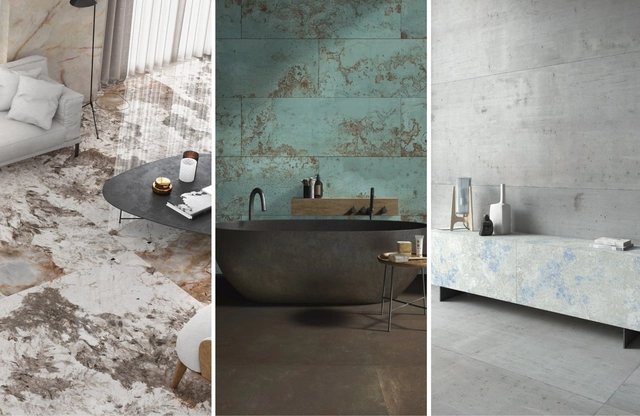
A rock like marble is usually light in color when formed through a process involving the heat and pressure of limestone. Carrara marble, for example, became famous for having good workability for sculptures, but also for its extremely uniform appearance. Under skillful hands, rough stone could become works of art such as Michelangelo's Pietá or David, among many others. But if during the rock formation process there are impurities such as clay minerals and iron oxides, the resulting stone may acquire bluish, gray, pink and black hues. Something that would make its use in a sculpture unfeasible can be seen as the real beauty of the piece, and how the passage of time was printed on it. Likewise, it is very difficult to predict exactly how zinc or copper will oxidize over time, and its patina effect takes on beautiful greenish, reddish or grayish tones, depending on the conditions to which they were exposed.

Admiring the unpredictability of materials and observing the beauty of the unexpected can bring surprising results to architectural projects. Through constant research, Apavisa has been able to develop modular ceramic pieces that combine strength and versatility, reproducing in detail the materials that our environment gives us. The strength of stone and metal with their oxidative processes, the roughness and timelessness of cement or the beauty of marble with its different veins, shades and patterns.  

Houses in Costa Rica: Creating Shelter, Ventilation, and Shade Using Wood and Metal

Subscriber Access | 

"Here in the tropics, shade is the prime air conditioner and, unlike the stove, it can be created everywhere," says Bruno Stagno about architecture for the tropics. In this sense, how has Costa Rica been "building" it's shade over the years?

How to Incorporate Steel Railings Into the Design

Subscriber Access | 

Railings play two roles in architectural projects, both as a support and safety component in a building, which involves a great deal of technical detailing and accessibility standards, and as an accent element in the design. In this article, we will explore the different ways in which these elements can be used in a project.

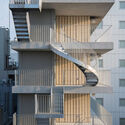
How to Incorporate Steel Railings Into the Design - Image 1 of 4How to Incorporate Steel Railings Into the Design - Image 2 of 4How to Incorporate Steel Railings Into the Design - Image 3 of 4How to Incorporate Steel Railings Into the Design - Image 4 of 4How to Incorporate Steel Railings Into the Design - More Images+ 10

Metal Houses in Argentina: 10 Projects with Sheet Metal Exteriors

Subscriber Access | 

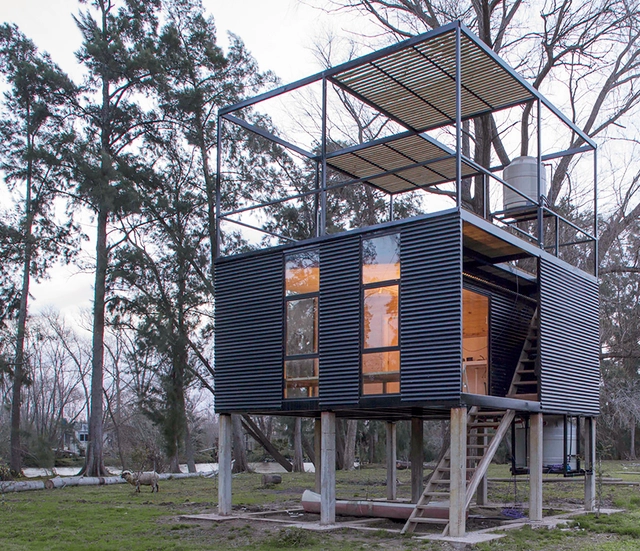
Metal Houses in Argentina: 10 Projects with Sheet Metal Exteriors  - Image 1 of 4Metal Houses in Argentina: 10 Projects with Sheet Metal Exteriors  - Image 2 of 4Metal Houses in Argentina: 10 Projects with Sheet Metal Exteriors  - Image 3 of 4Metal Houses in Argentina: 10 Projects with Sheet Metal Exteriors  - Image 4 of 4Metal Houses in Argentina: 10 Projects with Sheet Metal Exteriors  - More Images+ 11

Whether applied as cladding to steel or timber frame structures or to structures built by traditional means, sheet metal offers an array of advantages as a building material, thanks to its low cost, ease of maintenance, and versatility.

How Exterior Metal Panels Provide Function, Performance, and Beauty

 | Sponsored Content

Integrating metal panels into exterior architecture can result in a unique building that is both performative and beautiful. Metal panels customized in tandem with adaptive solutions, proprietary technology, and skilled project managers and designers create a perfect opportunity to make a statement in the surrounding built environment. Arktura provides services, resources, and materials to support endless creativity with exterior metal wall panels that give the flexibility to achieve virtually any design preference.
Tiny Homes Can Make a Big Impact in How We Think of Housing

The issue of the housing deficit plagues virtually all countries today. According to a study by the McKinsey Global Institute, 330 million urban families worldwide lack decent housing, or housing costs are so heavy that they need to forgo other basic needs such as food, heath care, and education for children. According to the WRI (World Resources Institute), it is estimated that 1.6 billion people will lack adequate housing by the year 2025.

Solving this problem is, understandably, complex. Having good housing means much more than simply having a roof over your head. Good housing is essential for physical and financial security, economic productivity, and human well-being. In addition to adequate comfort, it is essential that these houses are integrated with the city, jobs, infrastructure, and city services. For people living on the street, this issue is even more delicate. Among many other necessities, having a place to structure a life is essential to moving forward and prospering. One project that confronts this issue is Emerald Village Eugene (EVE), an affordable micro-housing community with a unique housing model structured to enable residents to transition from the streets.

15 Details of Metal Structures and Facades for Residential Projects

Subscriber Access | 

The use of steel in both the past and present is mainly associated with the success of grand industrial and civic structures. But due to the commercialization and standardization of steel profiles, its use in residential projects (thanks to its mechanical properties and fast installation) has resulted in complex and interesting solutions on a domestic scale.

Dive into these 15 construction details from residential projects that have made use of steel structures and cladding.