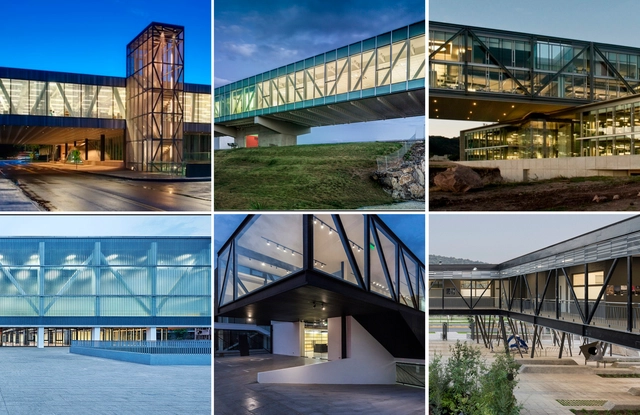
The use of steel in both the past and present is mainly associated with the success of grand industrial and civic structures. But due to the commercialization and standardization of steel profiles, its use in residential projects (thanks to its mechanical properties and fast installation) has resulted in complex and interesting solutions on a domestic scale.
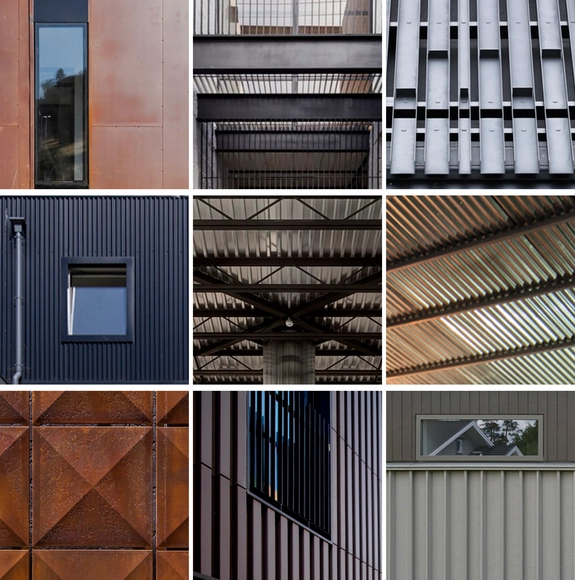
Dive into these 15 construction details from residential projects that have made use of steel structures and cladding.
Throughout history, simple structures have constituted one of the most common forms of human expression. Small-scale housing, shelters, and viewpoints have been shaped by myriad materials that effectively created - depending on the techniques used - different forms of response to the same need.
Here is a compilation of 20 small-scale projects that stand out due to their small size and their simple, practical structures.
The use of steel in architecture is considered as one of the most innovative construction developments in history, allowing architects to create structures in scales they never thought they could. Fast-forward a few centuries, and steel remains as one of the most crucial materials in architecture. But there is a lot more to the material than just tensile strength and durability, some architects were well-aware of steel's potential and transformed it into lighting fixtures, facades, decorative elements, and finishes.
Here are 15 projects where architects looked beyond steel as structural support and explored its diverse possibilities in architecture.
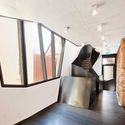
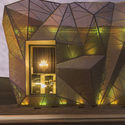
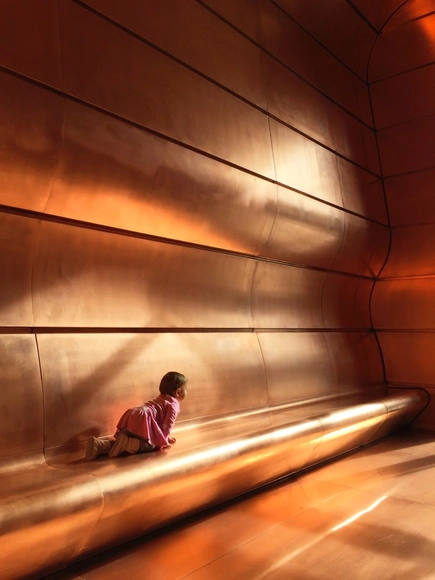
This renovation project by Peter Ebner and friends ZT GmbH is about the history of a place and changing tastes and times. It is about not needing a large scale to radically improve the space around. It is about the beauty and character of the city with its reflected sparkling life, gloomy evening sky, raindrops and lights of passing cars. It is about people who are mostly in a hurry, but who still sometimes stop for a few seconds to take note of a special, glittering room.
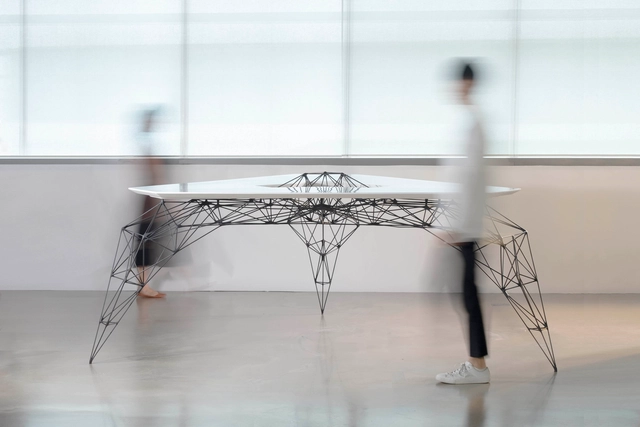
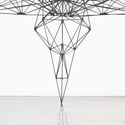
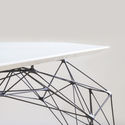
A sturdy featherweight table? Sounds... contrary to reason. But this contradiction was the very impetus for the design. Created for a research center that’s pushing the boundaries of design and manufacturing using technology and science, the designers--AIRLab, in collaboration with DManD-- sought to dematerialise the typical structure of a table, creating a sense of instability with the visual counterpoint of a solid surface.
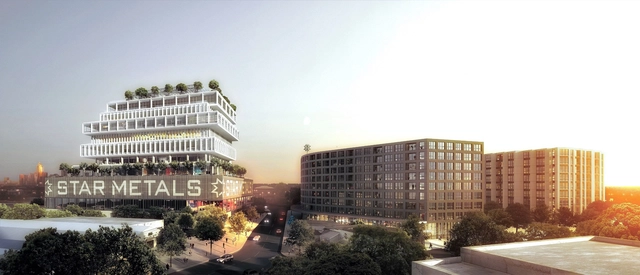
Oppenheim Architecture has released an update of their proposed Star Metals development in Atlanta, Georgia. Spread over two schemes, the project seeks to “shift the paradigm of what’s possible for new urban environments” through a 1.36 million-square-foot masterplan.
The Oppenheim scheme consists of a 14-story “Star Metals Offices” building, accommodating offices, terraces, parking, and retail, and a nine-story “Star Metals Residences” building with over 400 residential units.
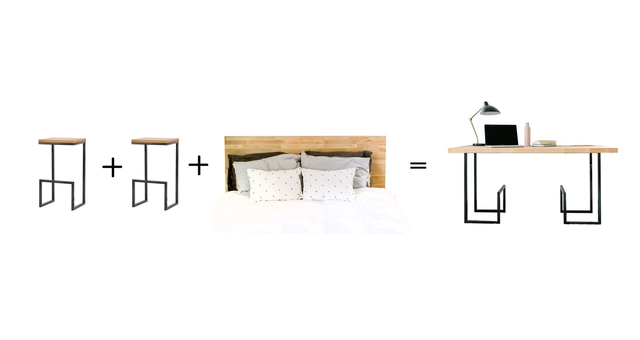
A table and a bench. A coffee table and a mirror? Perhaps it’s a stool and a cutting board.
This is not a furniture identity crisis, it’s Varia, a six-piece, mix-and-match furniture collection that can create over 25 pieces of furniture, saving money, space, and time. The creators, Jamie and Laura Kickstarted their project after Jamie found herself constantly moving from one place to another, and in need of versatile material instead of having old, unnecessary furniture pieces. With just a couple of lightweight metal frames and solid hardwood accessories, the collection is ideal for compact urban living and can be transformed into different furniture pieces in no time.
In brief, this is Varia, and it is pretty much anything you want it to be.
Varia's Kickstarter ends on August 31, support Jamie and Laura's project here.
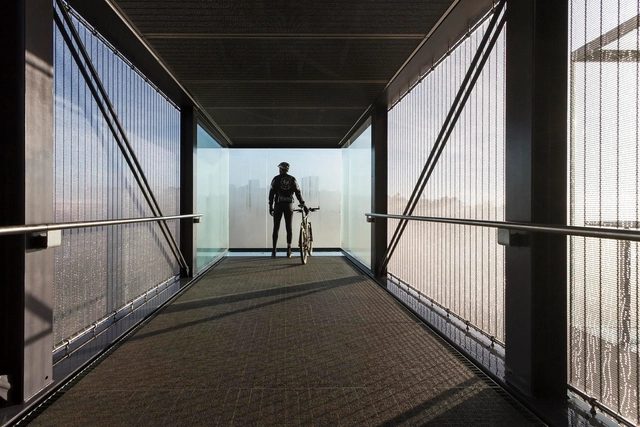
In buildings where openness, brightness, and outward views are highly valued by the users of our projects, glass predominates as an exterior cladding in cities all around the world. This forces us to look for options that can manage the excess of solar radiation and maintain thermal comfort in all seasons, without obstructing the views or darkening the interior spaces.
Prefabricated metal meshes provide certain qualities and flexibility that can work well in conjunction with glass; here we present 8 tips to work with this material and take advantage of its potential.
Now in its sixth year, CONNECT highlights innovative design programs at universities throughout the country. Students, under the supervision of university faculty, have the opportunity to design environments that incorporate seating and lighting installations, with the intention of offering an intimate area on the show floor where attendees can sit, relax and "connect." Exhibits will be located throughout the show floor, providing SOFA CHICAGO's international audience an opportunity to experience the innovation and creativity of future designers.
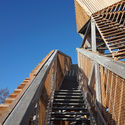
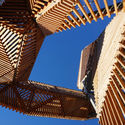
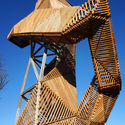
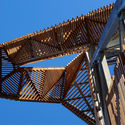
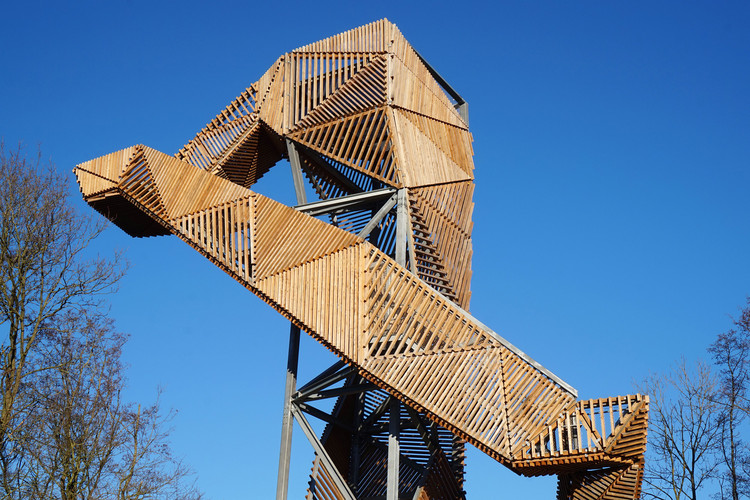
Ateliereen Architecten has proposed a metal and wood configuration for an observation tower in Peize, Netherlands. Their plan is to construct a resistant, permeable and playful structure.
The project is designed so that people climbing up the tower will have unique viewpoints. This tower is also easily assembled from screws and bolts.
The countdown has begun to the annual GAGAs - Galvanizers Association Galvanizing Awards. Entry is now open for these highly regarded awards, which offer an accessible yet powerful way of establishing a reputation for design excellence, within the architectural community and beyond.
The GAGAs are open to all within the construction supply chain from clients, architects, engineers, contractors and fabricators. All that is required is a short project description and photographs. Any new building or refurbishment project completed after 1st June 2015 is eligible.
The event will be held in June 2018 at the Royal Aeronautical Society in London, where judges
With the green premise growing in popularity across the globe, more and more people are turning to recycling shipping containers as a way to reduce the extremely high surplus of empty shipping containers that are just waiting to become a home, office, apartment, school, dormitory, studio, emergency shelter, or anything else. The conversion of shipping containers to living spaces is not a new concept.
Shipping containers have become a more common architectural tool over the past few years. Through clippings, insertion of external elements, coatings, and equipment, the container is adapted according to its future use and desired aesthetics. See below 10 examples of works that adopt the use of containers.
Photographs: Lorena Darquea Schettini - Rubén Rivera Peede - Chris Cooper - Bartosz Kolonko - Pablo Errázuriz - Pablo Sarabia. Image
Shipping container architecture has developed its own niche in both design and representation. Colorful or grungy? Economical or gentrified? Either way, you look at it, designing with shipping containers is a serious exercise in modular planning. The physical constraints of the object make designing projects with containers a complex task, which demands specific studies in spatial organization.
The responses using this element in architecture are great and diverse, so we have selected a number of different project plans, both helpful and inspirational, that rise to the shipping container-challenge of design.
Check out selection of 10 architectural project plans using shipping containers below:
Understanding the structural aspects of architecture is an inherent task of the architect; sufficient structural knowledge allows designers to propose ideas such as large structural elements which offer an interesting response to a project's needs.
Steel trusses are an example of such a response, which demonstrate an ability to define spaces and structures that are truly complex and interesting.
Below is a list of 10 inspirational projects that use metal trusses as an essential element of design.
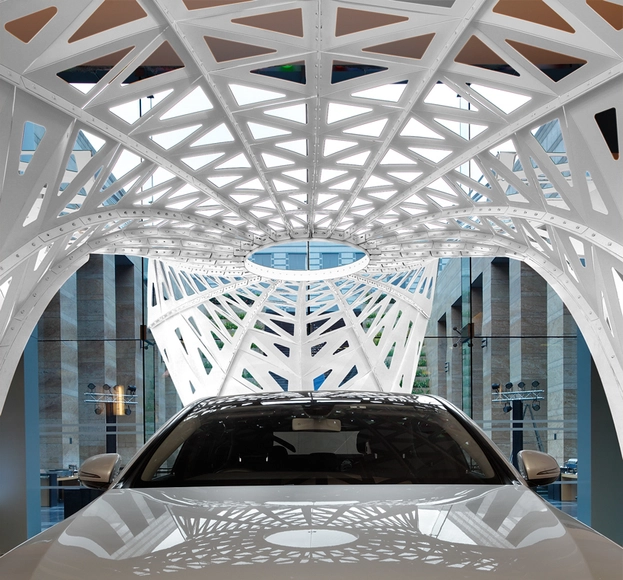
The geometric design of the 'Protostar Pavilion' for the launch of the new Mercedes-Benz E-Class is a morphological response associated with the iconic brand logo: a three-pointed star.
The project is a removable metal pavilion, made up of a series of folded aluminum plates that besides generating a light structure, allow for a quick and easy construction.





.jpg?1558680317 "© Ket Kolektif")







.jpg?1518089499 "© CODE + Johannes Belz")