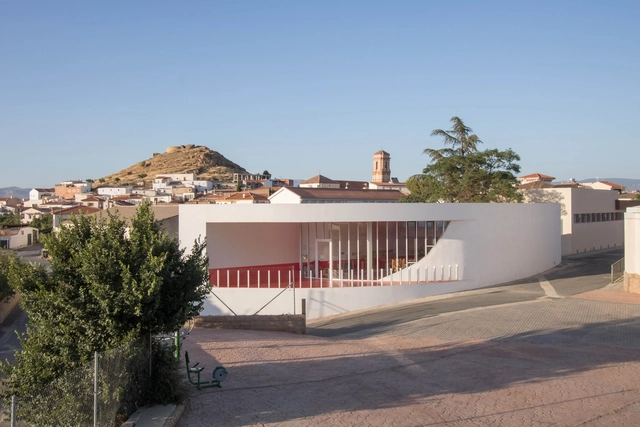
Contemporary educational architecture has moved away from replicating closed buildings that resemble prisons or hospitals more than environments designed to foster the academic development of younger generations. Whether a university, high school, elementary school, or preschool, educational infrastructure must encourage free and creative thinking, moving past the obsolete notion that students should be trained like soldiers who cannot question authority. This is where the architecture of these spaces plays a leading role, serving as the setting where students spend a significant portion of their lives.
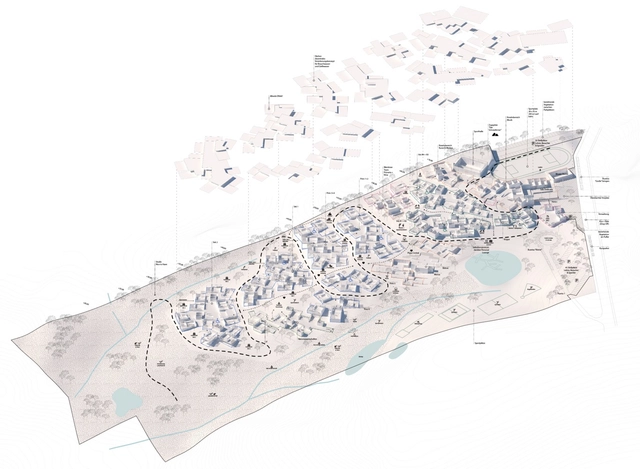
In the heart of the southern Ecuadorian Andes, near the city of Cuenca—a UNESCO World Cultural Capital—PPAG Architects is building the Stiehle German School, having won the invited competition.
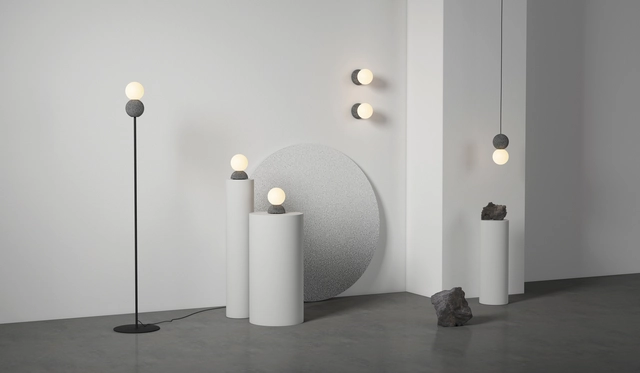
Founded in 2013 and based in Mexico City, David Pompa is a studio made up of designers, engineers, and makers established in Mexico and Austria. David Pompa grew up in both countries and studied product design in London. Over time, the studio has shown a strong interest in traditional materials and techniques. Since its founding, it has remained committed to Mexican culture, which is reflected in the creation of aesthetic and accessible design objects.
In November of this year, the latest edition of the Minsk International Biennale of Young Architects was held in Belarus. The event featured the Leonardo Awards, which recognize completed projects from around the world across six categories: urban planning, public buildings, multi-family housing, single-family homes, landscaping, and interior design.
A few days ago, we asked our Instagram followers, "What does public space mean to you?" These reflections are intrinsic to architectural discourse and come into play across various project types, particularly those involving the planning of shared spaces in cities.
Keeping up with the software used in architecture is not only a massive task but a necessary one to showcase the diverse skill set of anyone involved in design and construction. With today's wide range of available programs, which of these could be the "best"?
Fortunately, TechRadar, the tech-focused online publication, gives us a clue with its announcement of the best architecture software of 2019. While this list may rank the software from "best to worst," it is important to remember that each program is designed to serve a different purpose, not necessarily to perform better than the others.
https://www.archdaily.com/1120128/the-best-architecture-software-of-2019ArchDaily Team
Architects Ignacio Urquiza and Bernardo Quinzaños present "ESSAYS: The Architectural Process of 2008-2018," a monograph that celebrates and concludes the first stage of their careers, offering a critical and retrospective look at the projects and collaborative processes they have developed over the last 10 years.
During the first half of this year, the XXI Chile Biennial of Architecture and Urbanism invited students, architects, firms, institutions, publishers, and collectives to participate in one of the most important architectural events in Chile and Latin America, which this year will focus on proposals geared toward the "everyday" public.
It is already happening: the Internet of Things allows many devices to be digitally integrated into automated systems to be managed directly from our smartphones. If a user speaks to their phone and says, for example, the word "cleaning," home automation could raise the blinds, turn on the lights, and activate a robot vacuum. Amazon, with Alexa, and Google, with Google Home, are some of the virtual assistants that enable this integration; users simply download the application, link the devices, and give the command to their phone, which then activates the functions required to complete a specific task or create a scene.
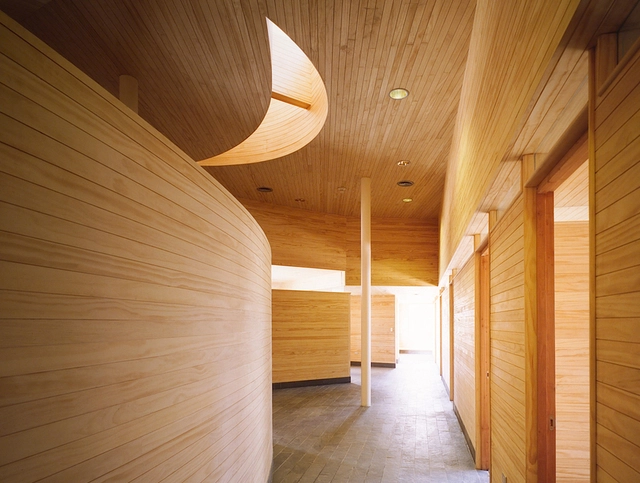
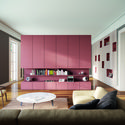
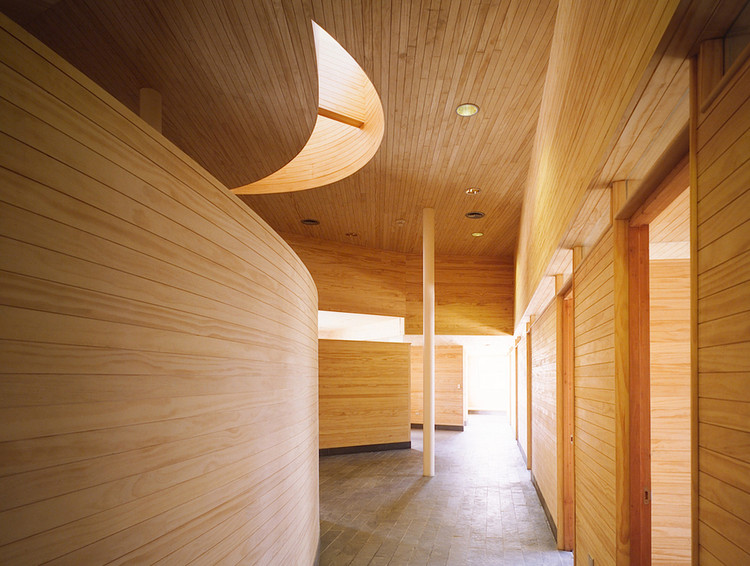
Offering warmth and a modern yet artisanal aesthetic, wood is always an excellent choice when selecting wall coverings for interior spaces or manufacturing furniture. However, how do you choose the right cladding for a specific project?
We have compiled a selection of coverings with different aesthetics, formats, and installation systems, identifying their characteristics and differences to help you choose the right material. Slats or panels? Melamine, Trupán, or Radiata Pine? A natural look or colored pigments? Compare eight different options below.
Whether seeking distraction, escape, or reflection, metro passengers shorten their commutes by checking their phones, reading books, or listening to music. For Chilean photographer and civil engineer Felipe Lavín, this conceals a contradiction. "Commuting en masse is a highly social act, yet at the same time, it is deeply solitary. As Marc Augé notes, in the metro we constantly brush against the lives of others without ever truly encountering them," Lavín says in conversation with ArchDaily.
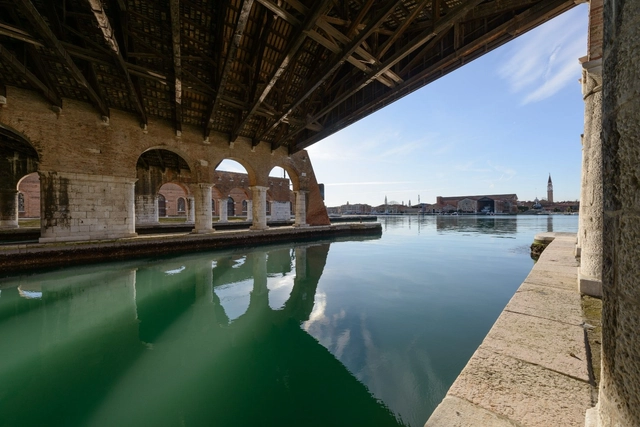
On Monday, November 18, the National Institute of Fine Arts and Literature (INBAL), through its Department of Architecture and Conservation of Built Artistic Heritage, announced the official selection that will represent Mexico at the 17th International Architecture Exhibition of the Venice Biennale 2020. Chosen from 153 submissions across 14 Mexican states, the final selection of 12 proposals features the following participants:
https://www.archdaily.com/1120094/results-of-the-open-call-for-the-mexican-pavilion-at-the-17th-international-architecture-exhibition-venice-biennale-2020Pabellón de México
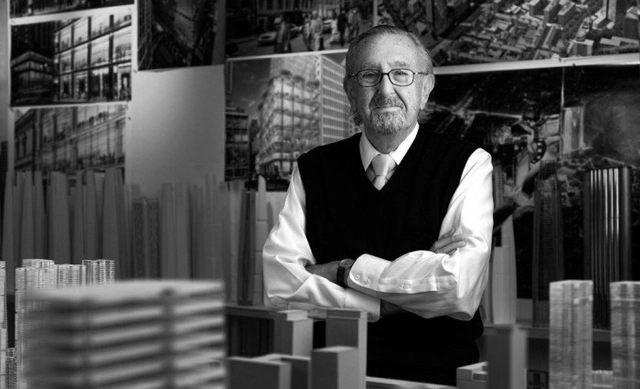
Argentine architect César Pelli, known for designing some of the world's tallest buildings, such as the Petronas Towers in Kuala Lumpur, the Torre de Cristal in Madrid, and the Costanera Center building in Santiago, Chile, passed away today at the age of 92, as confirmed on social media by Juan Manzur, governor of the province of Tucumán.
"Domestic Workspaces" by Silvia Garcia Camps brings together 46 international architecture offices through collage, revealing the intimate, domestic, and shared qualities of workspaces through the everyday objects within them. Explore a selection of these illustrations, along with her thoughts, below.
The winners of the National Sustainable Social Housing Competition were recently announced. Organized by the College of Architects of the Province of Córdoba and promoted by the Municipality of Villa María, the competition aimed to foster debate around the role of architecture in social issues, discussing how the discipline can generate housing alternatives that offer positive solutions to Argentina's housing crisis while incorporating economic, social, and environmental sustainability principles.
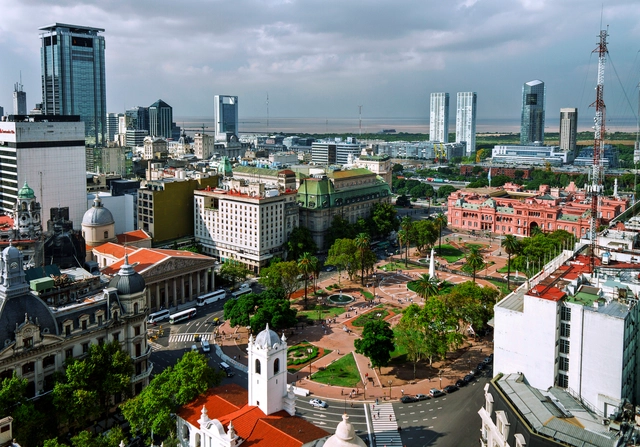
The Night of the Museums is an annual cultural event held in the City of Buenos Aires. Since 2011, various public and private cultural spaces, foundations, and museums have opened their doors with special nighttime programming, allowing the public to visit them free of charge and enjoy their collections, exhibitions, and activities. The 2019 edition will take place on Saturday, November 2, from 8:00 PM to 3:00 AM, with a total of 280 cultural spaces, libraries, galleries, and museums participating.
Have you ever been curious to see inside someone else's home? With this tagline, Open House Buenos Aires has announced the details of its seventh edition, an invitation and a unique opportunity to rediscover both the architecture of Buenos Aires and its stories and residents. Like every year, this festival offers free admission to numerous architecturally significant buildings that are normally closed to the public. Over the weekend of November 9 and 10, more than 140 buildings will open their doors, making the festival one of the year's most important cultural events.
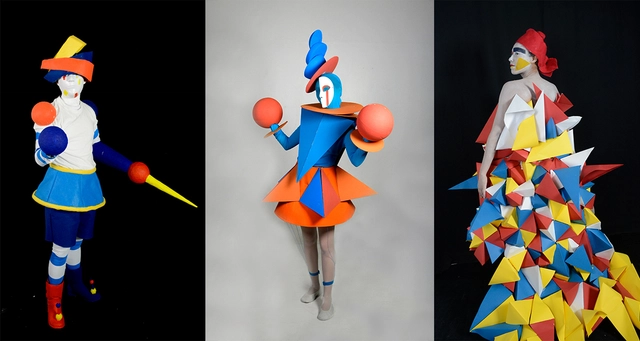
The history of the Triadic Ballet dates back to 1919, when the Bauhaus was founded in Weimar, Germany, including a theater workshop within its curriculum. Directed by Oskar Schlemmer, this theater workshop focused on staging new concepts and reflections on the relationship between humans and space, based on a geometric analysis of bodily forms and movement in space.
The volume of debates, ideas, discourses, and discussions triggered by theater at the Bauhaus—and its subsequent influence on architectural production—is almost incalculable. Schlemmer opened a door to an architectural study centered on the body. One of his most famous works is the Triadic Ballet (Das Triadische Ballett), staged in 1921. It comprised 12 small-format pieces featuring 18 costume and lighting changes spanning several hours.
When talking about Argentine architecture, does a native style exist? The question is complex, as Argentina's DNA contains a mixture of contributions from various origins, ranging from Indigenous peoples to immigrants from diverse global regions. The country is as rich as it is diverse.
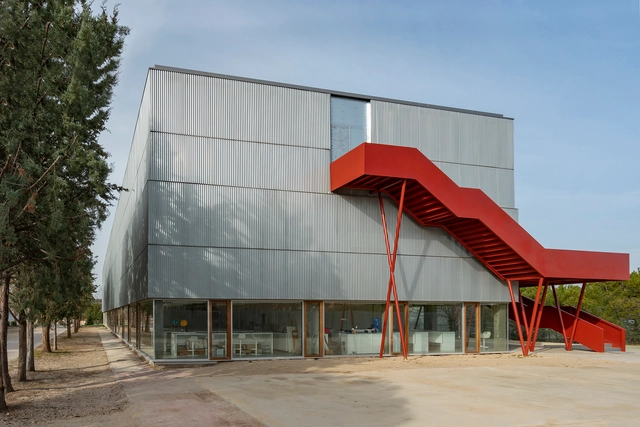
Luis Rojo de Castro and Begoña Fernández-Shaw Zuleta received the 2019 First COAM Award and Luis M. Mansilla Award for the renovation of Aulario B Founder's Hall, located on the Runnymede College Campus in Alcobendas, Madrid.
Every day, more architects are turning to virtual reality, driven by the rapid emergence of headsets and platforms. Architecture firms are seeking efficient ways to present their new developments, and VR technology is making a powerful impact in the visualization of unbuilt projects.
Many were surprised that this edition of BBConstrumat in Barcelona lacked carpeting across its 34,000-square-meter exhibition space, or that the schedule of events was only available via the event's app. As climate change—or rather, the climate emergency—becomes irreversible and adaptation demands more drastic measures, the construction sector is also feeling the pressure to reinvent itself.








_2018_-_Fotomontaje_Digital.jpg?1553477725&format=webp&width=640&height=580)