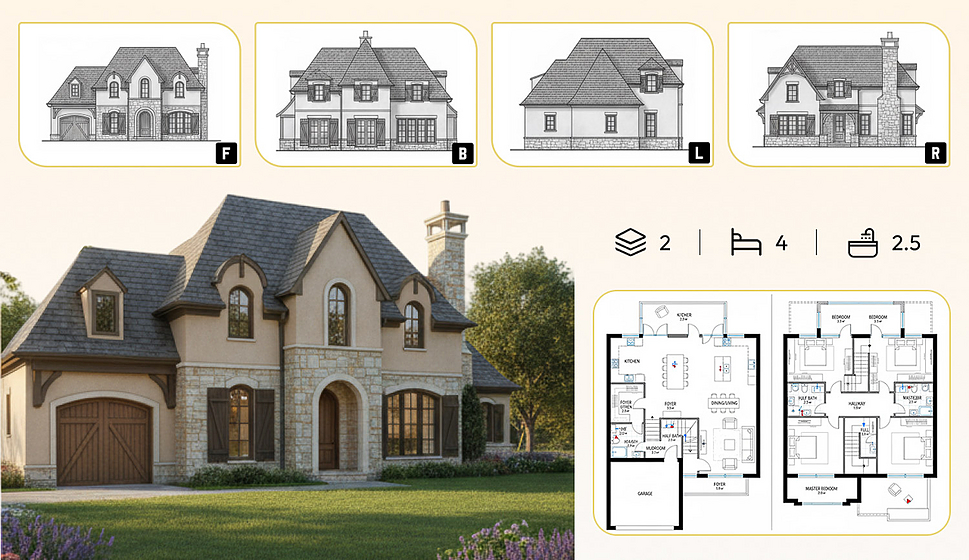
This guide covers a workflow that moves from project parameters to generated floor plans, 3D perspective views, exterior design exploration, and site context visualization, using AI tools in place of preliminary CAD and rendering work.
This guide covers a workflow that moves from project parameters to generated floor plans, 3D perspective views, exterior design exploration, and site context visualization, using AI tools in place of preliminary CAD and rendering work.
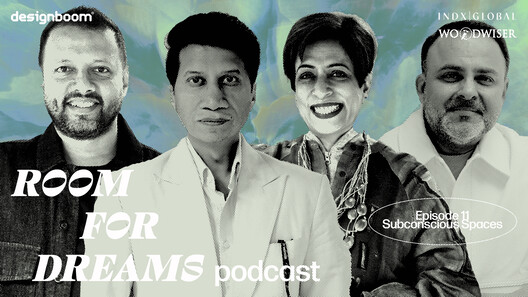
Beyond the structural grids lies a layer of design that dictates how a room feels the moment someone crosses the threshold. Recorded live at Milan Design Week 2026 in partnership with INDX|GLOBAL, the final episode of the Room For Dreams podcast covers the unseen atmospheric energy that gives architecture its emotional weight.

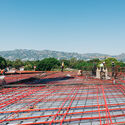
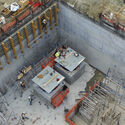
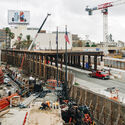
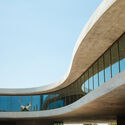
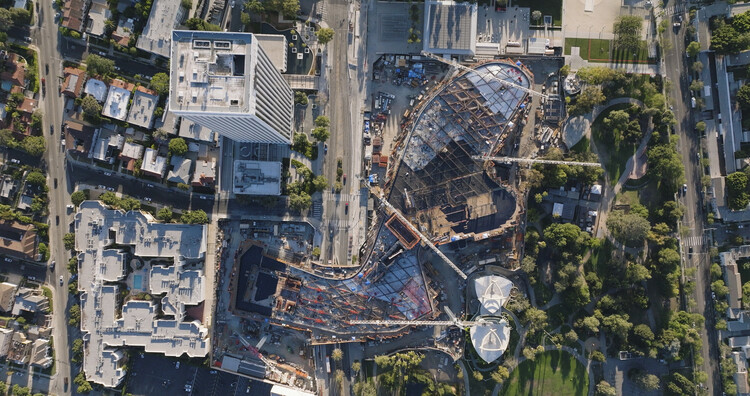
The recently opened David Geffen Galleries at LACMA are the result of more than a decade of effort across many fronts: the city, the county, the public, the architect, the engineers, the general contractor, and the many builders involved in translating an ambitious and visionary design into built form. The project has also been subject to unusually intense scrutiny, with responses ranging from admiration for its meticulous construction and architectural ambition to criticism of its scale, cost, concrete mass, and engineering complexity in earthquake-prone Los Angeles. Whatever one's position, the building remains an exceptionally sophisticated case study in how architecture is negotiated through construction.
This conversation approaches the David Geffen Galleries from the perspective of Clark Construction, the general contractor responsible for helping bring Peter Zumthor's design to completion. Carlos Gonzalez, Group President at Clark Construction, oversaw the construction process and shared with ArchDaily some of the technical, material, and logistical challenges behind the building. These range from its monolithic concrete structure and extensive post-tensioning system to the 56 seismic isolators that allow the building to move during an earthquake; from unpredictable ground conditions near the La Brea Tar Pits to the fabrication of solid bronze mullions and the integration of mechanical systems within the building's double-deck concrete structure.

In a slim volume with a yellow-edged cover, recently published by the Porto-based imprint Circo de Ideias, the architect Paulo Martins Barata (a founding partner of Promontório) makes a deceptively bold claim that the architecture produced in Europe since the Great Recession belongs to neither of the two camps that structured the twentieth century's fiercest disciplinary debate.
The Language of Metamodern Architecture borrows its title, with evident irony, from Charles Jencks' 1977 The Language of Post-Modern Architecture, the book that famously declared modern architecture dead at 3:32 pm on July 15, 1972, with the demolition of Pruitt-Igoe. His wager is that another death, never officially certified, occurred somewhere around 2008, and that architecture has been living, mostly unaware, in what grew up around the grave.

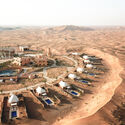
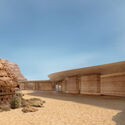
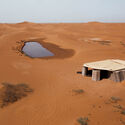
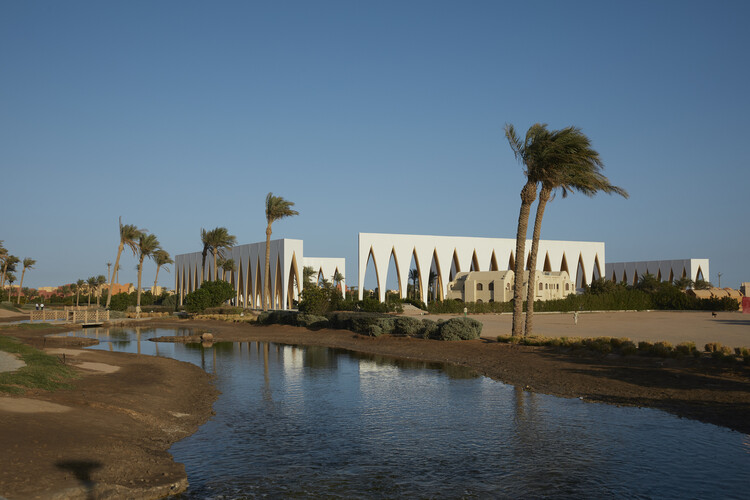
Architecture has long been defined by permanence. Buildings are celebrated because they endure, cities because they establish permanence against uncertainty, and monuments because they resist the passage of time. Some of humanity's oldest urban traditions emerged in landscapes where permanence alone could never guarantee survival. Across the deserts of North Africa and the Arabian Peninsula, oasis settlements developed not as isolated refuges from an empty wilderness, but as carefully maintained pauses within landscapes already shaped by movement. Long before highways and airports connected continents, caravans, pilgrims, pastoralists, and merchants traversed these territories through networks of wells, irrigation systems, cultivated groves, and market towns. The oasis was never the end of a journey. Wells, shaded palm groves, irrigated fields, and caravan markets allowed the next stage of the journey to begin.

The White Bay Power Station precinct and Glebe Island, two key sites in one of the last major redevelopment sites on Sydney's inner harbour, are the focus of a new international design competition launched by the New South Wales Government. The open, two-stage Bays West International Design Competition seeks a design-led Urban Framework that will guide the transformation of the precinct into a new waterfront neighbourhood.

Examining the evolution of dwelling throughout history reveals that concepts of space, time, identity, and home extend far beyond architecture itself. From the early twentieth century to the present, human development has been shaped by accelerating economic, social, cultural, and technological transformations. Advances in information and communication technologies have fostered a world of constant connectivity, a phenomenon that can, at times, disconnect individuals from the physical spaces they inhabit. Amid an ever-growing flow of stimuli, interactions, and digital platforms, shared living across multiple architectural scales and programs presents both a challenge and an opportunity to reconnect people with their surroundings through design strategies that support the freedom of movement and flexibility demanded by contemporary life.

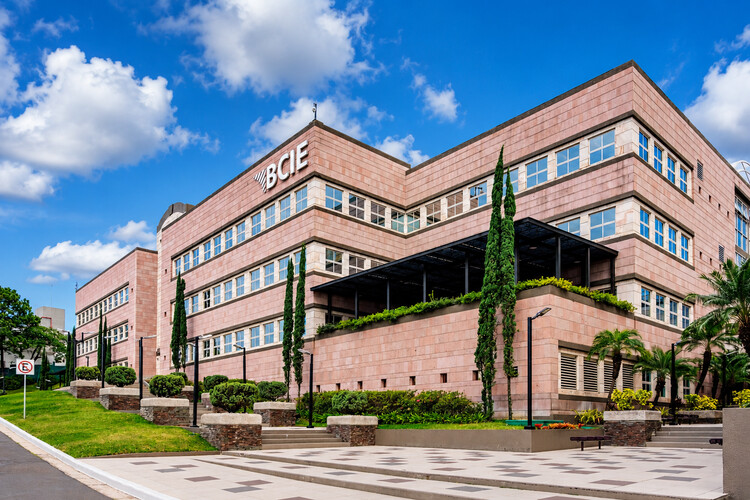
Central America's nations occupy a narrow land bridge between Mexico and Colombia, but they were not born as separate countries. They emerged from a single entity: the Federal Republic of Central America in 1823. That federation collapsed, yet the ideal of a unified region never fully died. In 1951, the governments signed the Charter of San Salvador, creating ODECA, the Organization of Central American States. Four decades later, the 1991 Protocol of Tegucigalpa replaced it with SICA, the Central American Integration System, the framework guiding regional cooperation today. Within this integration process, the Central American Bank for Economic Integration (BCIE) was founded in 1960 by Guatemala, El Salvador, Honduras, and Nicaragua, establishing its headquarters in Tegucigalpa. On the surface, it is a conventional late-20th-century office complex, but look closer at its façade, and the building becomes an argument about identity. One written in pink quarry stone from the very hills that surround the Honduran capital.

Recorded live at Milan Design Week 2026 in partnership with INDX|GLOBAL, the tenth episode of the Room For Dreams podcast looks at how buildings outgrow their original blueprints. Architects Parvez Alam and Priyanka Arjun, alongside interior designer Aditi Sharma, discuss why the best architecture is never truly finished.

Concéntrico returned to Logroño for its 12th edition in June and transformed the city into a working site for architecture. Since its founding in 2015, the festival has built an identity on resisting a distant, controlled exhibition of design by constructing full-scale installations in the city's streets, plazas, and vacant lots, engaging residents and visitors as part of daily life. This year's program brought together more than twenty interventions by architects, designers, and researchers working across a wide range of geographies and methods, each contributing to a citywide experiment in reimagining public space.

Images of the benches at New York City's High Line Park spread around the world when the project opened in 2009. Emerging diagonally from the same material and modular pattern as the paving, they transition seamlessly from concrete to wood, evoking the railway tracks that once occupied the site. To withstand decades of exposure to the elements, the project required a wood species of exceptional durability, and ipe, harvested from the Brazilian Amazon, was selected. Its slow growth produces a dense, low-porosity hardwood that is naturally resistant to wear, moisture, and biological decay. The choice, however, sparked controversy at the time amid concerns over the certification of the timber's forest management. This broader view changes how we think about materials. Their origin still matters, but so does what happens after the building's life comes to an end.

This article is part of our new Opinion section, a format for argument-driven essays on critical questions shaping our field.
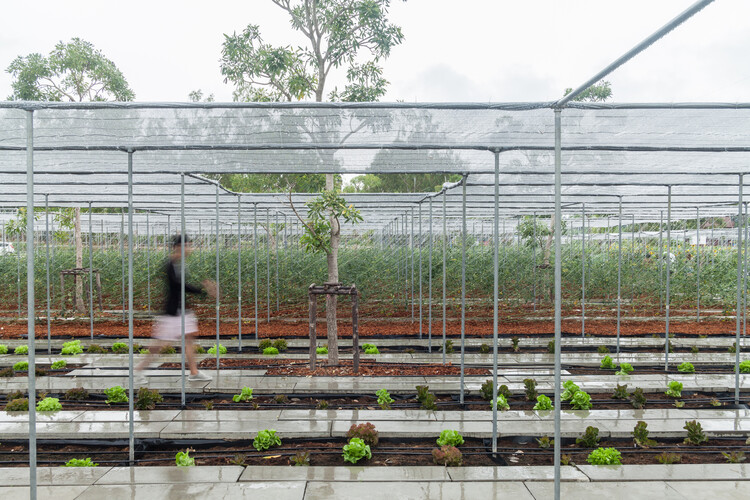
Agritourism is commonly understood as a hybrid model, with equal parts of overlap between the agriculture and hospitality industries. Under this framing, agritourism is valued as a variation on an existing theme, a supplementary activity layered onto rural production. This framing no longer holds in the 21st century as the scale and independence of agritourism's growth have transformed it into a distinct economic sector, one with architectural consequences that neither the agriculture nor the hospitality industries are equipped to address in isolation.

Every democracy eventually confronts the same question: where can its citizens speak?
Public squares, marches and demonstrations have served as the most visible and impactful expressions of collective opinion. There persists a growing desire among citizens to be seen and heard in the public domain. Demonstrations, by their very nature, are moments of urgency, emerging when conversations have reached an impasse. While essential to democracy, they cannot be its only language.

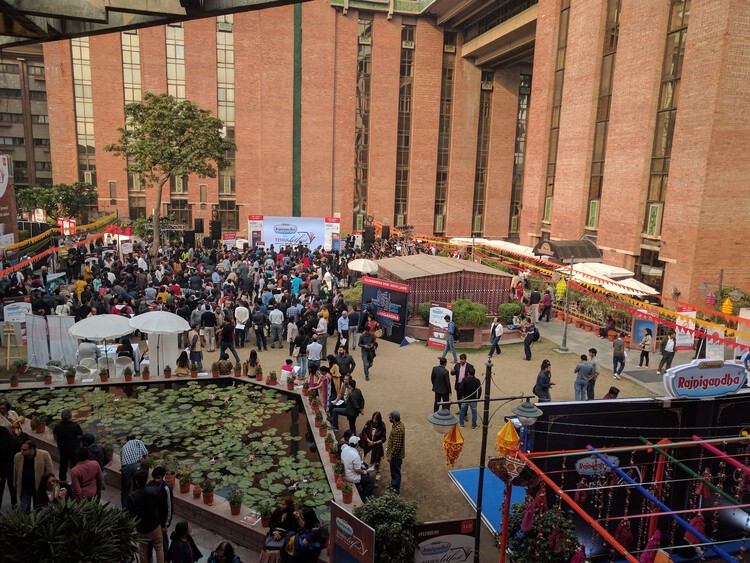

Few conditions have shaped contemporary architectural discourse as profoundly as uncertainty. Across international biennials, exhibitions, and forums, architecture increasingly imagines its relationship to the world through flexibility, reversibility, and responsiveness—qualities intended to engage with climate emergencies, political instability, and unprecedented human mobility. Buildings are designed to transform, infrastructures to evolve, and cities to accommodate conditions that appear increasingly unpredictable. This emphasis on agility has expanded the discipline's capacity to engage with environmental change, offering valuable strategies for a world in constant transformation.
Yet this evolution points to a deeper shift in how architecture mediates the human condition. Architecture has long functioned as a mechanism for existential orientation—a way for human consciousness to carve an intelligible coordinate out of an indifferent cosmos, anchoring memory and identity to a fixed point. Within much contemporary architectural discourse, uncertainty increasingly appears less as an external condition to be mitigated than as the horizon from which architectural thinking begins. Spatial experience is increasingly shaped by environments designed around the persistence of flux, where static reference points give way to conditions of continuous transformation.

In many homes, the entry is treated as leftover space or a narrow strip transition before the living room begins. Yet in dense Asia-Pacific interiors, sometimes despite the small sizes, the entrance often performs far more work than its size suggests. It is the threshold that dictates the transition: street is filtered, body adjusts, shoes are removed, guests are received, privacy is negotiated, and domestic order begins. Before the living room became recognizable as interior, the entry sequence and space had already staged the first act of inhabitation.
The Japanese genkan is perhaps the most familiar version of this condition, but the logic extends far beyond Japan. Across apartments, terrace houses, public housing units, and compact urban homes, the entry threshold becomes a small but charged architectural device. It manages hygiene as well as spatial sequencing through various deliberate architectural elements. It can be a recessed floor, a thickened wall, a compressed corridor, a screen, or a small foyer between public circulation and private life. Its importance lies not in its size, but in the number of transitions it holds.

What defines the quality of a bathroom beyond its basic functions? As one of the most private spaces within the home, the bathroom is closely connected to everyday rituals and moments of pause. While fixtures, circulation, and technical requirements establish the practical foundation, the atmosphere emerges through a combination of spatial decisions: how furniture meets the floor or deliberately avoids it, how materials interact with light, how storage is integrated, and how form and proportion shape perception.

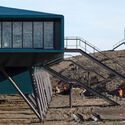
Antarctica has no government, no permanent population, and no economy. It also, since 1959, has had no legally recognized owner as the Antarctic Treaty freezes every territorial claim on the continent. On paper, this makes Antarctica the closest thing on Earth to a true commons. In practice, close to thirty countries currently operate more than seventy research stations there, several of them within a short flight of one another, and one of those stations has a school, a chapel, a cemetery, and a civil registry office that has recorded eleven births since 1978.
None of that architecture is accidental, and very little of it is explained by science alone. A research station costs millions of dollars to build and supply in one of the most logistically hostile places on the planet; a country does not commit to that expense purely to measure atmospheric ozone it could, in several cases, measure somewhere closer. What a station does, reliably, is stake a claim to a territory that legally forbids exactly that.

Recorded live at Milan Design Week 2026 in cooperation with INDX|GLOBAL, the ninth episode of the Room For Dreams podcast brings together architects Rajiv Parekh of Red Architects, Hiren Patel of HPAD, and Rudraksh Charan of 42mm Architecture to discuss how design can serve as a powerful tool for emotional resilience and collective healing.

What allows a single architectural principle to generate many different outcomes? The answer lies in the systems that organize architecture: geometry, proportion, structure, and construction. Together, these can establish a set of rules that can accommodate different programs, contexts, and spatial conditions while maintaining a coherent identity. A structural grid, for example, can organize a variety of uses, just as a single construction detail can be repeated throughout an entire building without producing identical spaces. Can the same way of thinking be translated into furniture design without losing its identity? MTM—Made to Measure, developed by Herzog & de Meuron for UniFor, explores this question. Instead of designing each piece independently, the collection grows from a single structural principle that can be extended, adapted, and repeated across different functions while maintaining its internal coherence.

Architecture often inherits a paradox. The buildings that come to define a place are rarely the only ones that shaped it. Instead, they become symbols, repeated through guidebooks, tourism campaigns, conservation agendas, and architectural histories until they stand in for an entire region. Over time, the richness of a built landscape is compressed into a handful of familiar images. What falls outside that frame rarely disappears. It simply slips from architectural discourse.
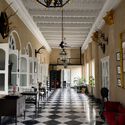
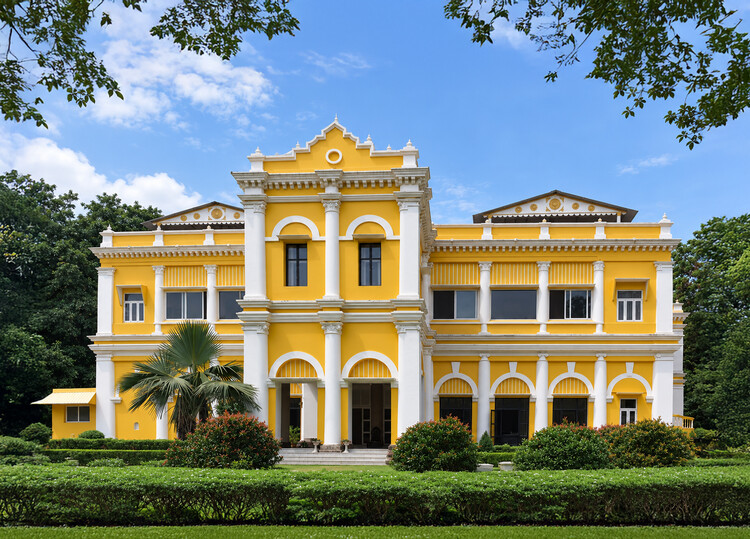
Few places illustrate this more clearly than Odisha. For decades, its architectural identity has been represented through the monumental stone temples of Bhubaneswar, Konark, and Puri. The sculptural sophistication of the Kalinga tradition has rightly earned international recognition, becoming one of India's most celebrated architectural legacies. Yet this prominence has also produced an unintended consequence. Odisha is frequently understood as a land of temples, leaving other architectural histories comparatively unexplored. Royal residences, administrative buildings, colonial encounters, vernacular settlements, and former capitals occupy a far smaller place in the architectural imagination despite revealing equally complex stories of governance, diplomacy, ecology, and cultural exchange.

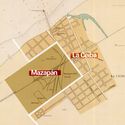
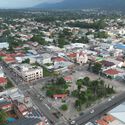
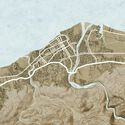
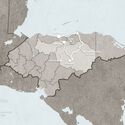
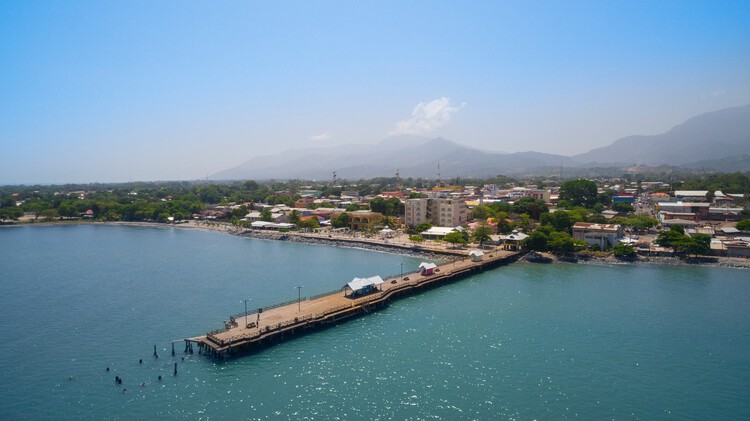
On the Caribbean coast of Honduras, lies the Leán valley, a narrow coastal strip lined by the Nombre de Dios Mountain Range to the South and the Caribbean Sea to the North. For a long time, this was the last frontier: dense jungle, swamps, no infrastructure, and difficult inland access. However, all of that started to change with the arrival of the Garífuna, who settled the area between the Danto and Cangrejal Rivers, setting the foundations of what would become the City of La Ceiba. An urban hub in the Honduran Caribbean whose history has been defined by migration waves: Central Americans, Afro-Caribbean people, Europeans, and corporate North America. These movements from all around the world did not merely contribute to economic growth, but actively produced the city's spatial logic, identity, and architectural form.

What does luxury mean when products are designed for quick obsolescence? Recorded live at Milan Design Week 2026 in cooperation with INDX|GLOBAL, the eighth episode of the Room For Dreams podcast brings together architects Priyanka Mehra, Simran Boparai, Ashmit Singh Alag, and Adreesh Chakraborty to dissect the evolving, often contradictory relationship between exclusivity, sustainability, and purposeful craftsmanship.

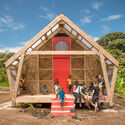
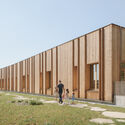
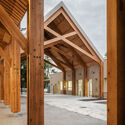
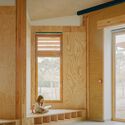
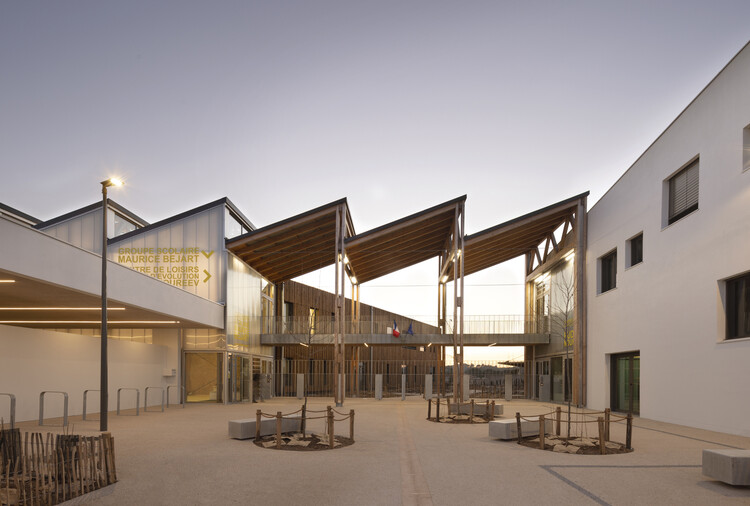
Over the past decades, timber has expanded its presence in contemporary architecture—driven both by the development of new construction technologies and by the rediscovery of traditional building techniques, all with a focus on lower-impact environmental solutions. Schools are among the building types that best reflect this movement: it is in these environments that the environmental, constructive, and sensory qualities of timber find particularly fertile ground.

As the UIA World Congress of Architects 2026 came to a close in Barcelona, one message resurfaced across debates, exhibitions, talks, and conversations alike: the future of architecture will depend less on definitive answers than on the ability to accept change and collectively question established models. At this year's Congress, under the theme "Becoming. Architectures for a Planet in Transition," architecture was framed as an evolving practice shaped by interdisciplinary dialogue, research, and collaboration.

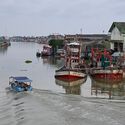
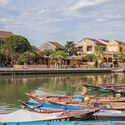
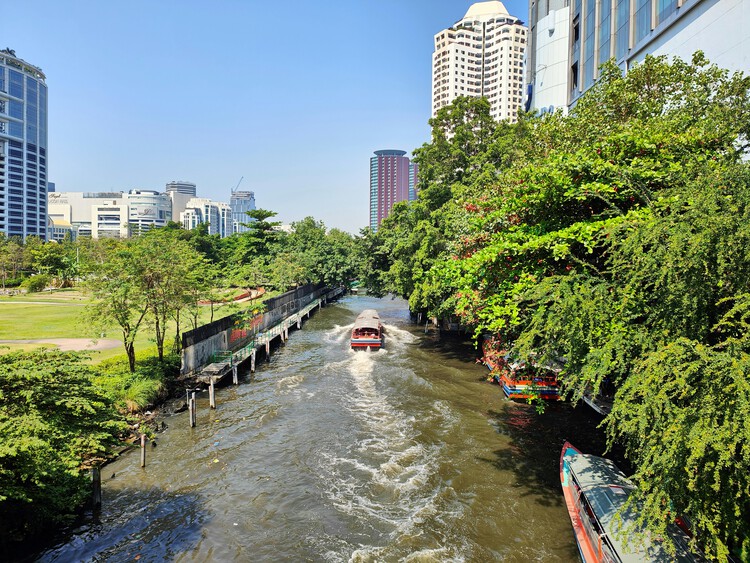
For most of the twentieth century, architecture has learned to read cities through roads. Street hierarchies define urban plans, intersections organize movement, and buildings are understood by the façades they present to sidewalks. Roads appear so fundamental to urban life that they are often mistaken for a universal condition. Across much of Southeast Asia, cities developed according to an entirely different spatial logic. Long before automobiles reordered urban landscapes, rivers served as streets, marketplaces, civic spaces, and public infrastructure. Movement occurred primarily by boat, commerce unfolded along waterfronts, and architecture addressed water rather than asphalt. Reading these cities through their waterways changes how architecture itself is understood. Infrastructure, in this case, is not the road but the river.