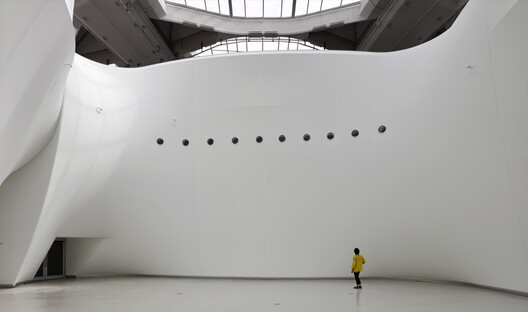
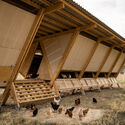
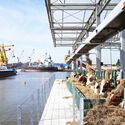
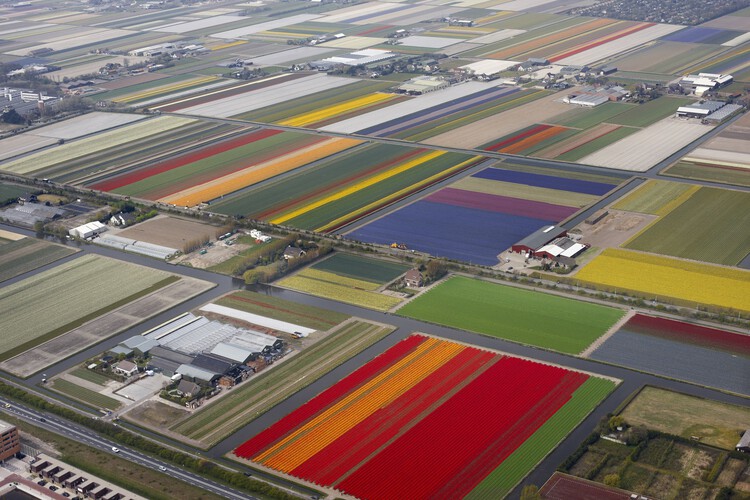
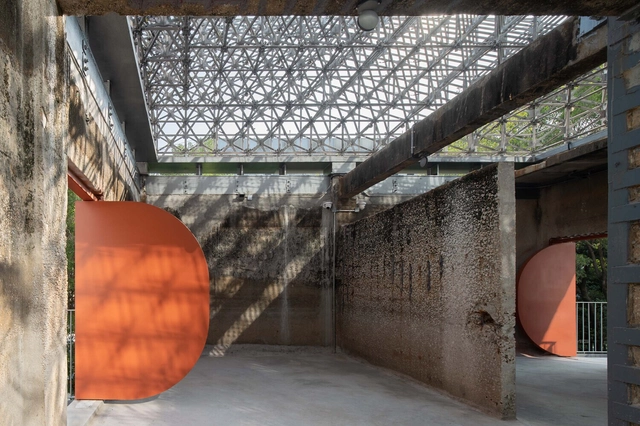
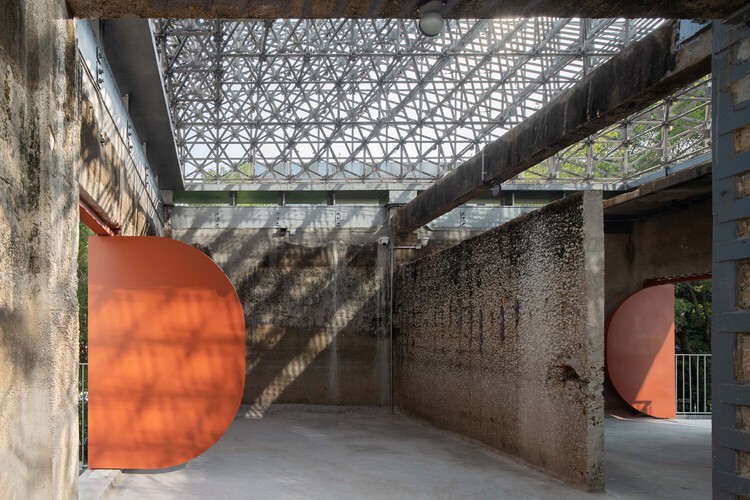
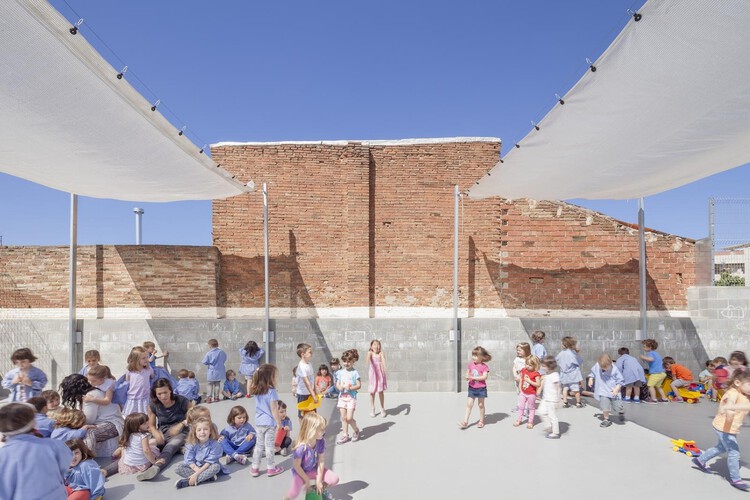
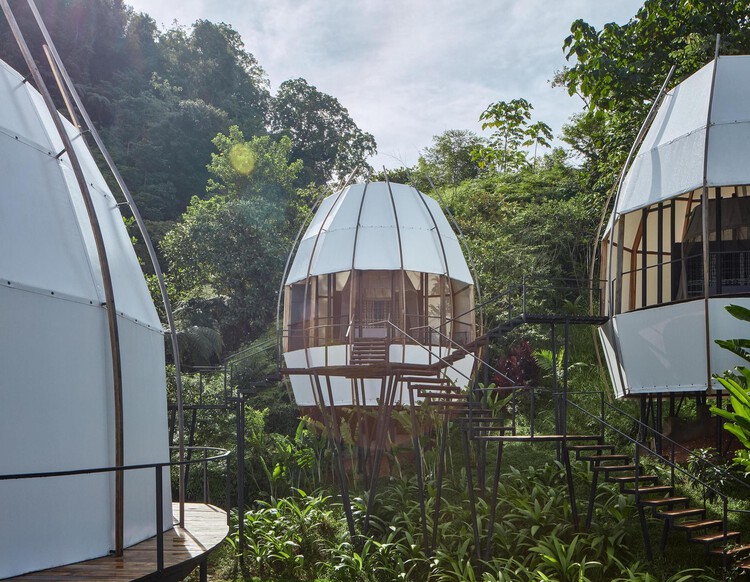
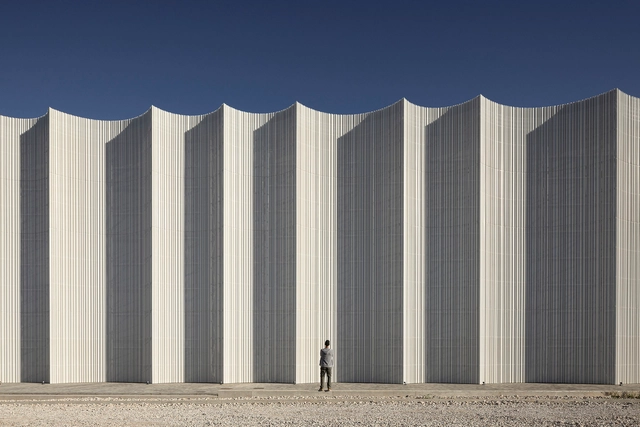
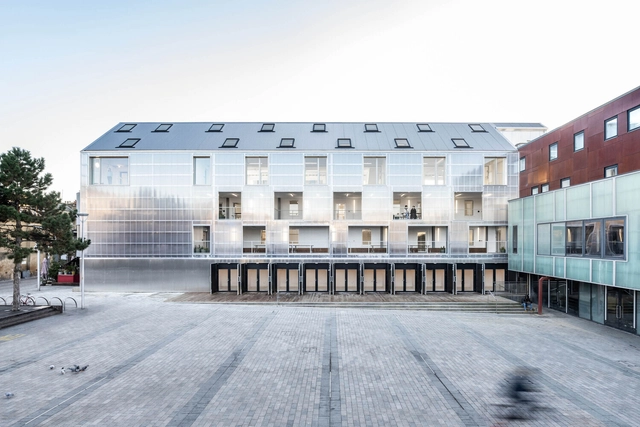
What can a textile do that glass, wood, concrete, or metal cannot? Architectural composite fabrics don't replace conventional building materials. Instead, they can complement them and often add another layer of performance to the building envelope. Their application changes with context. A composite membrane can become an exterior shading system for a tropical conservatory, an interior skin that shapes acoustics and spatial experience in a museum, or part of a facade strategy that improves the environmental performance of an existing building.
The built environment has historically served humans as a mechanism of environmental control. Through our intellectual capacities and ability to organize, we have used buildings to actively influence and terraform the immediate context in which they are inserted, often treating geography, water, and ecosystems as resources to be extracted and managed. However, more and more, architecture is transitioning from exploiting physical and biological matter to actively collaborating with it. This shift demands that architects explore how buildings and their materials grow, transform, decay, and persist beyond human timelines. This thinking also serves as a starting point for the profession to reflect on how it influences the natural world, as well as the non-human species around it, creating networks and connections between humans, buildings, living organisms, and natural environments.
There is growing awareness around sustainability—and the environmental cost of prematurely demolishing safe, structurally sound buildings only to replace them with new construction. In the broader race to reduce carbon emissions, corporations and institutions are placing greater emphasis on ESG performance (environmental impact, social responsibility, and governance). Many now require carbon accounting, set "carbon-neutral" targets, or purchase carbon credits to offset footprints.
This shift, together with a wave of exemplary adaptive-reuse projects worldwide—Herzog & de Meuron's Tai Kwun in Hong Kong, Powerhouse Arts in Brooklyn, David Chipperfield's The Ned Doha, and Xu Tiantian's transformations of factories, quarries, and rammed-earth fortresses in China—has accelerated serious reconsideration of reuse as a primary development strategy. Yet despite its many benefits, adaptive reuse is still not as prevalent as it could be. Why and what might be the main obstacles and tensions?
Produced on an industrial scale since the 19th century, steel has profoundly transformed the way we build. Iron, refined through controlled metallurgical processes, has given rise to a material capable of combining mechanical strength, relative lightness, and constructive precision, making possible some of the major achievements of modern engineering and architecture. From skyscrapers and bridges to facades, roofs, and industrialized systems, few materials have had such a significant impact on shaping the built environment.
However, the quality of a material cannot be measured solely by its initial structural performance or its appearance at the time of delivery. Although buildings are often evaluated when they are completed, their true performance only reveals itself over time. Photographs record impeccable facades, newly installed surfaces, and spaces ready for use. The following decades, however, expose these constructions to solar radiation, rain, humidity, salinity, air pollution, and thermal variations. It is in this continuous contact with the environment that material choices are effectively put to the test.
Sunlight House / HEIN-TROY Architects. Image Courtesy of VELUX
Can architecture shape comfort before mechanical systems enter the equation? As buildings account for nearly 40% of global energy consumption and people spend close to 90% of their time indoors, thermal performance has become one of architecture's most urgent concerns. Yet despite often being associated with insulation values, energy ratings, or mechanical systems, thermal performance begins with spatial decisions made long before technical equipment is introduced. Orientation, airflow, daylight, and the placement of openings all influence how a building absorbs, retains, and releases heat throughout the day.
Thermal performance is not only about reducing energy demand but also about maintaining comfortable indoor conditions in response to climate. Closely tied to thermal comfort—the way occupants experience temperature, airflow, humidity, and radiant heat—it influences health, well-being, and productivity as much as it does operational efficiency. Research suggests that healthy indoor environments can improve learning ability and productivity by up to 15%, reinforcing the growing relationship among environmental performance, resilience, and space quality.
Between the moment a material is specified in a project and the moment it is installed, there is an invisible layer that plays a decisive role in the final outcome: fabrication, logistics, and coordination. These factors shape timelines and costs, but more critically, determine whether the original design intent is preserved or diluted in execution. Cladding systems, especially those that function as visible and expressive components of the building envelope, make this gap particularly evident, as they are the most outward-facing layer of a project.
Selecting a cladding system is never a purely aesthetic decision. It activates a chain of dependencies: profile availability, fixing systems, tolerances, sequencing, and compliance with local codes. When elements are misaligned, the fallout is rarely subtle. Integrated cladding systems—those that anticipate assembly as much as appearance—tend to close this gap, embedding coordination into their logic and reducing the need for on-site improvisation.
As the technical requirements of building envelopes have evolved, fire performance has become a key criterion in the design of ventilated facades. Given this situation, analyses no longer focus solely on the individual reaction of materials, but also on the joint response of the entire building envelope under possible scenarios of external fire propagation.
Offsite construction dramatically reduces construction waste and ensures precision assembly, but long-term sustainability relies on the durability of the factory-applied building envelope.. Image Courtesy of Terraco
The global offsite construction market—encompassing modular, precast concrete, and hybrid prefabricated systems—was valued at USD 172 billion in 2024 and is projected to reach USD 225.7 billion by 2030 (CAGR 4.9–8%). In the UAE, government targets call for 25–30% offsite content in public projects by 2030; the UK currently leads globally, with 15–20% of housing using offsite solutions. Offsite manufacturing is increasingly promoted as the sustainable future of construction, with benefits including reduced waste, accelerated delivery, and improved quality control. Sustainability is not defined by how quickly a building is assembled. It is defined by how long it performs.
In temperate and cold climates, architecture typically begins with a defensive gesture. The building envelope is a sealed boundary designed to resist the exterior environment through insulation, vapor barriers, and mechanical control. In cold countries like Canada, where winter temperatures can plunge well below freezing, airtightness is not a luxury. In this context, buildings must resist the exterior environment entirely to maintain interior comfort. However, in Central America, a region spanning from Belize to Panama, architectural logic shifts from exclusion to negotiation. In this region, the envelope is not a wall of defense but a specialized filter.
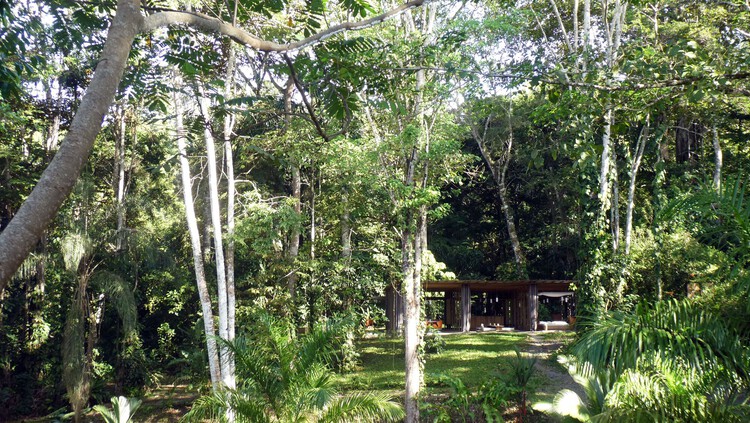
In the coastal and jungle regions of Costa Rica, high humidity and intense solar radiation dictate an architectural strategy centered on permeability rather than enclosure. Unlike the airtight envelopes required in cold climates to retain heat, Costa Rican architecture uses the building envelope as a climatic filter to maximize air exchange. The primary mechanism for managing these thermal gradients seems to be the oversized roof overhang. By extending the roof plane significantly beyond the floor plate, architects create a permanent buffer of deep shade that reduces solar gain and lowers the ambient temperature before air enters the structure. This strategy, combined with permeable or non-existent walls, allows for constant airflow. This is a critical technical requirement for humidity control and the prevention of material degradation through mold and rot.
What if industrial leftovers weren't waste, but the start of architectural design? At Rieder's headquarters in Maishofen, Austria, over 1,300 cubic meters of timber, 180 ceiling elements, and hundreds of upcycled glassfiber-reinforced concrete fragments come together in a building shaped as much by reuse as by planning. The new production hall, designed by Kessler² Architecture, treats material leftovers as a design resource. Developed as part of a long-term investment in sustainable manufacturing, the timber-concrete hybrid building introduces a facade technique that inverts conventional architectural workflows: instead of designing first and producing components afterward, the building envelope is generated from the material remnants already available on site establishing a new language for industrial architecture.
Architecture has always played a key role in providing shelter and protection for human beings. In prehistoric times, we sought refuge in caves, taking advantage of rock structures for protection against the natural elements and predators. Over time, shelters began to be made from materials found in nature, such as branches, leaves, and animal skins, evolving into more permanent and complex homes, with walls made of stone, bricks or wood, roofs to protect against rain and sun, and doors to control access. As we developed more advanced building skills, we used materials such as wood, stone, and clay and architecture evolved significantly, with the construction of temples, palaces, and fortifications that provided not only shelter but also symbolized power, status, and cultural identity. Even so, our buildings can continue to be seen as shells that protect us from the outside world.
From the massive stones of Greek temples to glazed skyscrapers, we work with a range of possibilities and thicknesses to separate what we consider internal and external. This article seeks to explore this diversity of thicknesses in architecture, from simple materials to complex construction techniques, highlighting how this variation not only provides protection but also influences our perception and interaction with the built environment.
https://www.archdaily.com/1014920/from-thin-veils-to-thick-barriers-exploring-different-widths-in-architectural-envelopesJosé Tomás Franco and Eduardo Souza
The main role of architecture is to create structures that protect us from the environment and create spaces that are safe and comfortable for all types of needs and activities. By providing shelter, architecture also shapes the way people interact with their surroundings. Building technologies of the past rarely managed, however, to create a complete separation between us and the outside world.
While impermeability was a desired outcome, the porous building materials available always allowed some water, wind, or outside particles to leak into the interior spaces. In contrast, modern technologies now allow for almost completely impermeable building envelopes, allowing for complete separation between indoors and outdoors, thus relying on engineered systems to regulate temperature, airflow, or humidity. This article explores the differences between these two contrasting approaches, exploring how building facades are equipped to regulate indoor comfort and its environmental impact.
Over-providing traditionally implies offering more than is necessary, often carrying a negative connotation due to the potential for excess and waste. However, could there be scenarios within the built environment where over-providing proves advantageous? The question critically examines how overprovisioning might enhance a building's flexibility and adaptability to diverse and evolving conditions.
The underlying assumption of accurately providing what is needed for a building is that stakeholders—including owners, architects, and designers—can accurately predict and cater to a structure's current and future needs. This assumption, however, is challenging to realize, as societal, economic, and cultural shifts frequently occur in unpredictable ways. In this context, over-providing emerges as a counterintuitive yet potentially beneficial strategy. As buildings and structures inevitably transform, those designed with inherent adaptability reduce the need for costly renovations or complete rebuilds.
In the evolving landscape of architecture and urban design, bioclimatic and biogenic envelopes present a compelling vision for future cities. Dr. Arta Yazdanseta, a Doctor of Design focused on energy and environments, dives into the intersection of design, building performance, and plant biophysical ecology. With a focus on bioclimatic and biogenic envelopes, Dr. Yazdanseta examines how these typologies can enhance socio-natural systems by leveraging their self-organizing potential. Dr. Yazdanseta’s academic journey includes earning a Doctor of Design and a Master of Design in Energy and Environments from the Harvard Graduate School of Design.
Her contributions as a researcher at the Harvard Center for Green Buildings and Cities include developing environmental design strategies and performance analyses for the HouseZero carbon retrofit project. In this interview, Dr. Yazdanseta explores the concept of bioclimatic envelopes and their interaction with passive architectural design principles. With a potential to revolutionize urban environments, the interview reveals insights into her research, the benefits of plant-based materials, and the future of sustainable architecture, emphasizing the critical connection between human and environmental health.
Formally, transparency usually takes the shape of a window, a door, a curtain wall, or a skylight. These are commonly created through rectangular punched openings or in the form of glass curtain wall systems or translucent screens. The following projects play with traditional notions of transparency and window-making in playful and unconventional ways. They create visually striking facades and dynamic relationships between their exterior and interior. They filter light and frame views through their glazing and opening articulation to craft memorable architectural experiences.
Porches in New Orleans. Image via William A. Morgan / Shutterstock
Positioned between the streetscape of a neighborhood and the privacy of the interior of a house lies the porch. Taking on the role of an entrance, a window to ponder out of, a gathering spot, and a stage, the porch has come to represent community and identity for many neighborhoods in the United States. Made of various stylistic elements of different sizes and shapes, these tie together neighborhoods by creating an interstitial space between the home and the street, weaving together the family life inside the house and the public life outside it, and creating a space between the private and public for both serendipitous encounters and for pausing. The porch has often been displayed in film and literature as the stage of profound and life-changing conversations, representing a comfortable threshold between the domestic and public realm in which to linger.