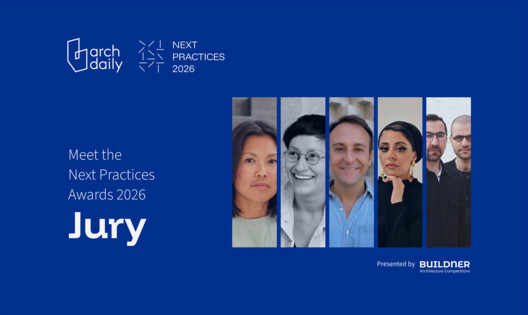
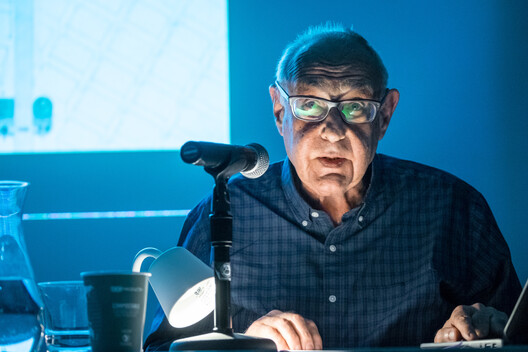
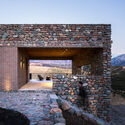
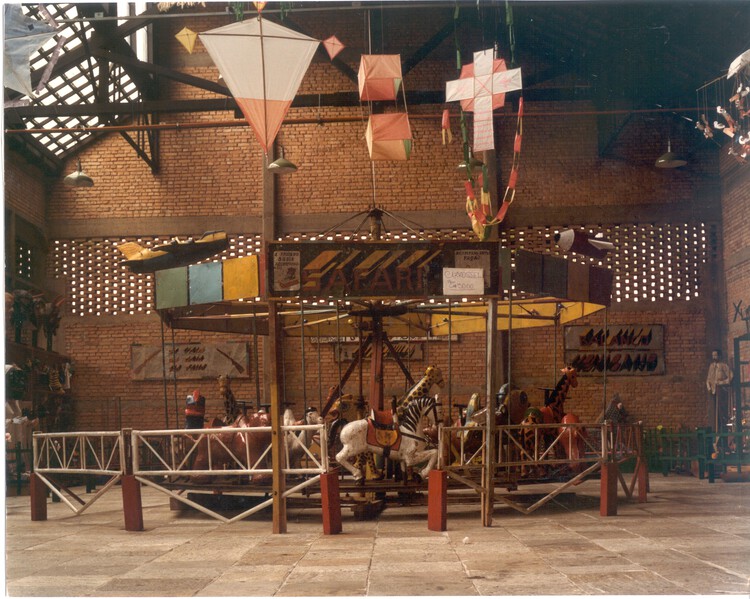
From left to right: Oanh Nguyen Henriksen (Photo: Tuala Hjarnø), Susana Rojas Saviñón (Photo: Estudio Ome), Javier Ors Ausín, Sumayya Vally (Photo: Lou Jasmine), Charles Kettaneh and Nicolas Fayad (EAST Architecture Studio, Photo: Julien Lanoo)
Since its launch in 2020, the ArchDaily Next Practices Awards have spotlighted forward-thinking architecture practices that are redefining the boundaries of the discipline. Over five editions, the initiative has recognized 105 practices from 44 countries, amplifying voices from around the world and fostering a global conversation about architecture's evolving role in society. Across the winning practices, recurring values emerge: contextual sensitivity, sustainable material use, co-creation with communities, experimental and interdisciplinary approaches, memory and heritage, social responsibility, and human-scale interventions.
The program reflects what is next: the ideas, practices, and projects that should be brought forward. 'Next' embodies practices that find solutions to today's urgent challenges while anticipating the needs of tomorrow. By spotlighting these practices, we hope to illuminate the paths that can lead to a more meaningful and resilient future for architecture and beyond.
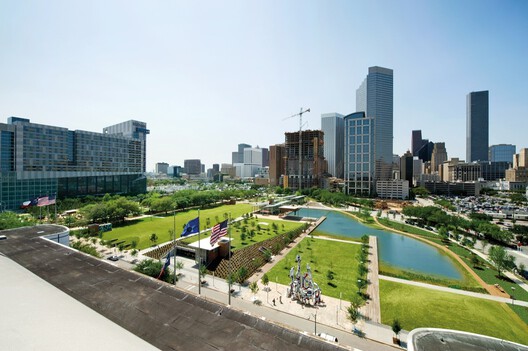
Every housing crisis eventually becomes a land question, and every land question eventually becomes a values question. The United States' West Coast has arrived at that point. As cities from Los Angeles to Seattle search for parcels to build the affordable housing they have promised for years, they keep landing on the same answer: the park or the greenbelt. What looks like a zoning decision is a referendum on which form of wellbeing a city is willing to sacrifice for another.
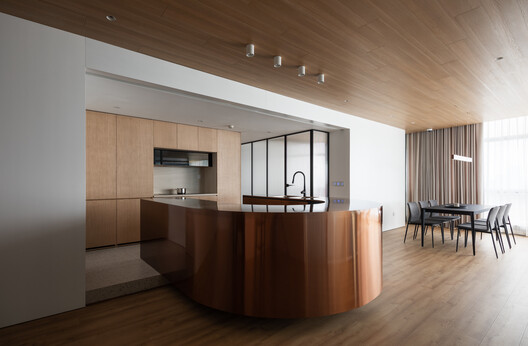
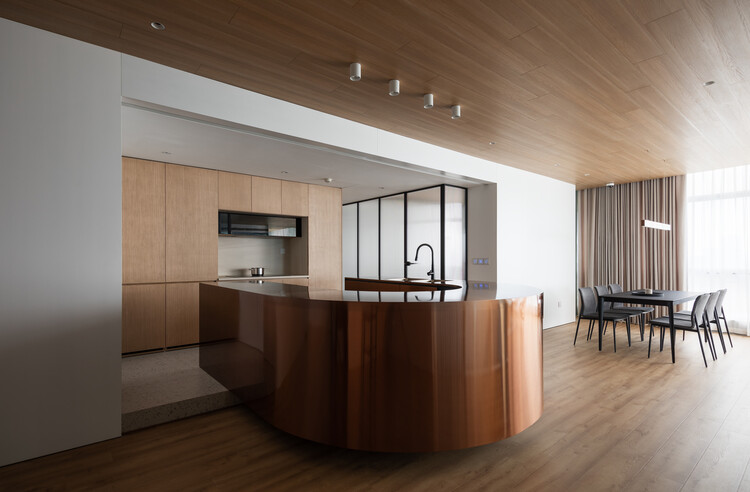
In compact homes, the kitchen is rarely only a room for cooking. It often operates as an edge: a service wall or a boundary between domestic work and social life. Its importance lies not only in food preparation, but in how it organizes the rest of the home, particularly due to limitations of plumbing and ventilation requirements. Before a living room can feel open, the kitchen often has to absorb the practical intensity of daily life: water, heat, smell, appliances, groceries, and storage.
This is especially visible in dense East Asian interiors, where domestic space is frequently shaped by limited area, changing family structures, hybrid work, and the cultural specificity of cooking. The open kitchen may be framed as a lifestyle feature, but in many apartments it is also a planning problem. It has to negotiate domestic labor, support informal gathering, and sometimes, as space-saving strategies, replace the hallway or foyer. More than a design gesture, the kitchen edge is therefore a spatial agreement between service and living.
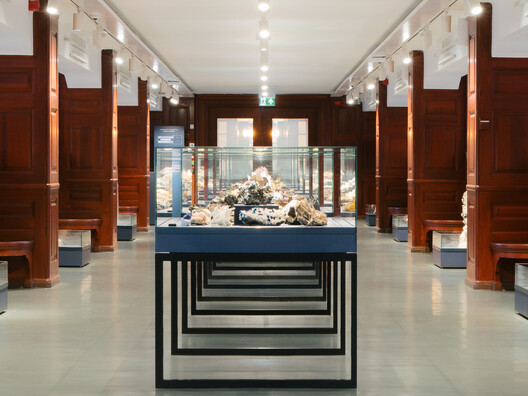
Designing a museum interior means negotiating between the needs of the collection and those of the visitor: objects must be protected and carefully displayed, while spaces need to remain accessible, legible, and engaging. Scale, circulation, security, lighting, structure, and technology all become part of the design, often working quietly in the background so that the exhibits remain the focus. So, how do you fit 4.5 billion years of Earth's history into a museum interior? The renovation of the Natural History Museum Oslo, home to one of the largest geological and anthropological exhibitions in the Nordic countries, offers a clear example of how these demands can come together within an existing architectural framework.
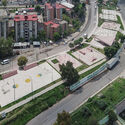
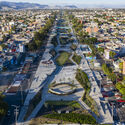
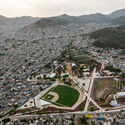
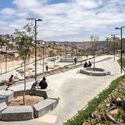
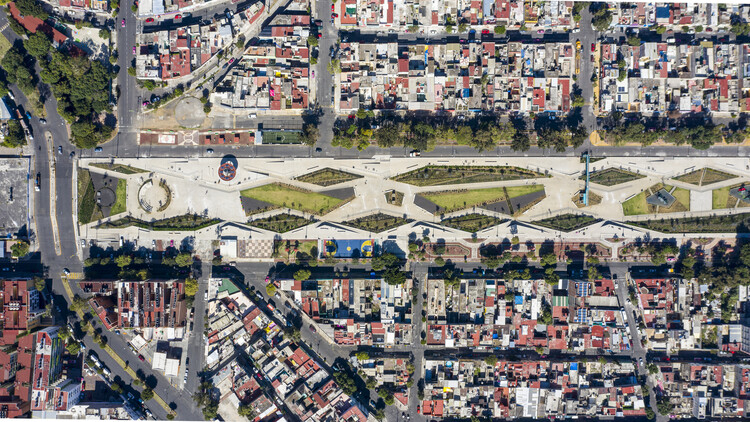
Mexico's rapid urban growth over recent decades has left many cities struggling with fragmented neighborhoods, high crime rates, and severe shortages of quality public spaces. In many low-income urban areas, informal development occurred alongside raw infrastructure like drainage canals, rail lines, and steep ravines, dividing communities and creating hazardous vacant zones. To address this spatial segregation and lack of civic amenities, public agencies and architects across Mexico are intervening in these abandoned buffer zones to construct public parks. By converting former physical barriers into accessible pedestrian corridors, these projects rejoin separated neighborhoods, re-establish safe visual sight lines, and provide spaces for community gathering and daily recreation.
Across architecture and the building industry, women contribute to a wide range of fields, from design practice and construction to research and leadership. Their work reflects different approaches to some of the profession's most pressing questions, including environmental performance, adaptive reuse, and the creation of healthier and more responsive spaces. However, disparities remain visible in areas that influence professional recognition. For example, women continue to be significantly underrepresented in architecture in the United Kingdom. According to the Architects Registration Board, only about 31% of registered architects are women.
Due to popular demand, we are briefly reopening applications for the ArchDaily Student Ambassador Program 2026/2027.
ArchDaily started inside a university, with two architecture students who believed that architectural knowledge should travel further than it did. Eighteen years later, that conviction hasn't changed — but the insights, the tools, and the opportunities have grown. We are launching the Student Ambassador Program to give the next generation of architects a direct role in bridging their university and the global architectural conversation.
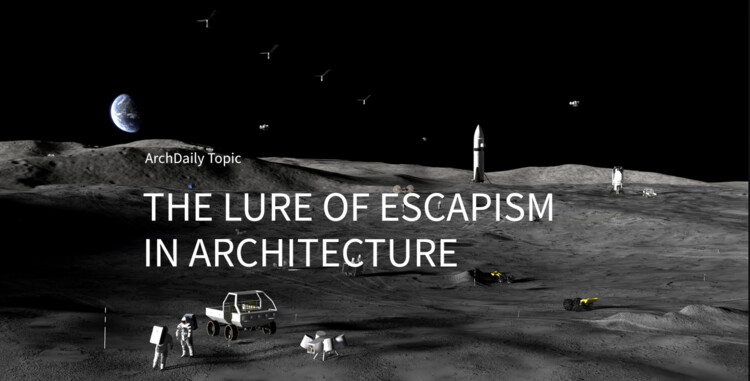
At a moment when architects across the globe are revisiting earthen construction, reassessing vernacular technologies, and forging visceral connections between communities and the land beneath their feet, others are sketching habitats for the Moon and designing the built environments of a Martian colony. Architecture firms, engineers, and space agencies are investing serious intellectual effort into structures that would need to be raised from scratch on another world. Two impulses, one returning to the soil, the other reaching for the stars, are unfolding simultaneously within the same discipline. And the tension between them raises an uncomfortable question: what, exactly, are we trying to escape?
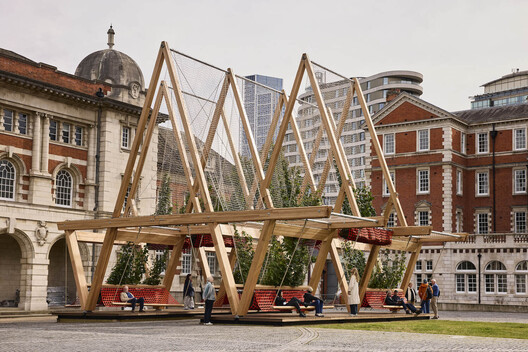
Water management, air quality, and heat mitigation are usually planned through systems much larger than the spaces where people actually experience them. Drainage networks sit below the street. Air pollution is measured across entire cities. Yet these conditions are felt much closer to the body: while waiting for a bus in the sun, walking through a flooded street, crossing an exposed plaza, or looking for somewhere to sit when the air itself feels difficult to breathe.
Heat makes this question especially urgent. As cities become warmer, streets, parks, transit areas, and other public spaces are increasingly becoming sites where design can reduce exposure through shade, planting, airflow, and water. For architecture, that brings part of climate adaptation into the spaces people use every day.
ArchDaily is looking for Social Media Collaborators to join our content team. Our Social Media Teams transform ArchDaily's content into engaging, high-performing digital formats for various social media channels.
Your role involves hands-on content creation and repackaging, as well as a high degree of collaboration and creativity to amplify architectural ideas to a global audience.
What narratives do materials carry, and how can the visible "traces" of artisans engage in a dialogue with manufacturing processes and industrialization?Between design and construction, the act of thinking through making can become a guiding principle for a design philosophy. Combining wood, industrial materials, and reused objects, Atelier CRAFT's approach is rooted in reversible architecture, guided by its manifesto: "Transform design through making." Based in Saint-Ouen, Paris, the practice explores the relationships between humans and materials, the act of making, and manufacturing processes.
Elia Zenghelis. Photo: Harvard Graduate School of Design
Elia Zenghelis, Greek architect, co-founder of the Office for Metropolitan Architecture (OMA), and one of the most influential architectural educators of the late twentieth century, died on August 30, 2026, at the age of 89. His death marks the passing of a figure whose influence on architectural thought extended far beyond the buildings he designed, shaping the intellectual formation of several generations of architects through decades of teaching across Europe and the United States.
Born in Athens in 1937, Zenghelis studied architecture at the Architectural Association School of Architecture in London, completing his studies in 1961. He joined the practice of Douglas Stephen and Partners, where he worked until 1971, while simultaneously beginning to teach at the AA in 1963. At the school, he became a prominent voice for a more radical, avant-garde architectural discourse, helping to transform the AA into a fertile ground for radical ideas.
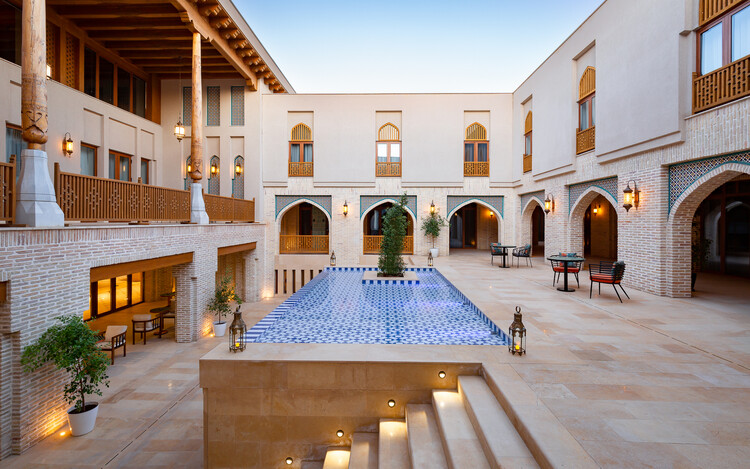
Amid the transformation of Uzbekistan's cities, ARC Architects develops an architecture that seeks to connect past and present. Founded in 2017 by Bobir Klichev, the studio emerged from Bukhara's architectural community and remains closely connected to the country's cultural and climatic particularities. With offices in Tashkent and Bukhara, ARC combines minimalism and ethnic references to develop a contemporary language rooted in its context.
Rather than reproducing a traditional image of Uzbek architecture, the studio seeks to understand how this heritage can be reinterpreted today, an exercise that necessarily engages with the overlapping historical layers across the country. For centuries, cities such as Samarkand and Bukhara were important commercial and cultural centers of Central Asia. Their architecture developed around inner courtyards and narrow streets, forming urban fabrics in which buildings and collective spaces are inseparable.
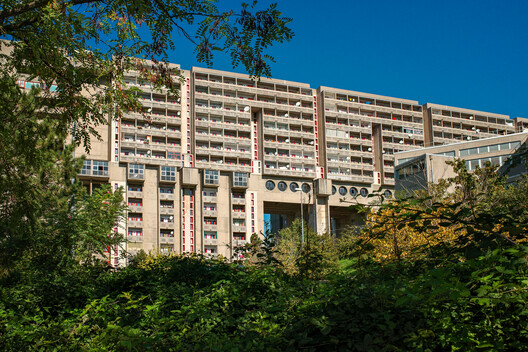
The courtyard at Rozzol Melara measures two hundred meters on each side, which makes it larger than any square in Trieste. Two L-shaped blocks of exposed concrete enclose it, one of them twice the height of the other, climbing from seven to fifteen stories as the ridge falls away toward the gulf four kilometers below. Concrete pylons spaced every fifteen meters carry the blocks down to a slope they never quite touch, opening porticoes deep enough to walk through, and above them the facades resolve into loggias at the scale of a single room. Seen from the coastal road, none of that is legible; one can only see a gray line drawn across the hills.
Inside the enclosure, the Istituto Autonomo Case Popolari of Trieste built the rest of a city. The 648 apartments account for less of the plan than the schools, the post office, the health center, the parish hall, the twenty-odd shops and the two-level garage, all reached through covered streets that run the length of the blocks and cross the court in a raised walkway, so that the route from a front door to a grocery or a classroom passes through collective space without ever going outdoors. Twenty-nine architects worked on it under the coordination of Carlo Celli, drawing on sociological studies commissioned before the project.
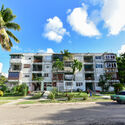
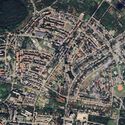
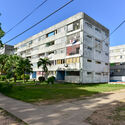
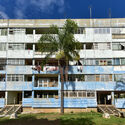
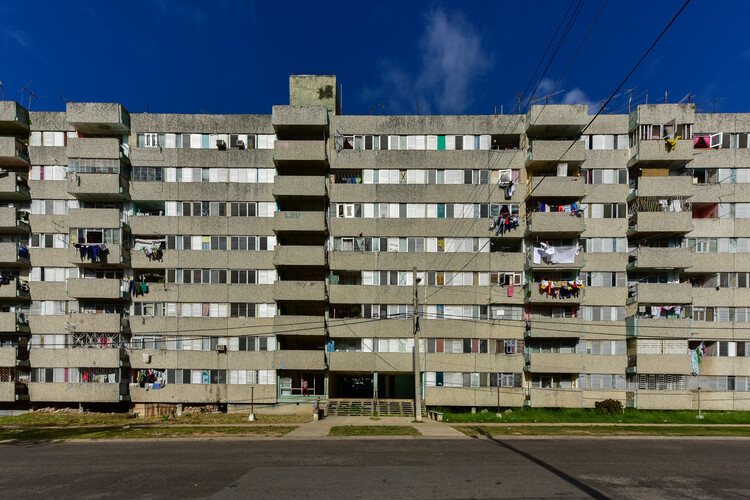
In the 1970s, Cuba faced a severe nationwide housing shortage due to population growth, rural-to-urban migration, and the degradation of existing housing stock. The government's answer was a system that pulled ordinary workers off their regular jobs and put them on building sites instead. This program, known as the Microbrigadas (microbrigades), reshaped entire districts of Havana, where they combined collective self-construction and state-backed technical knowledge, which left a mark on the urban grid of its capital city that persists until today.
In an era where digital fabrication and automation are increasingly present in architectural practice, manual craft is often seen as a luxury item—restricted to high-end projects whose clients can afford extended deadlines and collaborative processes requiring constant dialogue with artisans. This scenario might have sounded contradictory a few decades ago, when Lina Bo Bardi denounced that a process of "deculturation" was underway and that an appraisal of "popular" Brazilian civilization was urgently needed to confront totalizing universalisms and *folklore*—the latter viewed by her as an instrument of state alienation designed to neutralize the subversive and transformative character of popular culture:
Research is a structured and active process of analyzing, testing, interpreting, and solving, ultimately leading to knowledge that can be considered disruptive. The creative process behind research is an invitation to the imagination: to seek answers, solutions, and alternatives to the reality we know. To go beyond theory, the exercise moves away from books and computers and into spaces designed specifically to foster experimentation. In these six unbuilt projects, laboratories, workshops, observatories, gardens, auditoriums, and exhibition spaces are arranged as fertile ground for the imagination. These spaces must support collaborative work and creativity, so that curious minds and skeptics alike can find paths toward alternative futures.
In modern architecture, the promenade architecturale stood out as an essential design strategy to realize the principles of functionality, aesthetics, and integration with the urban context. Iconic projects by Le Corbusier, such as Villa Savoye (1929), illustrate this concept by guiding the visitor along an upward path that culminates in the contemplation of the roof garden, an open space where the building dialogues harmoniously with nature. A century later, the concept continues to influence contemporary projects, exploring the relationship between movement and space across various architectural typologies such as houses, museums, libraries, and parks.
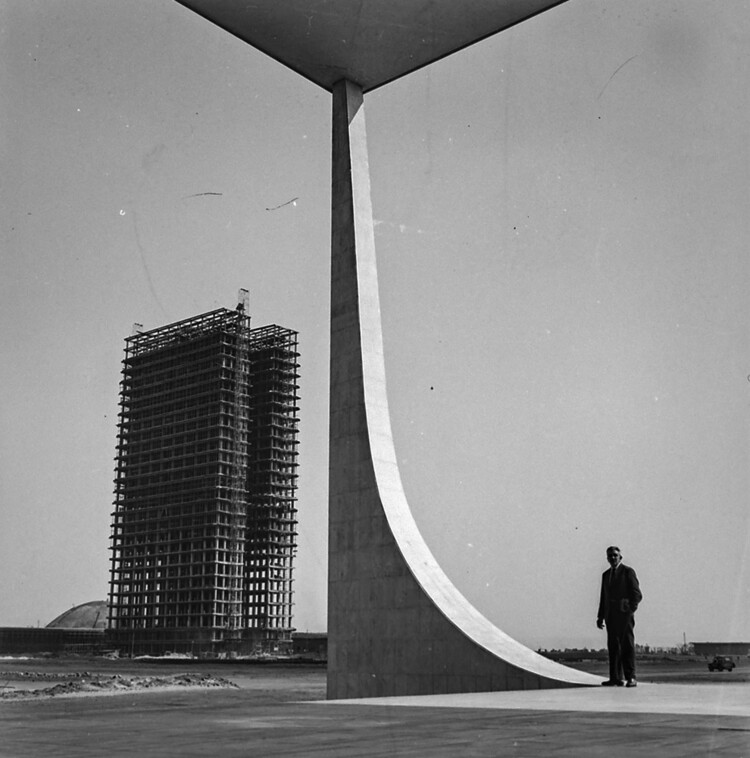
National Congress under construction, seen from the STF (Supreme Federal Court), 1958. Image from the National Agency Collection, National Archives, Public Domain
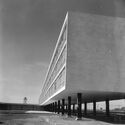
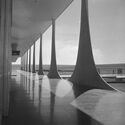
Building a city from scratch is no easy task. It never has been, and it never will be. The very idea of creating something that would otherwise develop and grow gradually demands resources, organization, and, above all, labor. This was the case in 1958, when Brazil's Central Plateau became one of the largest construction sites of the 20th century for the building of Brasília. Tens of thousands of candangos (migrants coming predominantly from northeastern Brazil, many without prior technical training) arrived to build an entire capital in just over three years, under then-president Juscelino Kubitschek's motto of achieving "fifty years of progress in five." Oscar Niemeyer's architecture and Lúcio Costa's plan would not have been possible without the assumption that enough workers were available and willing to endure low wages and extremely harsh conditions to transform concrete and curves into a national symbol.
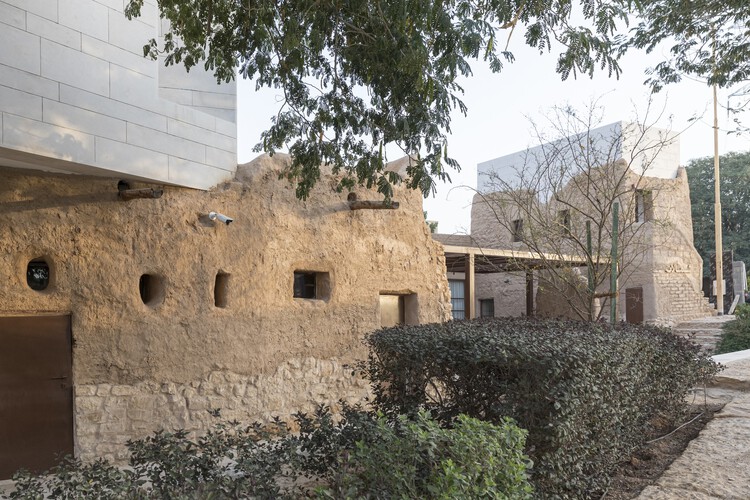
As Saudi Arabia's cities expand through increasingly ambitious cultural projects, Syn Architects has spent much of its practice looking at what predates that transformation. The practice's participation in the 2025 Venice Architecture Biennale grew out of years spent documenting Najdi architecture, disappearing urban fabric, local materials and inherited forms of knowledge. For Syn, heritage becomes useful when it can be documented, tested and brought back into use.
Selecting wood for outdoor applications involves more than appearance alone. Durability, stability, versatility and sustainability all influence how a material performs over time. Understanding these factors can help architects, builders and homeowners choose the right wood for exterior projects.
Wood remains one of the most desirable materials for exterior applications. Its natural appearance, warmth and versatility make it a popular choice for decking, siding, windows, doors, outdoor structures and architectural detailing.
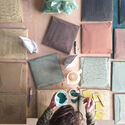
Architects are trained to choose materials, compare their properties, and decide how they should be used. Some practices are taking on a different task: developing the material itself.
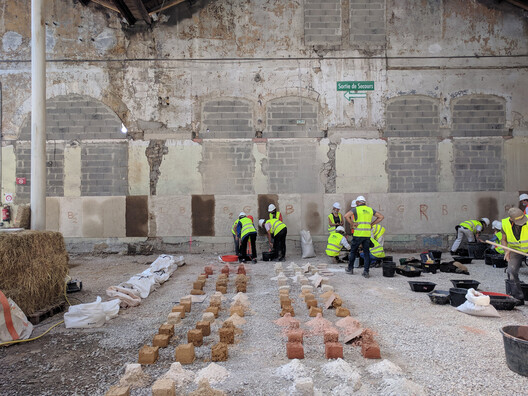
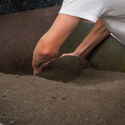
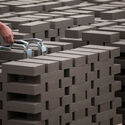
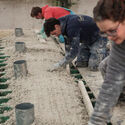
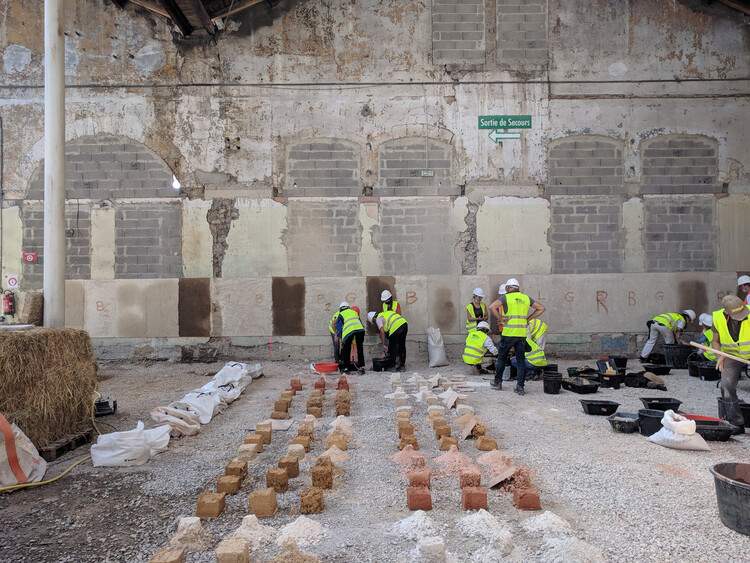
For Material Cultures, BC architects, and Studio Ossidiana, this can begin with hemp grown for construction, earth excavated from building sites, or mixtures of concrete, pigment, stone, and shells. Their work connects material research with processing, fabrication, and construction.