
-
Architects: Laith Matarweh Studio for Architecture
- Area: 25 m²
- Year: 2026
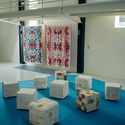
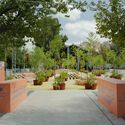
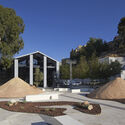
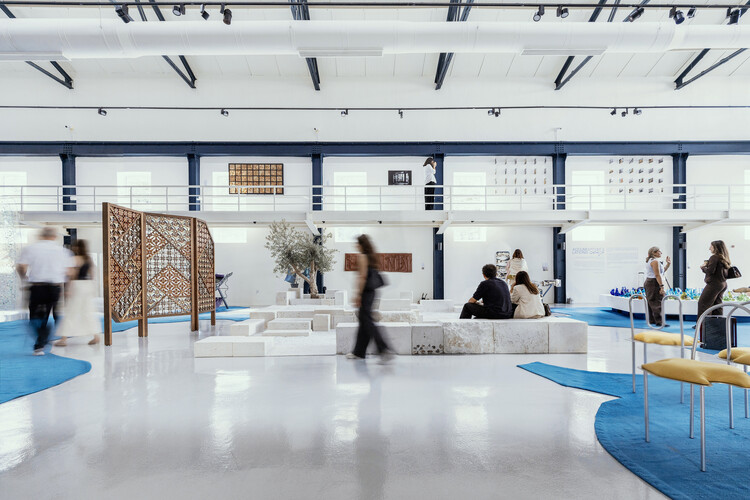
Following a seven-year pause, Amman Design Week returned in 2026 under the theme "Accumulations," bringing together designers, makers, and cultural practitioners to reflect on the work shaping Jordan's design landscape. The fourth edition, held from October 2 to 17, 2026, marked a new chapter for the event, with architects Sarah Hejazin and Bisher Tabbaa, founders of the architecture and design practice FADAA, serving as co-directors. Their appointment also brought their research-driven approach to the event's broader program, which explored the relationships between daily practices, cultural memories, and material environments. During the event, we had the opportunity to speak with Sarah Hejazin and Bisher Tabbaa about the thinking behind this year's theme, their approach to material investigations, and how practicing in Jordan informs their work across architecture, objects, and public space.

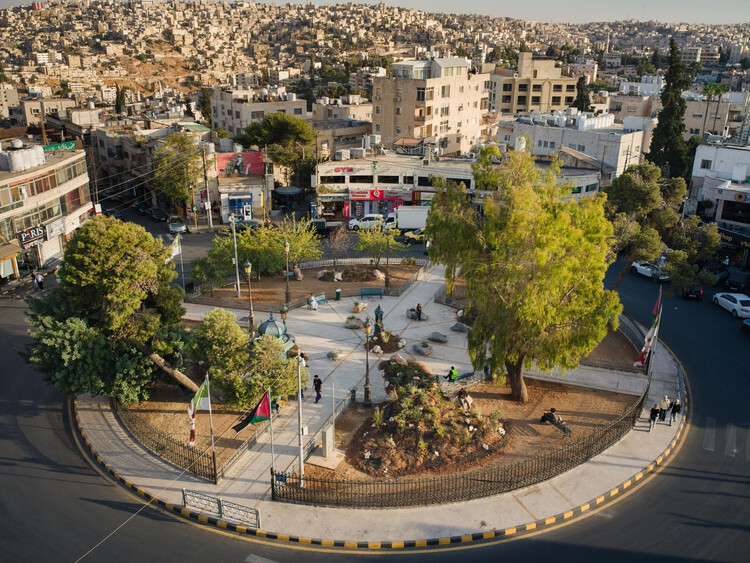
After a seven-year pause, Amman Design Week returned to Jordan with a premise that feels closely tied to the city itself: that nothing is ever entirely new. Under the theme "Accumulations," the fourth edition of the biennial event brought together more than 220 designers, makers, architects, and collectives across exhibitions, public interventions, talks, workshops, and performances from October 2 to 17. The premise was particularly relevant to Amman, a city whose architecture has been shaped by waves of construction, migration, adaptation, and reuse, where accumulation is not simply a metaphor.

The week began with World Architecture Day, drawing attention to the global housing crisis as a fundamental element of human dignity, inclusion, and well-being. In a joint message between the UIA and the United Nations, this year's call is to focus disciplinary efforts on building not only residential structures but also systems to better distribute and use what already exists, proposals that enable new ways of living and alternatives for a more sustainable industry. Aligned with this concept, we featured three projects where reuse and representation converge, and three others that help establish a dialogue between what we consider old and what we can expect from the new. On this week's radar, we find another instance to reexamine the canons of modern architecture in Switzerland, the start of construction on a translucent yet hurricane-resistant building in the United States, and a winning entry for a mixed-use urban complex in Austria.

Following its last edition in 2019, Amman Design Week returns from October 2-17, 2026, bringing more than 220 designers and participants together across exhibitions, installations, public-space projects, talks, workshops, and performances in Jordan. The fourth edition unfolds across Ras El Ain, Jabal Al Lweibdeh, Jabal Amman, Iraq Al Amir, and, for the first time, Aqaba. Founded by Her Majesty Queen Rania Al Abdullah in 2016, the event returns under the theme "Accumulations," looking at how materials, memories, knowledge, labor, and everyday practices gather over time and become part of the places people inhabit. The theme also gives the 2026 edition a clear relationship with the city itself.
The Arabian Peninsula represents one of the world's leading exporters and users of fossil fuels, an economic reality that influences the area's visions for the future and, implicitly, architecture and urban planning's role in these scenarios. A number of emerging offices are however countering these narratives, turning to contextual research to reframe the area's production of architecture. Among these, cultural practice Civil Architecture has become recognized for its provocative works that explore alternative narratives for the identity of the Middle East. While in Bahrain, ArchDaily's Christele Harrouk had the chance to sit down with Ali Karimi, who, together with Hamed Bukhamseen, co-founded Civil Architecture. In the video interview, they discuss the practice of architecture in the Gulf region and the narrative and research-focused approach of the office.
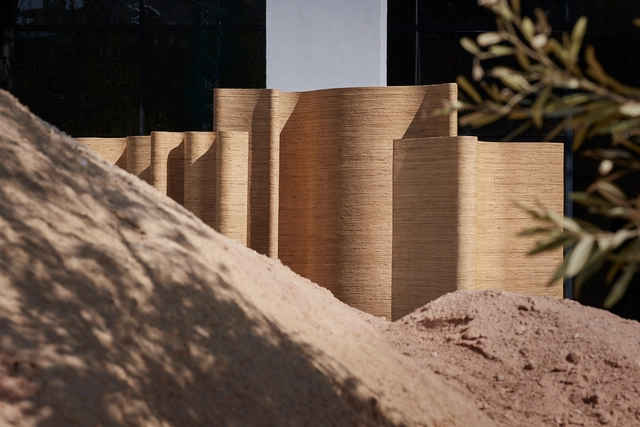
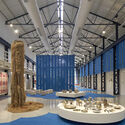
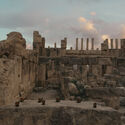
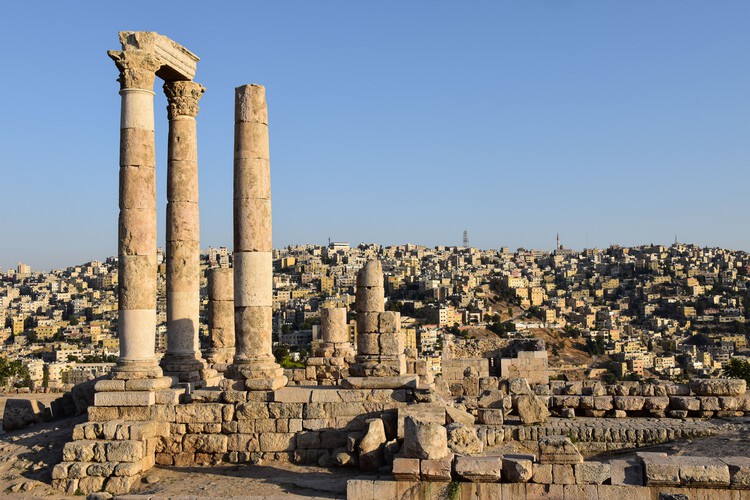
The third edition of the Hangar Exhibition was held this past October in the Jordanian capital, Amman, as part of the city's Design Week. Among the projects exhibited, one installation was able to momentarily teleport visitors into one of the country's most historic sites.
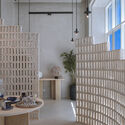
Designed by architect Rasem Kamal, Canyon Walls, a series of freestanding curvilinear partitions, served as a sanctuary for people to disconnect and remain in solitude for a period.
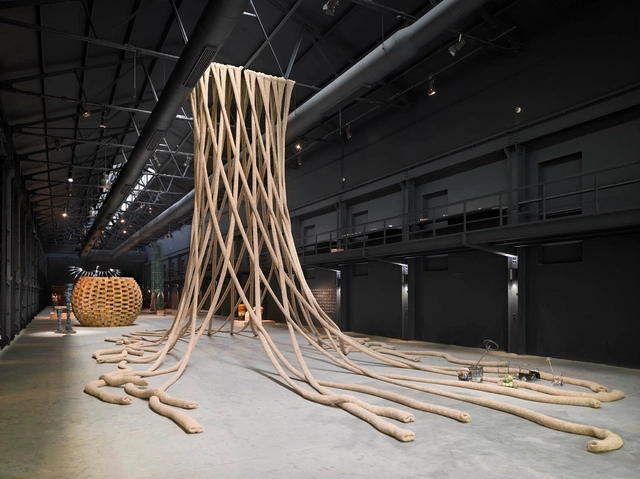
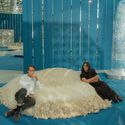
Jordanian artist Raya Kassisieh, with the support of American firm NADAAA, has repurposed her exhibit from the Amman Design Week in Jordan to create blankets for Syrian refugees and Jordanian families. The Entrelac exhibit, created by Kassisieh and NADAAA, consists of 300kg of hand-knit, un-dyed wool which was later cut and stitched to create blankets for those fleeing the Syrian Civil War, now approaching its sixth year.