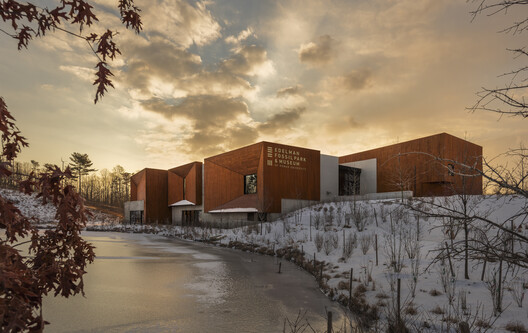
Wood has been used in buildings for thousands of years. It is natural, renewable and versatile, but its response to moisture requires consideration in design and specification. Changing moisture conditions can cause it to swell and shrink, while prolonged moisture exposure can create conditions for fungal decay. Historically, using wood outdoors has therefore meant choosing naturally durable species, protecting the material or designing around the way wood behaves. Wood modification offers another approach: changing certain properties of the material itself.
What Is Modified Wood?
Modified wood is real wood that has undergone a process designed to alter certain properties of the material itself. The goal is to improve characteristics such as durability and dimensional stability while retaining the qualities that make wood desirable in the first place.
Several technologies are used commercially, including thermal modification, furfurylation and acetylation. Each works differently and can produce different performance characteristics. This article focuses on acetylation and its implications for architectural applications.
Unlike conventional preservative treatments, which typically introduce substances to protect wood against biological threats, modification changes properties of the wood itself. Depending on the process, that can change not only durability but also how wood responds to moisture and changing environmental conditions.
What Is Acetylated Wood?
Acetylation is a modification process that changes wood at the molecular level. Acetyl groups already occur naturally within wood. During acetylation, moisture-attracting hydroxyl groups are converted into acetylated groups, substantially reducing the wood's ability to absorb bound water.

In practical terms, the wood swells and shrinks less, becomes more dimensionally stable and is more resistant to fungal decay. Accoya is a commercial example of acetylated wood. Through acetylation, fast-growing radiata pine is transformed into a highly durable and dimensionally stable material.
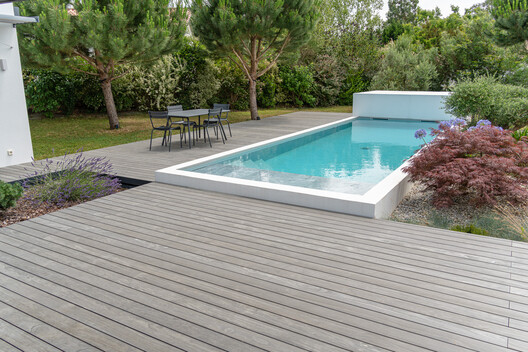
Consider a deck exposed to rain followed by intense sun, or cladding moving through seasons of heat, cold and humidity. Windows and doors need to maintain tight tolerances despite constant weather exposure. Around pools and in coastal environments, repeated moisture exposure can place even greater demands on the material.
When wood absorbs less bound water and moves less, its behavior becomes more predictable. Deck boards can maintain more consistent gaps. Cladding can remain more stable. For windows and doors, reduced movement can help preserve the fit between components. Reduced movement can also place less stress on coatings.
Greater durability also means wood can be considered for applications where long-term exposure might otherwise make unmodified wood more challenging.
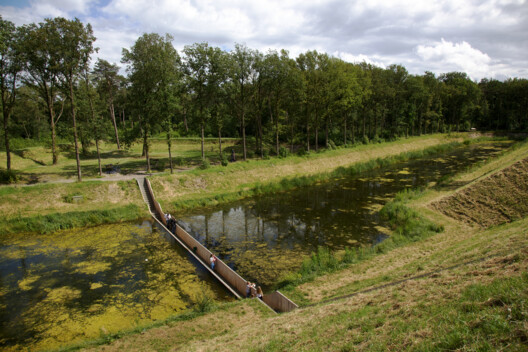
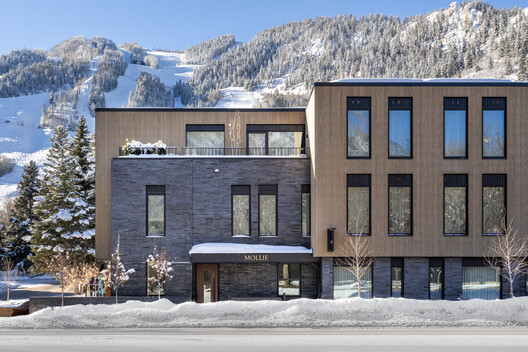
Accoya is now used across decking, siding, windows and doors, landscape structures, bridges and other infrastructure, with performance backed by a 50-year warranty above ground and 25 years in ground or freshwater.
For centuries, choosing wood largely meant finding a species whose natural properties suited the application. Wood modification adds another consideration to material selection. Today, acetylated wood with its improved properties of enhanced dimensional stability and decay resistance allows architects to expand their consideration of where and how real wood can perform in a wider range of exterior applications.


