1. ArchDaily
  2. Symbolism

Symbolism: The Latest Architecture and News

Reinterpreting the Ruyi Knot as a Cultural Symbol in Contemporary Metalwork

 | In Collaboration
Audio available

Symbols have always traveled through architecture. They appear in carved stone, woven textiles, painted ceilings and walls, door hardware, and everyday objects, carrying the beliefs, rituals, and histories of the cultures that first created them. Across contemporary interiors, designers continue this dialogue with place by revisiting historical symbols and translating them through new materials, manufacturing techniques, and architectural forms.

The Ruyi knot is one such example. For centuries, the interwoven motif has been part of the Chinese knotting tradition, symbolizing continuity, harmony, and good wishes. Its gently looping geometry has appeared across decorative objects and ceremonial crafts, demonstrating how cultural references can become part of a design vocabulary that extends far beyond ornament.

Buildner's 3rd Architect's Stair Competition Winners Explore the Stair as a Form of Architectural Expression

 | Sponsored Content
Audio available

Buildner has announced the results of its third edition Architect's Stair international architecture ideas competition. The event invited designers to reflect on one of architecture's oldest and most symbolic elements: the stair. Beyond its functional role as a connector of levels, the stair was positioned here as a medium of architectural storytelling—an invitation to explore ideas of procession, sequence, space, and form.

When Is Architectural Symbolism Hypocrisy?

This article was originally published on Common Edge.

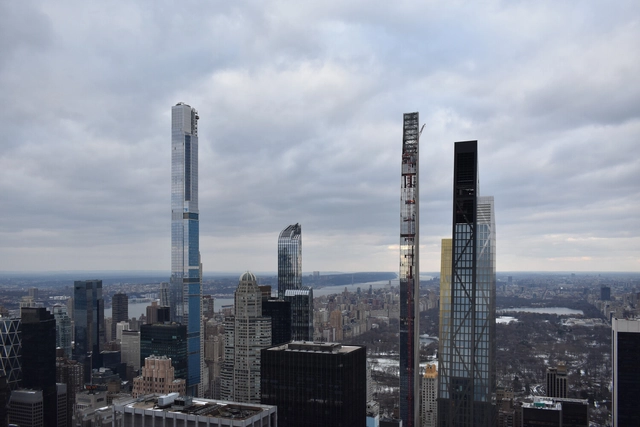
Architecture mirrors the culture it is built from, while simultaneously aspiring to lead that culture. This is almost oxymoronic, since reflecting and projecting our values is an essential part of every human life, and architecture is exquisitely human. Our buildings embody us, with all of our mixed messages.

When Is Architectural Symbolism Hypocrisy? - Image 5 of 4When Is Architectural Symbolism Hypocrisy? - Image 1 of 4When Is Architectural Symbolism Hypocrisy? - Image 2 of 4When Is Architectural Symbolism Hypocrisy? - Featured ImageWhen Is Architectural Symbolism Hypocrisy? - More Images+ 1

Architecture Always Reflects the Values of Its Current Culture

This article was originally published on Common Edge.

What we build can be metaphoric—often intentionally, sometimes subliminally. But architecture is seldom the intentional commentary of architects, crafting symbolism; more often it is a direct reflection of its time and the culture that made it.

The Symbolic Use of Color in Islamic Architecture

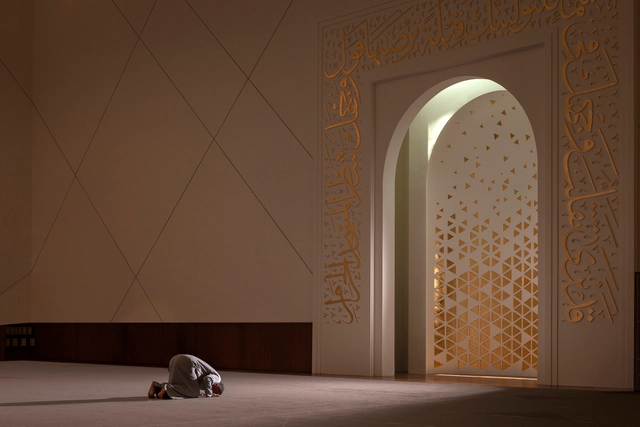
The Islamic Architecture style has a diverse history, spanning over a millennium, stretching from Western Africa to Europe to Eastern Asia. Beginning in early 7th century Arabia, this form of architecture emerged with the rise of the Islamic civilization. In fact, Al Masjid Al Nabawi, the first Mosque to ever be constructed was built in 622, in Medina, Saudi Arabia. Moreover, early Islamic architecture was influenced by the pre-existing styles around the region, such as Roman, Byzantine, and Persian qualities.

Today, Islamic architecture is known for its acute attention to detail, craftsmanship, and its spiritual symbolism. Furthermore, as color plays an essential role in architecture, influencing the emotional experience of the space, different colors have been utilized over the years in Islamic Architecture to evoke certain meanings. In Islamic Architecture, colors hold significant spiritual symbolism, reflecting the values and beliefs of the Islamic faith. Four core colors, Green, Blue, Gold, and White, are each used to convey various cultural, religious, and symbolic meanings.

Read on to discover the use of these colors in various Islamic architectural icons around the world.

The Symbolic Use of Color in Islamic Architecture - 1 的图像 4The Symbolic Use of Color in Islamic Architecture - 2 的图像 4The Symbolic Use of Color in Islamic Architecture - 3 的图像 4The Symbolic Use of Color in Islamic Architecture - 4 的图像 4The Symbolic Use of Color in Islamic Architecture - More Images+ 6

"I Wanted to Look at Places in a New Three-Dimensional Way": In Conversation with Daniel Libeskind

"I Wanted to Look at Places in a New Three-Dimensional Way": In Conversation with Daniel Libeskind - Featured Image
Jewish Museum Berlin. Image © Hufton+Crow

Daniel Libeskind (b. 1946, Lodz, Poland) studied architecture at Cooper Union in New York, graduating in 1970, and received his post-graduate degree from Essex University in England in 1972. While pursuing a teaching career he won the 1989 international competition to design the Jewish Museum in Berlin before ever realizing a single building. He then moved his family there to establish a practice with his wife Nina and devoted the next decade to the completion of the museum that opened in 2001. The project led to a series of other museum commissions that explored such notions as memory and history in architecture.

"I Wanted to Look at Places in a New Three-Dimensional Way": In Conversation with Daniel Libeskind - Image 1 of 4"I Wanted to Look at Places in a New Three-Dimensional Way": In Conversation with Daniel Libeskind - Image 2 of 4"I Wanted to Look at Places in a New Three-Dimensional Way": In Conversation with Daniel Libeskind - Image 3 of 4"I Wanted to Look at Places in a New Three-Dimensional Way": In Conversation with Daniel Libeskind - Image 4 of 4I Wanted to Look at Places in a New Three-Dimensional Way: In Conversation with Daniel Libeskind - More Images+ 15

National Flower, Global Ambition - DeciBel Unveils the Hanoi Lotus Centre

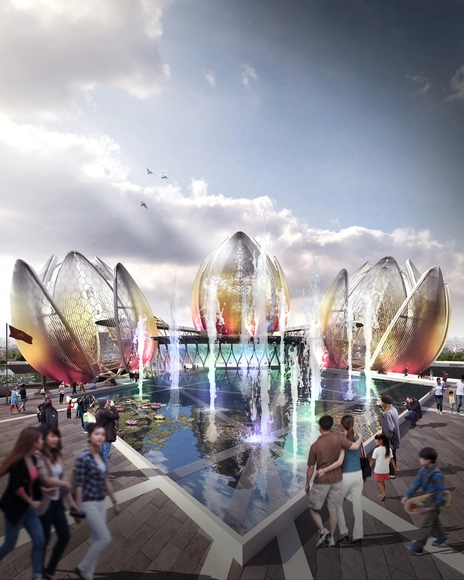
Australian firm deciBel(Architecture))) has released images of their proposed multi-purpose theater and cultural center in the Vietnamese capital of Hanoi. The Hanoi Lotus draws inspiration from Vietnam’s national flower, creating a city-defining piece of public architecture to place Hanoi and Vietnam on the global stage.

National Flower, Global Ambition - DeciBel Unveils the Hanoi Lotus Centre - Image 1 of 4National Flower, Global Ambition - DeciBel Unveils the Hanoi Lotus Centre - Image 2 of 4National Flower, Global Ambition - DeciBel Unveils the Hanoi Lotus Centre - Image 3 of 4National Flower, Global Ambition - DeciBel Unveils the Hanoi Lotus Centre - Image 4 of 4National Flower, Global Ambition - DeciBel Unveils the Hanoi Lotus Centre - More Images+ 9