Discussions of Amancio Williams's architecture typically focus on his built work—the tangible side of his profession. Yet beyond being a great architect, he was a researcher, creator, avant-gardist, and visionary. Constantly studying the technical possibilities of his era, he approached his theoretical development and architectural thinking as if the field were a laboratory.
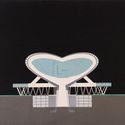
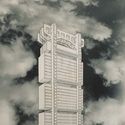
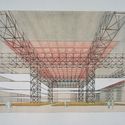
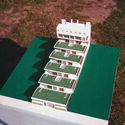
This is evident in the projects Williams developed for dwellings in space (1942), the hall for plastic spectacle and sound in space (1942), the Buenos Aires airport (1945) the suspended office building (1946) and the first city in Antarctica (1980), which we explore below.

While his era was marked by an extraordinary wealth of scientific discoveries, Williams believed there was a profound disconnect between this knowledge and its practical application to daily life. Fully aware of the need to find novel architectural solutions aligned with contemporary knowledge, he forged a path of research and creation that came to define his entire body of work. He believed that an architect's primary duty was to observe, study, and diagnose the challenges of habitation and the city, and only then produce and design tailored responses. His ability to envision a future fueled by scientific advancement, combined with his faith in human progress, led him to a pursuit of perfection. Deepened by his technical curiosity, this quest ultimately materialized in projects of immeasurable architectural value.