Smart phones are designed to collect a variety of personal data, from location and orientation to sight and sound. But what if these devices were capable of tracking our visceral response to the built environment?
The architects and academics behind The Morpholio Project have been researching ways in which biometrics, such as EEG, EMG, face tracking and pulse measurement, could be used to quantify the physical impact of an image on the human body. By turning to the medical industry, Morpholio has studied the capabilities of photoplethysmography (PPG) and envisioned ways in which it could be integrated with the smart phone.
With a simple 3D printed fitting, the iphone can be transformed into a miniaturized blood pressure machine that records the heart rate fluctuations of a user while they photograph their surroundings. By tracking an individual’s unique emotional response to what they are seeing and experiencing, Morpholio believes they can unlock new potentials in which technology can evolve of the design process.
More information from the creators after the break...







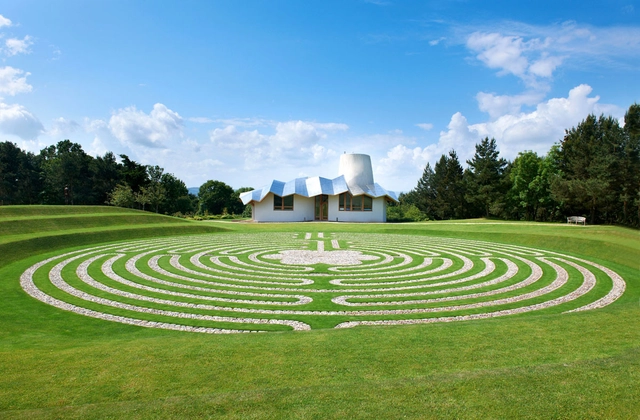

.jpg?1397700541 "Fife, Scotland, 2006 by Zaha Hadid Architects / © Werner Huthmacher. ImageAll sharp angles and painted a sinister black, Zaha Hadid's Fife center isn't the first thing you'd expect from a Maggie's Centre. The exterior invited comparisons to a bunker, despite the airy, humane spaces within. \"Zaha got a lot of criticism and her building is bloody good,\" Jencks says of his former student's design. The building was the architect's first in the UK.")