A Crash Course on Modern Architecture (Part 2)

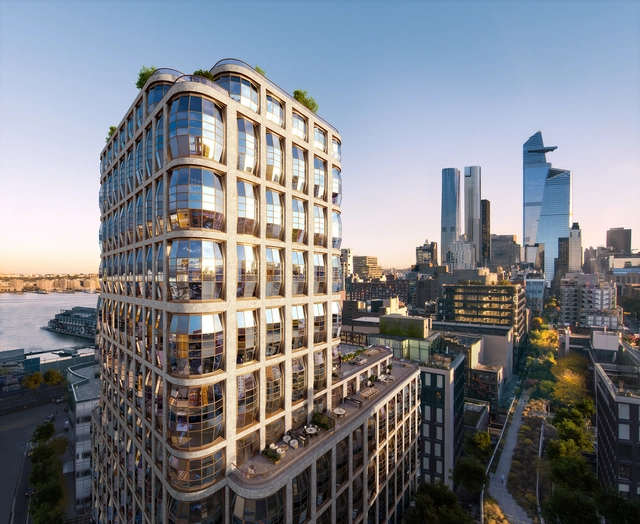
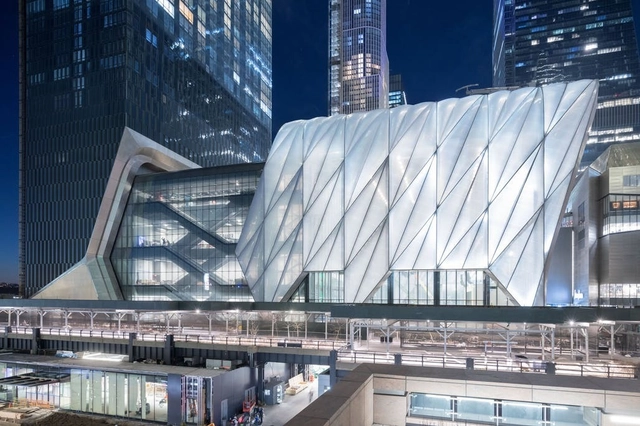
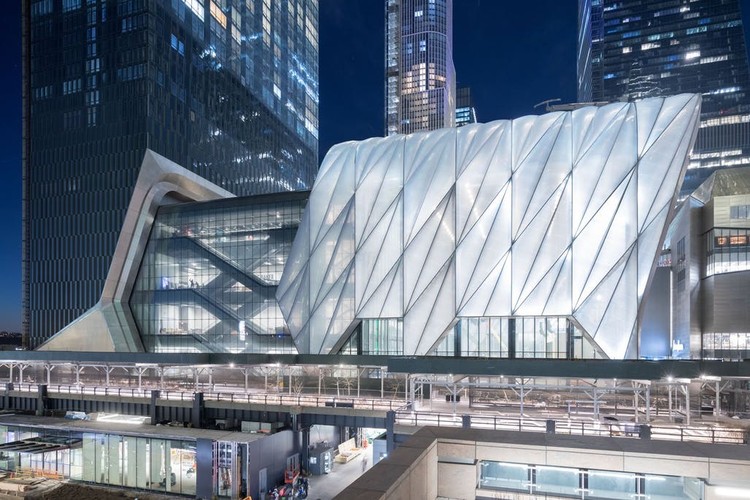
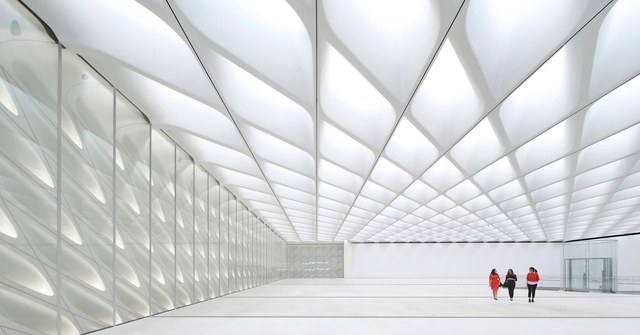
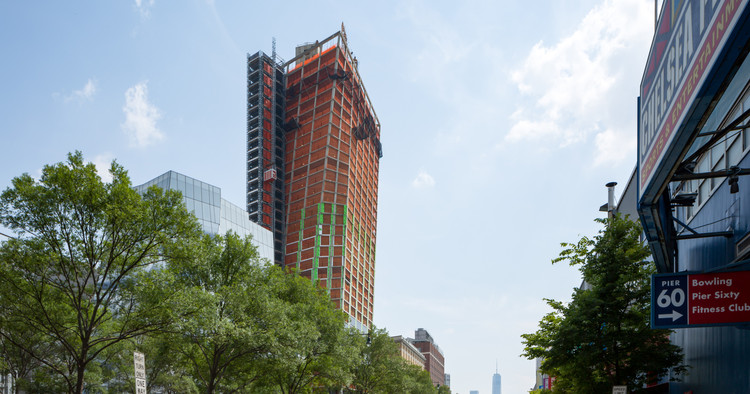
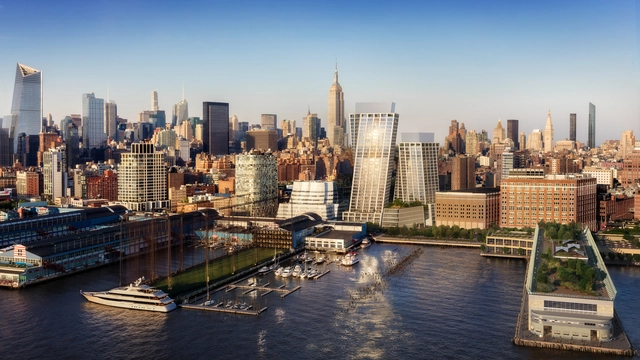
, New York, is a good example of what is to come. Image © Iwan Baan

Merete Ahnfeldt-Mollerup is associate Professor at The Royal Danish Academy of Fine Arts. This article originally appeared in GRASP.

Miss Part 1? Find it here.

Architecture is inseparable from planning, and the huge challenge for the current generation is the growth and shrinkage of cities. Some cities, mainly in the Southern Hemisphere, are growing at exponential rates, while former global hubs in the northern are turning into countrysides. In the south, populations are still growing a lot, while populations are dwindling in Europe, Russia and North East Asia. The dream of the Bilbao effect was based on the hope that there might be a quick fix to both of these problems. Well, there is not.

A decade ago, few people even recognized this was a real issue and even today it is hardly ever mentioned in a political context. As a politician, you cannot say out loud that you have given up on a huge part of the electorate, or that it makes sense for the national economy to favor another part. Reclaiming the agricultural part of a nation is a political suicide issue whether you are in Europe or Latin America. And investing in urban development in a few, hand-picked areas while other areas are desolate is equally despised.

The one person, who is consistently thinking and writing about this problem, is Rem Koolhaas, a co-founder of OMA.

Chicago On-Track To Break Ground On Elevated Parkway

Courtesy of Michael Van Valkenburgh Associates, Inc.

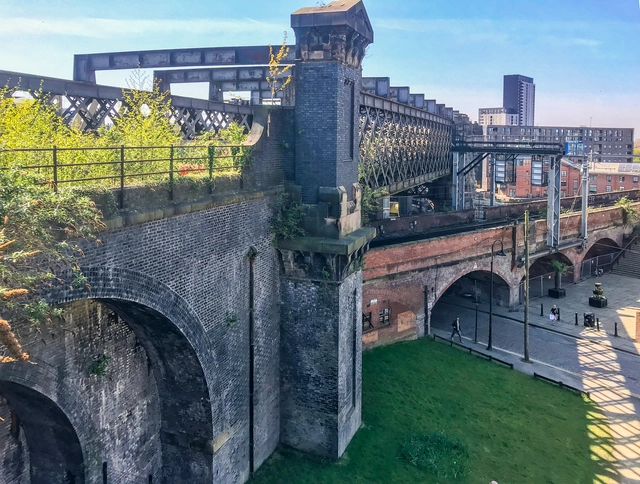
Chicago is set to be the next U.S. city to park-ify on one of its abandoned rail-lines. First proposed back in 1997, the 2.7 mile, 13-acre Bloomingdale Trail and Park is proposed for a stretch of abandoned railway trestle dating from 1910, which has been lying unused since the turn of the century. And, even though it is already being compared to New-York’s High Line, the planners are adamant that the park will be an entirely different animal to its cousin.

Read more about ’s unique proposal after the break…

Chelsea Market Upzoning Approved by NYC Council

Plans for Market along 10th Avenue; Courtesy of Jamestown Properties. Via Architect’s Newspaper

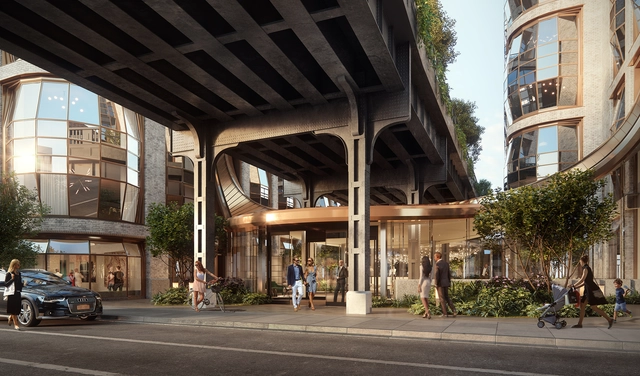
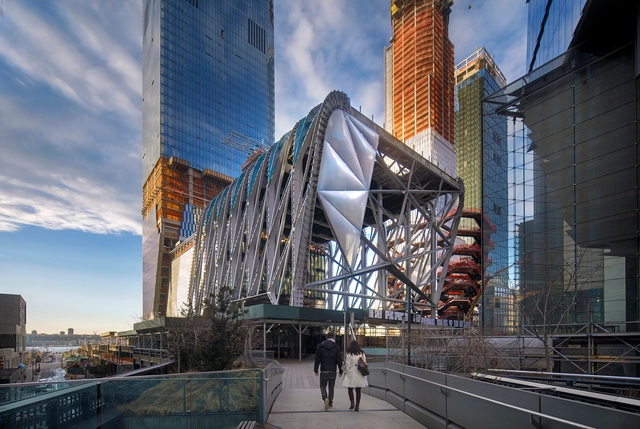
Construction has exploded along the High Line ever since it opened: condos hover over the rehabilitated track and look out onto the Hudson, while the new location of the Whitney Museum is making headway on the southern end of the park as Google moves into its NYC headquarters to a building just a few short blows away.  Now, the historic Chelsea Market may be looking at a facelift following approval from the New York City Council for increasing density in the building by developers, Jamestown Properties. The proposed vertical extension, which has made a brief appearance on a few architecture blogs, will provide the additional in demand office and retail space in the Chelsea neighborhood.

Solar Carve Tower / Studio Gang Architects

Courtesy of Studio Gang Architects

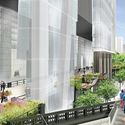
Jeanne Gang is about to make her debut, as the Chicago-based architect just unveiled the latest project planned to border City’s beloved . The 180,000 square-foot office tower with ground level retail will replace an existing, disused meatpacking plant along 10th Avenue between 13th and 14th streets. It will feature a “gem-like”, glass facade that is intelligently shaped to avoid the disruption of light, air and views from the .

Dubbed the Solar Carve Tower, the mid-rise structure is currently pending city approval and is planned for completion in 2015.

Continue after the break for the architects’ description.

The 4 Coolest “High Line” Inspired Projects

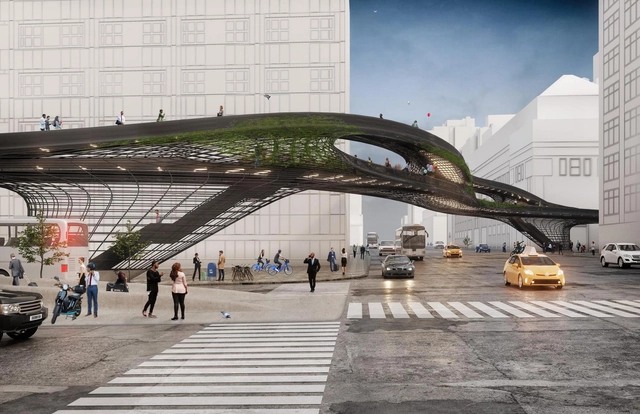
LEGO Bridge by MEGX

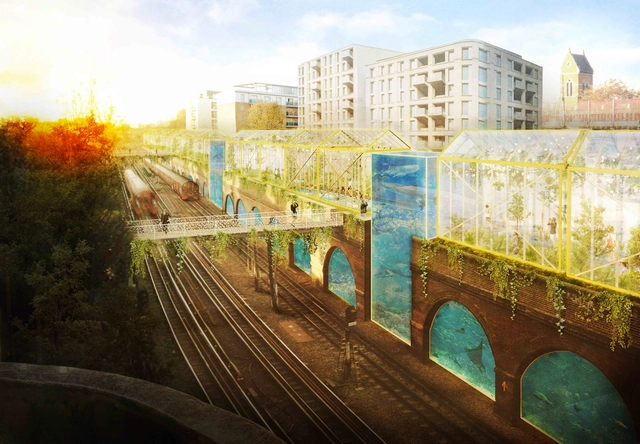
City’s High Line has been such a success – both as an project and a money-making tourist attraction – that it’s spawned quite a number of Copy Cats around the world (we found 18 19, listed after the break, but no doubt there’s many  more…). Many, however, are more yawn-inducing than awe-inspiring. The following four projects are notably awesome exceptions.

Find out which projects made the cut, after the break…

Update: The High Line + Koons

Image by James Corner Field Operations, Diller Scofidio + Renfro, and . Courtesy of Friends of the

In the middle of March, we attended a community meeting for the third installment of the High Line and shared James Corner and DS + R’s visions for the final stretch of the elevated rail line.   While the meeting offered an in depth look as to how it would tie together the previously featured conceptual elements, perhaps the already daring project needs a little more spice…perhaps, the High Line needs Jeff Koons.  The American artist has been in contact with the founders of the Friends of the High Line (the nonprofit which saved the railway from being demolished) as it is possible the public park could be outfitted with his lastest sculpture, Train, a massive replica of a 1943 Baldwin 2900 steam locomotive.  Oh, and did we mention that the train would be danging dramatically in the air, suspended from a crane?

More about Train after the break. 

Journey to the Center of New York: Can Design “Cure” Our Cities?

Plans for the Delancey Underground, an underground park made possible by fiberoptic technology. Photo courtesy of James Ramsey and Dan Barasch

Walk into the cafeteria at the Googleplex and you are nudged into the “right” choice. Sweets? Color-coded red and placed on the bottom shelf to make them just a bit harder to reach. “Instead of that chocolate bar, sir, wouldn’t you much rather consume this oh-so-conveniently-located apple? It’s good for you! Look, we labelled it green!” [1]

Like the Google cafeteria guides you to take responsibility of your health, Google wants to transform the construction industry to take responsibility of the “health” of its buildings. They have been leveraging for transparency in the content of building materials, so that, like consumers who read what’s in a Snickers bar before eating it, they’ll know the “ingredients” of materials to choose the greenest, what they call “healthiest,” options.[2]

These examples illustrate the trend of “medicalization” in our increasingly health-obsessed society: when ordinary problems (such as construction, productivity, etc.) are defined and understood in medical terms. In their book Imperfect Health, Borasi and Zardini argue that through this process, architecture and design has been mistakenly burdened with the normalizing, moralistic function of “curing” the human body. [3]

While I find the idea that design should “force” healthiness somewhat paternalistic and ultimately limited, I don’t think this “medicalized” language is all bad – especially if we can use it in new and revitalizing ways. Allow me to prescribe two examples: the most popular and the (potentially) most ambitious urban renewal projects in New York City today, the High Line and the Delancey Underground (or the ).

More on “curative” spaces after the break. (Trust me, it’s good for you.)

Update: Community Meeting / Friends of the High Line

Interim Walkway at the Western Rail Yards. James Corner Field Operations and . Courtesy City of New York and Friends of the

Last night, ArchDaily joined the community of Chelsea and Friends of the High Line in the crowded auditorium of PS 11: The William T Harris School eager to see James Corner and Rick Scofidio’s latest ideas for the third installment of the High Line.  This last segment of the amazing elevated park project is the designers’ most crucial intervention as it culminates the strategies introduced in Phases 1 and 2 and must adaptively respond to new contextual relationships between 34th and 30th Streets.   Corner and Scofidio’s eloquent and coherent presentation very much responded to the community’s input from the last public meeting held in December, as the design addressed the need for a child’s play area with an idea for a section with rubberized beams, a place for spontaneous and planned performances, and more seating.  Scofidio kidded, “There are some things we could do better, and that’s exactly why we get to do the third phase.”

More about Phase 3 after the break.

Community Input Meeting / Friends of the High Line

YouTube Preview Image

Are you an avid lover of the High Line? If you’ve been keeping up with our coverage of the project by James Corner Field Operations and DS+R, then you have been following the development of the High Line’s different sections – such as the early stages for a the design of the Gansevoort entrance and elevated street ampitheater of Stage One, and the picture frame and tree fly over of Stage Two.   And, yet the amazing public space is still developing further.  Friends of the High Line are presenting initial design concepts for the rail yards section of the High Line, which requires new zoning that would preserve the entire rail yards section, including the Spur, as public open space.  At a community input meeting on Monday, March 12, the High Line design team will share their visions and answer questions about the soon-to-be newest part of the project.

More information about the meeting after the break.

City Talk discusses the High Line and Delancey Underground

Professor Doug Muzzio of City Talk sits down with Joshua David and Robert Hammond, co-founders of Friends of the , and Dan Barasch, co-founder of the Delancey Underground. The conversation focuses on the latest plans for the third and last section of the High Line and the potential of the subterranean public park proposal below Delancey Street. Muzzio states, “Ones a great West Side story, the other could be a great East Side story.” City Talk is known to discuss the important issues of City with the people who help the city function. Professor Doug Muzzio is a political analyst for CUNY TV and a professor at Baruch College’s School of Public Affairs.

Video: A Conversation with Charlie Rose about the NYC High Line

© Iwan Baan

Charlie Rose discusses the story of the High Line with Amanda Burden, director of the Department of City Planning, Diane von Furstenberg, High Line contributor, Robert Hammond, Co-Founder and Executive Director of Friends of the High Line and Joshua David, Co-Founder and Executive Director of Friends of the High Line.

Click here to watch the video on the website.

Stakeholders Pledge to Complete High Line

Rendering by KPF

The stakeholders have publicly committed to develop the third and final section of the at the West Side Rail Yard, between West 30th and West 34th Streets. The private rail company and owner of the , CSX Transportation, Inc, have agreed to donate the last remaining section to the City of .

The city, along with the state and Related Companies, has pledged to “preserve the entire historic structure of the High Line at the West Side Rail Yards, including the spur over 10th Avenue.” This ensures the protection of the rail line as development begins in the historic Hudson Yards area. Coach’s new 1.7 million square-foot global headquarters will be the first to break ground in mid-2012.

Part One of the High Line officially opened in the summer of 2009 and Part Two just opened this past summer. As announced yesterday on ArchDaily, you can now digitally walk though the High Line with Google Street View.

Mexico City’s High Line Park

Courtesy of Federal District Public Space Authority


To say New York’s High Line is a successful project is putting it very lightly.  From the moment the overgrown landscape opened, thousands have flocked to experience the amazing public space and dozens have been inspired to incorporate similar urban reuse attitudes in their cities.  Ruth Samuelson shared ’s inspired project which seeks to apply the New York High Line’s sense of serenity to a busy intersection by mid-2012. “The High Line in New York seemed to me a fresh breath of air, completely.   just needs – within so many streets, so many avenues – respite like this,” explained Daniel Escotto Sánchez, the general coordinator for the city’s Public Space Authority.

More about the project after the break.

Video: Robert Hammond on The High Line

Co-founder of Friends of the , Robert Hammond shares on TED the transformation from abandoned elevated railroad line to one of the hottest spots in City.  The High Line recently opened Section 2 of the park, which continues to provide a break from the chaotic city streets.  The users have an opportunity to experience an elevated space with uninterrupted views of the Hudson River and the city skyline.

Video tour of the High Line Section 2

Justin Davidson, architecture critic for New York Magazine, tours the recently opened section 2 of the High Line and describes the city views you can see from there.

Part Two of the High Line Opens / Field Operations + DS+R

Philip A. and Lisa Maria Falcone Flyover, the pathway rises eight feet above the , winding through a canopy of trees, between West 25th and West 27th Street, looking South. ©Iwan Baan

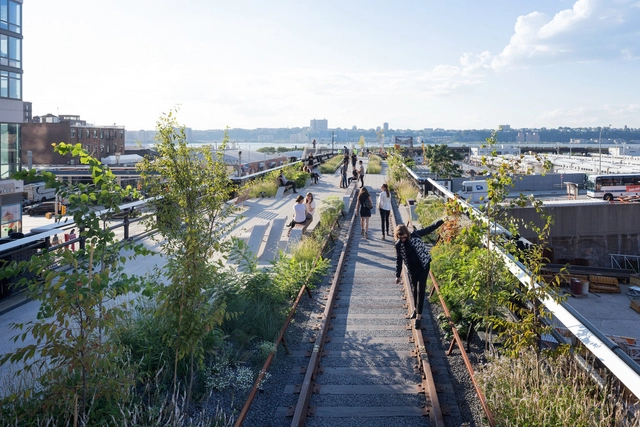
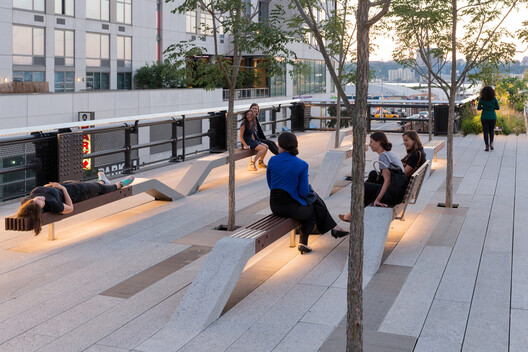
New Yorkers can’t get enough of James Corner Field Operations with Diller Scofidio + Renfro‘s High Line as millions meandered along the refurbished rail tracks enjoying spectacular views of the skyline.   And yet, the opening of the High Line in 2009 offered a mere preview of the project’s total grandeur as parts two and three of the 1.45 mile project were still to come.   Today, the second phase of the High Line has opened to the public – a section which stretches from West 20th up to West 28th Street.  This segment includes a hovering frame that will display people’s silhouettes against the evening sky, an elevated pathway which brings visitors to the level of the trees’ canopy, and a Great Lawn which will be perfect for sun-bathing and a summer time picnic.

After the break you can find a great set of photos from Iwan Baan, via the High Line Facebook Page, and some more information about the project.

The High Line Frenzy

© Michelle Borth

It is easy to take for granted the things you grow accustomed to, but ever since the initial idea of revitalizing the High Line began sprouting up, New Yorkers have been taking full advantage of the project and loving every second spent strolling, relaxing and gazing at the West Side’s newest addition. The project has truly piqued locals and tourists’ interests as the elevated promenade is enjoyed as much today as it was on opening day over a year ago.

With such success, it is no surprise, as Kate Taylor reported for the New York Times, that the small office of the Friends of the High Line has received countless calls asking how their cities can also enjoy the effect.

More on Phase Two / Field Operations + DS+R

The Spur

A few days ago, we shared some information about the second segment of Field Operations and DS+R’s High Line, including construction shots to show the progress being made. Today, we share renderings from the firms which illustrate some of the cool features we can look forward to seeing.  The second phase will include a “spur” – a framed space recalling the historical billboards that once attached to the railway, a “floating platform” which rests above the exposed girders, “ Thicket” – a dense stretch of trees and shrubs, a “flyover” where the walkway rises into the canopy of sumac trees, and of course, a grand lawn for lounging.

Take a look at the renderings after the break, and we’ve also included a video of the whole project to see how the pieces will come together.

Phase 2 of the High Line

Looking north toward the Hudson Yards

Field Operations and DS+R’s High Line has been enjoyed by many ever since its opening, but we’ve been waiting patiently for the next segment to be finished.  And, thanks to Curbed.com, we’re able to share some recent construction shots of the progress being made.

Check out more photos and more about the second phase after the break.

The High Line, as told by the architects

Our green friends from Inhabitat had the chance to visit the recently opened High Line project in , and interviewed the lead design architect James Corner from Field Operations and Ricardo Scofidio from DS+R at the new elevated park.

This project is a remarkable example of infrastructure renovation, and in my opinion will be a case study for future urbanists and architects, not only in terms of design but also on how the community got involved in the process.

Also, props to Jill for making this video.

The New York High Line officially open


Photos ©

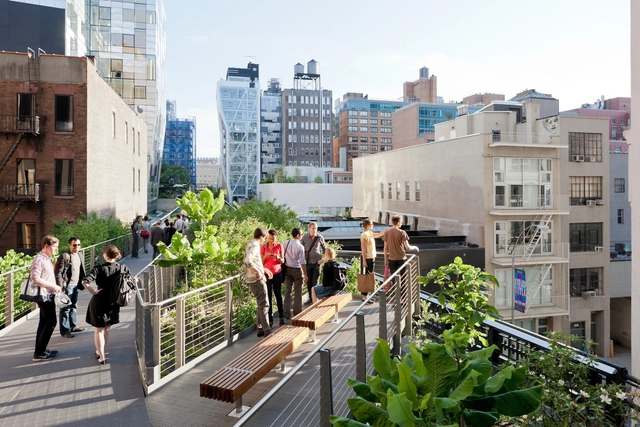
In May 2003, James Corner Field Operations with Diller Scofidio + Renfro competed against 720 teams from 36 countries to win the infrastructure conversion project of the New York City High Line.  More than half a decade later, the High Line’s transition to a public park is almost complete.  On June 8th, architects, elected officials, and advocates watched as Mayor Michael Bloomberg cut the ceremonial red ribbon, officially announcing the opening of the first of three sections.  The new park offers an alluring break from the chaotic city streets as users have an opportunity to experience an elevated space with uninterrupted views of the Hudson River and the city skyline.

More info about the park, including an incredible set of photos by architecture photographer Iwan Baan and a video by Brooklyn Foundry after the break.

UPDATE: We corrected some credits of this project. You can see the full list here.