The results of the Royal Institute of British Architects (RIBA) Future Trends Survey for June show that the Workload Index among UK practices increased slightly to +34 (from +33 in May) with confidence levels amongst RIBA practices about the level of future workloads remaining "very strong and widespread across the whole of the UK". Whereas last month’s survey showed Wales and the West with the brightest outlook, this month's survey saw Scotland top the index with a balance figure of +50, the East Midlands and East Anglia tailing closely behind with a figure of +48. Workload forecasts from practices of all sizes are optimistically reporting positive balance figures.
Germany's contribution to the 2014 Venice Architecture Biennale scrutinizes the architecture of representation, its crisis, and potential cessation. Aside from the universal ambition of modernism to break with the past, Germany has undergone a number of decisive political and societal breaks during the last hundred years. Through the question of how the nation "(re)builds and represents itself through architecture, we are able to discuss the friction between national identity and architecture expression—however, architecture is not only a mirror to ideology, but a constituting reality and societal context."
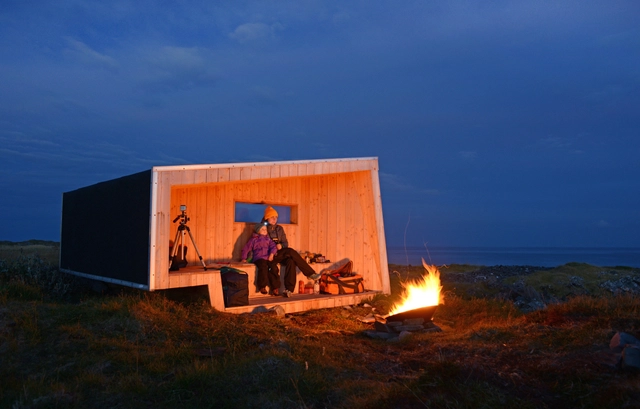
Biotope, a three-strong Norwegian practice based in the Arctic town of Varanger, have designed bird hides since 2009. For them, architecture is "a tool to protect and promote birds, wildlife and nature" - an approach reflected in their carefully crafted, environmentally integrated fragments of the 'invisible': small shelters that must blend into and be absorbed by their surroundings. Their diligent work has seen Varanger become established as one of the best birding destinations in Northern Europe and their unique design solutions are now being sought across Scandinavia.
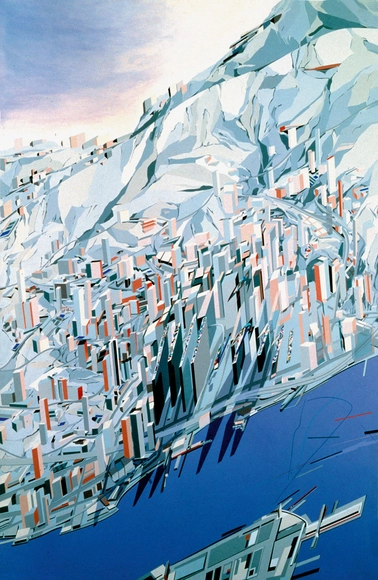
In an article for London's Royal Academy of Arts Magazine entitled Plane Sailing, Zaha Hadid discusses the influence of Russian Suprematist painter Kazimir Malevich on her own design work. In Hadid's early work, such as The Peak Blue Slabs (1982/83), the visual connections to Malevich's strict, regular shapes and lines are evident.
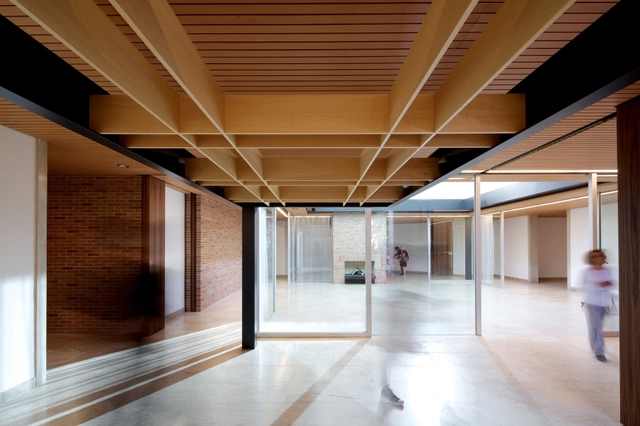
The first film takes the viewers on a "poetic climb" up and through the building's social circuit, which "purposefully encourages inter-disciplinary activity, with the hope to inspire positive energy for the future of art." The second film unpacks the design of the Reid Building in a conversation with design architects Steven Holl and Chris McVoy.
Jane Duncan, an Architect based in the English county of Buckinghamshire, has been elected as the 76th President of the Royal Institute of British Architects (RIBA). Taking over the reigns from current President Stephen Hodder in September 2015, Duncan will become only the third female President after beating fellow candidate Oliver Richards (by a majority of 52% of the vote) to the institute's highest position. According to the Architects' Journal, only 16.7% of RIBA members voted in the election.
The government of New South Wales have announced plans for Sydney's largest program of urban renewal since the 2000 Summer Olympics. The proposal seeks to utilise and regenerate a series of former docklands from the area of Blackwattle Bay, through the Sydney Fish Market, Rozelle Bay and Rozelle Rail Yards, to White Bay Power Station (a protected building).
Following the recent announcement of Aedas' demerger into two separate companies - one retaining the Aedas name and the other now known as AHR - we spoke to Keith Griffiths, Chairman of Aedas' global board and a practicing architect for close to three decades. The company, which was recently ranked by the Architects' Journal as the 5th largest and most influential practice in the world, have now moved their head office to London's Chandos Place and are championing a new approach to urban regeneration in the UK's capital. Alongside discussing how an international practice of Aedas' scale successfully operates, Griffiths offered his insight into how the future looks for European cities based on a tried and tested Asian model of densification.
To find out how Aedas approach sustainability in flourishing Asian markets, as well as the significance of the 'urban hub' typology for London's metropolitan future, read the interview in full after the break.
In an article for The Guardian Richard Rogers questions why, with space still left in urban areas, we should build in the countryside? Lord Rogers, no stranger to political activism, chaired the UK's Urban Task Force in the 1990s, culminating in his reportTowards an Urban Renaissance. Now, over fifteen years later, his plea for denser, better designed urban environments has been rekindled as he argues that: "We can't go on like this. The housing shortage threatens both the economy and our quality of life." Laying out a clear argument reinforced by his forty years of experience as an architect, you can read his article in full here.
In a recent article for The Telegraph Jonathan Ruffer, a hedge fund manager turned campaigner for architectural heritage, discusses the significance of historic buildings in a time when they are "increasingly having to justify itself in the cold light of cost cuts." The notion of architectural "heritage" covers not only castles and stately homes but increasingly post-war and early contemporary structures. Speaking from a financier's point of view, Ruffler examines the "gulf" between public and private funding for restorative architectural schemes alongside the difficulty of mobilising large bodies to activate change. Arguing that "heritage has the power to change lives," the need for people to engage with their built heritage is more important than ever. Read the article in full here.
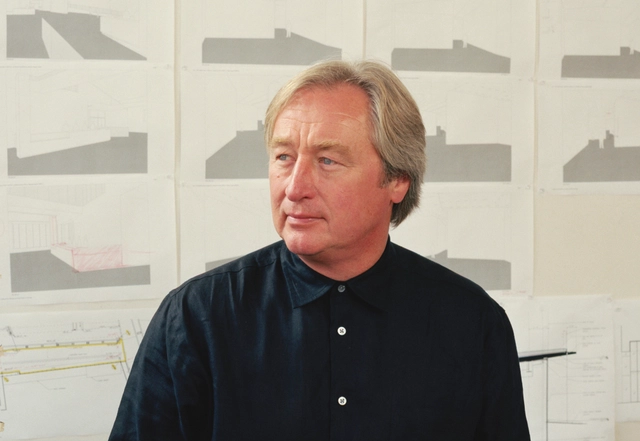
The Japan Art Association (JAA) has named American architect Steven Holl as the 2014 Praemium Imperiale Laureate for Architecture. Holl will be honored at a ceremony in Tokyo on October 15th. The jury's citation states that Holl's "works are internationally highly regarded, primarily as a result of his philosophy regarding the unification of the “experience” of space, as depicted by color and light, with the history and culture of each site of construction."
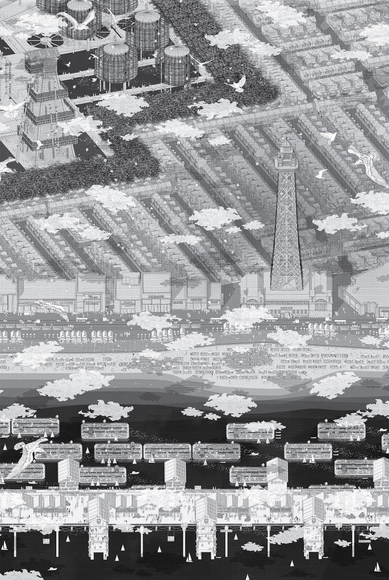
Jason Lamb, a recent graduate from London's Bartlett School of Architecture, has developed a project which centres around the legacy of hydraulic fracturing in the British coastal city of Blackpool. The theoretical thesis, which employs the possibility of Chinese investment prompting the transitory integration of hydraulic fracturing within the city for the exploitation of shale gas, features a number of interesting explanatory illustrations.
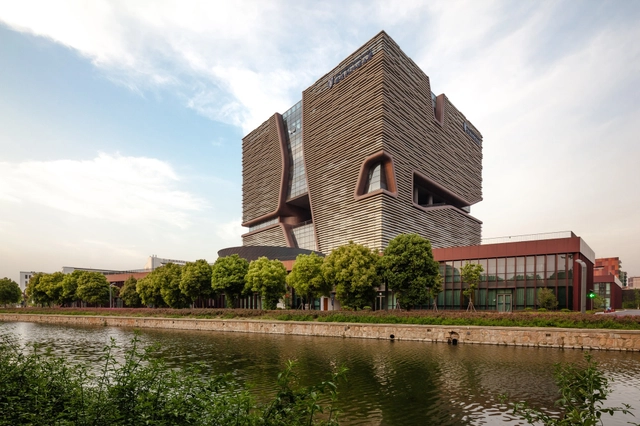
Xi'an Jiaotong-Liverpool University Administration Information Building. Image Courtesy of Aedas
As of this week Aedas, which was recently ranked as the 5th largest and influential practice in the UK by the Architects' Journal, has demerged into two separate practices. The thirteen offices in China, South-East Asia, the Middle East and the US, will continue to operate under the Aedas brand whilst the eight UK offices and the offices in Russia, Poland and Kazakhstan will operate under a new name: AHR. According to the outgoing board, the demerger "will allow both companies to focus on their respective strengths and will enable them to grow the businesses in different directions." The intention is that both groups will continue to work together on projects in the future.
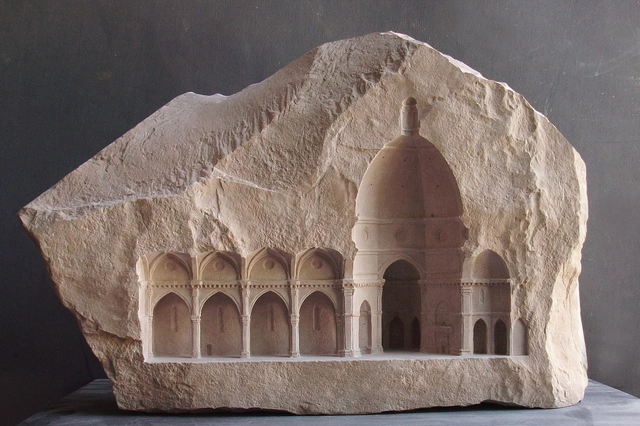
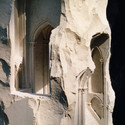
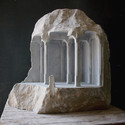
Matthew Simmonds, an art historian and architectural stone carver based in Italy, has created a collection of exceptionally beautiful miniature spaces carved from stone. Having worked on a number of restoration projects in the UK - from Westminster Abbey to Ely Cathedral - his skills have been transferred into work of a much smaller, if not more intricate, scale. Hewn from large stone blocks (some of marble), the level of intricacy Simmonds has achieved in the architectural detailing is almost incredible. Capitals, vaults and surfaces all distort and reflect light in a very beguiling way.
Videos
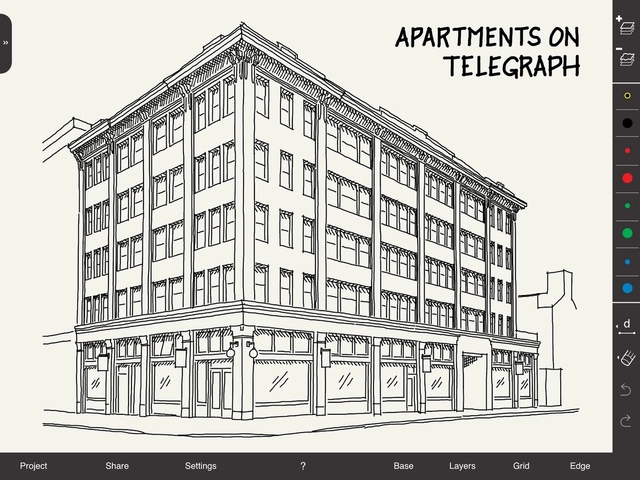
Arrette Scale: perspective. Image Courtesy of Arrette Scale
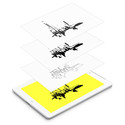
Building upon our Top 10 Apps for Architects, this collection brings together some of the best quality and most valued technical apps for designing, sketching, calculating and collaborating. Although the majority of those featured here are designed solely for the iOS platform, every time we collate lists such as these it's clear that more and more high quality apps for the Android and Windows platforms are being developed. From condensed versions of large scale software packages that architects and designers use every day, to blank canvases to scratch ideas down onto, you might just find an app that could improve the way you work.
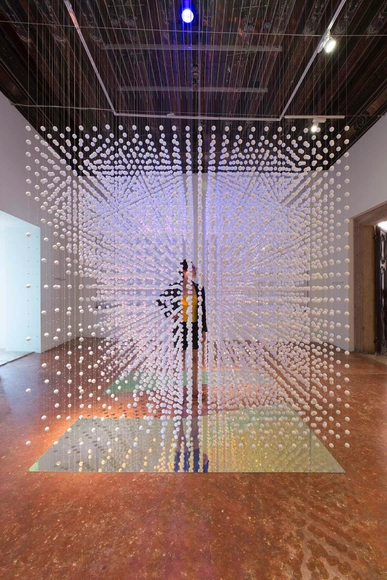
Dutch practice Bekkering Adams Architecten, in cooperation with ABT and BeersNielsen, recently unveiled an installation at the Palazzo Mora, Venice as part of a collateral event with this year's Venice Biennale. Entitled Form-ContraForm, the sculptural piece reflects on the conceptual and human perception of space - something which they describe as "a space that surrounds and envelops." Distilling architecture's fundamentals (which is also the theme of this year's Biennale) down to the definition of co-ordinates in space, the experience created by Bekkering Adams is akin to the notion of "the mass versus the cavity."
Arguing that the previous thirteen Biennales have, "more or less, tried to predict what is going to happen over the next five years," "Rem Koolhaas has changed the paradigm:" Rem's Biennale is about "the past of the present". Jencks, who describes Koolhaas as "the Corbusier of our time", suggests that his Biennale is about analysis rather than total synthesis. He has, however, "shown that research can be creative."
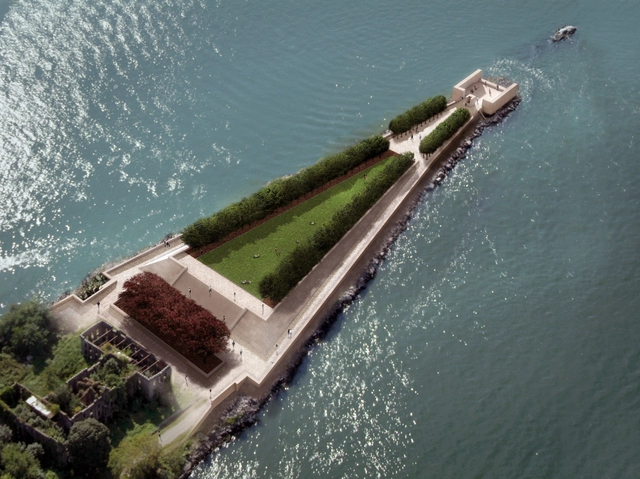
Aerial Rendering Prior to Completion. Image Courtesy of Franklin D. Roosevelt Four Freedoms Park, LLC
Built four decades after Louis Kahn's death, New York City'sFour Freedoms Park - the architect's posthumous memorial to Franklin D. Roosevelt and his policies - is becoming one of the architect's most popular urban spaces. In a recent article for the Guardian, Oliver Wainwright investigates what he describes as perhaps Kahn's "best project". Wainwright's spatial description of the monument is interweaved by fragments of Kahn's personal history, building up a picture of a space with "the feel of an ancient temple precinct" and "a finely nuanced landscape". Although Gina Pollara, who ultimately realised the plans in 2005, argues that Four Freedoms Park "stands as a memorial not only to FDR and the New Deal, but to Kahn himself", can a posthumous project ever be considered as an architect's best? Read the article in full here.