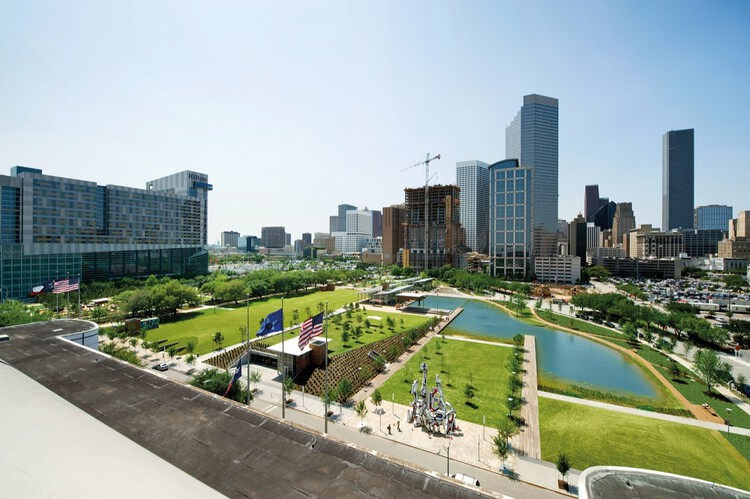
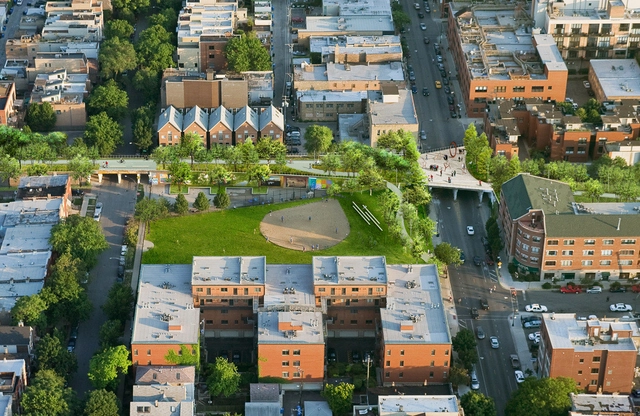
Every housing crisis eventually becomes a land question, and every land question eventually becomes a values question. The United States' West Coast has arrived at that point. As cities from Los Angeles to Seattle search for parcels to build the affordable housing they have promised for years, they keep landing on the same answer: the park or the greenbelt. What looks like a zoning decision is a referendum on which form of wellbeing a city is willing to sacrifice for another.
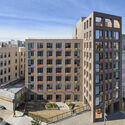
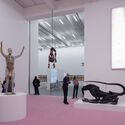
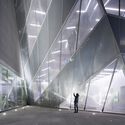
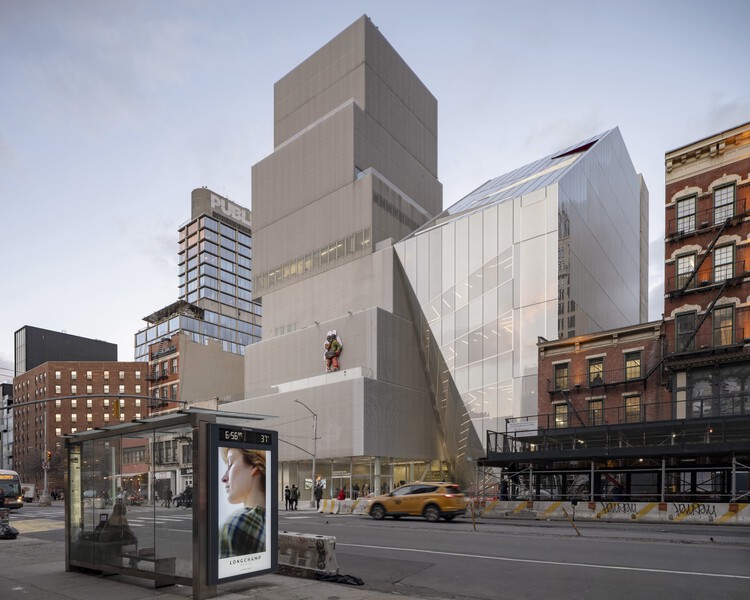
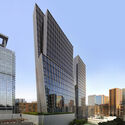
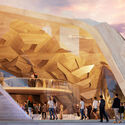
When the New Museum's original SANAA-designed building, a stack of shifted opaque boxes wrapped in a metal mesh skin, opened in 2007, it already seemed destined for some form of expansion to relieve the vertical pressure created by its constrained circulation and limited footprint. In March, the museum unveiled its long-anticipated addition, designed by OMA's Shohei Shigematsu and Rem Koolhaas. The angular and slightly set-back companion building doubles the museum's exhibition capacity while reshaping the institution's relationship to the city and to the original SANAA structure by Kazuyo Sejima and Ryue Nishizawa.
At the building's press opening, Koolhaas described the project "not simply as an extension but as a complement or counterpart." Shigematsu later elaborated: "We thought about designing a pair composed of two distinct and yet highly connected buildings. One is more vertical and introverted. The other is more horizontal and extraverted."
Under the theme Common Ground, ICFF 2026 brought together the international design community through a shared focus on craftsmanship and innovation. From May 17–19, 2026, ICFF (International Contemporary Furniture Fair) returned to the Javits Center for a landmark edition that celebrated the global design community during NYCxDESIGN.
How do societies support and nurture emerging architects? Young architects are heavily influenced by their formal education and initial exposure to the industry. Various organizational systems across regions, whether passive through environmental factors or active via tangible benefits, are in place to assist them in entering the field. However, it's worth questioning how often we reflect on these established support systems. Are they effective in fostering well-rounded professionals, or do they unintentionally reinforce certain biases in how architecture is practiced?
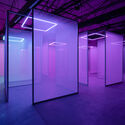
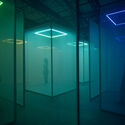
Step into the realm where the minimalism of the 1960s Light and Space movement intertwines with contemporary high-tech algorithms and sensors. Back then, light artists like James Turrell, Dan Flavin, and Robert Irwin captivated audiences with the bare essentials, using precisely daylight or lamps to heighten visual perception. Fast forward to today, Chromasonic takes this synergy of light and color but augments it with sound and algorithms. Envisioned as a global network to experience the harmony of body and mind, Johannes Girardoni's team unveiled the first satellite of perception in the heart of Venice Beach, California. Through a collaboration with Google, Milan Design Week showcased how the interplay of light and color can go on tour as a walk-in installation on a larger scale.
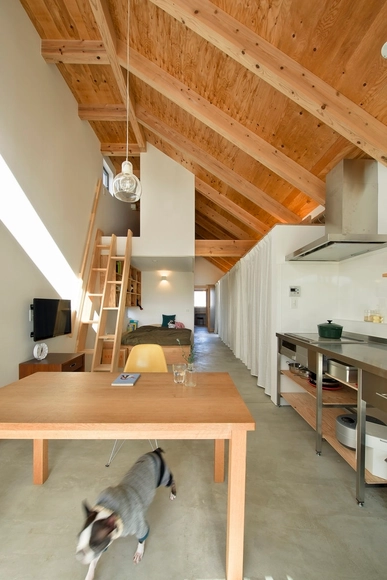
Ever since the Industrial Revolution and the introduction of mass production, the ownership and use of simple products and services like flush toilets with running water, electricity, heating, and cooling are seen as human rights in many areas of the world. With the majority of homes and residential projects being individually designed and built to order – therefore without the speed and cost advantages of mass production – an underperforming housing construction sector means many people – even in the world’s richest countries – are being denied one of the most basic human rights, having somewhere to call home.
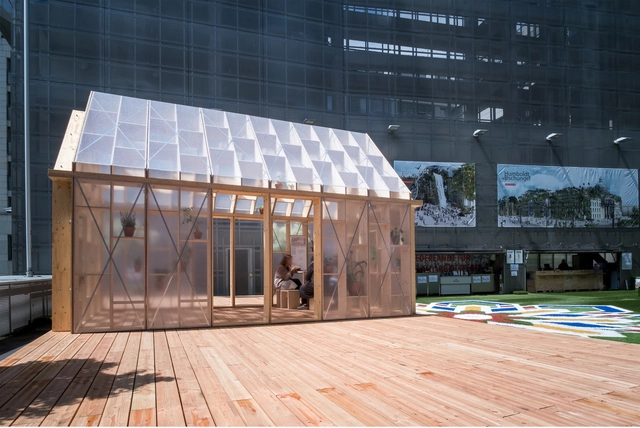
The UNHCR (UN Refugee Agency) states that there were over 100 million forcibly displaced people worldwide in 2023 – a figure that has tripled over the last 10 years. For host countries, finding safe, sustainable housing solutions for those in need, both in the short- and the long-term, is an ongoing and dramatically worsening challenge.
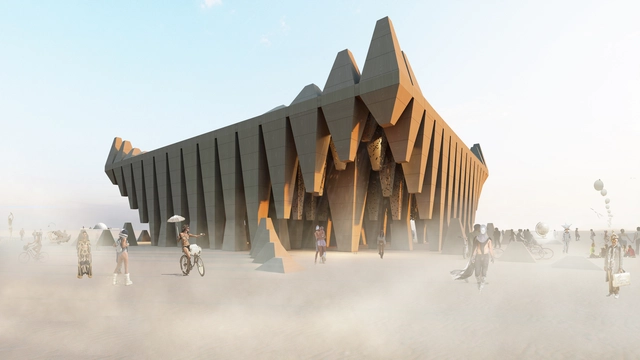
The Sacred Grove Burning Man Temple / DIALOG. Image Courtesy of DIALOG
In the world of architecture, competitions serve as catalysts for innovation and creativity. By promoting the architectural community to contemplate a given theme and intervene in well-defined spaces, they provide some of the best platforms for experimentation, allowing architects and designers to explore new concepts, challenge conventions, and address pressing societal needs, all while comparing the wide variety of emerging solutions. This week's curated roundup gathers examples of worldwide competition proposals submitted by the ArchDaily Community.
The selected projects vary in size and program, from world-renowned competitions such as those hosted for the national pavilions at the next World Expo in Osaka, or the Temple at the center of Black Rock City at Burning Man, to local interventions that highlight unique spaces such as the creative reimagining of a popular market space in the historic center of Sibiu, Romania, or the subtle presence of a villa in the Mediterranean wilderness.
Spanning continents and cultures, architecture-focused events serve as platforms for the gathering of diverse groups of professionals to share innovations and embark on dialogues regarding some of the most pressing matters faced by our profession. Embodying the spirit of collaboration, highlighting local cultures and practices, and fostering open debates, this year’s list of events covers a diverse range of biennales, forums, city-wide celebrations, international fairs, and awards.
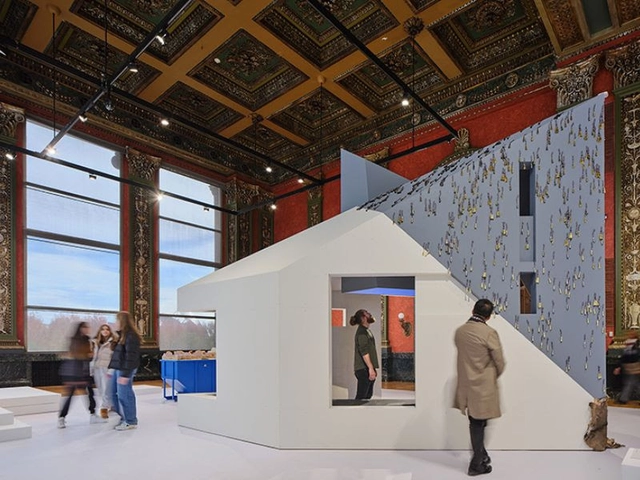
Inaugurated on September 21st, 2023, The Chicago Architecture Biennial is a city-wide festival that will continue until the end of the year. Titled “This is a Rehearsal,” the event is set up as a love letter to Chicago, activating ongoing dialogue around and in the city. One month after the biennial started, events are still ongoing, with open houses, theater performances, and virtual conferences happening throughout this week.
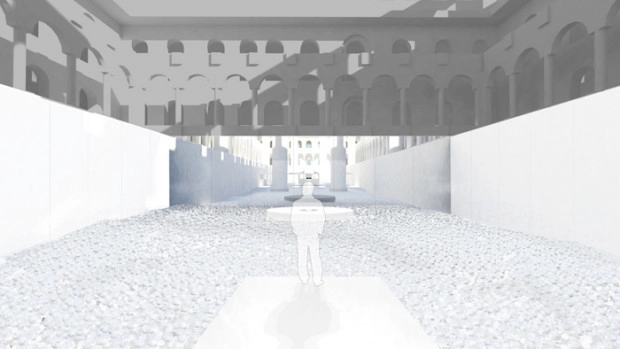
In partnership with Brooklyn-based Snarkitecture, the National Building Museum (NBM) in Washington, D.C. aims to once again create an interactive architectural exhibit as a part of its “Summer Block Party” programming. While last year’s exhibit included a life-sized maze by BIG, this summer, the museum will host a 10,000 square foot enclosure in its Great Hall called the BEACH.
Courtesy of Michael Van Valkenburgh Associates, Inc.
Chicago is set to be the next U.S. city to park-ify on one of its abandoned rail-lines. First proposed back in 1997, the 2.7 mile, 13-acre Bloomingdale Trail and Park is proposed for a stretch of abandoned railway trestle dating from 1910, which has been lying unused since the turn of the century. And, even though it is already being compared to New-York'sHigh Line, the planners are adamant that the park will be an entirely different animal to its New York cousin.
Read more about Chicago's unique proposal after the break...