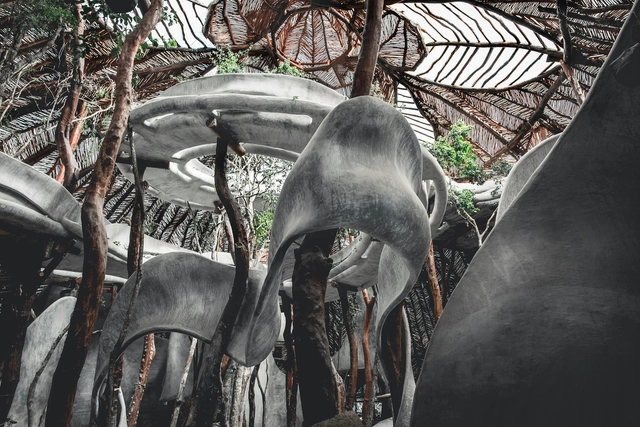
One of the most practical and functional spaces of any residential project is the kitchen. Its artificial surfaces – be it countertops, kitchen benches, or coverings – contain most of the space's equipment. Thus, it’s essential to build kitchens with the most resistant and hygienic materials. Aside from these requirements, it's also important to pay attention to aesthetics and profitability, while adapting the space to the dynamics of each family.
Fellow architects, can we talk? This is gonna hurt, but it needs saying. Were I a poet, I’d write, The end is nigh, and we are why. I’m no bard, though, so I’ll put it this way: Most of us suspect anthropogenic climate change will lead to civilization’s end. Some architects deny the science (“The climate is always changing!”), while others ignore the obvious (denial is a good coping mechanism), but buried within the folds of all angst-addled designer brains lies the fear that today’s toddlers could be the last of us.
I’ll pause here to let the weight of that thought depress you.
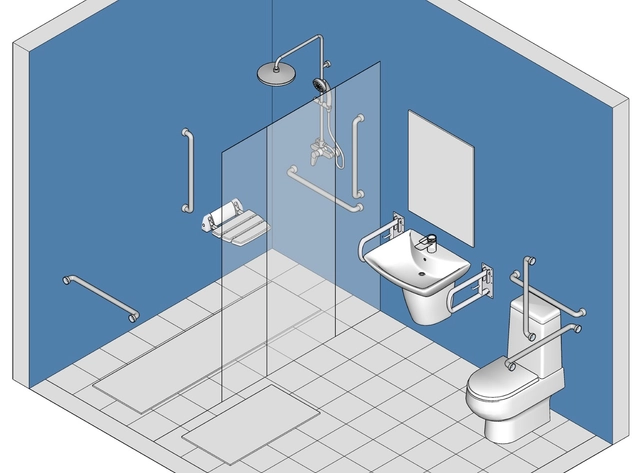
There exist frequent reports of toilet accidents, as they are often located in tight and slippery places. Although no one is immune to a slip after bathing, it is the elderly who suffer most from falls, and can often suffer serious injuries, sequelae, and functional limitations. Due to the natural reduction of reflexes and muscle mass, the higher the age group, the more prone to falls we become.
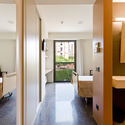
To provide more comfortable living conditions as users grow older, the environment must adapt to the new physical capabilities of its occupants. Making toilets safer is critical to reducing the risk of accidents and decreasing response time in the event of a fall. Here are some things to keep in mind when designing toilets for older people:
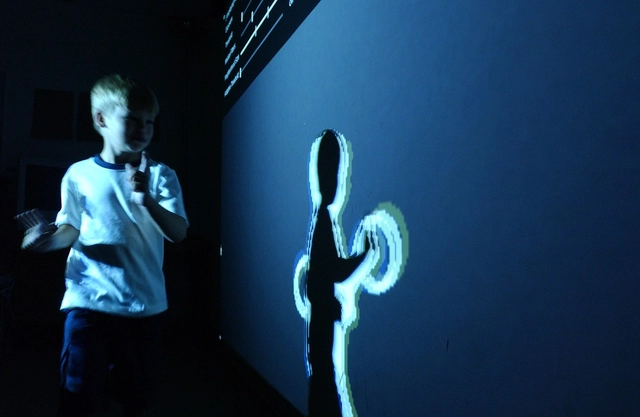
What happens when the sensor-imbued city acquires the ability to see – almost as if it had eyes? Ahead of the 2019 Shenzhen Biennale of Urbanism\Architecture (UABB), titled "Urban Interactions," ArchDaily is working with the curators of the "Eyes of the City" section at the Biennial to stimulate a discussion on how new technologies – and Artificial Intelligence in particular – might impact architecture and urban life. Hereyou can read the “Eyes of the City” curatorial statement by Carlo Ratti, the Politecnico di Torino and SCUT.
The human body, at least in terms of anthropomorphic ideals, was in the centre of western architectural debates from Greco-Roman times up to the Renaissance. Although the very concept of the body didn't come as explicit in traditional architecture writing in the east, the notion that the body (or, the envelope of the soul) connects the mind and the physical world was constantly revisited and reinterpreted.
https://www.archdaily.com/924279/thoughts-on-cities-and-the-human-body-eyes-and-ears-of-the-city-zhang-brian-li-for-the-shenzhen-biennale-uabb-2019ZHANG, (Brian) Li
There are three words that have long-awaited to be put together: The Siza Pavilion. Their story begins with top furniture brand CAMERICH and the Aedes Architecture Forum’s search for a visionary in architecture and product design. The 1992 Pritzker Prize Laureate, Álvaro Siza, was later selected and commissioned a pavilion for China’s International Furniture Fair (CIFF 2019).
Hello Wood, as you may already know, is an annual festival, which gathers hundreds of people in a Hungarian village for a week. Divided into groups, the architects and students carefully selected by the team of organizers, build installations made of wood with their bare hands. The outcome is amazing — dozens of beautiful structures rise up there each year adding more and more originality to the site.
The words cannot express the vibe you get at the Hello Wood Project Village — all the "beautiful people", as they call each other, are one big family. There is no competition, the teams help each other to make sure all projects are completed before the deadline, when they all march to the neighboring village and celebrate the week spent together.
But what is the idea behind this festival? What is the secret key to building a strong community of professionals and students in such a short period of time? Watch our interview with Hello Wood team to learn how they answer these questions.
Many people's way of working has changed, but most offices remain the same.
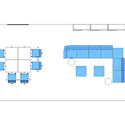
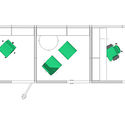
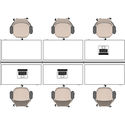
However, innovating doesn't necessarily mean breaking down every wall and creating a play space; the design of an office must take into account the needs and details of each type of work separately. For every function, there are better and worse ways to organize spaces, and some configurations work better for certain activities but not for others. The most important consideration is that the workplace allows interactions while providing spaces for concentration and focus.
The way we approach work has changed, and that is undeniable. Our profession no longer defines us as much as past generations, and new forms of work have been incorporated into everyday life. While technology has revolutionized our ability to perform a variety of daily tasks, many professions have disappeared, some will probably not last much longer and, while others were created.
As the trend of migration from rural to urban areas continues, it is estimated that by 2050, one billion people with disabilities will live in cities. Many of these urban centers, with cores dating back hundreds or even thousands of years, are currently ill-equipped to respond to this demand. There is, therefore, an immediate challenge for architects, urban planners, and city officials to address the inaccessibility of historic cities, from uneven cobblestones to narrow, stepped alleys, creating an urban realm that offers universal mobility without detracting from their historic charm.
https://www.archdaily.com/923725/how-ancient-cities-become-accessible-citiesNiall Patrick Walsh
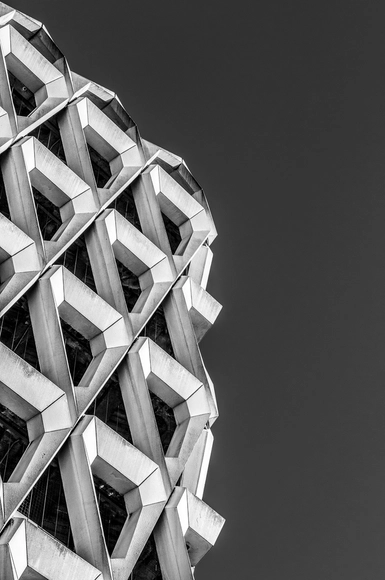
Rarely does one see brutalist architecture in the city of London. Primarily, these buildings were perceived as rebellious and grotesque, only to become the "go-to" style for commercial and governmental buildings after the Second World War. Nowadays, with the real estate market demands and dominance of contemporary architecture, these monumental grey structures are gradually fading away.
Santiago-based architect and photographer Grégoire Dorthe developed the passion of photography during his military service, when he realized that through his images, he is able to freeze moments and preserve what will be lost with time. In his photographic series titled "Brutal London", the Swiss photographer captures the raw forms and graphic qualities of the city's brutalist architecture, before these buildings meet their end.
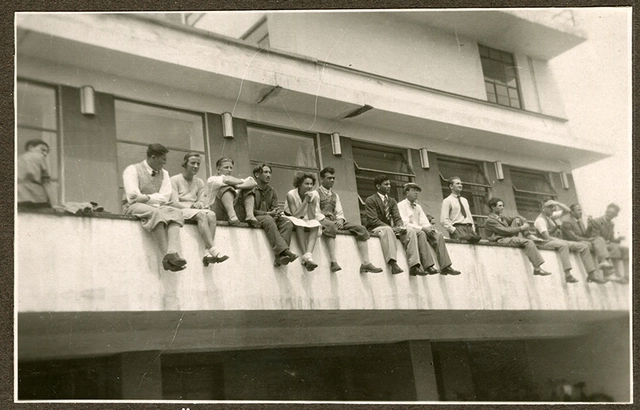
Students on the balustrade of the canteen terrace, around 1931 (photographer unknown). Image Courtesy of Stiftung Bauhaus Dessau
Women are imperative members of the design community, creating innovative and inspiring work in the fields of architecture, design, and urban planning. However, even with the rise of the women's movement, their contributions are still being questioned, compared, or taken for granted.
Metropolis Magazine looked back at the history of feminism in architecture, shedding the light on the times when the advocates witnessed unprecedented progress, and times when they lost their advantage.
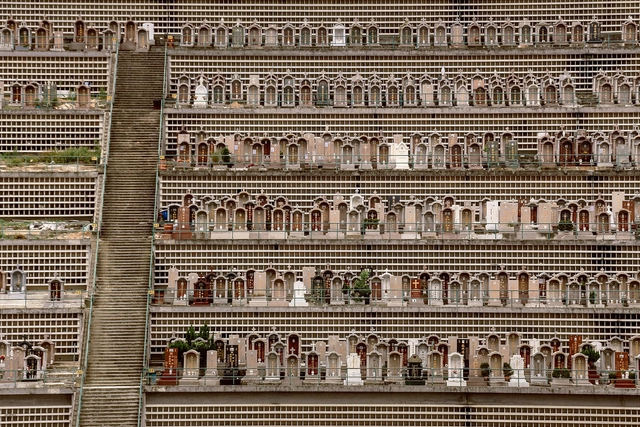
Hong Kong is considered to have one of the most exceptional skylines and urban schemes in the world: contemporary skyscrapers stand amidst the mountains and harbour, ancient houses nestled between futuristic structures, neon lights, landscapes... But among Hong Kong's numerous remarkable architectures, its spatial typology of death is like no other.
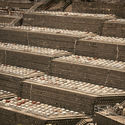
Over the course of five years, RIBA-nominated architectural photographerFinbarr Fallon captured the hyper-dense graveyards of Hong Kong, showcasing the sublime geometry of its mountainside burials in a series titled "Dead Space".
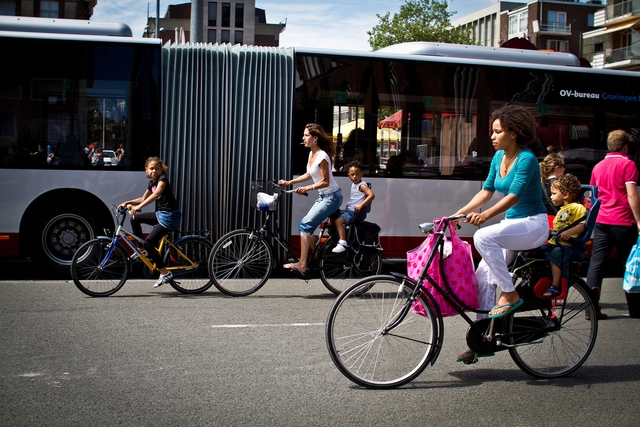
Being able to move around cities is a basic requirement for the development of most human activities. Yet daily trips between home and work, study, leisure, and other daily commitments are not always done under the most comfortable conditions, whether it be because of crowded public transportation or unexpected traffic jams. Urban mobility is a hotly debated topic, from informal conversation circles to technical and scientific seminars. It's hard to find someone who doesn't have an opinion on the subject or some miraculous solution to the problems in their city or region. In fact, we have already posted several articles addressing this issue on this site, from utopian proposals to questions related to the daily lives of most of the population.
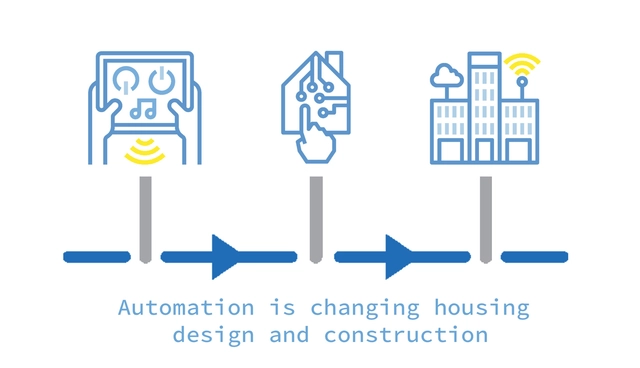
Throughout the past year, the concepts of Smart Homes (+160% YoY) and Domotics (+450% YoY) have been gaining traction as they define the automation and connectivity between devices found within homes, and which constitute the basic units of the growing Smart Cities concept.
Open More Doors is a section by ArchDaily and the MINI Clubman that takes you behind the scenes of the world’s most innovative offices through exciting video interviews and an exclusive photo gallery featuring each studio’s workspace.
This month, we talked with Italian architecture firm Supervoid to discuss their design strategies and how they helped develop the office's interior space.
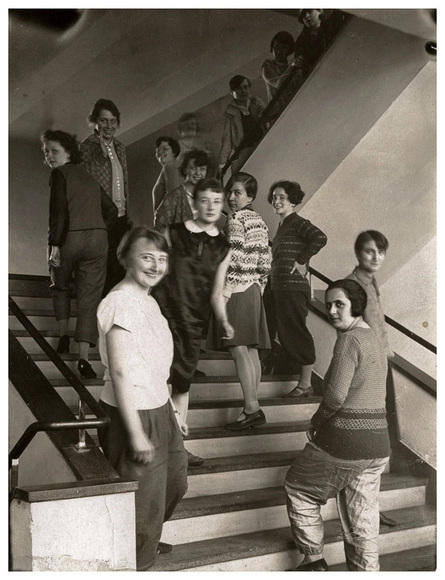
Weavers on the Bauhaus staircase, 1927. From top to bottom: Gunta Stölzl (left), Ljuba Monastirskaja (right), Grete Reichardt (left), Otti Berger, (right), Elisabeth Müller (light patterned sweater), Rosa Berger (dark sweater), Lis Beyer-Volger (center, white collar), Lena Meyer-Bergner (left), Ruth Hollós (far right) and Elisabeth Oestreicher.. ImagePhotograph by T. Lux Feininger; collection of the Bauhaus-Archiv Berlin
The Bauhaus was founded on the promise of gender equality, but women Bauhauslers had to fight for recognition. A new book recounts the achievements and talents of 45 Bauhaus women.
After the end of World War I, a spirit of optimism and a euphoric mood prevailed in Germany. Thanks to a new republican government and women’s suffrage, the war-torn nation was experiencing a radical new beginning.
As part of that convention-breaking wave, in 1919 German architect Walter Gropius assumed leadership of what would become the legendary Bauhaus. Initially, he declared that there would be “absolute equality” among male and female students.
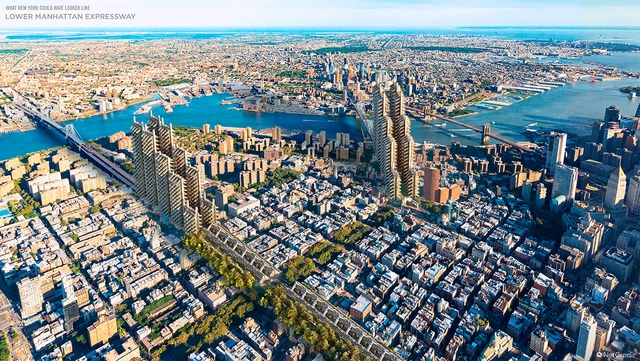
The United States of America has provided enormous opportunities to develop some of the most iconic buildings in the history of architecture, leaving the mark of important architects in urban, suburban, and rural areas around the country. However, ambitious ideas often come with a high price that cannot always be paid, causing some of the most exciting building, bridge, and tower designs to never evolve past archived plans.
Design:ED Podcast is an inside look into the field of architecture told from the perspective of individuals that are leading the industry. This motivational series grants unique insight into the making of a successful design career, from humble beginnings to worldwide recognition. Every week, featured guests share their personal highs and lows on their journey to success, that is sure to inspire audiences at all levels of the industry. Listening to their stories will provide a rare blueprint for anyone seeking to advance their career, and elevate their work to the next level.
In this episode ofDesign:ED Podcast, host Aaron Prinz speaks with Kengo Kuma about why he chose to be an architect, what difficulties architects face when starting their own office, and how has cross-cultural education influenced his work.
Major cities are facing major crises. The United Nations estimates that by 2050, almost one billion people with disabilities will live in cities, representing 15% of total city dwellers. With urban landscapes awash with inaccessible subways, shops, and bathrooms, the UN has declared that poor accessibility represents a major challenge for cities. At the same time, most cities around the world are struggling to provide safe, respectable, affordable housing for their citizens, with rent accounting for more than 50% of some incomes. The World Economic Forum recently warned that “a world in which only a few can afford housing is not sustainable.”
https://www.archdaily.com/923441/10-technologies-for-accessible-affordable-citiesNiall Patrick Walsh
Air-conditioning isn’t just expensive; it’s also terrible for the environment. Accounting for 10% of global energy consumption today, space cooling in 2016 alone was responsible for 1045 metric tons of CO2 emissions. This number is only expected to increase, with the International Energy Agency estimating that cooling will reach 37% of the world’s total energy demand by 2050.
For the past decade, Nigeria has lived under the crushing specter of attacks by the terrorist group Boko Haram. From Maiduguri to Abuja, bombs have exploded intermittently, killing hundreds, destroying thousands of homes, and crippling public infrastructure. In recent years, the Nigerian military has liberated several captive communities and begun reconstruction work in a number of them. Sadly, the aftereffects of these violent convulsions have profoundly reshaped our cities. The attacks utterly upended lives: shattering basic civic amenities, disrupting livelihoods, and forcing residents to rebuild from scratch while still grieving for family and friends.
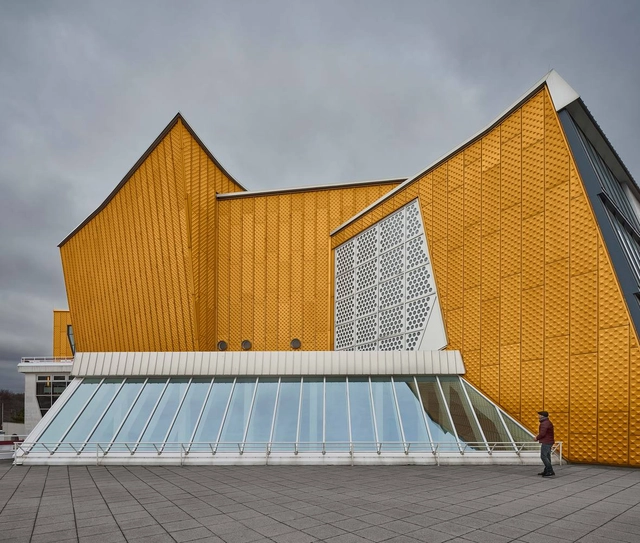
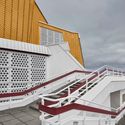
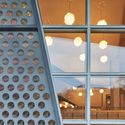
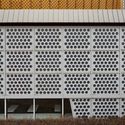
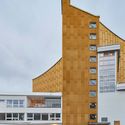
The Berlin Philharmonic by Hans Scharoun is one of the most prominent mid-20th century structures in the German city. The expressionist-style building with its bright-colored facade is the first of its kind by the German architect, as well as his most famous project to date. Scharoun’s design interprets rhythm and music as architecture, both conceptually and physically.
Architectural photographer Bahaa Ghoussainy unfolds Scharoun’s unique architecture by highlighting the concert hall’s dramatic angular geometry, vibrant yellow-hued facade, and play of lines and forms.
Concrete, a material commonly used in the construction industry, is made of a binder combined with aggregates (or gravels), water, and certain additives. Its origins reach back as far as Ancient Egypt, when the construction of large structures created the need for a new kind of material: one which was liquid, featured properties of natural stones, could be molded, and communicated a sense of nobility and grandeur.











.jpg?1567193500&format=webp&width=640&height=580)


.jpg?1567178154&format=webp&width=640&height=580)







_0262.jpg?1566906640 "© Laurian Ghinitoiu")
_0153.jpg?1566907296 "© Laurian Ghinitoiu")
_0268.jpg?1566907775 "© Laurian Ghinitoiu")
_0247.jpg?1566906787 "© Laurian Ghinitoiu")
_0247.jpg?1566906787)