7N Architects have revealed their designs for the 8.2 acre Fountainbridge site, one of the largest city centre developments in Edinburgh, where they plan 350 homes, a range of workspaces, a 130 room hotel, canalside retail and café space and two arts buildings. The intention for the former industrial zone is to offer "enhanced canalside features, open space and paths for both pedestrian and cycle use."
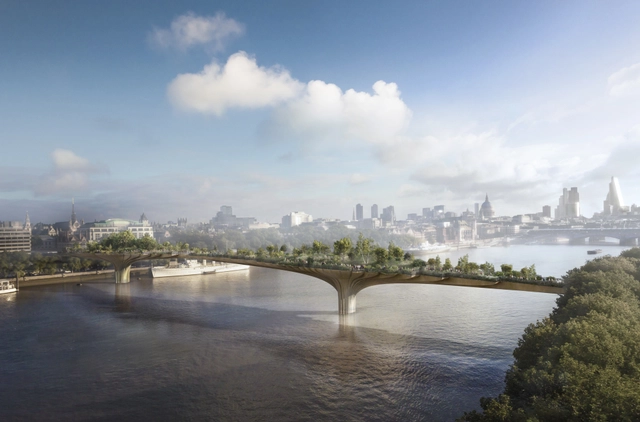
Heatherwick's trademark ingenuity, demonstrated in previous projects such as the London Garden Bridge proposal, will be needed for the difficult site in Leeds. Image Courtesy of Arup
The Maggie's cancer charity has announced Thomas Heatherwick as the latest high-profile designer who will contribute to the Maggie's Centre program, with a site at the new Bexley Wing of St James's University Hospital in Leeds. The new centre will be the first Maggie's in Yorkshire, with Heatherwick joining the likes of Norman Foster, Richard Rogers, Zaha Hadid, Frank Gehry and Steven Holl in the list of Maggie's Centre designers.
The building itself will be designed by MAD Architects, chosen "because of its innovative approach to design and the firm’s philosophy of connecting urban spaces to natural landscapes." In this case, that landscape will be designed by Studio Gang, who will also add a bridge to Northerly Island, an area which they have worked on turning into an ecologically diverse urban park.
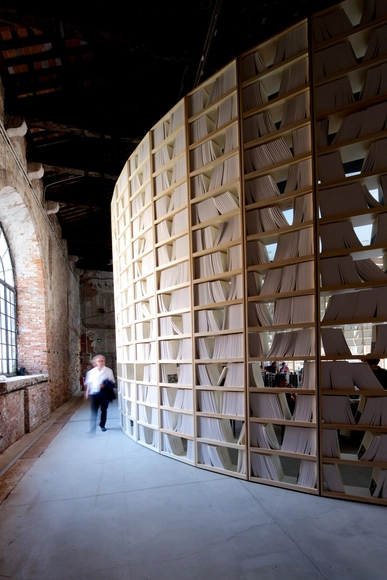
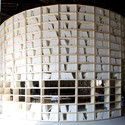
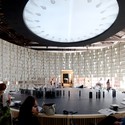
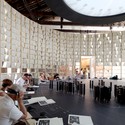
In Bahrain's pavilion for the 2014 Venice Biennale, the country uses its position on the eastern edge of the pan-Arabic region to investigate modernity's impact on the Arab world: first as a colonial imposition, then as a local attempt to reconcile global and Arabic culture, then finally as an acceptance of neoliberal ideals.
The exhibition collects 100 projects from across the Arabic states, with the intention of consolidating and preserving knowledge of this critical period. The installation itself, a giant bookcase, is the manifestation of this research, and will later be made available at the Arab Center for Architecture.
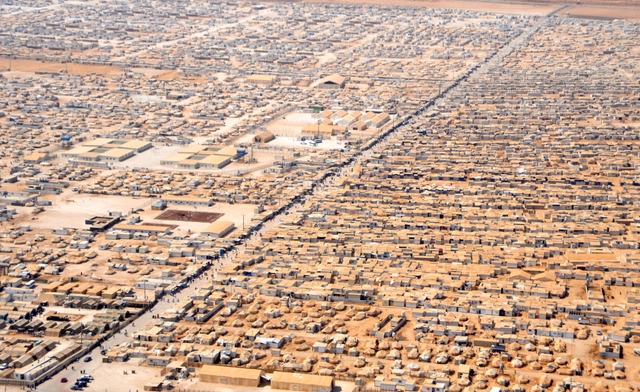
Aerial View of Zaatari Refugee Camp. Image Courtesy of Wikimedia
As the Syrian civil war continues to rage, more and more Syrian citizens are emigrating across the border to refugee camps in Jordan. While these camps were intended to be temporary, the sheer number of people they support and the uncertainty of when the Syrian crisis will end has leant them a sense of permanence. This article from the New York Times takes a look at how Syrian refugees are prompting urban development and what this means for the future of refugee camp design.
Japanese firm Kotaro Horiuchi Architecture's "Fusionner 1.0" was on display this past March at the White Gallery Cube in Nagoya, Aichi, Japan. The installation consisted of two horizontal floating membranes stretched across a simple rectilinear room, dividing the space vertically into three sections.
Led by Madhav Raman and Vaibhav Dimri, Anagram Architects is a growing studio that works in architecture, installation, urban design and material innovation. The firm is often experimental in nature, and each project is developed with a distinct, independent framework. Beyond architecture, Anagram Architects has also designed objects and installations with a strong, cohesive sense of material, detail and execution. Indian Architect & Builder’s interview with the founders, after the break…
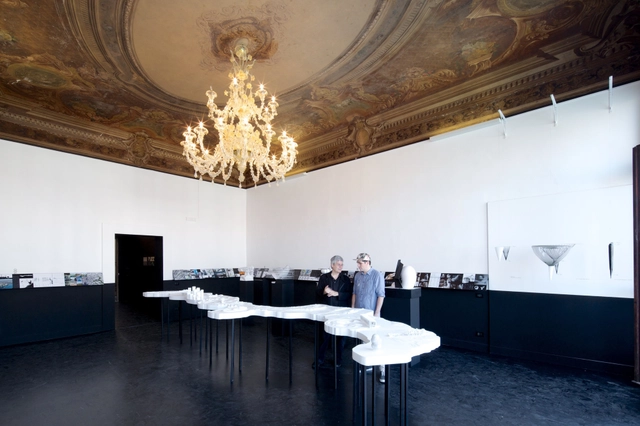
The much anticipatedTime Space Existence collateral event at Palazzo Bembo and Palazzo Mora for the 2014 Venice Architecture Biennale brought together a diverse group of 100 architects from six continents in an "extraordinary combination." Summoned by the Dutch non-profit Global Arts Affairs Foundation, the exhibitions the architects were asked to produce documents current developments and thoughts in architecture, highlighting fundamental questions by discussing the philosophical concepts of Time, Space and Existence. Featuring well established architects next to lesser known practices, they all share a "dedication to architecture in the broadest sense of their profession."
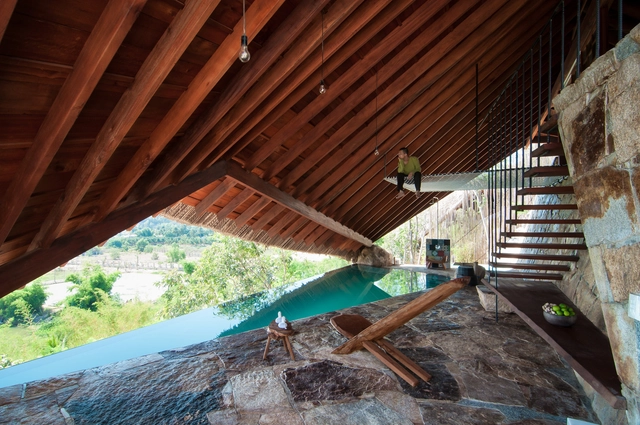
The World Architecture Festival (WAF) has announced the shortlist for its first Wood Excellence award, which will honor a project where wood is an integral part of the design. Out of over 40 projects considered, WAF has selected eight for the shortlist, including a21studio’s “The Tent” and “Salvaged Ring,” as well as DSDHA’s “Alex Monroe Studio” and the University of Hong Kong’s “The Pinch.”
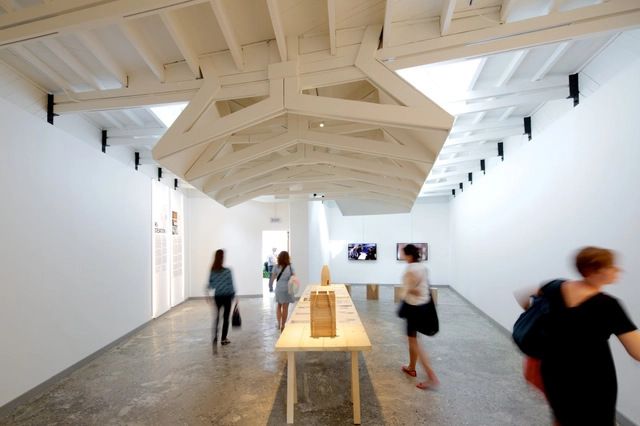
Re-Creation is a two-part installation based on a concept by Anssi Lassila. One part of the installation was constructed by a Finnish master carpenter and his team, and the other by a Chinese team. Together the two parts of the installation strike up a subtle and complex dialogue between the architects and local builders.
Presented by the pavilion designed by Alvar Aalto in 1956, the installation "takes a stand on our relationship with the modern legacy and its tradition of international dialogue, and represents a quintessential product of topical international dialogue while at the same time offering its own unique interpretation of the dynamic between tradition and modernity." See images of the pavilion and enjoy a statement from the curators after the break.
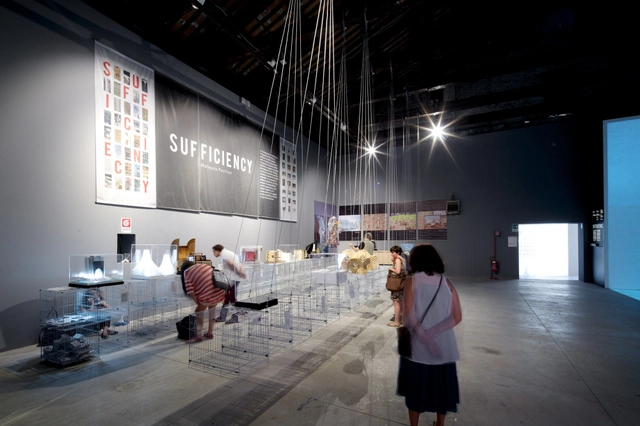
The Malaysia Pavilion at the 2014 Venice Biennale focuses on the idea of sufficiency, and its role in creating sustainable and modest architecture.
In a statement, one of the Pavilion curators, Lim Teng Ngiom, writes that “while sufficiency suggests a modest but adequate scale of living, it can be reduced to only the necessity required for survival extended on a personal or collective autonomy. On the precept of sustainability it can be measured by one’s carbon footprint, or in construction it can suggest minimum building footprint or optimum structure.”
To represent the idea of sufficiency, the curators chose to display works on collapsible pet cages, which have "just enough space for existence." Several of the pet cages are clamped together to form a suspended beam, creating a "fundamental component of architecture." Additional works are displayed on pet cages that are sitting on the floor.
Enjoy photos from the Pavilion and a statement from the curators after the break…
Mirroring the Serpentine Galleries of London, the Naomi Milgrom Foundation has announced its own yearly pavilion commission for the city of Melbourne. Sited in the Queen Victoria Memorial Gardens, the premier "MPavilion" will be designed by Sean Godsell, opening October 6th of this year. The pavilion will host a variety of community events, including art installations and performances, over a four month period. It remains to be seen whether the MPavilion will have a lasting impact on the architectural culture of the city, as some critics have pointed out. To learn more about this now annual commission, visit this article from infolink.
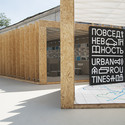
Over the course of nine months, graduate students at the Strelka Institute studied the urban landscape of Moscow and the daily routines of its inhabitants, focusing "on new, little-noticed, and as-yet unresolved contradictions." The main goal of the projects was to come up with solutions that could be applied in practice.
The research projects, collectively entitled "Urban Routines," were presented at the end of this past June at the graduate show. Program director David Erixon said that while the theme might seem naive, "when you start looking at seemingly trivial things in a new way they are not so trivial anymore." For details about the individual research projects - covering Cars, Retail, Dwelling, Offices, and Links - keep reading after the break.
The results of the Royal Institute of British Architects (RIBA) Future Trends Survey for June show that the Workload Index among UK practices increased slightly to +34 (from +33 in May) with confidence levels amongst RIBA practices about the level of future workloads remaining "very strong and widespread across the whole of the UK". Whereas last month’s survey showed Wales and the West with the brightest outlook, this month's survey saw Scotland top the index with a balance figure of +50, the East Midlands and East Anglia tailing closely behind with a figure of +48. Workload forecasts from practices of all sizes are optimistically reporting positive balance figures.
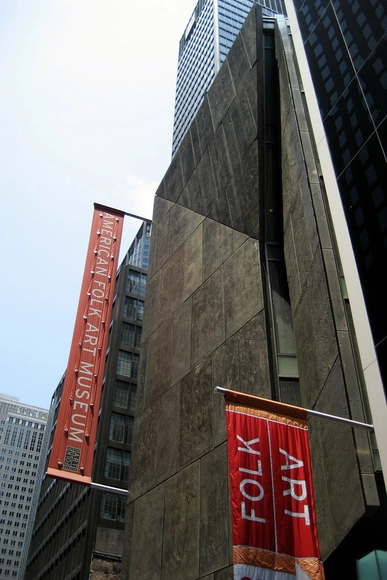
Tod Williams and Billie Tsien have been awarded the National Medal for Arts by the National Endowment for the Arts. The duo, known for projects such as the Barnes Foundation and for the controversy surrounding the demolition of their 2001 American Folk Art Museum last year, will be rewarded for their "deliberate and inspired designs" as well as their services in teaching. The medals will be awarded to them by President Obama in a ceremony on July 28th. Also receiving a medal will be Johnpaul Jones of Seattle firm Jones & Jones, who will be the first Architect to receive the National Humanities Medal in the Award's 17-year history. Find out more about the awards at World-Architects.
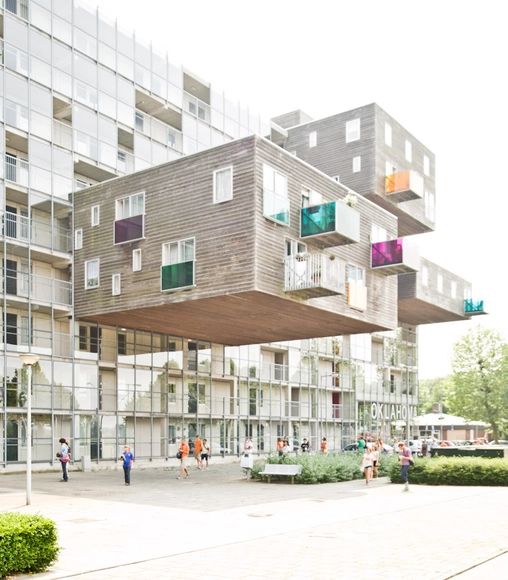
Dutch architect Winy Maas has been selected as the curator for the Strelka Institute’s 2014-2015 academic year. One of the co-founders of Rotterdam-based firm MVRDV, Maas also lectures and teaches all over the world, most recently serving as a visiting professor of architectural design at the Massachusetts Institute of Technology and as a professor of architecture and urban design at Delft University of Technology.
This time-lapse video, entitled "Above LA," is Chris Pritchard's love letter to Los Angeles. Filmed over the course of two years, Pritchard sought out locations to showcase the city in a way people rarely get to see – from above. Some of the views were easy to seek out, while others involved some exploratory hiking and trespassing. He encourages "everyone - lifelong Angelenos, transplants, visitors - to hit the trails, drive the mountain roads, find a reason to get on top of a high-rise. From the basin to the valley, this city offers so many opportunities to rise above and look down. Never stop exploring."
Germany's contribution to the 2014 Venice Architecture Biennale scrutinizes the architecture of representation, its crisis, and potential cessation. Aside from the universal ambition of modernism to break with the past, Germany has undergone a number of decisive political and societal breaks during the last hundred years. Through the question of how the nation "(re)builds and represents itself through architecture, we are able to discuss the friction between national identity and architecture expression—however, architecture is not only a mirror to ideology, but a constituting reality and societal context."
Talk about Modernist Japanese architecture, and you can hardly fail to bring up Tokyo's Hotel Okura. Built in 1962 under the design direction of Yoshiro Taniguchi, Hideo Kosaka, Shiko Munakata, and Kenkichi Tomimoto, the hotel has long been a landmark not only for the city, but for Japan. Now, however, the hotel's owners have decided that the main building for the hotel will be demolished in September of 2015, with a new hotel taking its place. To learn more - including how to sign the petition for preservation - keep reading after the break.
After years of rebuilding from the devastating earthquake that hit the city in February 2011, the city of Christchurch in New Zealand has announced an open competition to design a memorial to the 185 people that lost their lives in the tragedy. The $3.5 million memorial will be situated in the city center on the banks of the Ōtākaro-Avon River, and is expected to be "a thoughtfully designed space where small groups or individuals can pay respect to those who died," but will also "comfortably fit a crowd of around 2,000 people" to host an annual memorial gathering, as well as other events.
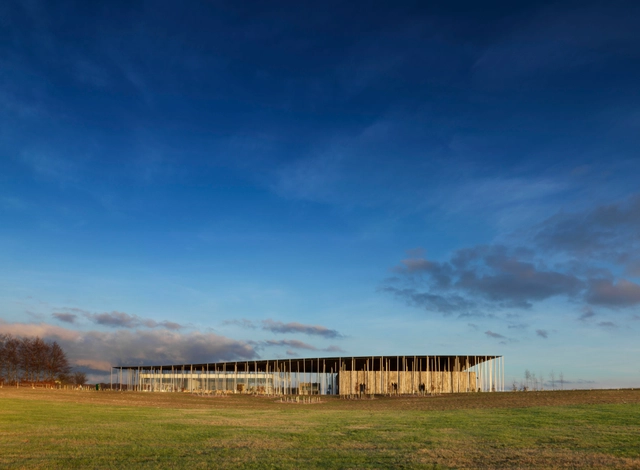
The Australian Institute of Architects' International Area Committee Jury has announced the recipients of its 2014 international awards, given to projects completed by Australian architects overseas. The biggest winners on the night were Denton Corker Marshall, who in addition to winning the Award for Public Architecture with their Stonehenge Visitor Centre also received commendations for public architecture and commercial architecture.
BVN Donovan Hill dominated in the field of interior architecture, scooping both the award and a commendation in the category. Kerry Hill Architects also achieved the same result in the residential category. Read on after the break for the full list of awards and commendations.
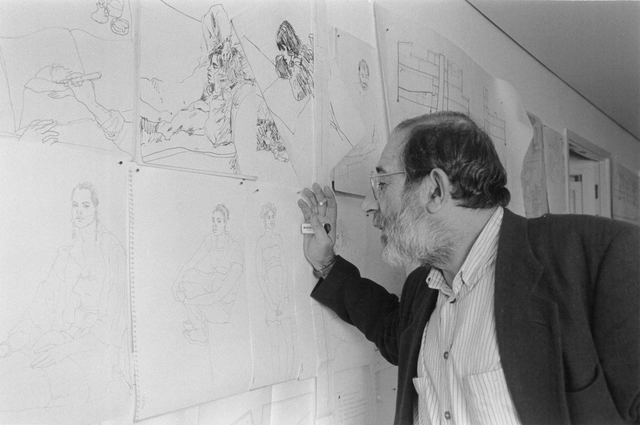
Earlier this week we announced that Portuguese architect Álvaro Siza was considering donating his archive to institutions outside of his home country of Portugal. Finally, after much discussion and speculation, Siza has arrived at a decision.
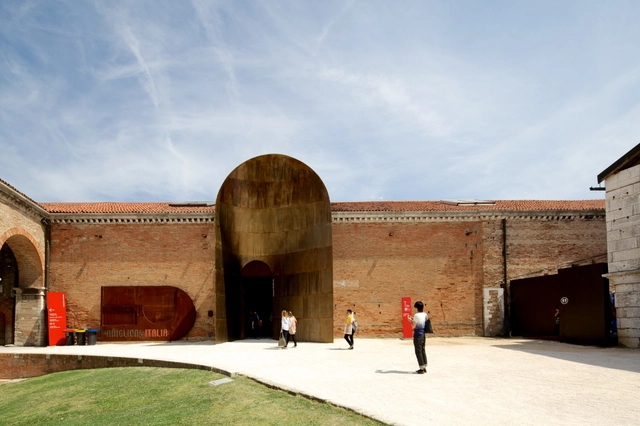
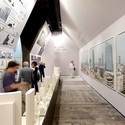
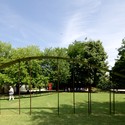
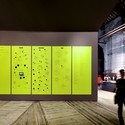
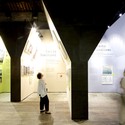
The Italian Pavilion at the 2014 Venice Biennale looks at the country’s architecture through the lens of “grafting,” or the transferring of new ideas onto preexisting realities and structures.
Architect and Pavilion curator Cino Zucchi associates grafting with “the great capacity to interpret and incorporate preceding states through continuous metamorphoses.” He opens and closes the Italian Pavilion with two physical grafts: a large rusted steel arch and a bench sculpture. The first room of the exhibit begins with a study of modernization in Milan, followed by series of collages of contemporary projects in Italy. A video of Italian urban environments concludes the exhibit.
See images of the Pavilion and read a description from the curator after the break.
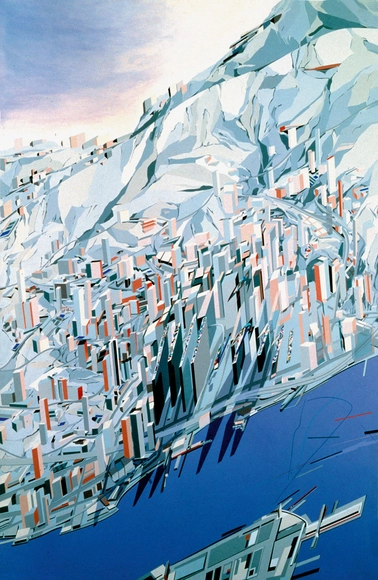
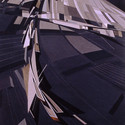
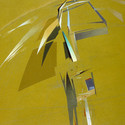
In an article for London's Royal Academy of Arts Magazine entitled Plane Sailing, Zaha Hadid discusses the influence of Russian Suprematist painter Kazimir Malevich on her own design work. In Hadid's early work, such as The Peak Blue Slabs (1982/83), the visual connections to Malevich's strict, regular shapes and lines are evident.











.jpg?1406047165&format=webp&width=640&height=580)