AD Interviews: Alexander Mamut
The construction of the city is something that goes beyond architects and planners. It involves the government, the citizens and the private sector. For the ArchDaily Interview series we have interviewed many architects with very different backgrounds, and we have started to include people outside the field that have played an important role either for our profession or the city.
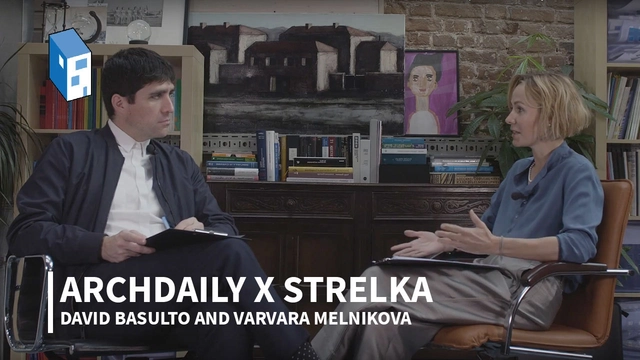
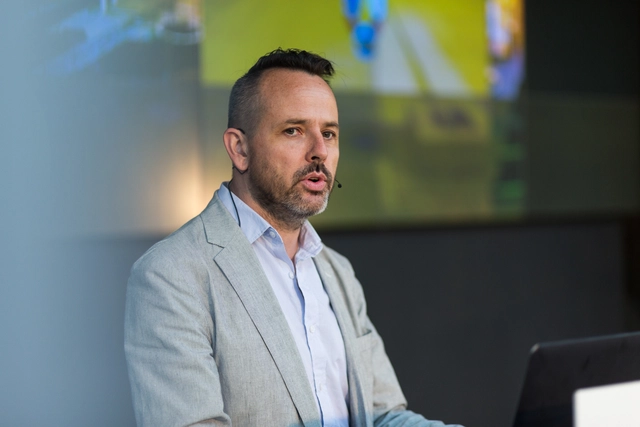
During our last trip to Moscow, we had the opportunity to interview Alexander Mamut, businessman and investor who is involved in projects such as the Pioner Cinema, the Waterstone book chain, the blogging service LiveJournal and other projects related to culture, media and the city. He is also one of the founders of the Strelka Institute, a post graduate school located at the Chocolate Factory in the heart of Moscow and using the city as a laboratory, with an ambitious plan to raise the quality of architectural education in the country.
The founders of Strelka (who also include Sergey Adonyev, Dmitry Likin, Ilya Oskolkov-Tsentsiper and Oleg Shapiro) invited Rem Koolhass to design the curriculum for this new school, who under the AMO research arm prepared the educational programme for Strelka, with a research agenda based on design, energy, preservation, public spaces and thinning. The institute brings together professionals from different disciplines to have a comprehensive approach to city and architecture, from architects to urbanists, writers, designers, scientists, and journalists.
The city of Moscow is facing tremendous challenges, due to the growth and changes it has undergone in the past few years, which will only accelerate as the result of its vibrant economy. The city is expected to double its population in the coming years, and many competitions, including the masterplan for the city’s expansion, are being held with this objective in mind.

In this scenario, architecture education is key in order to form the new generation of professionals that wil face the critical issues of contemporary Russia. And this is why we wanted to include Alexander Mamut, whose passion for the city led him to invest in the city in a particular way, in our interview series. He is a good example of what can be done from the private sector to develop cities with a long-term vision.
During the interview, we discuss with Alexander Mamut the future of Moscow, how education can improve the quality of life of its habitants, the importance of the private sector in the development of cities, and more.
Venice Biennale 2012: Strelka Institute to host discussions on shaping tomorrow’s cities

Russia’s leading creative think tank, Strelka Institute, is hosting a series of discussions with preeminent voices in architecture and urban design in the pre-opening days of the 2012 Venice Architecture Biennale. Inspired by the Biennale’s theme of Common Ground, the conversations will focus on how architecture and design can drive the physical, social and economic regeneration of urban environments. Using Russian cities as a starting point, the talks will explore wider issues in urban design around global metropoles. Featured speakers include OMA’s Reinier de Graaf, Teddy Cruz, Stefano Boeri, and more.
The discussions will take place on August 27 and 28 at the Strelka Palazzo. All events are free to attend, but space is limited. Please email venice@strelka.com to reserve a seat.
Strelka Palazzo Program:
ArchDaily lecture series in Moscow, Russia

After great lectures at the Escola da Cidade in Sao Paulo and the Center for Architecture in New York, this week ArchDaily is heading to Moscow to lecture at three important institutions: The High School of Design (May 31st), the State Museum of Architecture (June 1st) and the Strelka Institute (June 3rd).
More information about the lectures after the break, including links to register for each event.
We look forward to meet and connect with Russian architects and architecture students in Moscow!
Rem Koolhaas’ opening lecture at the Strelka Institute
A year ago we told you about the Strelka Institute, a postgrad school for media, architecture and design in Moscow. The school focuses on a series of themes aimed to reshape Russia’s current role in the world: from the preservation of the urban environment and migration to the future of energy and the role of virtual space.
The curriculum for the first academic year has been developed together with AMO (OMA’s think tank) as a framework for these creative investigations. Research projects will be led by OMA head Rem Koolhaas, AMO director Reinier de Graaf and cultural advisor Michael Schindhelm.
On the opening lecture (video above) Rem Koolhaas explains the program (first 40 minutes), addressing several global issues. Koolhaas’ interest in Russia will now play a vital role in shaping the next generation of architects.
Strelka Institute / OMA + AMO

It was just announced that OMA + AMO will collaborate with Strelka, a postgraduate school for media, architecture and design in Moscow. The new school is launching an educational program where a select group of students will work intensely and innovatively on a series of themes aimed to reshape Russia’s current role in the world. In an attempt to raise the ambition of the creative industries in Russia, the institute will challenge students with a variety of projects. The students will guided by the expertise of both Russian and international creative leaders.
More about the collaboration after the break.