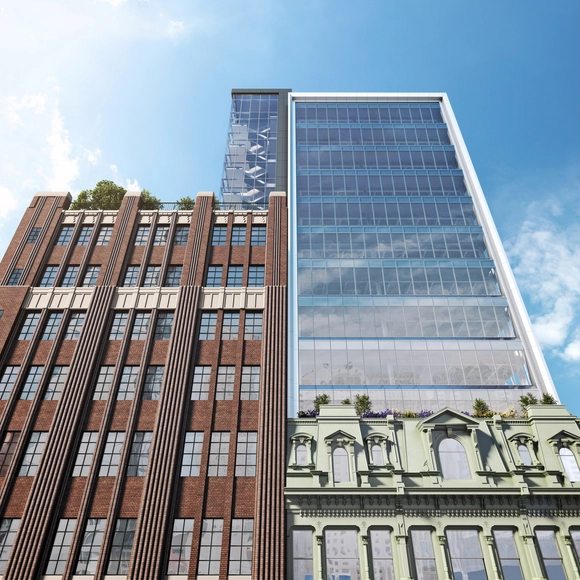
Plans have been announced by Tishman Speyer for "The Wheeler", a glassy new addition above downtown Brooklyn’s iconic Macy’s store on Fulton Street. The design is a collaboration between Shimoda Design Group and Perkins Eastman, and incorporates 10 stories of dynamic office and mixed-use space that will sit atop the existing department store.
Paying homage to the renowned 19th century Brooklyn developer Andrew Wheeler, the new offices will come complete with 16 foot ceiling heights, an acre of combined outdoor terrace gardens and decks, an amenity floor, and 360,000 square feet of rentable space, all while capturing the surrounding views of Lower Manhattan, the Brooklyn Bridge, the Statue of Liberty and New York harbour from its vantage point above the existing architecture.
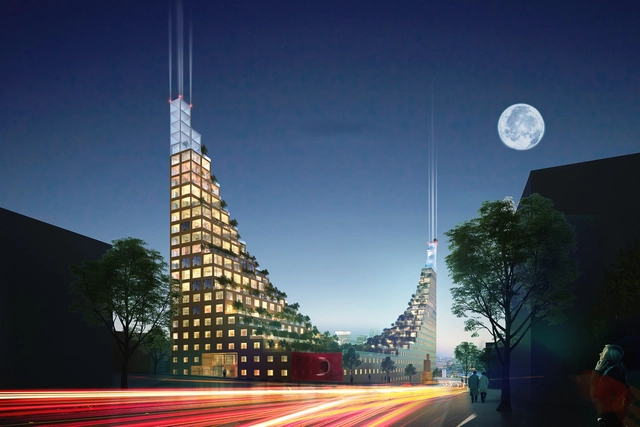
A new housing complex in the form of 500 terraced units has been proposed by London practice Architects of Invention for the city of Birmingham, in response to its growing multicultural population. Drawing inspiration from the ancient Hanging Gardens of Babylon, Garden Hill’s formal composition is that of two staggered 25-storey towers, with private and communal gardens on each level of terraces.
With the project's swooping mass, the residences aim to offer panoramic views of Birmingham, given its central location in the Digbeth area, a 10-minute walk from the city center. Additionally, the staggered towers capture ample daylighting over the course of the day, with the south end benefitting from the morning sun and the north end in the evening.
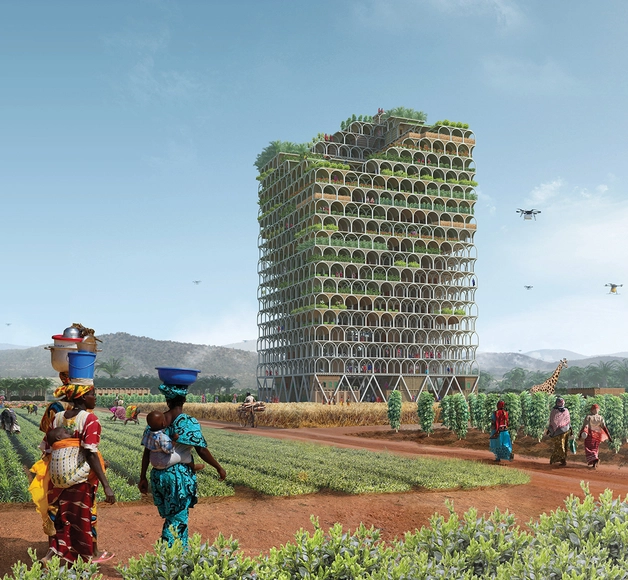
First Place: Mashambas Skyscraper / Pawel Lipiński, Mateusz Frankowski. Image Courtesy of eVolo
eVolo Magazine has announced the winners of its 2017 Skyscraper Competition. Now in its 12th year, the annual award was established to recognize “visionary ideas for building [high-rise] projects that through [the] novel use of technology, materials, programs, aesthetics, and spatial organizations, challenge the way we understand vertical architecture and its relationship with the natural and built environments.”
This year, 3 winners and 22 honorable mentions were selected from a pool of 444 entries. Among this year’s winners are a modular educational center and marketplace for sub-Saharan Africa, a vertical stack of factory and recreational space, villages embedded in mountains and even a skyscraper built within a giant sequoia.
Now, a new pool at Houston’s Market Square Tower is upping the ante even further with a transparent plexiglass wading pool that projects out 10 feet past the end of the building – and 500 feet above the busy street below.
https://www.archdaily.com/868968/this-glass-bottomed-sky-pool-is-suspended-500-feet-from-the-groundAD Editorial Team
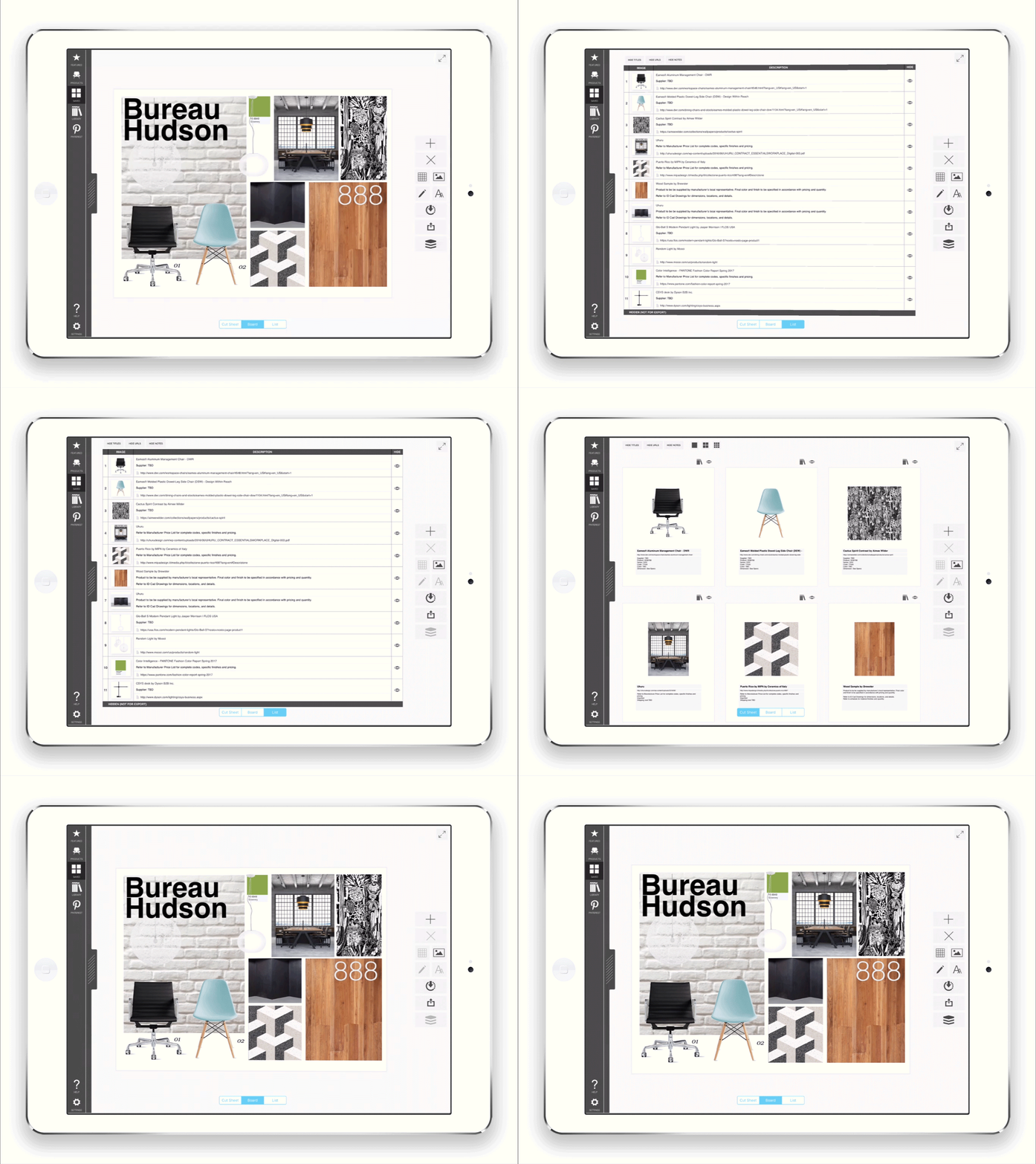
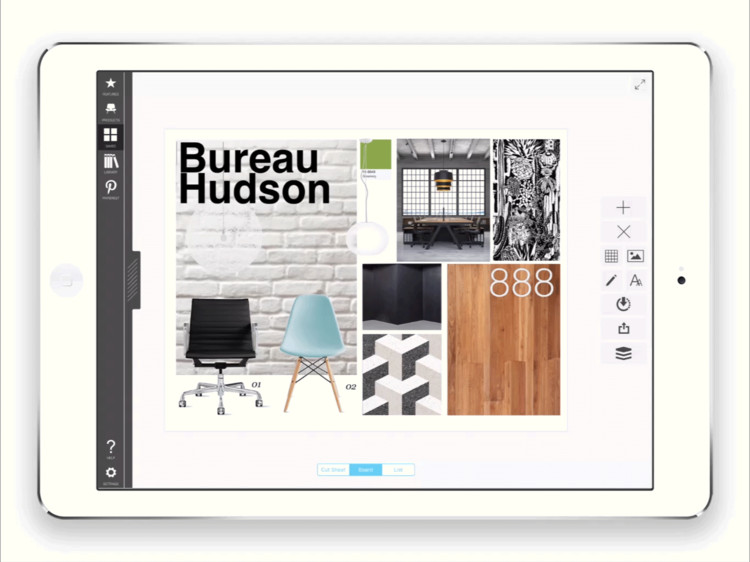
Today, app developer Morpholio has unveiled the newest addition to its collection of architectural aids. Ava, short for Automated Visual Assembly, aims to streamline the interior design process by allowing the user to navigate seamlessly between visually-appealing presentation boards and detailed, editable data spreadsheets.
Ava seeks to reform the status quo for interior design projects, which often involves the separate creation of visual presentation boards for clients, cut sheets and specs for drawing sets, and product lists for purchasing. Ava has been invented to package images and information more intelligently, optimizing beauty, clarity, and ease, and allowing designers to navigate neatly from process, to presentation, to project delivery.
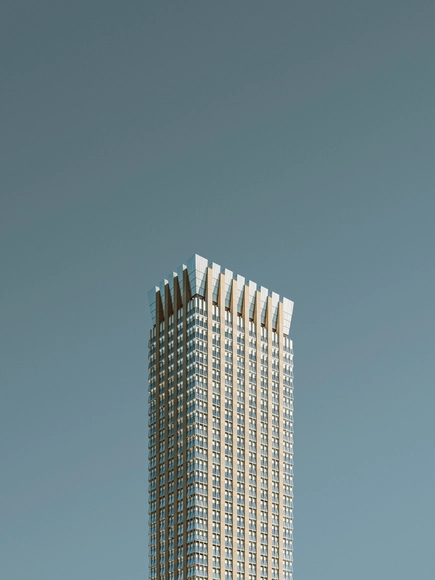
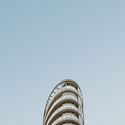
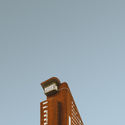
Florian W. Mueller's Singularity series is, in the photographer's own words, "just the building – reduced to the max." These deceptively simple shots of the summits of skyscrapers from around Europe and North America, each set against in infinite gradient of sky, are symbols of architecture's effort to reach ever higher in evermore unique ways. For Mueller, who is based in Cologne, they are an attempt at abstraction. In isolation—and especially when viewed together—they are remarkably revealing as studies of form and façade.
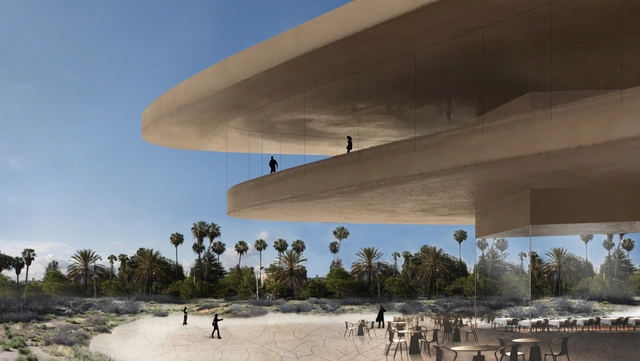
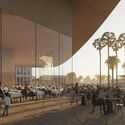
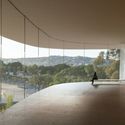
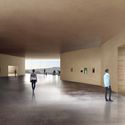
The Los Angeles County Museum of Art (LACMA) has released the newest renderings of their planned Atelier Peter Zumthor-led $600 million renovation, and one thing in particular stands out: the building is no longer black.
While the third major revision to the design sees the building retain the overall shape of its previous iteration, many aspects have changed, including how the floating mass touches the ground and the facade’s new sandy color.
Historical Future: Milan Reborn, Scalo Farini and Valtellina
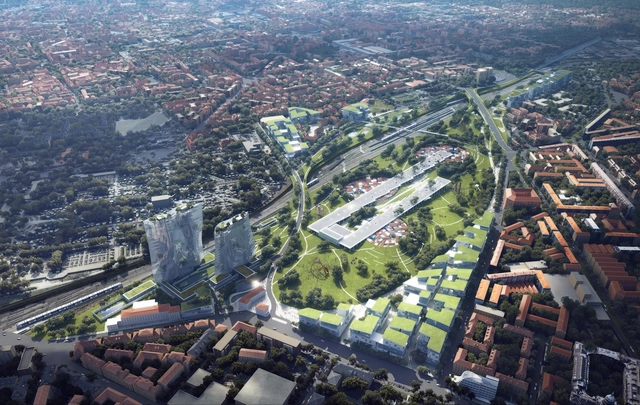
In an presentation at Milan Design Week 2017, MAD Architects has revealed their proposal for the Scali Milano project, which invited five international firms (MAD, Stefano Boeri Architetti, Mecanoo, MIRALLES TAGLIABUE EMBT, and Cino Zucchi Architetti) to design a community-reactivation masterplan aimed at transforming a series of Milan's neglected railyards into "productive social landscapes that establish a harmony between Milan’s citizenry, the larger metropolitan region, and the natural environment."
Titled Historical Future: Milan Reborn, MAD's scheme proposes reorganizing the railyards into a series of interconnected micro-systems that follow five spatial concepts: “City of Connections,” “City of Green,” “City of Living,” “City of Culture,” and “City of Resources.”
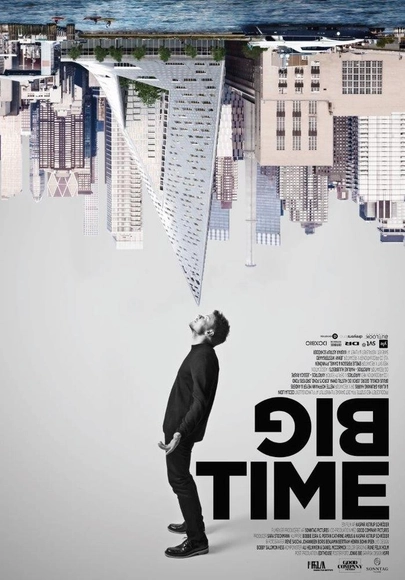
There is something unsettling about this trailer – something uncomfortable. On the surface it’s as optimistic as any other film about Bjarke Ingels, the architectural protege and principal of BIG, of which there have been many. He is incandescently youthful, remarkably young when tallied to the level of his repute and success, and perhaps the last of the world-building, world conquering 'media darlings' of the 20th and 21st Centuries. He is, many would argue, an unstoppable force.
https://www.archdaily.com/868779/watch-the-cryptic-trailer-for-new-bjarke-ingels-documentary-big-timeAD Editorial Team
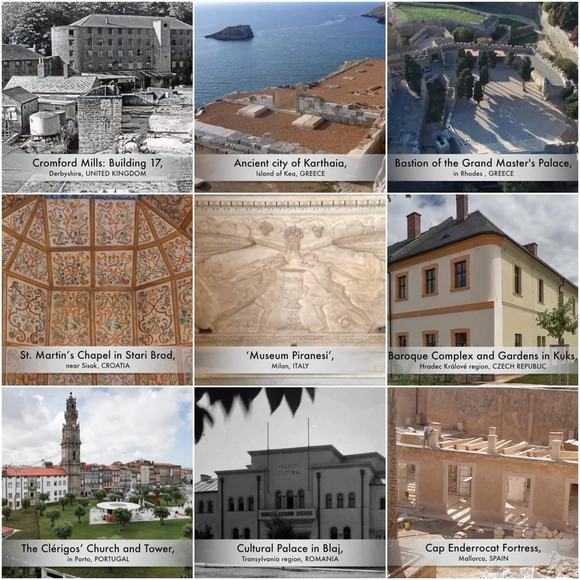
The European Commission and Europa Nostra have unveiled the winners of the 2017 European Union Prize for Cultural Heritage / Europa Nostra Awards, which honor achievements in conservation, research, dedicated service, and education, training and awareness. Out of 202 applications from 39 countries, 29 winners have been selected.
With high hopes of contributing to the reformation of Russia’s secondary schooling system, construction has begun on Smart School, a planned 31,000 meters square educational complex in Irkutsk, Siberia, which combines multi-use educational facilities, outdoor learning spaces, and housing developments for adoptive families. Designed by Danish firm CEBRA, the project was the winning proposal for the school’sinternational competition back in 2015, beating 48 other firms, including MVRDV and Sou Fujimoto Architects.
“Based on the program and principles of Smart School, an architectural concept has been developed which integrates buildings, a plot of land and the surrounding urban community into a complete, diverse and activating learning environment, a ‘school park’, explain the architects. “There is school life not only in specialized premises but also in open areas inside and around buildings."
https://www.archdaily.com/868734/cebras-mixed-use-smart-school-proposes-a-rethink-of-russias-education-systemOsman Bari
Within the framework of the recent election of Malta to the Presidency of the Council of the European Union—a position that will be held through June 2017—architectural photographer Danica O. Kus has created a photo series detailing Renzo Piano Building Workshop’s Valletta City Gate in Malta.
Completed in 2014, the project is composed of four parts: the Valletta City Gate and site, an open-air theater “machine,” a Parliament building, and landscaped space. Experience the project in beautiful detail though the photo series, after the break.
Following the success of their highly intricate Arabesque Wall, Benjamin Dillenburger and Michael Hansmeyer have once again achieved new levels of ornamental eye candy – this time, with a full-scale 3D printed grotto created from seven tons of sandstone. Commissioned by the Centre Pompidou in Paris, the grotto is an example of how the spatial expression of computational technologies can make for remarkable architectural experiences.
“Digital Grotesque II is a testament to and celebration of a new kind of architecture that leaves behind traditional paradigms of rationalization and standardization and instead emphasizes the viewer’s perception, evoking marvel, curiosity and bewilderment,” state Dillenburger and Hansmeyer.
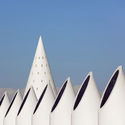
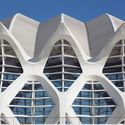
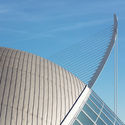
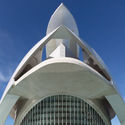
As a young boy, Santiago Calatrava's fascination with light in his native Valencia fueled his determination to draw, design, and eventually build. His Ciudad de Artes y Ciencias (City of Arts and Sciences) is a perfect example of the influence of the Valencian sun on the architect's work. The seven cultural buildings define a formal vocabulary all their own, with a dynamism between blanched curves and rhythmic visual patterns. So bright it almost glows on clear days, the materiality of the structures emphasizes the ability of light to outline the spatial relationships between Calatrava's shapes, and shift them as the sun moves through the sky.
In his most recent photo series, Sebastian Weiss has captured the tendency of the shapes of the City of Arts and Sciences to "complement each other and even merge to a harmonic unity," as the photographer himself puts it. The photos were originally featured on his Instagram, @le_blanc, and develop a new way of looking at the oft-photographed tourist spot. His images imagine the complex as a pulsating "light-space installation" of equally systematic and creature-like forms in constant conversation with one another. The series gives the sense of looking at different sections of a particularly beautiful beast—its ribs, underbelly, horns, etc.—captured within the complex's shallow pools.
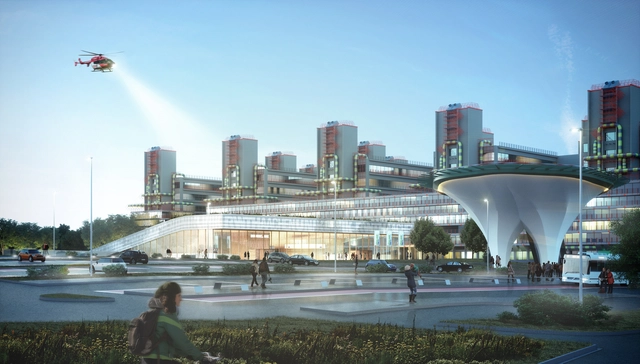
The competition called for the expansion of an existing listed 1970's hospital. Image Courtesy of HENN + C.F. Møller Architects
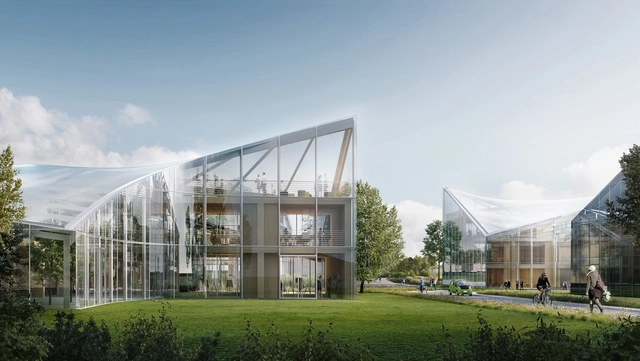
HENN and C.F. Møller Architects, of Berlin and Aarhus respectively, have jointly won an international competition to extend the iconic University Hospital RWTH Aachen in Germany. The winning entry, chosen amongst twelve others, responds to RWTH Aachen's existing listed 1970’s hospital with a partially-underground extension embedded in the landscape, seeking to minimize visual impact whilst creating lush green parkland for patients, staff, and the public.
Since 1953, the 160-mile (260 kilometer) strip of land along the Korean Peninsula's 38th parallel has served as a Demilitarized Zone between North and South Korea. The DMZ is more than a border; it's a heavily guarded, nearly four-mile-wide (6 kilometer) buffer zone between the two countries. Each military stays behind its own country's edge of the zone, perpetually awaiting potential conflict, and access to the interior of the zone itself is unyieldingly limited. Apart from the landmines and patrolling troops, the interior of the DMZ also holds thriving natural ecosystems that have been the subject of studies on what happens when wildlife is allowed to flourish in the absence of human contact.
In a competition that asked participants to design an underground bathhouse near the Kaesong Industrial Park, a (currently suspended) cooperative economic project that employs workers from both North and South Korea, research initiative Arch Out Loud imagined a DMZ that accommodates non-military structures that are typically seen as out of place in areas of such sensitivity and tension. The winning proposal by Studio M.R.D.O and Studio LAM utilizes the performative element of a bathhouse, where visitors are both audience members and actors, to the address the tensions—both geopolitical, from its surrounding environment, and personal, from the related emotions visitors carry with them—between both groups.
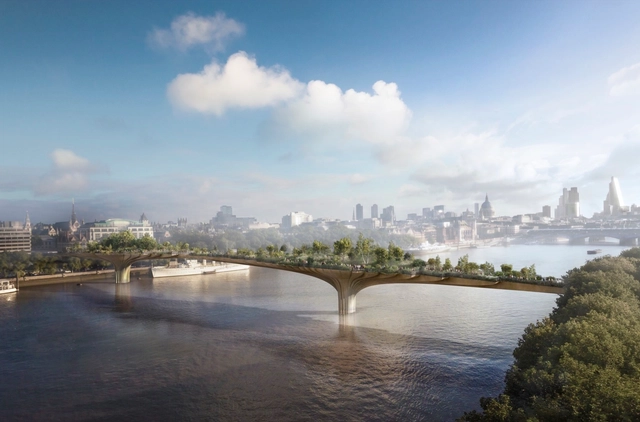
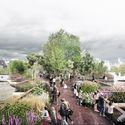
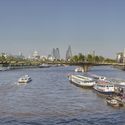
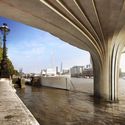
London’s troubled Garden Bridge proposal may have finally been dealt its final blow, after a new report by senior Labour MP Margaret Hodge concluded that the project should be cancelled now rather than risk pumping more public money into the controversial scheme. Conceived of by Thomas Heatherwick Studio in 2013 and approved by the Westminster Council in December of the following year, the over £46 million of public funding that has already gone toward the project would not be able to be recovered.
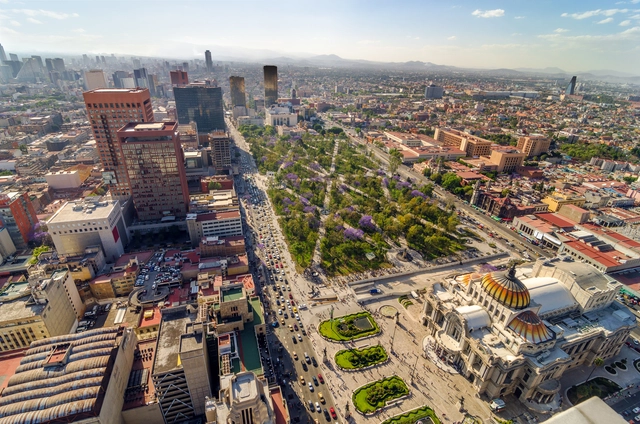
After being chosen as the winning city to be designated as the World Design Capital for 2018, Mexico City has revealed the theme of the year-long program of events and installations: Socially Responsible Design.
The announcement was made this week by Design Week Mexico, the country’s leading platform for design and architecture, at the 56th edition of the Salone del Mobile Milan, in collaboration with Abitare magazine.
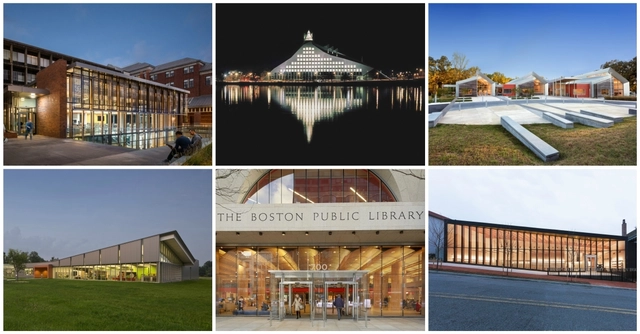
The American Institute of Architects (AIA) and the American Library Association (ALA) have selected eight projects as recipients of the 2017 AIA/ALA Library Building Awards. Founded to “encourage and recognize excellence in the architectural design of libraries,” the award draws attention to the changing role of libraries in society, and how exemplary community spaces can change to reflect the needs of their surrounding residents.
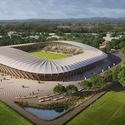
Planned as a center for local sports and sports science, the ECO park will provide state-of-the-art office space for environmentally-focused companies as well as public access to a wide range of health and leisure activities.
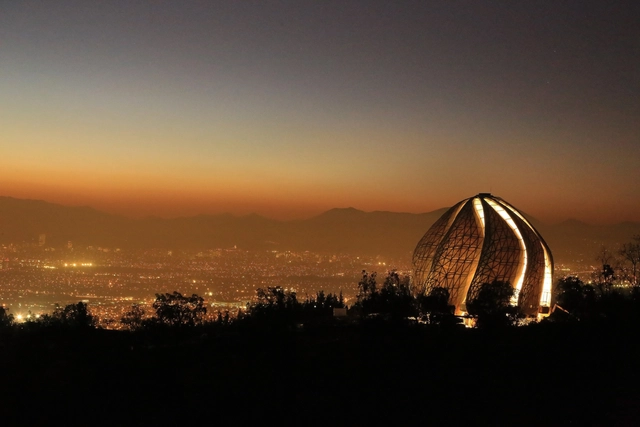
Located in the foothills of the Andes Mountains outside Santiago, Chile, the domed building was designed and built using computer modeling, measuring, and fabrication software, as well as custom glass, all of which culminated in nine monumental veils that frame an open worship space for up to 600 visitors. Completed in 2016, the project took 14 years to realize.
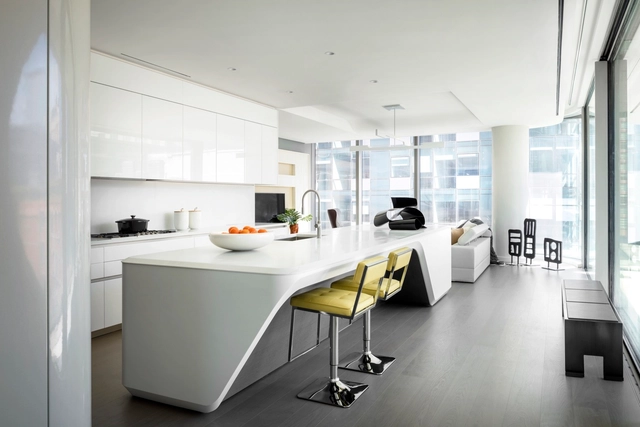
As Zaha Hadid’s 520 West 28th approaches completion, photos of the apartment interiors have been revealed for the first time. Shared by developer Related Companies, the images show two of the building’s first completed residences: the massive 4,500-square-foot Unit 20 and the more modest 1,700-square-foot Unit 12. The two units feature the interior built-ins and finishes designed by Hadid alongside interior design schemes envisioned by Jennifer Post and West Chin, respectively.
KPF’s Lotte World Tower in Seoul, South Korea is officially complete, according to criteria established by the the Council on Tall Buildings and Urban Habitat (CTBUH). At 555 meters tall, the building becomes the tallest building in Korea (250 meters taller than the previous tallest building, Northeast Asia Trade Tower) and the world’s new 5th tallest building.
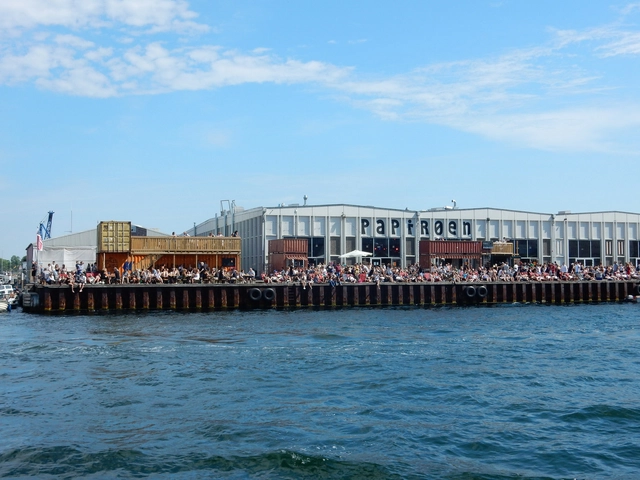
The city of Copenhagen have announced the shortlist of 5 firms that will compete for the design of a new aquatics center to be located on a prominent site in the Copenhagen Harbor. Planned for completion in 2021, the project will feature a 5,000-square-meter facility offering both indoor and outdoor swimming areas with views across the water to the Henning Larsen-designed Copenhagen Opera House.


























.jpg.jpg?1490953296)











Lotte_Group.jpg?1491409215&format=webp&width=640&height=580)