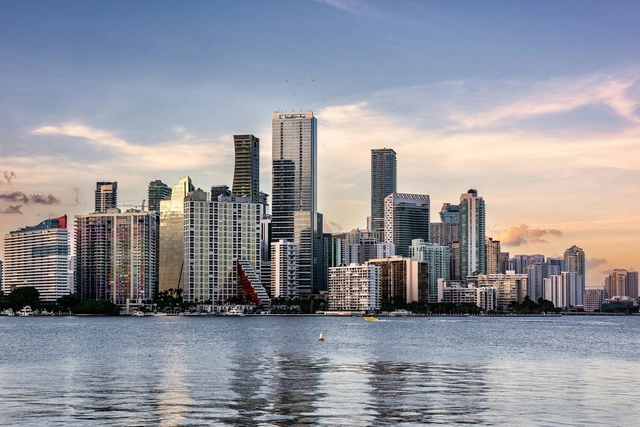
Stretching along the Atlantic coast at the southern tip of Florida, Miami is often introduced through postcard views of beaches, palm trees, and glass towers facing the water. Yet, behind this familiar image lies a city shaped by migration, tourism, and real estate cycles, where architecture has repeatedly been used to project new identities and reinvent the urban landscape. From early resort hotels and the Art Deco façades of South Beach to experimental high-rises and cultural institutions on the bay, the built environment offers a way to read how Miami negotiates climate, economy, and everyday life.
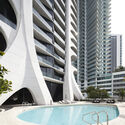
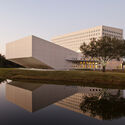
Over the past century, the city has grown through successive layers of development that remain visible in its streets and skylines. The streamlined geometry and pastel colors of the historic Art Deco District coexist with the exuberant forms of Miami Modern (MiMo) motels and postwar infrastructure along Biscayne Boulevard. Downtown and Brickell have transformed from low-rise business districts into dense clusters of residential and office towers, many designed by international firms working alongside local practices. At the same time, neighborhoods such as Little Havana, Allapattah, and Wynwood reveal how diasporic communities, industrial heritage, and creative industries occupy and adapt existing fabrics, often in contrast with the image-driven waterfront.
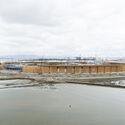
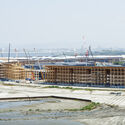
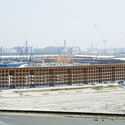
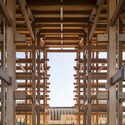
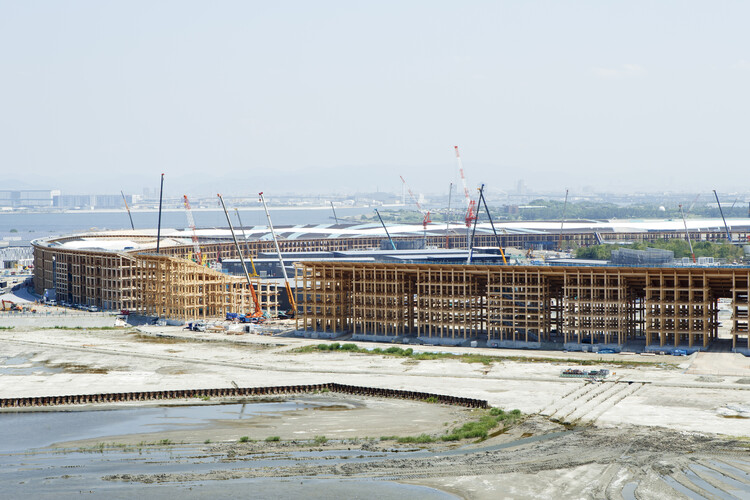
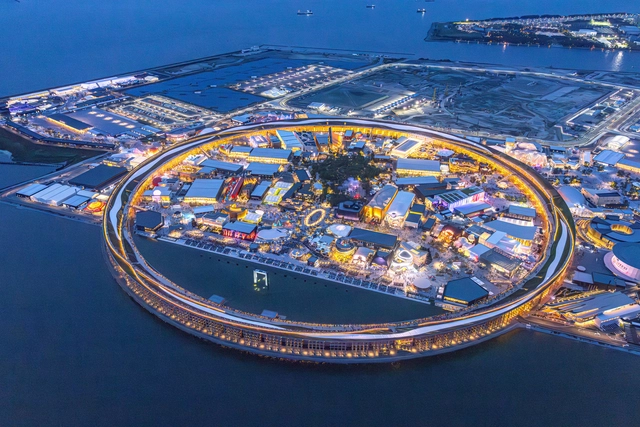
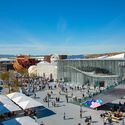
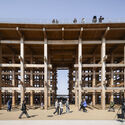
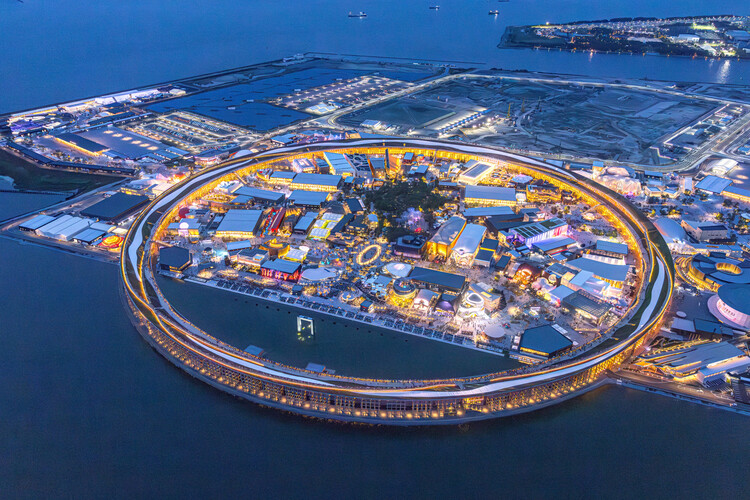
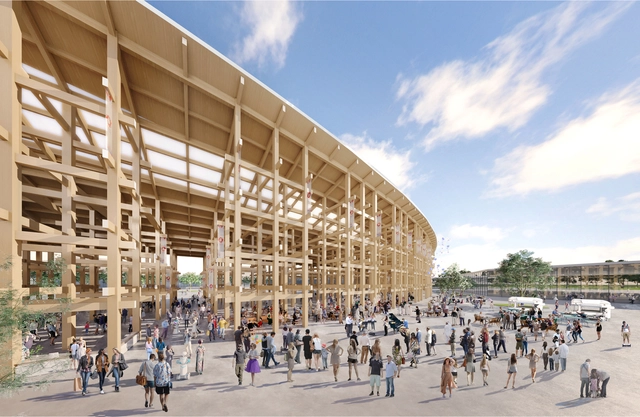
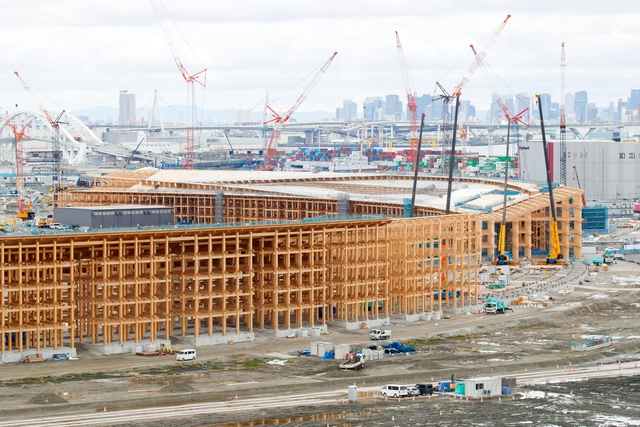
Monday, October 13th, marked the conclusion of Expo Osaka 2025. The exhibition gathered representatives from 165 countries and international organizations and welcomed around 28 million visitors to Yumeshima, a reclaimed site in Osaka Bay. The site was reimagined through a masterplan and bounded by a Guinness World Record-breaking wooden circular structure, both designed by Sou Fujimoto Architects. Over 184 days, participants were able to visit the self-built, modular, and shared pavilions, national exhibitions, and public activities organized under the overarching theme "Designing Future Society for Our Lives." During its six-month run, the Expo set out to explore three pivotal subthemes, Saving Lives, Empowering Lives, and Connecting Lives, as an invitation to bring together new perspectives for our built and social ecosystem.
The 2025 Osaka Expo has captured widespread attention—not only for its architectural ambition and spectacle, but also for breaking records and generating controversy. Its most iconic feature, a monumental timber ring designed by Sou Fujimoto, has already made headlines as a Guinness World Record-breaking wooden structure. Built on the reclaimed island of Yumeshima, the site has attracted praise and critique in equal measure. Beyond its awe-inspiring 2-kilometer circumference—parts of which extend dramatically over the water—the structure has also drawn concerns, including questions about health & safety, extreme heat, and swarms of insects that may affect the visitor experience.
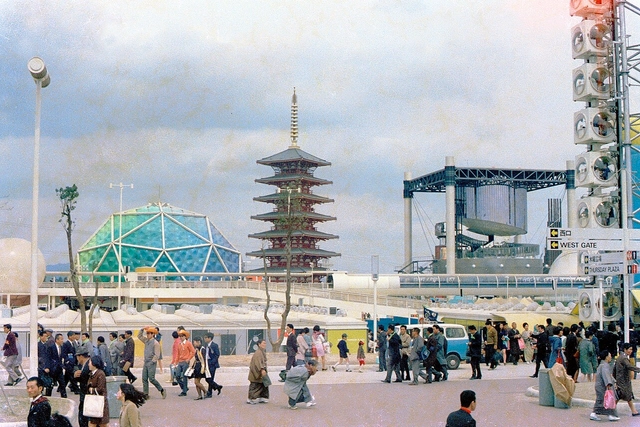
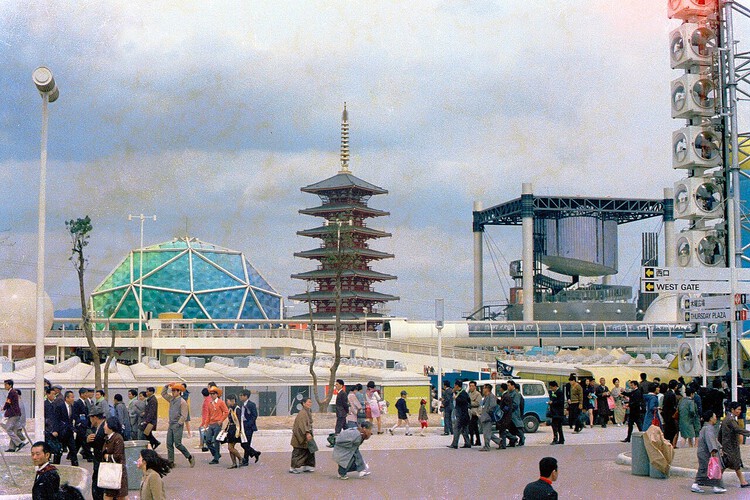
This year also marks a significant anniversary: the 55th year since the 1970 Osaka Expo, held under drastically different socio-economic conditions. Comparing these two expos—both hosted in the same city—offers a rare opportunity to reflect on how the rhetoric, curatorial themes, and architectural ambitions of world expos have evolved over time. From "Progress and Harmony for Mankind" in 1970 to "Designing Future Society for Our Lives" in 2025, the shift in thematic focus reveals changing global priorities. Meanwhile, the scale and nature of architectural involvement have also transformed, from the futuristic visions of Japanese Metabolism to a more internationally dispersed group of designers concerned with sustainability, technology, and civic engagement.
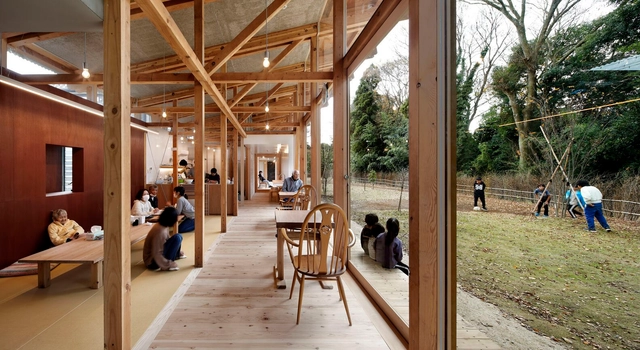
Japan, one of the places known for its high longevity, is critically facing a demographic shift. As the aging population continues to grow, so too does the demand for thoughtful, well-designed spaces that support elderly care. Traditionally, caregiving was woven into the fabric of family life, often falling on the shoulders of female members in a patriarchal society. However, as a traditional big family structure largely dissolves and the nuclear family becomes the norm, elder care increasingly relies on social welfare services and specialized facilities.
This situation presents a profound, growing architectural challenge: How can care environments not only accommodate medical and nursing needs but also foster individual dignity, comfort, and human and nonhuman interactions? The ideal design of elderly care facilities balances clinical functionality with the nuances of daily life—for the elderly themselves, for those experiencing challenges and difficulties such as dementia, for their families, and for the caregivers who support them.
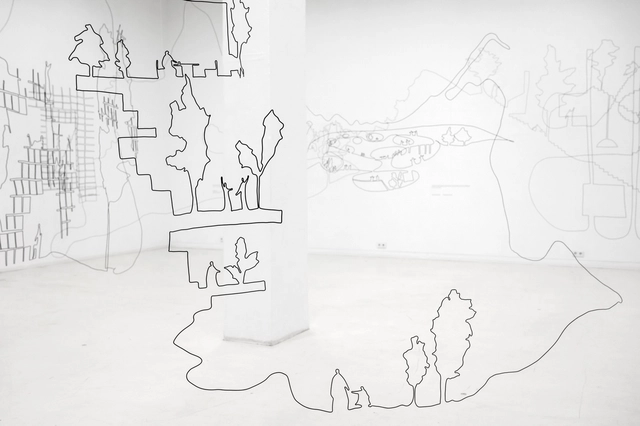
The Utzon Center in Denmark has announced the opening of “Primitive Future: Everything Is Circulating,” a solo exhibition dedicated to exploring the work of renowned Japanese architect Sou Fujimoto. Marking the first time his work is presented in Denmark, this exhibition offers a glimpse into Fujimoto’s vision, waving together the themes of nature and architecture. The exhibition's centerpiece is an expansive 500-meter-long steel wire installation that serves as a three-dimensional sketch, framing 12 of Fujimoto’s architectural projects.
In preparation for Expo 2025 Osaka, Kansai, Japan, The "Grand Ring," designed by renowned architect Sou Fujimoto, has reached a significant milestone. As of August 2024, the wooden construction of this structure is now complete, fully connecting the 2-kilometer ring into a continuous loop. This achievement is a crucial step in the development of the Expo site on Yumeshima, an artificial island on Osaka's waterfront, where the Expo will take place from April 13 to October 13, 2025.
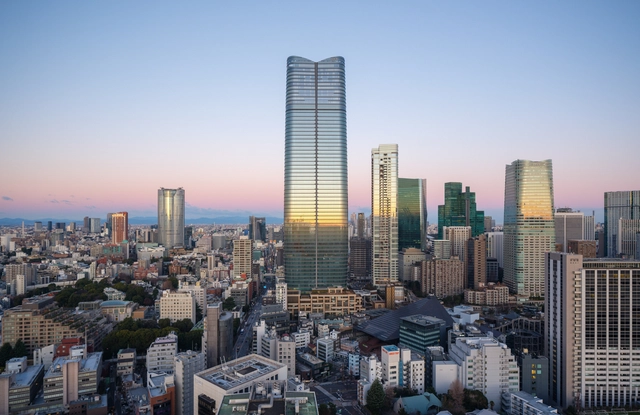
Pelli Clarke & Partners has just completed the Mori JP Tower, now standing as Japan’s tallest building. Situated in the recently revitalized Azabudai Hills district, the tower emerges at the center of this development. Establishing a new focal point for Tokyo’s skyline, the building soars 330 meters at the heart of this dynamic new mixed-use district in the city center.
The city of Osaka, Japan, has won the bid to organize the 2025 World Expo, an international event expected to draw in millions of visitors. Set to commence on April 13, 2025, and conclude on October 13, 2025, this marks Japan's second occasion as host, the prior instance being in 1970. Throughout their history, World Expos have been the place where new technologies and products are showcased and popularized, leading to technological advancements and innovative designs. For this event, Osaka has chosen the overarching theme of "Designing Future Society for Our Lives," with three subthemes further developing the concept: Saving Lives, Empowering Lives, and Connecting Lives. Architect Sou Fujimoto was selected as the Expo Site Design Producer, taking on the responsibility of creating the master plan and providing guidance to designers from participating countries.
In 2018, the Bureau International des Expositions (BIE) announced that the Japanese city of Osaka won the bid to host the 2025 World Expo, an event expected to draw millions of visitors. The event will open on April 13, 2025, and close on October 13, 2025. This will be Japan’s second time hosting the event, as another World Expo was held in Osaka in 1970. The official theme for this edition is “Designing Future Society for Our Lives.” Architect Sou Fujimoto has been chosen as the Expo Site Design Producer of the event, becoming responsible for designing the master plan and directing the designers of the participating countries. As of March 24, 2023, 153 countries and regions and 8 international organizations have officially confirmed their participation in Expo 2025 Osaka, Kansai, Japan.
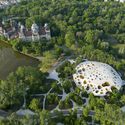
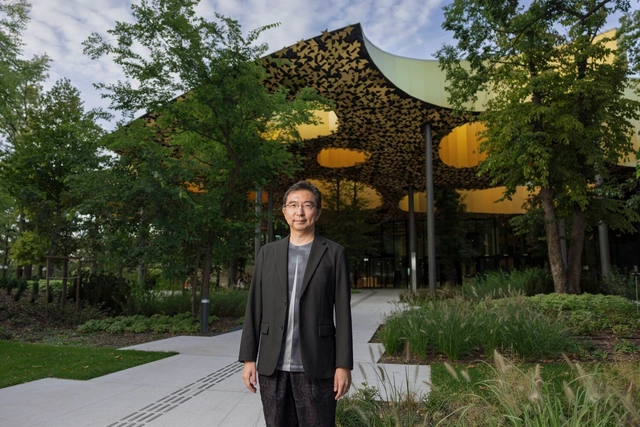
The House of Music Hungary is one of the biggest cultural investments in the European Union. Designed by Sou Fujimoto Architects, it is becoming a hub for city dwellers and worldwide visitors wishing to attend concerts, visit the exhibition or record music in the building's open studios.
ArchDaily editors first got in touch with the Liget Budapest Project in the summer of 2021 and were treated to an impressive site visit at the House of Music Hungary. We were among a few select invitees that caught a glimpse of the finishing phases at one of the city's major projects located in its 200-year-old park. Developers and contractors were racing to catch up on the time they’d missed due to the pandemic – a challenge they certainly fulfilled, with the project completed in less than six years and being opened to the public in December 2021.
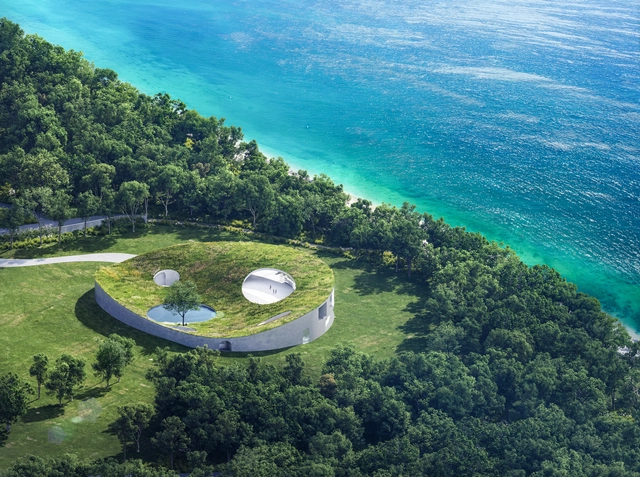
Not a Hotel Ishigaki by Sou Fujimoto Architects. Image Courtesy of Sou Fujimoto Architects
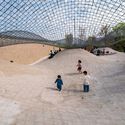
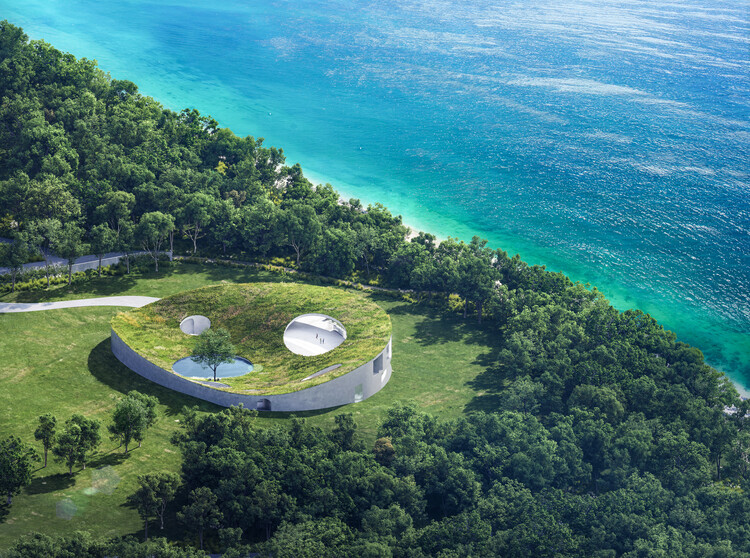
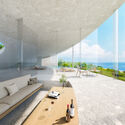
Sou Fujimoto has unveiled a “Not a Hotel Ishigaki”, a new project in the southwest of Ishigaki Island in Okinawa, Japan. The unique tropical resort hotel sits on a circular base open in all directions toward the surrounding natural landscape. The main feature of the building is the undulating roof covered in vegetation. Its shape allows access from the building terraces, creating an inner landscape, complete with meadows, relaxation areas, and a water mirror that reflects the sky and the singular tree in its vicinity.
One of the world's leading metropolises, Tokyo is home to extraordinary architecture that fascinates through its blend of traditional values and high-tech expression. The 1923 earthquake and the bombardments of World War II dramatically influenced the image of the city and its architecture, giving rise to modern urban environments with complex infrastructure.
The Japanese capital constitutes the most populated metropolitan area in the world, housing 33 million inhabitants. Divided into 23 wards and numerous neighbourhoods, the city features a diverse blend of atmospheres and urban fabrics that support an amalgamation of architectural typologies.
Sou Fujimoto Architects has unveiled its design for the Hida Furukawa Station Eastern Development, a regional community-based center that aims to enrich the life, leisure, and culture of the residents of Hida City, in Gifu Prefecture. The Center will include a university research base, student accommodation, an all-weather playing field, and commercial facilities, all interconnected to form one harmonious community.
It is nearly impossible nowadays not to present accompanying renders when proposing a new project. No matter the method, software or style that is used, it is a valuable reference that bares more practical weight than one might think. Not only can it be one of the closest possible representations of the architect's vision, if approved, it can also become a promise to clients, investors, and the general public.
When it comes to works from renowned architects, the render becomes a critical reference to the project participants and to the expectant community. A lot of details can be developed and considered when creating the images. In most cases, special attention is brought to the lighting, materials, and context in order to make the most accurate representation possible.
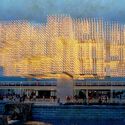
Sou Fujimoto’s House of Hungarian Music, a contemporary cultural landmark dedicated to music in Budapest's City Park has officially opened its doors to the public. Considered as one of the most anticipated buildings of the year, the project is nestled within the park's trees, and is designed as an extension of its natural setting through uninterrupted glass volumes and a perforated roof structure. The museum offers a unique artistic experience combining landscape, architecture, and exhibition design, all dedicated to the creation of music and sound.