1. ArchDaily
  2. Architecture News

Architecture News

Explore Endless Palladian-Inspired Facades Using This Random Generator

In his seminal work, Four Books on Architecture (1570), Andrea Palladio outlined the architectural elements that would make up his signature style, borrowing from the architecture of the ancient Romans and the principles directed by Vitruvius and Leon Battista Alberti. In designing his buildings, Palladio employed a full palette of motifs, from pediments to loggias to porticos, resulting in structures that followed a certain formula, while remaining individually distinct.

Recognizing the architectural patterns in his work, programmer “23” (Paul O’Leary McCann) set out to create a code project that could randomly generate Palladian-inspired facades. Adjusting the to size of your screen, the program can create facades ranging in scale from one-story temples to elaborate mega-structures that bear similarity to the magnificent toy block towers created by future-architect children.
Community, History and Art Collide in Illuminating Michigan Pavilion

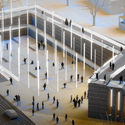
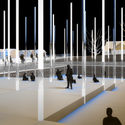
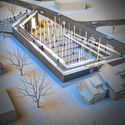
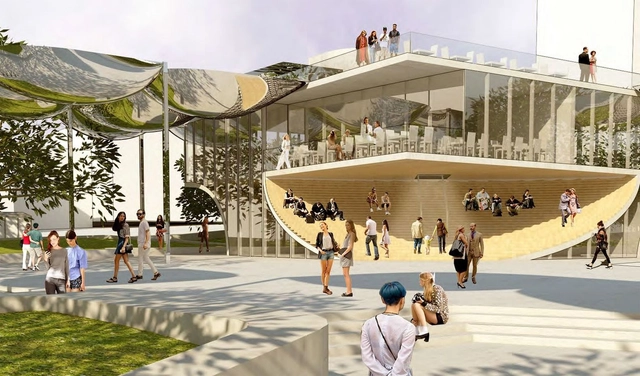
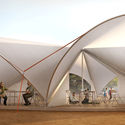
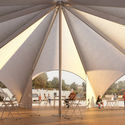
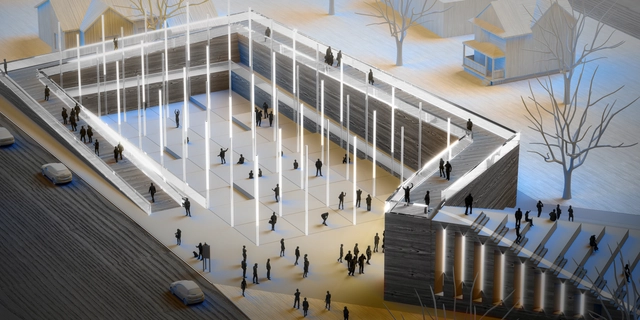
Cairo-based architect Mohamed Elgendy has won an international competition for the design of a new community pavilion in Roseville, Michigan. The Pavilion at Utica Junction competition, organized by the Roseville DDA, sought to attract proposals for a public pavilion on the site of an old tavern, creating a gathering space for residents and visitors to stage events, socialize, and play. The vision behind Elgendy’s winning scheme was for a dialogue between three elements – a plaza, a ramp, and an indoor pavilion.

Community, History and Art Collide in Illuminating Michigan Pavilion  - Image 1 of 4Community, History and Art Collide in Illuminating Michigan Pavilion  - Featured ImageCommunity, History and Art Collide in Illuminating Michigan Pavilion  - Image 2 of 4Community, History and Art Collide in Illuminating Michigan Pavilion  - Image 3 of 4Community, History and Art Collide in Illuminating Michigan Pavilion  - More Images+ 4

Four Projects Shortlisted for 2017 Moriyama RAIC International Prize

The Royal Architectural Institute of Canada (RAIC) has announced the four projects shortlisted for the 2017 Moriyama RAIC International Prize. The prize was established in 2014 by Canadian architect Raymond Moriyama along with RAIC and the RAIC Foundation to recognise buildings that are judged to be " transformative within its societal context and reflect Moriyama's conviction that great architecture transforms society by promoting social justice and humanistic values of respect and inclusiveness."

"These projects celebrate human life and shape activity," commented RAIC President Ewa Bieniecka, FIRAC. "They embody innovation, contribute to how we experience space, and explore how spaces allow opportunities for freedom. The four shortlisted projects demonstrate how architecture is generous and gives back to the community. These works have a strong sense of place and connect to their surrounding landscape."

Awarded every two years, the winning project will receive a CAD $100,000 prize and a handcrafted sculpture by Canadian designer Wei Yew. The prize is open to all architects, irrespective of nationality and location. The inaugural prize was won by Chinese architect Li Xiaodong for his design of the Liyuan Library in Jiaojiehe, China.

See the shortlisted projects, after the break.

Four Projects Shortlisted for 2017 Moriyama RAIC International Prize  - Image 4 of 4Four Projects Shortlisted for 2017 Moriyama RAIC International Prize  - Image 9 of 4Four Projects Shortlisted for 2017 Moriyama RAIC International Prize  - Image 20 of 4Four Projects Shortlisted for 2017 Moriyama RAIC International Prize  - Image 34 of 4Four Projects Shortlisted for 2017 Moriyama RAIC International Prize  - More Images+ 30

Büro Ole Scheeren's MahaNakhon Tower, Photographed by Hufton + Crow

Büro Ole Scheeren's MahaNakhon Tower, Photographed by Hufton + Crow - Image 14 of 4
© Hufton + Crow

In this photoset, British photographers Hufton + Crow turn their lens toward Büro Ole Scheeren’s ‘dissolving’ MahaNakhon tower in Bangkok. Now the tallest building in the Thai capital at 1030 feet (314 meters), the pixelated skyscraper opened last summer with a fantastical light show display.

The project began as a design by Ole Scheeren for local firm Pace Development, and was completed by his own firm following his departure from OMA in 2010. The architects describe the project:

The design of MahaNakhon dismantles the typical tower and podium typology, creating a skyscraper that melds with the city by gradually ‘dissolving’ as it flows downward to meet the ground. A series of cascading indoor/outdoor terraces at the base of the tower accommodates retail and entertainment facilities, evoking the shifting protrusions of a mountain landscape.

See the full gallery of photos, after the break.

Büro Ole Scheeren's MahaNakhon Tower, Photographed by Hufton + Crow - Image 1 of 4Büro Ole Scheeren's MahaNakhon Tower, Photographed by Hufton + Crow - Image 2 of 4Büro Ole Scheeren's MahaNakhon Tower, Photographed by Hufton + Crow - Image 3 of 4Büro Ole Scheeren's MahaNakhon Tower, Photographed by Hufton + Crow - Image 4 of 4Büro Ole Scheeren's MahaNakhon Tower, Photographed by Hufton + Crow - More Images+ 25

Graham Foundation Awards 2017 Grants for 72 Innovative Architectural Projects

The Graham Foundation has announced the list of 72 recipients of their 2017 “Grants to Individuals,” awarding over $560,000 in support of “innovative projects engaging original ideas in architecture.”

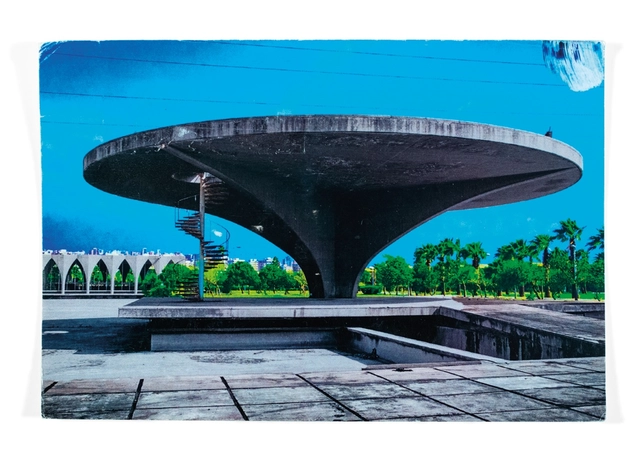
Helmed by architects, designers, curators, artists, writers and more, the 2017 projects range from a study of the relationship between water and African cities by Kunlé Adeyemi and Suzanne Lettieri; to an exploration of Oscar Niemeyer’s oft-overlooked Algerian period; to an exhibition surrounding the complex civic issues along the US/Mexico border.

“These diverse projects advance new scholarship, fuel creative experimentation and critical dialogue, and expand opportunities for public engagement with architecture and its role in contemporary society,” explain the Graham Foundation.

This year, nearly 700 submissions were considered, with a total of 99 grantees representing 20 countries selected to receive grants. Over the past 61 years, the Graham Foundation has awarded more than 4,300 grants to individuals and institutions from all over the globe.

See the full list of recipients, after the break.

Graham Foundation Awards 2017 Grants for 72 Innovative Architectural Projects - Image 1 of 4Graham Foundation Awards 2017 Grants for 72 Innovative Architectural Projects - Image 2 of 4Graham Foundation Awards 2017 Grants for 72 Innovative Architectural Projects - Image 3 of 4Graham Foundation Awards 2017 Grants for 72 Innovative Architectural Projects - Image 4 of 4Graham Foundation Awards 2017 Grants for 72 Innovative Architectural Projects - More Images+ 2

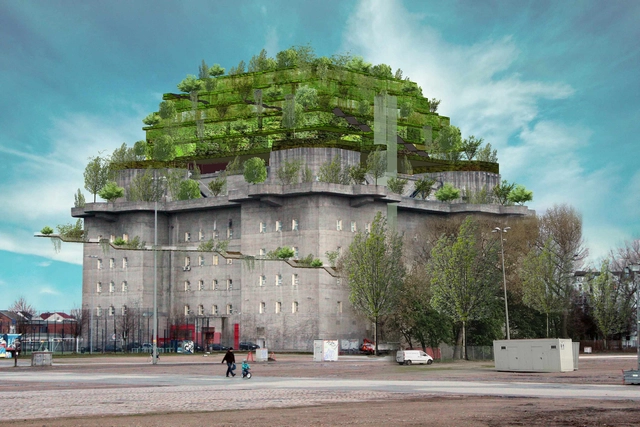
From War Relic to Mixed-Use: Plans to Build a “Green Mountain” Atop a Bunker in Hamburg

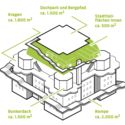
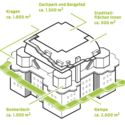
A team of local residents and architects in Hamburg’s neighborhood of St. Pauli have been granted planning permission for a proposal to repurpose a war bunker dating back from the 1940s. Coined Hilldegarden, the proposal seeks to create a “green mountain” garden atop the disused roof of the bunker along with a range of mixed-use projects that increase its height by several stories. “We are rebuilding what we inherit.” The project’s initiative states, “Adding something to history while dealing with it and thereby reshaping history itself.”

From War Relic to Mixed-Use: Plans to Build a “Green Mountain” Atop a Bunker in Hamburg - Image 1 of 4From War Relic to Mixed-Use: Plans to Build a “Green Mountain” Atop a Bunker in Hamburg - Image 2 of 4From War Relic to Mixed-Use: Plans to Build a “Green Mountain” Atop a Bunker in Hamburg - Image 4 of 4From War Relic to Mixed-Use: Plans to Build a “Green Mountain” Atop a Bunker in Hamburg - Image 3 of 4From War Relic to Mixed-Use: Plans to Build a “Green Mountain” Atop a Bunker in Hamburg - More Images+ 14

Draw Perfectly At Any Scale With This Augmented Reality App

The ability to draw well is one of the most coveted skills in architecture. Unfortunately for those without an innate gift for sketching, it's also one of the most difficult to learn—even if it can, contrary to popular opinion, be learned with commitment and practice. But for those poor souls without such talents, there is now a fix: an app called SketchAR.

Available for iPhone and Android devices that incorporate Google's Tango technology, SketchAR can take photographs or other images, convert them into sketchable line drawings, and then use augmented reality to overlay them onto real-world surfaces.

KXIV Designs Adidas Ultraboost Sneakers Inspired by Herzog & de Meuron's Beijing 'Bird Nest'

Architecturally-trained designer KXIV has envisioned a custom pair of adidas UltraBOOST sneakers, inspired by the architecture of Herzog & de Meuron’s 2008 Beijing Olympics stadium, commonly referred to as the “Bird’s Nest.”

KXIV’s design features a unique lacing system that wraps around the sneaker, held in place with a series of 3D-printed double-loop cinch locks. Underneath, a lycra texture is covered with lace-like lines made from abrasive-resistant polyurethane, giving the shoe a layered look similar to that of the stadium. To get it to hold its form, the upper lace layer the upper lace layer was baked at 300 degrees, creating a structure that is both supportive and elastic.

KXIV Designs Adidas Ultraboost Sneakers Inspired by Herzog & de Meuron's Beijing 'Bird Nest' - Image 1 of 4KXIV Designs Adidas Ultraboost Sneakers Inspired by Herzog & de Meuron's Beijing 'Bird Nest' - Image 2 of 4KXIV Designs Adidas Ultraboost Sneakers Inspired by Herzog & de Meuron's Beijing 'Bird Nest' - Image 3 of 4KXIV Designs Adidas Ultraboost Sneakers Inspired by Herzog & de Meuron's Beijing 'Bird Nest' - Image 4 of 4KXIV Designs Adidas Ultraboost Sneakers Inspired by Herzog & de Meuron's Beijing 'Bird Nest' - More Images+ 1

Early Concept Design for New York City Skyscraper by Adjaye Associates Revealed

Early design studies have been unveiled of Adjaye Associates’ first New York City skyscraper. Developed by the Lightstone Group, the 61-story, 750-foot-tall ‘Wall Street Tower’ will be located at 130 William Street in New York’s Financial District.

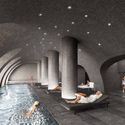
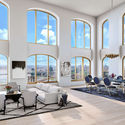
Uncovered by CityRealty, these initial visualizations show a gold-detailed structure featuring arched windows that expand as the building rises, and an abundance of luxury amenities including sports facilities, a swimming pool, a movie theater, lounge areas and rooftop observatory.

Early Concept Design for New York City Skyscraper by Adjaye Associates Revealed - Image 1 of 4Early Concept Design for New York City Skyscraper by Adjaye Associates Revealed - Image 2 of 4Early Concept Design for New York City Skyscraper by Adjaye Associates Revealed - Image 3 of 4Early Concept Design for New York City Skyscraper by Adjaye Associates Revealed - Image 4 of 4Early Concept Design for New York City Skyscraper by Adjaye Associates Revealed - More Images+ 2

Public Pools or Private Houses - How Should Stockholm Use its Cliffs?

Public Pools or Private Houses - How Should Stockholm Use its Cliffs? - Image 5 of 4
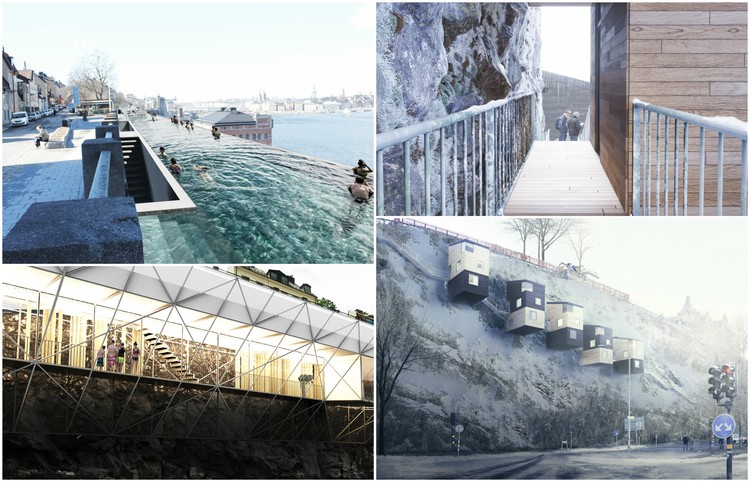
Courtesy of UMA / Manofactory. Image Infinity Pool vs Nestinbox

One of architecture’s most delightful anomalies is the diversity of solutions generated by any given site. From hypothetical university projects by architecture students to professional international design competition entries, the differing perspectives, stances, and experiences brought to rest on one site by several design teams can wield a bounty of contrasting ideas.

Recently, we reported on Nestinbox, a proposal by Swedish architecture firm Manofactory to attach a series of simple, functional houses to a cliff face in Stockholm, addressing the demands of increased populations and land prices in cities across the world. Now, the cliffs of Stockholm have been the subject of an entirely different, though just as evocative concept by Swedish firm UMA. Rather than private housing, UMA proposes the Stockholm Infinity Pool, a public pool 1km along the Sodermalm cliffs of Sweden’s capital.

Public Pools or Private Houses - How Should Stockholm Use its Cliffs? - Image 1 of 4Public Pools or Private Houses - How Should Stockholm Use its Cliffs? - Image 2 of 4Public Pools or Private Houses - How Should Stockholm Use its Cliffs? - Image 3 of 4Public Pools or Private Houses - How Should Stockholm Use its Cliffs? - Image 4 of 4Public Pools or Private Houses - How Should Stockholm Use its Cliffs? - More Images+ 8

This Project Explores the Ottoman Miniature as a Form of Architectural Representation

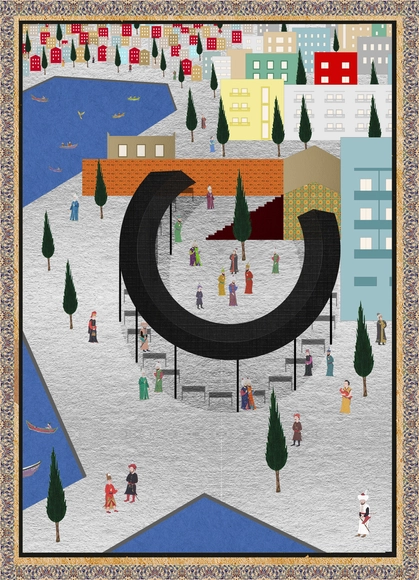
Over the following weeks we will be sharing a selection of unrealized student projects, alongside realized schemes by practices who explore representational techniques, in collaboration with KooZA/rch. The aim is "to explore the role of the architectural drawing as a tool for communication" and, in the process, provoke a conversation about the contemporary use, format, and role of drawing.

This Project Explores the Ottoman Miniature as a Form of Architectural Representation - Image 1 of 4This Project Explores the Ottoman Miniature as a Form of Architectural Representation - Image 2 of 4This Project Explores the Ottoman Miniature as a Form of Architectural Representation - Image 3 of 4This Project Explores the Ottoman Miniature as a Form of Architectural Representation - Image 4 of 4This Project Explores the Ottoman Miniature as a Form of Architectural Representation - More Images+ 4

OMA and Mia Lehrer Associates' FAB Park Redesigned for More Green Space

The design of OMA and Mia Lehrer+Associates’ park at First and Broadway (FAB) in Los Angeles has received a green update, reports LA Downtown News, following a community feedback session in which residents voiced their desire to add additional plantings to the scheme.

Watch Adriaan Geuze of West 8 Explain the Design Behind New York's Largest Private Outdoor Gardens

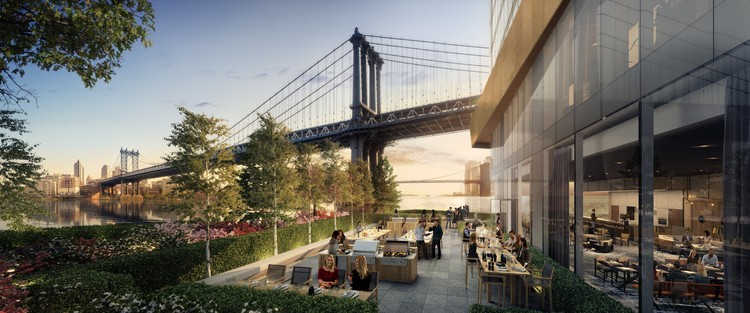
In this video, West 8 co-founder Adriaan Geuze discusses the design process behind New York City’s largest private outdoor gardens, which will be located at One Manhattan Square in the Lower East Side. Currently under construction, the 800-foot-tall glass residential tower will feature more than an acre of exterior garden space designed by West 8 Urban Design and Landscape Architecture.

Watch Adriaan Geuze of West 8 Explain the Design Behind New York's Largest Private Outdoor Gardens - Image 1 of 4Watch Adriaan Geuze of West 8 Explain the Design Behind New York's Largest Private Outdoor Gardens - Image 2 of 4Watch Adriaan Geuze of West 8 Explain the Design Behind New York's Largest Private Outdoor Gardens - Image 3 of 4Watch Adriaan Geuze of West 8 Explain the Design Behind New York's Largest Private Outdoor Gardens - Image 4 of 4Watch Adriaan Geuze of West 8 Explain the Design Behind New York's Largest Private Outdoor Gardens - More Images+ 19

RIBA Announces 2017 London Regional Award Winners

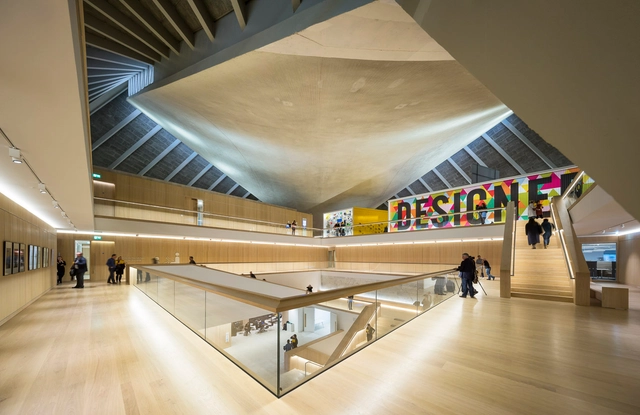
The Royal Institute of British Architects (RIBA) has named 50 projects as winners of 2017 RIBA London Regional Awards, including the London Building of the Year, “Photography Studio for Juergen Teller” by 6a architects.

“The year has demonstrated once again the breadth of the capital’s architectural output at the very high level that the RIBA programme requires, and the juries took enormous pleasure in selecting a most exemplary set of schemes,” said Jury chair Matthew Lloyd.

Selected from a 85-strong shortlist, these 50 projects will now go on to compete in RIBA's National Awards program, the winners of which will create the shortlist for the RIBA Stirling Prize – the highest award for architecture in the UK.

RIBA Announces 2017 London Regional Award Winners - Image 1 of 4RIBA Announces 2017 London Regional Award Winners - Image 2 of 4RIBA Announces 2017 London Regional Award Winners - Image 3 of 4RIBA Announces 2017 London Regional Award Winners - Image 4 of 4RIBA Announces 2017 London Regional Award Winners - More Images+ 46

Spotlight: Robert A.M. Stern

As founder of Robert A.M. Stern Architects and former Dean of the Yale School of Architecture, Robert A.M. Stern is a self-proclaimed modern traditionalist – and no, in his eyes, that is not an oxymoron. When asked about the seeming contradiction in a PBS documentary, he replies by musing, "Can one speak the local languages of architecture in a fresh way?"

RCR Arquitectes' Pritzker Prize Acceptance Speech

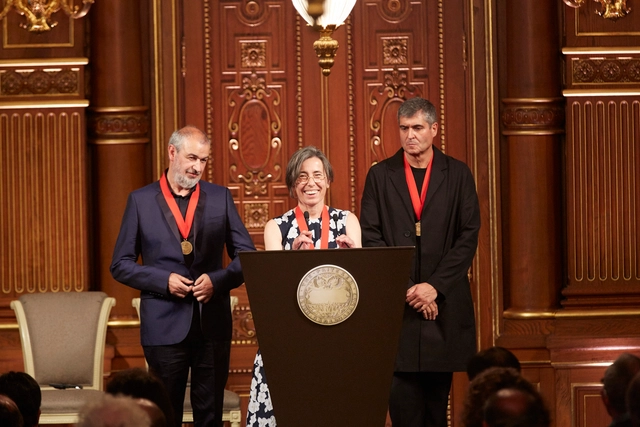
On Saturday, Rafael Aranda, Carme Pigem and Ramon Vilalta of RCR Arquitectes accepted the 2017 Pritzker Prize at a ceremony in the Akasaka Palace in Tokyo. ArchDaily is pleased to share, with the permission of The Hyatt Foundation and The Pritzker Architecture Prize, a transcript of the winners' acceptance speech, delivered by Carme Pigem on behalf of the trio.

Your majesties, the Emperor and Empress of Japan; Deputy Prime Minister Taro Aso; your excellencies ambassadors and ministers; Tom and Margot Pritzker and members of the Pritzker family; ladies and gentlemen.

Emotions, happiness, pride, humility, respect, responsibility, admiration for those who have gone before us and for those who will receive this award in the future: there is an infinite mixture of many overlapping feelings that we are experiencing now, but the strongest sensation is one of gratitude: To the Pritzker Family, who for years have been generously supporting and bringing attention to architecture, and we ask that they continue to do this.

Timelapse of Herzog & de Meuron's Latest Completed NYC Skyscraper Takes us to New Heights

Herzog & de Meuron have completed construction of their latest project, a high-rise luxury residential skyscraper on 56 Leonard Street, New York City. Conceived as a stack of individual houses resembling a Jenga tower, the building is the tallest in its Tribeca neighborhood. With its tall and slender silhouette, 56 Leonard Street is the latest in a series of contemporary skyscrapers punctuating Manhattan’s skyline.

London to Follow in New York’s Footsteps With Camden High Line

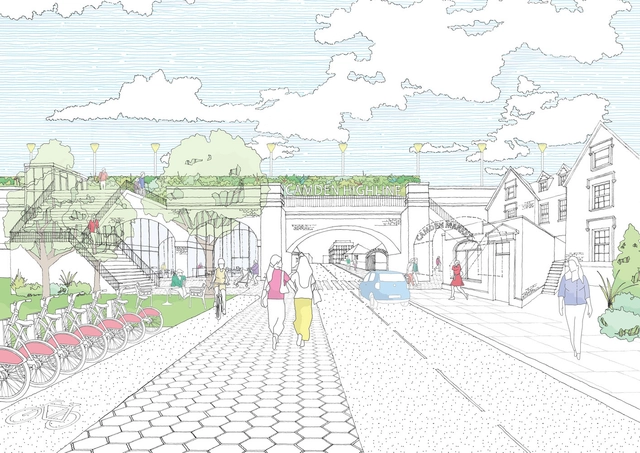
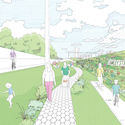
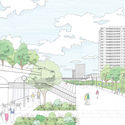
The New York High Line is set to receive a new British sibling, in the form the Camden High Line – a conversion of the defunct railway line connecting Camden Town and King’s Cross, into an elevated public space and commuting route. The invited competition for the project was won by London-based practices Studio Weave and Architecture 00, whose proposal is one of three international designs that have followed the success of the High Line in New York, with the other two situated in Bangkok and Mexico City.

“We think the re-use of this railway line for the Camden High Line outweighs the benefits and costs of leaving it vacant,” said Simon Pitkeathley, Chief Executive at Camden Town Unlimited. “This new transport link can reduce overcrowding and journey times on the existing, cycling and pedestrian routes nearby like Regent’s Canal.”

London to Follow in New York’s Footsteps With Camden High Line - Image 1 of 4London to Follow in New York’s Footsteps With Camden High Line - Image 2 of 4London to Follow in New York’s Footsteps With Camden High Line - Image 3 of 4London to Follow in New York’s Footsteps With Camden High Line - Image 4 of 4London to Follow in New York’s Footsteps With Camden High Line - More Images+ 1

World Architecture Festival Announces the 2017 Awards 'Super Jury'

The World Architecture Festival (WAF) has announced four internationally recognized names as members of the Super Jury that will judge the awards program at the 2017 Festival in Berlin this November. After the selection of winners from across 31 categories on the first two days of the event, category winners will present to the Super Jury, who will decided the winners of the World Landscape, Future Project and Completed Building of the Year Awards.

Maidan Tent - Architectural Aid for Europe's Refugee Crisis

Over the past two years alone, more than a million people have fled the Syrian conflict to take refuge in Europe, strenuously testing the continent’s ability to respond to a large-scale humanitarian crisis. With the Syrian Refugee Crisis still unresolved, and temporary refugee camps now firmly established on the frontiers of Europe, architects and designers are devoting energy to improving the living conditions of those in camps fleeing war and persecution.

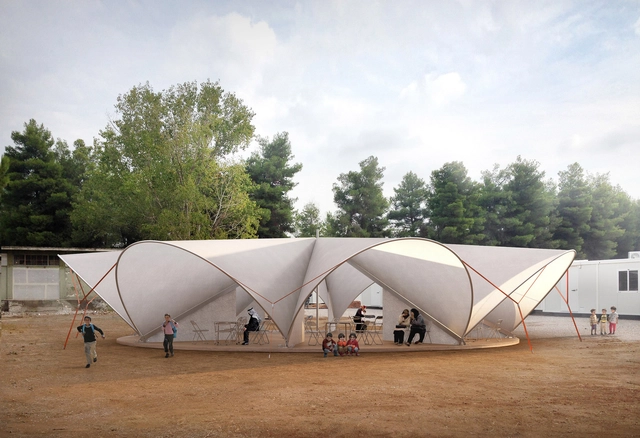
One emerging example of humanitarian architecture is Maidan Tent, a proposed social hub to be erected at a refugee camp in Ritsona, Greece. Led by two young architects, Bonaventura Visconti di Modrone and Leo Bettini Oberkalmsteiner, and with the support of the UN International Organization for Migration, Maidan Tent will allow refugees to benefit from indoor public space – a communal area to counteract the psychological trauma induced by war, persecution, and forced migration.

Maidan Tent - Architectural Aid for Europe's Refugee Crisis  - Image 1 of 4Maidan Tent - Architectural Aid for Europe's Refugee Crisis  - Image 2 of 4Maidan Tent - Architectural Aid for Europe's Refugee Crisis  - Image 3 of 4Maidan Tent - Architectural Aid for Europe's Refugee Crisis  - Image 4 of 4Maidan Tent - Architectural Aid for Europe's Refugee Crisis  - More Images+ 19

Look Inside a Collection of Parisian Architecture Offices, Photographed by Marc Goodwin and Mathieu Fiol

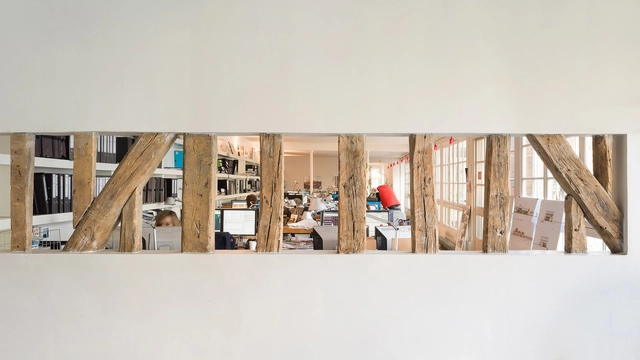
Architectural photographer Marc Goodwin, alongside Mathieu Fiol, has recently completed the fifth collection of his "ultra-marathon of photoshoots" – this time in la Ville Lumière, Paris. Following Goodwin's insight into the spaces occupied by Nordic architectural offices, his look at studios both large and small lived in by London-based practices, his lens on a collection of Beijing-based studios and, most recently, his and Felix Nybergh's study of studios in Seoul, the project has now focused on the French capital.

Look Inside a Collection of Parisian Architecture Offices, Photographed by Marc Goodwin and Mathieu Fiol - Image 1 of 4Look Inside a Collection of Parisian Architecture Offices, Photographed by Marc Goodwin and Mathieu Fiol - Image 2 of 4Look Inside a Collection of Parisian Architecture Offices, Photographed by Marc Goodwin and Mathieu Fiol - Image 3 of 4Look Inside a Collection of Parisian Architecture Offices, Photographed by Marc Goodwin and Mathieu Fiol - Image 4 of 4Look Inside a Collection of Parisian Architecture Offices, Photographed by Marc Goodwin and Mathieu Fiol - More Images+ 27

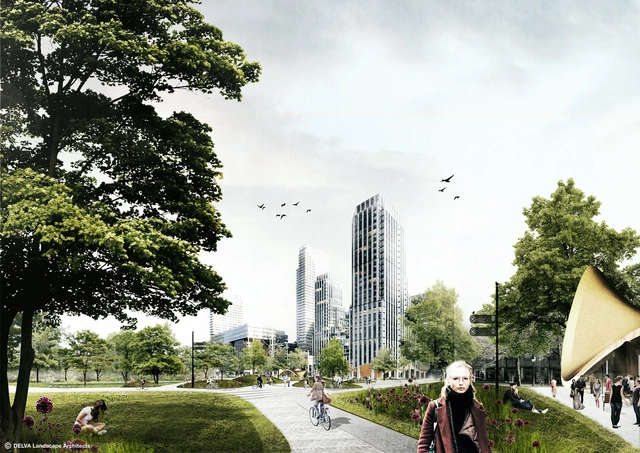
DELVA Landscape Architects to Revive The Hague’s Historic Centre With Interconnected Urban Greens

Serving as a new gateway to the city through the connection of various green spaces and public programs, The Green Entrance is DELVA Landscape Architects’ masterplan for a historic district of The Hague. Given The Hague’s future inner-city densification, which involves the creation of 50,000 new houses, the Dutch firm’s aim is to aid these developments through sustainable and green urban strategies, manifested “through an integral approach between landscape design, cultural heritage, mobility, programming and technology.”

Commenting on the project’s primary function, the architects state: “’The Green Entrance’ connects areas that have been isolated over the years. It starts in the spacious and open ‘City Hall' that connects to the train station and continues to the ‘Koningin Julianaplein’. No narrow doors or gates, but a wide view over the green and lively surrounding public space.”

DELVA Landscape Architects to Revive The Hague’s Historic Centre With Interconnected Urban Greens  - Image 1 of 4DELVA Landscape Architects to Revive The Hague’s Historic Centre With Interconnected Urban Greens  - Image 2 of 4DELVA Landscape Architects to Revive The Hague’s Historic Centre With Interconnected Urban Greens  - Image 3 of 4DELVA Landscape Architects to Revive The Hague’s Historic Centre With Interconnected Urban Greens  - Image 4 of 4DELVA Landscape Architects to Revive The Hague’s Historic Centre With Interconnected Urban Greens  - More Images+ 13

Pl@ntNet: The "Shazam" of Plants Making Life Easier for Landscape Designers

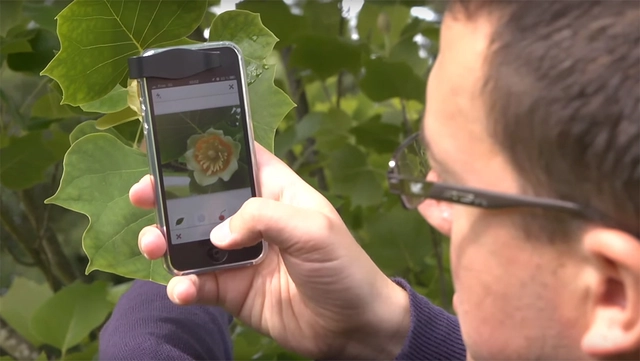
You've probably used or heard of the app Shazam, used by millions of people to identify songs and song lyrics. A team of researchers from Cirad, IRA, Inria / IRD and Tela Botanica Network - had the idea of developing a similar application, but instead of identifying songs, the application identifies plant species.

Pl@ntNet is a new tool that helps identify plants using pictures. Collecting data from a large social network that constantly uploads images and information about plant species, Pl@ntNet has a visualization software that recognizes the plant photographed and links it to its plant library.

China’s Shenzhen Waterfront to be Transformed by Laguarda.Low Masterplan

New York-based firm Laguarda.Low are set to transform the Bao’an district in Shenzhen, China with a 128-acre large-scale waterfront masterplan. Located 13 miles west of Shenzhen city center, and less than an hour’s drive from Hong Kong, OCT Bao’an will encompass dynamic spaces for business, retail, and entertainment. Designed in collaboration with landscape firm SWA, the Laguarda.Low scheme integrates nature, recreation, and culture in a new urban setting, a vision which was awarded first place in an international competition.

China’s Shenzhen Waterfront to be Transformed by Laguarda.Low Masterplan - Image 1 of 4China’s Shenzhen Waterfront to be Transformed by Laguarda.Low Masterplan - Image 2 of 4China’s Shenzhen Waterfront to be Transformed by Laguarda.Low Masterplan - Image 3 of 4China’s Shenzhen Waterfront to be Transformed by Laguarda.Low Masterplan - Image 4 of 4China’s Shenzhen Waterfront to be Transformed by Laguarda.Low Masterplan - More Images+ 2

You've started following your first account!

Did you know?

You'll now receive updates based on what you follow! Personalize your stream and start following your favorite authors, offices and users.

In alliance with Architonic
Check the latest Architecture NewsCheck the latest Architecture NewsCheck the latest Architecture News

Check the latest Architecture News