Produce personalized presentation boards that distill complex concepts into simple visual representations with a few helpful tools and effects.


Produce personalized presentation boards that distill complex concepts into simple visual representations with a few helpful tools and effects.
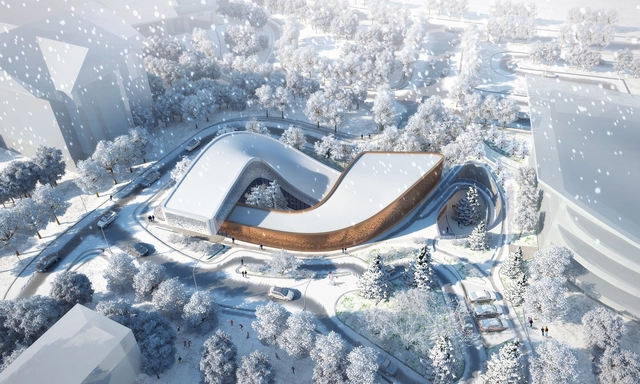
GroupGSA's design for the Four Seasons Reception Center in Chongli, Zhanjiakou, China, where the 2022 Winter Olympics will be hosted, has been announced as the winning bid. The building will be used as the main information center for all of the activities that will occur at the ski resort during the Olympic Games.

The topic of diversity in architecture has remained a mainstream issue in recent years—however, a recent article from Metropolis Magazine offers an account that is nevertheless surprising: a celebration of the unique contributions of women architects in the former socialist state of Yugoslavia. According to the essay, the highlighted women made their mark on the history of Yugoslavia "in spite of, not through the dismantling of, both the region’s and the profession’s male-dominated cultures."

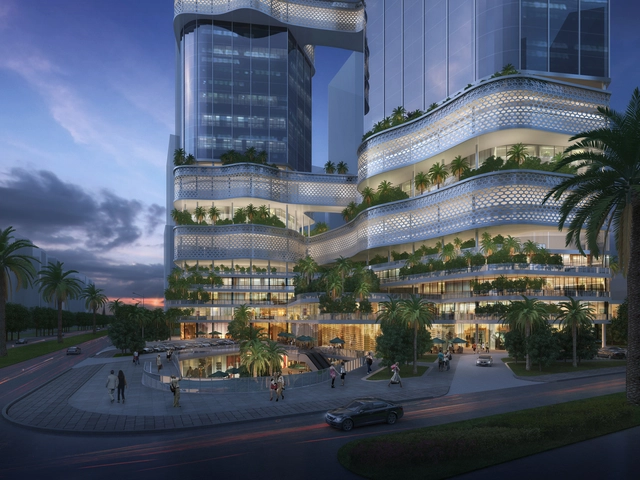
Australia-based GroupGSA’s recent design for iCarbonX’s Super Headquarters in Shenzhen, China has been dubbed “outstanding” by the competition’s jurors. The firm was invited to submit an entry which explored iCarbonX’s goal to “build an ecosystem of digital life based on a combination of an individual’s biological, behavioral and psychological data, the Internet, and artificial intelligence.”
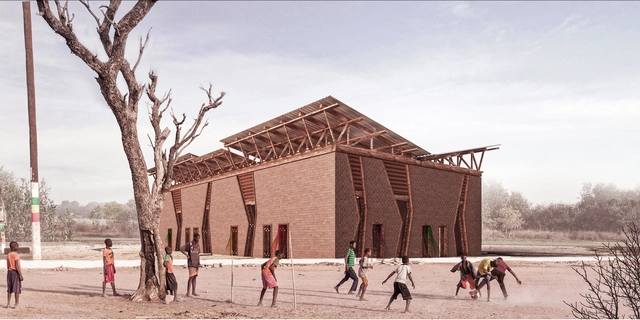
AMKNA, the Dubai-based studio, has been shortlisted for the 2018 World Architecture Festival, in recognition of their design proposal of a cultural center in Sedhiou, Senegal. The proposed “Sedhiou Cultural Center” will provide citizens with a rich cultural, social, and educational experience, all while sustaining the surrounding environment and keeping African heritage alive.
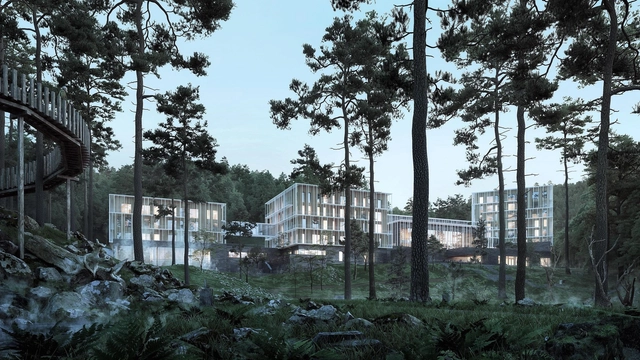
New renders have been released of Henning Larsen’s “luxurious hideaway in the Georgian mountains” after construction started on the 25000m², 135 room hotel earlier this year. The new Agobili Hotel is located at the Abastumani spa resort in Georgia, which itself has been a health retreat for both the Tsar family and general public alike. The new building hopes “to create a story about the magnificent place it inhabits.”
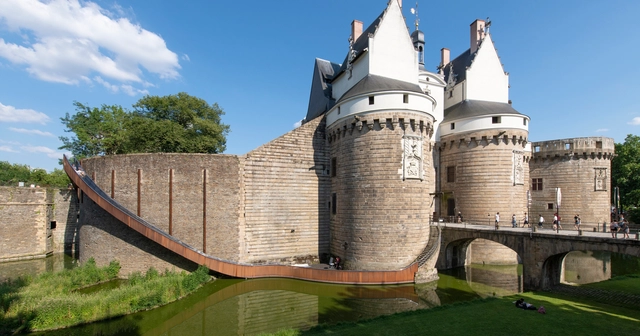
Situated in the Loire region of France, Nantes could be regarded as a “tale of two cities” from many angles. Once a bustling node for European shipping, former vast, industrial warehouses have become a hotbed of cultural and artistic expression. Meanwhile, divided by the Loire river flowing towards the Atlantic, a maze of Haussmann-style terraces, ornate cathedrals, and monumental museums sit in contrast to an island of outlandish mechanical contraptions, and young, modern, free-spirited innovation.
The sheer variety of artistic and architectural wonders alone make Nantes a destination for architects and designers. Merged with culinary excellence, highly-instagrammable hotels, and a determination by public and private officials to maintain and expand on the city’s vibrant, playful design scene, and Nantes becomes a must-see, undiscovered architectural gem.
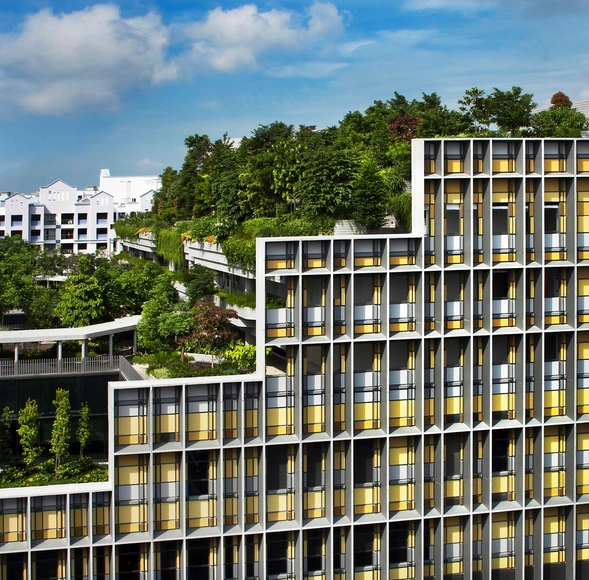
The Australian Institute of Architects has announced the winners of their 2018 International Chapter Awards. Recognizing projects from beyond Australia, but designed by members of the Australian Institute of Architects, the jury has honored six projects from a shortlist of 17.
The projects span commercial, interior, public, residential, and small architecture, with winners hailing from across Asia and the Pacific, including three in Singapore.
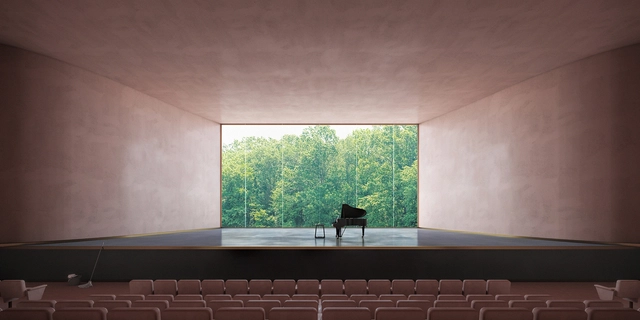
Located in a small village in Poland, this proposed music center honors the birthplace of famous Polish composer and pianist, Frédéric Chopin. Designed by ELEMENT as a part of an international competition, the Chopin Music Center captures the picturesque landscape of endless forests through "leisure and relaxation."
The Center integrates with the park through window views of Frédéric Chopin's birth house and the surrounding landscape. The proposed international music center utilizes a combination of natural materials and glazing to create a seamless connection with its site. The existing park can be reached by pathways and bridges near the building, prompting visitors to experience the outdoor area.
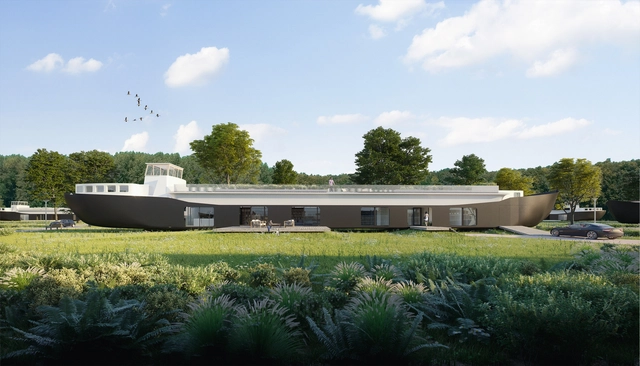
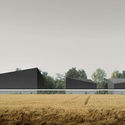
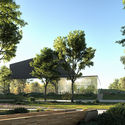
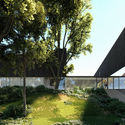
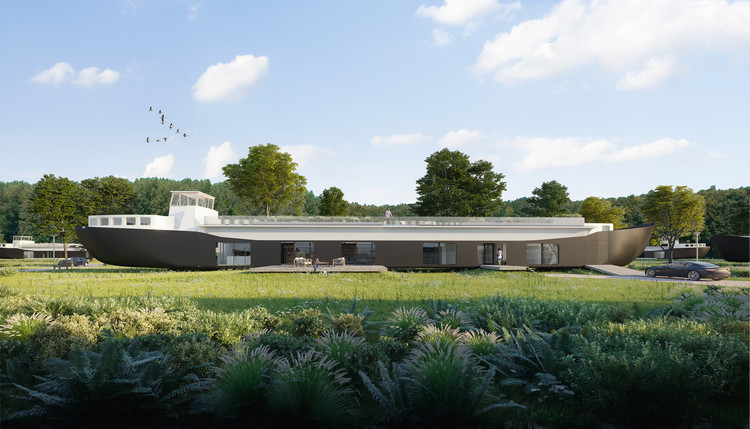
Adaptive reuse, the process of refashioning a defunct structure for a new purpose, is ubiquitous these days—so much so that hearing a phrase like “converted warehouse” or “repurposed factory” barely causes one to blink an eye. However, a new project from a cohort of Dutch architecture firms highlights the innovative nature of adaptive reuse with a scheme that reimagines disused cargo ships as houses. With their fully intact exterior shells, the ships remind residents and visitors of their industrial, seafaring past.
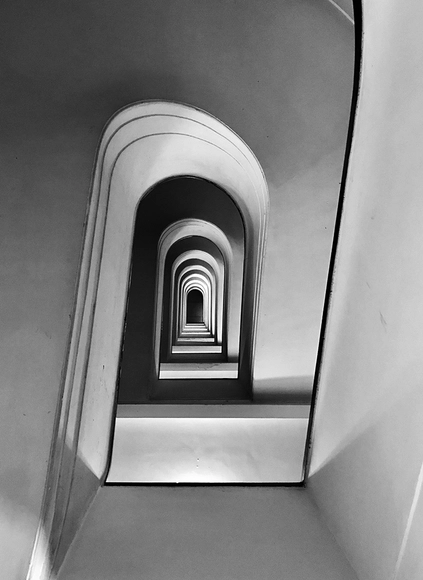
The iPhone Photography Awards (IPPAWARDS) has announced the winners of the 2018 edition of the annual competition. Founded in 2007, the same year as the release of the first iPhone, IPPAWARDS is the first and longest running iPhone photography competition. Now in its 11th year, the awards continue to select the best images taken by iPhone, iPad or iPod touch from a variety of categories including Landscape, Animals, People, Still Life and Architecture.
This year’s architecture category was won by Massimo Graziani from Italy for a shot “Rampage,” taken at the Via Allegri in Rome. Second prize was awarded to KuangLong Zhang from China with an image of one of the oldest mosques in Iran, while third prize went to Nasra Al Sharji from Oman with an early-morning shot of the Burj Khalifa in Dubai.
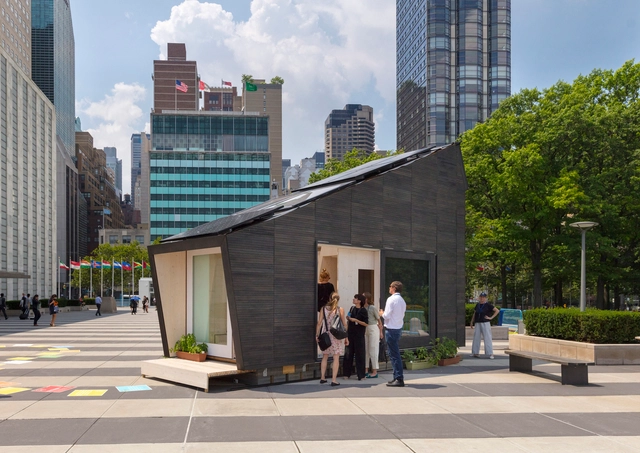
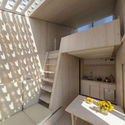
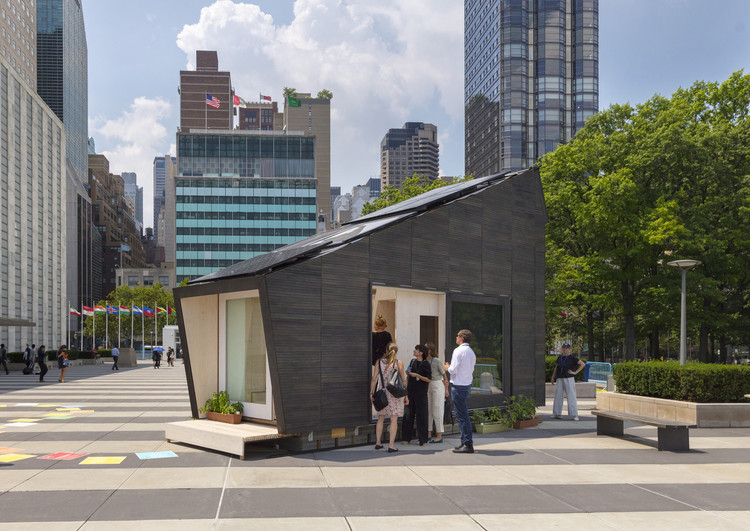
In an effort to spark public discussion and new ideas on how sustainable design can manifest as decent, affordable housing, Yale University has collaborated with UN Environment and UN-Habitat to unveil a “tiny house” fully powered by renewable energy. At 22-square-meters, the eco-house is designed to “test the potential for minimizing the use of natural resources such as water.”
The prototype was unveiled during the United Nations High-Level Political Forum on Sustainable Development, constructed from locally-sourced, bio-based renewable materials. While the first prototype is designed for the climate and context of New York, future iterations can be adapted for site-specific conditions around the globe. Design and fabrication of the module was carried out by Gray Organschi Architecture, working in direct partnership with the Yale Center for Ecosystems in Architecture.

Few subjects evoke as much sensitivity and refection, both within architecture and beyond, as those of death and mortality. Frank Lloyd Wright’s timeless reflection that “youth is a quality, and once you have it, you never lose it, and when they put you in the box, that is your immortality” offers one insight into how architects place not just their buildings, but also their lives and careers in perspective.
Furthering this engagement between architecture and mortality is HofmanDujardin, a Dutch studio which has sought to “rethink the way we say goodbye” with the design of a new Funeral Centre. Placing the coffin at its epicenter, the scheme translates the memorial sequence into three moments: the gathering of friends and family, the ceremony of remembrance, and the moment of social encounter.
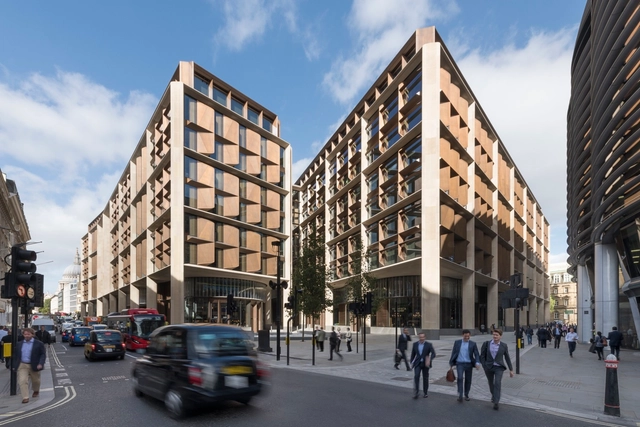
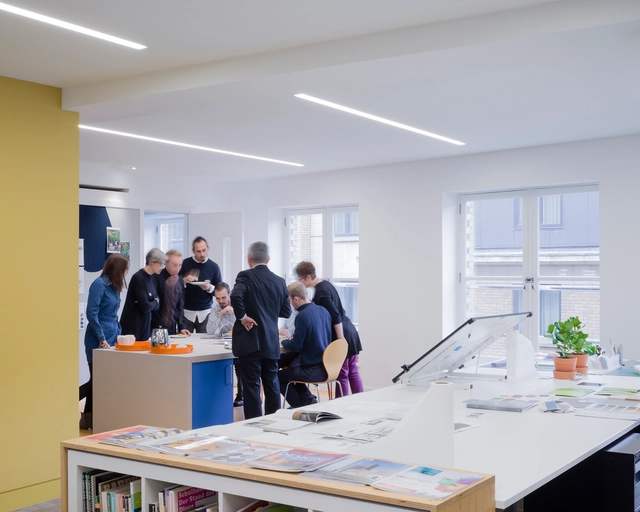
The Royal Institute of British Architects (RIBA) has announced the shortlist of six projects competing for the 2018 Stirling Prize, the UK’s most prestigious award for architecture, given to the building “that has made the biggest contribution to the evolution of architecture in a given year.” Selected from the list of national award winners, the finalist buildings range from a highly-innovative new workplace in central London to a rammed-earth wall cemetery in Hertfordshire.
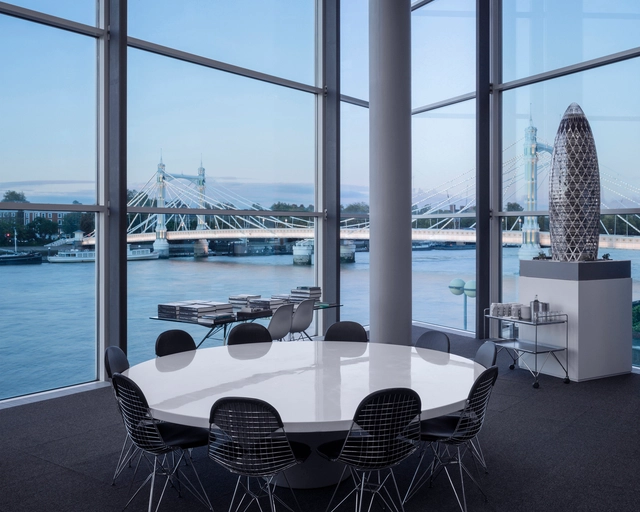
Earlier this month, a “Trailblazer Group” comprising 20 leading architecture firms led by Foster + Partners announced the creation of the UK’s first Architecture Apprenticeship Standards. Supported by the RIBA, ARB (Architects Registration Board) and over a dozen UK universities, the group has structured a program which tackles the financial feasibility of an architectural education through paid apprenticeships, and addresses the disparity experienced by students transitioning between education and practice.
While doing little to alter the notorious seven-year length of the UK's accreditation process, the apprenticeship is a welcome and proactive step in reforming an education system which, on the ground, breeds an atmosphere of financial insecurity, mental health issues, and a disenchantment among students with the value of their £45,000 investment in architecture degrees.
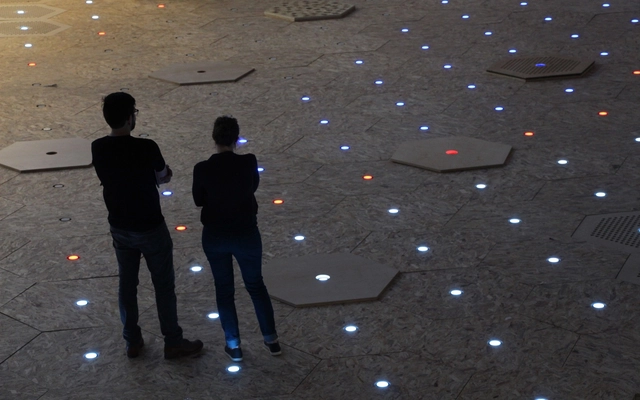
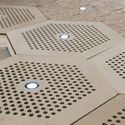
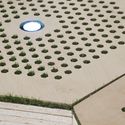
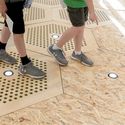
Carlo Ratti Associati, working in collaboration with Alphabet’s Sidewalk Labs, has unveiled their design for a modular paving system named “The Dynamic Street.” Intended to make streets “reconfigurable, safer, and more accessible to pedestrians, cyclists, and tomorrow’s self-driving vehicles,” the project will be on display at Sidewalk Lab’s office and experimentation space in Toronto throughout the summer of 2018.
Manifesting as a series of hexagonal modular pavers, the project explores the various patterns which can be created by reconfiguring modules, with a potential future “allowing a street to create an extra car lane during rush hour before then turning it into a pedestrian-only plaza in the evening.”
.jpg?1531354161)
Rural Studio, a student-centered design/build program at Auburn University’s College of Architecture, Design and Construction, has announced a collaboration with the mortgage loan company Fannie Mae to support the school’s 20K Initiative. This initiative continues to contribute to the development of "beautiful, healthy and resilient houses that afford financially vulnerable homeowners the ability to live in dignity, security and well within their means."
As a means to address the shortage of affordable housing in the U.S., the research produced from this collaboration with Fannie Mae is being shared with educational institutions industry groups. Auburn University is also providing funding for the initiative through a grant to "further strengthen the collaboration with Fannie Mae, as well as support the development of additional stakeholder collaborations."

Late last month, Sketchfab launched an online store which will make it easier for designers to buy and sell 3D models. The platform’s 1.5 million creative professionals can monetize their work and customers who are working on a range of 3D projects will have the opportunity to purchase tens of thousands of high-quality 3D models and textures. The new launch also features a first-in-market, "Model Inspector."
.jpg?1531851210&format=webp&width=640&height=580)
Paul Clemence of Archi-Photo shares rare images of the house of Pierre Jeanneret in Chandigarh. The photographer described the experience in an article published in Modern Magazine, which is republished below with permission.
Chandigarh, India’s modern planned city, is most commonly associated with the pioneering modernist master Le Corbusier, who conceived the radical urban plan and most of its important civic buildings. But credit is also due to the architect’s younger cousin and long-time collaborator, Pierre Jeanneret, who turned Le Corbusier’s sweeping vision into a reality. The cousins had worked extensively together, sharing a common, forward-thinking design sensibility. Appointed to senior architect, the Swiss-born Jeanneret oversaw the ambitious project on the ground and proved himself particularly skilled at connecting with the professionals and local community alike. “Effectively, he is respected like a father, liked as a brother by the fifty or so young men who have applied to work in the Architect’s Office,” wrote Corbusier in praise of his cousin.

Researchers at the University of British Columbia have unveiled details of their recently-designed “bacteria-powered solar cell” capable of converting light to energy, even in overcast conditions.
Hailed as a “cheap, sustainable” method of renewable energy extraction, the cell can generate a current stronger than any previously recorded from similar devices. Development of the cell opens new possibilities for typically-overcast regions such as British Columbia and Northern Europe, where the world's first solar panel road debuted in France.
At the Moscow Urban Forum, Rem Koolhaas spoke to Vladimir Pozner about his life and work, including how he has been influenced by Russian architecture. The pair discuss how the city of Moscow has evolved and the role that it currently has in the world. The event was originally streamed live on YouTube, meaning you can watch the recording of the discussion above.
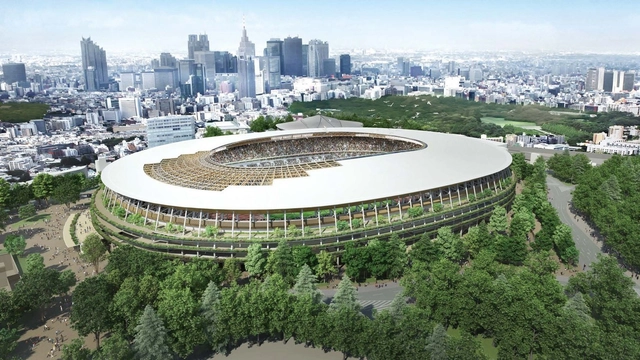
Five lucky architecture enthusiasts and Airbnb users have been offered the unique experience to accompany Kengo Kuma on a guided tour of the 2020 Olympic stadium in Tokyo. The renowned architect has collaborated with Airbnb to offer the exclusive experience, described as a “visit to Kengo’s under-construction Olympic stadium, along with a meet and greet at his studio and tea with the celebrated architect.”
The July 31st tour, sadly fully booked, offers an insightful example of architects collaborating with leaders of the “gig economy” to offer design experiences directly to the public.
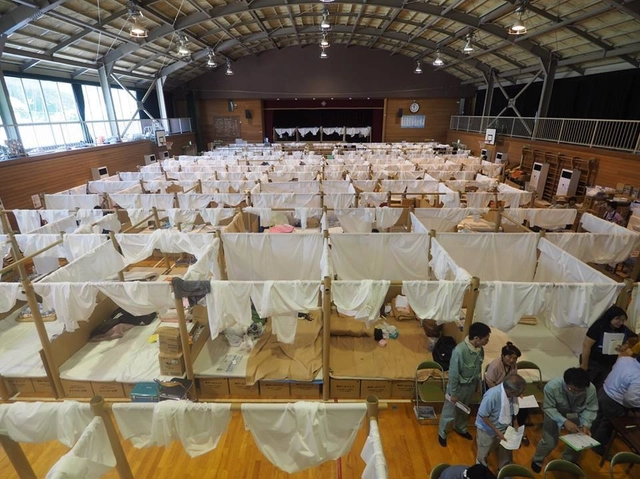
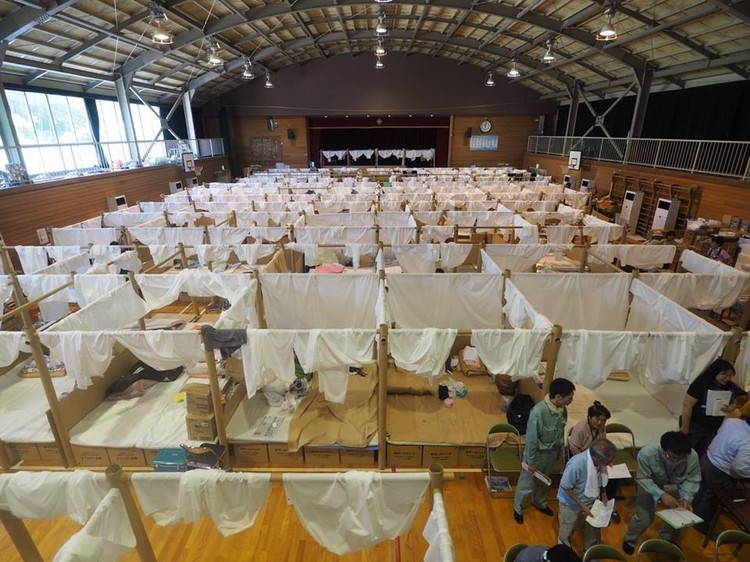
Pritzker Prize-winning architect Shigeru Ban has mobilized his Voluntary Architects’ Network (VAN) to aid victims of recent devastating floods in Southern Japan. At least 210 people have been killed by flooding and landslides which occurred last week, with a continuing heatwave further hampering recovery efforts.
Ban, along with members of the VAN and student volunteers, is constructing a partition system in evacuation centers made from paper tubes and cloth curtains. The temporary structures intend to offer privacy for flooding victims, forming a modular unit of 2 meters by 2 meters.

Fentress Architects has been chosen to design the USA Pavilion for Expo 2020 Dubai. The American Pavilion 2020 will sit within the 438-hectare masterplan designed by HOK, pictured above.
The U.S. Department of State selected the consortium containing Fentress Architects, led by Big Things Group, to deliver a pavilion based on the theme “What Moves You,” featuring highlights of American culture and technology. The team will seek to use the program as “a showcase of the innovation, creativity, and diversity that defines the United States.”


.jpg?1532112938 "Passage Pommeraye featuring Ode to Laziness by Philippe Ramette. Image © Marc Domage and LVAN")










Lewis_Kahn.jpg?1532000068 "Bushey Cemetery, Hertfordshire / Waugh Thistleton Architects. Image © Lewis Kahn")






.jpg?1531865940)