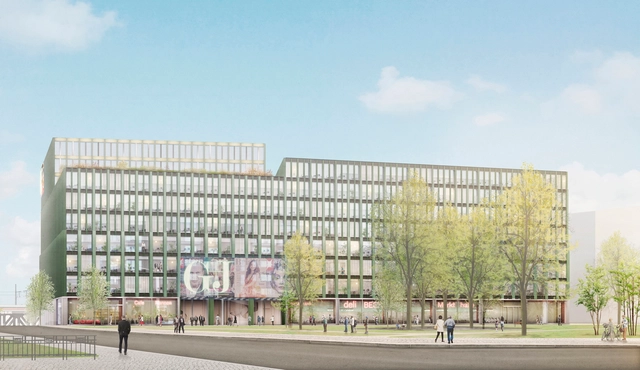
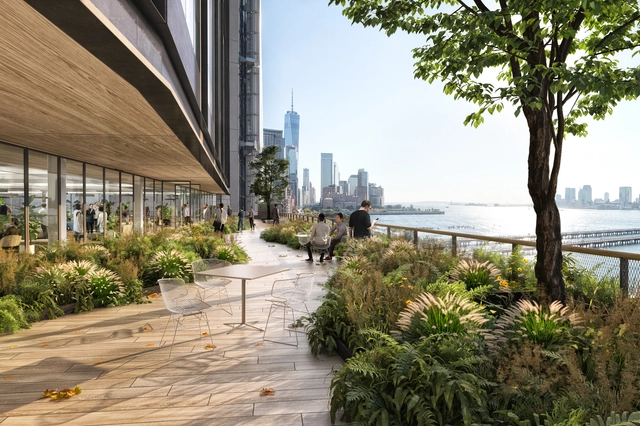
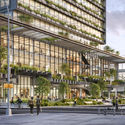
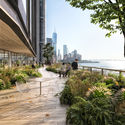
St. John’s Terminal. Image Courtesy of COOKFOX Architects
COOKFOX Architects and Oxford Properties have reimagined New York's St. John’s Terminal as a workplace of the future. The 1.3 million square foot proposal aims to connect the Hudson Square neighborhood to the waterfront at the end of The High Line. Combining outdoor space and greenery with 100,000 square-foot floor plates, the project reinterprets the industrial past of the former freight terminal. The project was created to shape how businesses innovate and create between Lower Manhattan and the waterfront.
MVRDV has released details of their proposed renovation of a 19th-century listed building on Slodowa Island in Wroclaw, Poland. The “Concordia Hub” will see the retention of the existing façade, with the addition of a contemporary rear extension to “create a focal point” for the general public and visitors.
The site’s former use as a German artillery base in 1945 means almost all of the island’s structures were destroyed in the closing months of World War II. The Concordia Hub scheme seeks to preserve one of the only surviving heritage structures on the island, while transitioning the building into the modern age.
https://www.archdaily.com/903159/mvrdv-proposes-respectful-renovation-for-19th-century-heritage-building-in-wroclaw-polandNiall Patrick Walsh
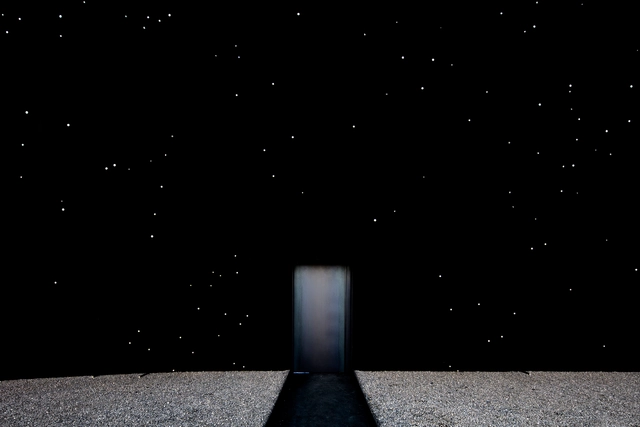
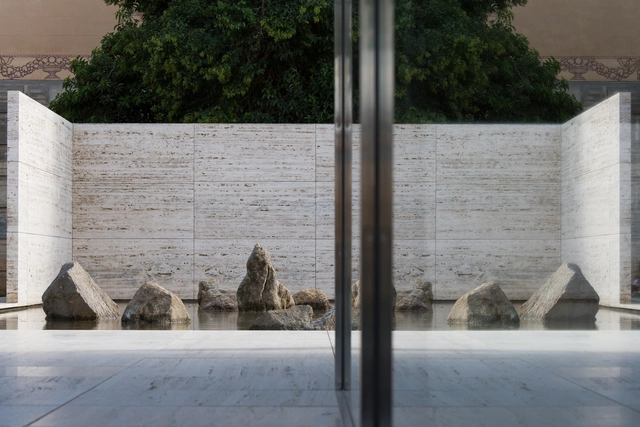
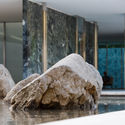
It would be hard to associate zen philosophy with Mies van der Rohe, even harder to associate it with the German Pavilion in Barcelona. Nevertheless, the latest work by American artist Spencer Finch, Fifteen stones (Ryōan-ji), precisely establishes that connection with the iconic pavilion.
Spencer Finch was the latest artist invited to intervene the Fundació's pavilion. With the aim of "provok[ing] new looks and reflections through [his] intervention in the Pavilion, [he] enhanced it as a space for inspiration and experimentation for the most innovative artistic and architectural creation." Finch joined a prominent team of artists and architects, including SANAA, Jeff Wall, Ai Wei Wei, Enric Miralles, Andrés Jaque, and Anna & Eugeni Bach, among others.
Architecture and design practices Penda and Smartvoll have created a giant watermill for Austria's National Pavilion for Expo 2020 Dubai in Dubai. ‘The Source of Everything’ was selected as a finalist in an international competition and marks the first collaboration between Penda Austria and Smartvoll. The project features a supersized mill that circulates water through the pavilion and brings an experience to the desert of Dubai that Austria is famous for: Refreshment.
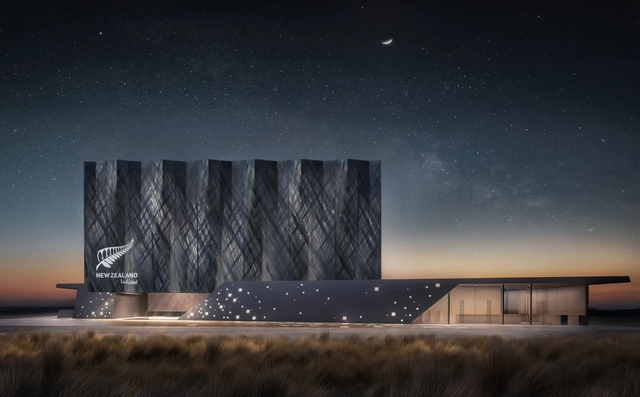
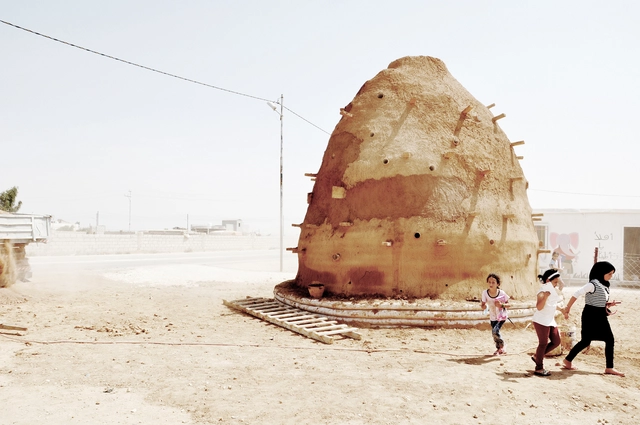
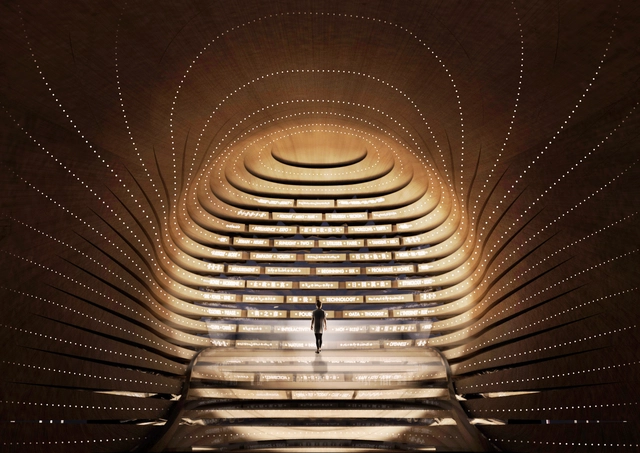
Architecture firm Jasmax has been selected to design New Zealand's National Pavilion for Expo 2020 Dubai. New Zealand will participate in Expo 2020 from October 2020 to April 2021. Expo 2020 Dubai will bring together 180 nations and 25 million international visitors. Over six months, the event will inspire collaboration on global challenges and opportunities. New Zealand’s theme for Expo 2020 is 'Care for People and Place'. The pavilion will feature an exhibition experience, corporate hosting facilities, a restaurant and design store.
Brooklyn Navy Yard. Image Courtesy of BNYDC and WXY
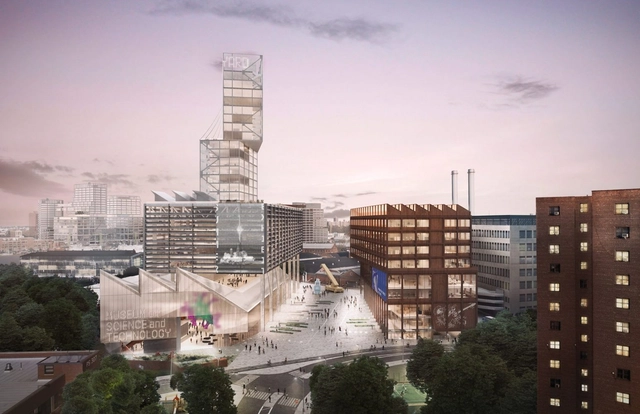
The New York firm WXY and the Brooklyn Navy Yard Development Corporation have proposed vertical manufacturing buildings in a new Navy Yard masterplan. A series of renderings show plans for the next phase of development, including high-rise structures with 5.1 million square feet of urban industrial space. The $2.5 billion masterplan was first announced in January 2018, and as Curbed NY reports, the master plan and rezoning calls for new manufacturing buildings, increased public access, and more educational programming.
Following the announcement by SpaceX founder Elon Musk that Japanese billionaire Yusaku Maezawa would be the first paying customer to visit the Moon, the retail tycoon generated further excitement by declaring he would bring between six and eight artists to accompany him.
The “Dear Moon” project would see a painter, musician, film director, and others, accompany Maezawa in order to “dream dreams that have never been dreamed…to sing songs that have never been sung, to paint that which has never been seen before.”
https://www.archdaily.com/903090/life-on-the-moon-according-to-8-architects-and-artistsNiall Patrick Walsh
The 60,000-square-meter scheme will be located in the Lohsepark area of the city, where it will form part of the HafenCity ensemble of office, commercial, and residential buildings.
https://www.archdaily.com/903088/caruso-st-johns-ceramic-proposal-wins-hamburg-publishing-headquarters-competitionNiall Patrick Walsh
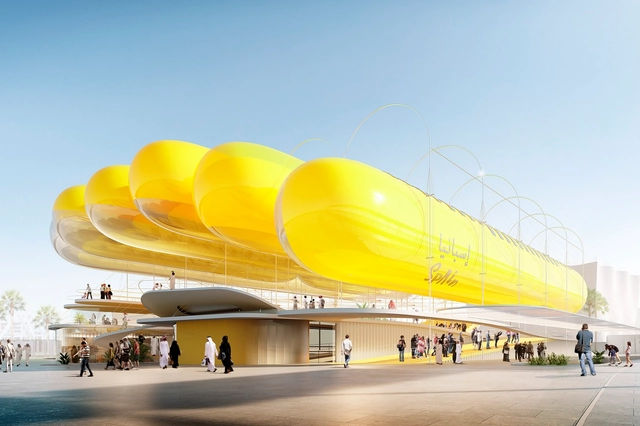
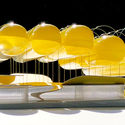
Spanish Pavilion. Image Courtesy of Selgascano & FRPO
Architecture firms Selgascano and FRPO have been announced as a finalist in the competition to design Spain's National Pavilion for EXPO 2020 in Dubai. Their proposal includes an inflatable canopy of nine yellow ETFE cylinders set within a steel framework. Reinterpreting the Spanish plaza, the design creates a new take on the public square. The pavilion was made to be ultralight as a more sustainable structure that could be easily removed and transported. Formed as a 'breathing pavilion', the design allows two inflatables to move up and down to respond to views, light and breeze.
Created by the Union International des Architects (UIA)in 2005, World Architecture Day is celebrated on the first Monday of October, aiming to highlight and remind the world of the architecture's collective responsibility in designing the world's future cities and settlements. To celebrate, ArchDaily's editors have chosen stories from the year so far that have interested, excited, or inspired them. Read on to see the stories.
https://www.archdaily.com/903015/world-architecture-day-2018-our-editors-celebrate-with-their-favorite-stories-and-projectsAD Editorial Team
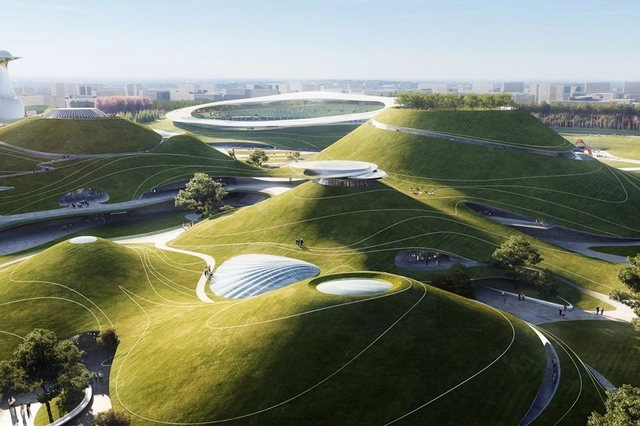
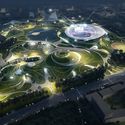
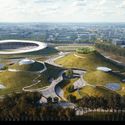
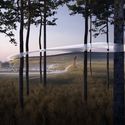
Quzhou Sports Campus. Image Courtesy of MAD Architects
MAD Architects have officially begun construction on the QuzhouSports Campus in China. Led by the Ma Yansong, the team designed the campus as a futuristic landscape with mountains and a lake conceived as a sunken garden. The design connects to the historic city as a surreal, ethereal and tranquil landscape. The 700,000 sqm sports campus combines the functions of a sports park with natural and organic forms to embrace thousands of years of history and culture in Zhejiang.
The shortlist for the 2018 Architectural Photography Awards have been revealed, bringing together 20 atmospheric images of the built environment. Categories this year ranged from a “portfolio of an individual building to a single abstract: with a professional camera or on a mobile phone.”
The 2018 edition saw a record number of entries, with photographs from 47 countries, including the UK (28%), USA (20%), Germany (6%), and China (5%). The 20 photographs were selected from four categories: exteriors, interiors, sense of place, and buildings in use.
https://www.archdaily.com/903008/shortlist-for-the-2018-architectural-photography-awards-revealedNiall Patrick Walsh
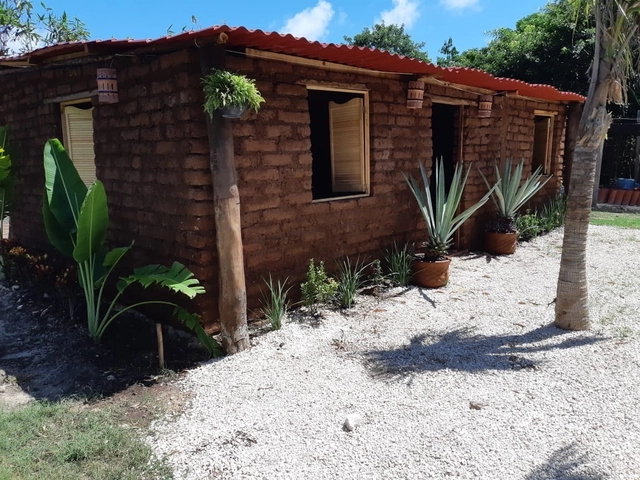
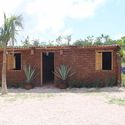
Over the past few months, Quintana Roo's coast has been overtaken by an invasion of seaweed that has put the locals to work cleaning up the beaches as the weeds wash ashore. The work is an exhausting day-to-day ordeal and while the cause of the invasion is still unknown, many point to the changes in climate impacting the Atlantic Ocean.
Currently, over 60 tons of seaweed has been gathered from the coast and locals are already putting the plants to good use as raw materials for biodigestors, cosmetics, plastics, fertilizers, and pharmaceuticals. However, another use for seaweed has recently come to the public's attention.
Founded by Juan Benavides in 2014, FILMATICA is an architectural film studio dedicated to making videos with a curatorial focus. The selection of projects is carried out in order to empathize with the formal interests of the studio, responding to aesthetic spatial conditions surrounded by powerful landscapes. With this in mind, FILMATICA makes a series of narratives that highlight architecture, time, movement, and our journey through the world. Below, a compilation of videos of contemporary architectural works narrated through the lens of Juan Benavides and the FILMATICA team.
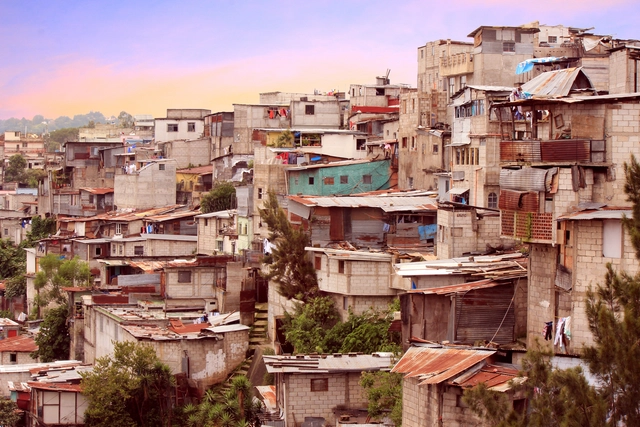
Guatemala City "favela" type housing near downtown. Image via Shutterstock
Slum. Shanty Town. Favela. Ghetto. Barrio Marginal. Bidonville. The list goes on.
We have the foresight to understand and predict that demand for shelter in urban environments will continue to expand, perhaps indefinitely, but certainly until the highly-cited prediction that by 2050, more than two-thirds of the global population will live in cities. With this reality, is it time to reassess the way in which we talk about different forms of urbanization?
Overall Winner: "HAPPI: Integrated Apparatus" by Massimilian Orzi, Studio Orzi. Image Courtesy of arch out loud
Architectural research initiative ‘arch out loud’ has announced the winners of the HOME competition. Entrants were asked to answer the question: ‘What is the future of HOME?’ A winner was identified for each category: Overall, Innovation, Adaptability, and Pragmatism.
As changes in global circumstances give rise to new design and living trends, the traditional definition of the home as a private place of permanence and stability has altered to accommodate these transitions. The competitors were asked to consider these changes, such as the impact of population shifts, the unpredictability of our changing ecosystem, contemporary forms of community housing and community relations, and newly engineered materials.
Denmark’s natural landscape along the shoreline of Mossø lake was once home to a vibrant monastic community. All that remains are ruins and unearthed artifacts - the reminisce of an active, self-sustaining monastic compound.
Galmstrup, a London-based architecture firm that specializes in community and cultural projects, has designed a gallery building to house the excavated archaeological objects and remains on site – maintaining the strong connection between the ruins and the growing collection of artifacts.
It’s well understood that a sense of place is an essential value for people, architecture, and cities. Everyone from designers to planners to city governments speak breathlessly of the power of places to transform cities for the better - but it’s not clear what placemaking really means.
https://www.archdaily.com/902961/this-week-in-architecture-what-makes-a-placeKatherine Allen
After carefully deliberating in their annual session, UNESCO's World Heritage Committee selected 19 new sites to inscribe on the World Heritage List in the city of Manama in Bahrain. Featuring 13 cultural sites such as Buddhist mountain monasteries in Korea, the industrial city of Ivrea in Italy, and the Caliphate city of Medina Azahara in Spain, alongside three natural sites and three mixed sites (classified as both cultural and natural heritage), the list now aggregates to 1092 sites in 167 countries.
From the historical Sultan Ahmed Mosque in Istanbul to the contemporary city of Brasilia orchestrated by Oscar Niemeyer, the World Heritage List has continuously exhibited varied examples of architecture and urban planning from different eras and movements from around the world. Amongst the new additions, there are several sites of religious importance, city organization, and natural conservation.
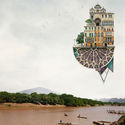
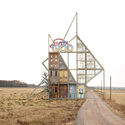
Matthias Jung's "Houses" series depicts finely stitched architectural facades against the picturesque landscapes of Northern Germany to create surreal architecture. Commencing as a childhood pastime in his father's photo lab, his passion for collaging has evolved into his career as a designer and artist.
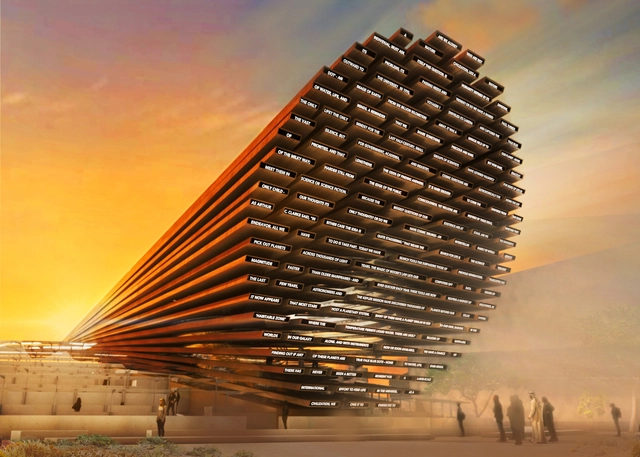
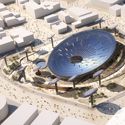
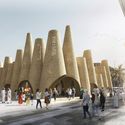
For the Dubai 2020 Expo, the United Arab Emirates and Sheikh Mohammed bin Rashid, Vice President and Ruler of Dubai, selected the theme Connecting Minds, Creating the Future. Organized around ideas of Sustainability, Mobility and Opportunity, the next world Expo will be the first to be held in the Middle East, North Africa and South Asia region. Organised every five years, the world expo lasts six months and is created as a global destination for millions of people to share ideas, showcase innovation, encourage collaboration and celebrate human ingenuity.
“Architects don’t even look at it as an opportunity to put any living experience there…we can open that up” muses Sankarshan Murthy, former Tesla and Apple Watch engineer.
As humans inhabit ever-tighter living arrangements, Murthy’s start-up “Bumblebee Spaces” takes a novel approach: put everything in the ceiling.
https://www.archdaily.com/902937/robotics-start-up-proposes-smart-motorized-ceiling-furnitureNiall Patrick Walsh
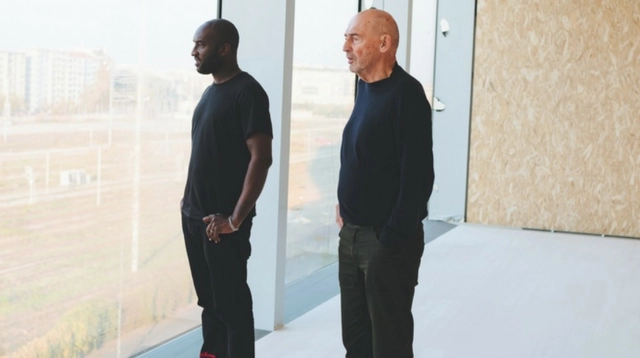
System Magazine and Buro 24/7 recently brought together Virgil Abloh and Rem Koolhaas to discuss contemporary consumerism and millennial design. Abloh, a rising American fashion designer and artistic director at Louis Vuitton, explains how his background in architecture has shaped his research into consumerism and culture. Koolhaas expands the discussion to explore Abloh's work with IKEA and his thoughts on residential design and the future of work.





.jpg?1538567368&format=webp&width=640&height=580)
.jpg?1538567368 "Courtesy of MVRDV")
.jpg?1538567396 "Courtesy of MVRDV")
.jpg?1538567380 "Courtesy of MVRDV")
.jpg?1538567412 "Courtesy of MVRDV")
.jpg?1538567368)




.jpg?1538515690 "The Source of Everything. Image © Virgin Lemon")
.jpg?1538515817 "The Source of Everything. Image © Virgin Lemon")
.jpg?1538515791 "The Source of Everything. Image © Virgin Lemon")
.jpg?1538515766 "The Source of Everything. Image © Virgin Lemon")