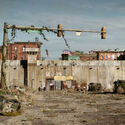
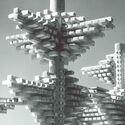
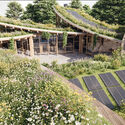
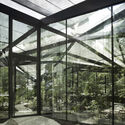
Every city carries, woven into its fabric, fissures that resist capture: ruins, vacant lots, leftover infrastructures, and gaps that persist at the margins of the official narrative. These are places that slip through the logics of planning, emerging as unexpected counter-scenes within a territory that seeks to present itself as coherent.
In the rush to organize and predict, we rarely pause to notice what emerges from such unforeseen conditions. Yet it is precisely in them that new forms of urban life begin to take shape. Free from pragmatic control or predetermined codes of conduct, these spaces reveal another layer of the city — one that, in its continual state of latency, opens room for new modes of appropriation.
Modernism has a long history in Morocco. Being close to Europe and under French Protectorate rule, it kept pace with architectural developments in the movement. Its relative peace after the Second World War further strengthened its role as some European architects sought a hub for new ideas. Architects in independent Morocco adopted Modernism as they were tasked to build the infrastructure of a new nation. The architect Jean-François Zevaco, born in Morocco to French parents, practiced across these formative periods, developing his own expressive version of modern architecture.
For monuments worthy of sustained admiration, conservation practices have been selectively mobilized to reinforce their prestige and secure their place at the center of heritage narratives. Structures whose vernacular ought to be passed down miss the discerning eye of the experts. Rowhouses, shopfronts, and neighborhood structures that form the fabric of our cities are often left to deteriorate beyond repair. Much more is lost, apart from aesthetics.
In a world facing ecological exhaustion and spatial saturation, the act of building has come to represent both creation and consumption. For decades, architectural progress was measured by the new: new materials, new technologies, new monuments of ambition. Yet today, the discipline is increasingly shaped by another form of intelligence, one that values what already exists. Architects are learning that doing less can mean designing more, and this shift marks the emergence of what might be called an architecture of restraint: a practice defined by care, maintenance, and the deliberate choice not to build.
The principle recognizes that the most sustainable building is often the one that already stands, and that transformation can occur through preservation, repair, or even absence. Choosing not to build becomes a political and creative act, a response to the material limits of the planet and to the ethical limits of endless growth. That Architecture moves beyond the production of new forms to embrace continuity, extending the life of structures, materials, and memories that already inhabit the world.
It is undeniable that, at first glance, the idea of a Louvre in Abu Dhabi or a Centre Pompidou in Brazil may seem somewhat disconcerting. The image of these museums, internationally renowned, appears in many ways inseparable from their original cultural contexts. And to some extent, it truly is. The Louvre, deeply rooted in the history of France as a former fortress and later royal residence, embodies a set of invaluable heritage values, further amplified by I. M. Pei’s iconic glass pyramid intervention in 1989. The Pompidou, meanwhile, is remembered as a historic turning point: by redefining the concept of public infrastructure through radically unconventional architecture, it marked the first time culture drew in mass audiences.
There is growing awareness around sustainability—and the environmental cost of prematurely demolishing safe, structurally sound buildings only to replace them with new construction. In the broader race to reduce carbon emissions, corporations and institutions are placing greater emphasis on ESG performance (environmental impact, social responsibility, and governance). Many now require carbon accounting, set "carbon-neutral" targets, or purchase carbon credits to offset footprints.
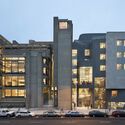
This shift, together with a wave of exemplary adaptive-reuse projects worldwide—Herzog & de Meuron's Tai Kwun in Hong Kong, Powerhouse Arts in Brooklyn, David Chipperfield's The Ned Doha, and Xu Tiantian's transformations of factories, quarries, and rammed-earth fortresses in China—has accelerated serious reconsideration of reuse as a primary development strategy. Yet despite its many benefits, adaptive reuse is still not as prevalent as it could be. Why and what might be the main obstacles and tensions?
Architecture—one of the few cultural artifacts made to be publicly lived with, preserved, and often capable of standing for centuries—contributes significantly to the cultural identity of places and people. Historically, buildings have expressed institutional attitudes, influence, and power; they are clear demonstrations of culture. Yet longevity complicates preservation: when a structure is rebuilt, repaired, or entirely reassembled, in what sense is it still the same building?
There's the classic Ship of Theseus puzzle from Plutarch. if a ship's planks are replaced one by one over time, is it still the same ship? Thomas Hobbes adds a twist—if the original planks are reassembled elsewhere, which ship is "the original"? The paradox tests what grounds identity: material fabric, continuous use and history, or shared recognition. In architecture and conservation, it reframes preservation as a choice among keeping matter, maintaining form and function, or sustaining the stories and practices that give a place meaning.
As countries in Africa emerged from colonialism in the mid-twentieth century, many expressed their independent identities through architecture. This process continues several decades later, exemplified by several new museums in West Africa, recently completed or in planning. Although varying in purpose and form, they have some common goals: addressing the need for restitution of many artifacts taken during colonialism and mostly kept in European museums; and defining a museum with local identity as opposed to a non-contextual import.
The museum and gallery visit has long been a highly curated experience. Visitors are guided through a carefully orchestrated sequence of rooms, with hand-picked works arranged to tell a specific narrative, supported by signage, graphics, scenography, and calibrated lighting. Even the rarely changed exhibitions - the permanent collections, also typically rely on a strong curatorial voice— led by noted artists or curators—to set institutional stance and shape interpretation.
At the same time, storage areas for museums and galleries are typically kept separately—often within the same building but under tightly controlled access, and not infrequently off-site in dedicated facilities, such as the Louvre Conservation Centre. These zones have long been understood as highly controlled spaces not only in terms of access, but also in relation to climate, humidity, archival order, handling protocols, maintenance, and repair. For fear of thefts and that the spatial, environmental, and sequencing requirements of the archive could be disturbed, storage has traditionally been somewhat secretive and primarily serves academic researchers and art practitioners by request. Rarely does the general public gain a comprehensive picture of the works safeguarded by any given institution.
The North Gate of Taipei, also known as Beimen, stands not only as a reminder of the city's complex history but also as a witness to the changing urban landscape around it, and its shifting attitudes towards the urban spaces bordering heritage buildings. Initially a Chinese imperial frontier, spared from demolition during the Japanese colonial dominion, crowded by overpasses and highways in the postwar modernization efforts, it has recently regained its prominent status through the development of the plaza that now frames it. The gate's resilience through shifting urban priorities and architectural policies tells a story of heritage preservation not only through the built form, but also through the open spaces framing it.
ArchDaily is proud to reveal the winners of the 5th edition of Next Practices, recognizing 20 groundbreaking architectural practices from around the globe. These firms embody the creativity, innovation, interdisciplinary approach and social responsibility that are shaping the future of architecture and expanding its horizons.
"Dance, dance… otherwise we are lost." This oft-cited phrase by Pina Bausch encapsulates not only the urgency of movement, but its capacity to reveal space itself. In her choreographies, space is never a neutral backdrop, it becomes a partner, an obstacle, a memory. Floors tilt, chairs accumulate, walls oppress or liberate. These are architectural conditions, staged and contested through the body. What Bausch exposes — and what architecture often forgets — is that space is not simply built, it is performed. Her work invites architects to think not only in terms of materials and forms, but of gestures, relations, and rhythms. It suggests that architecture, like dance, is ultimately about how we inhabit, structure, and emotionally charge the spaces we move through.

Historically, architecture and dance have operated in parallel, shaping human experience through the body's orientation in space and time. From the choreographed rituals of classical temples to the axial logics of Baroque palaces, built space has always implied movement. The Bauhaus took this further, as Oskar Schlemmer's Triadic Ballet visualized space as a geometric extension of the body. This was not scenery, but spatial thinking made kinetic. In the 20th century, choreographers like William Forsythe and Anne Teresa De Keersmaeker integrated architectural constraints into their scores, while architects such as Steven Holl, Diller Scofidio + Renfro, and Toyo Ito designed buildings that unfold as spatial sequences, inviting movement, drift, and delay.
The architect's role has traditionally been relatively well-defined: design a building, direct the project, coordinate logistics, and guide construction through to completion. As specialised fields have proliferated, together with a rapidly changing social economy, the practice of architecture has diversified, opening multiple paths for how architects can contribute to society.
Since the 1980s, one of the most consistent shifts may have been the separation between the "design architect" and the "architect of record." Where a single office once carried a project from concept to completion, internationalisation—alongside cross-border work, licensure regimes, procurement models, and liability structures—has encouraged a split. Design teams increasingly set the conceptual and schematic direction, then hand over the design development to local record architects for technical detailing, approvals, and site execution. The model has clear advantages—sharper expertise, efficiency, and often profitability (or services offered at reduced fees)—but it also segments the profession and can distance authorship from delivery.
What, then, might the next shift be, and what new synergies could redefine the architect's role? How should architects adapt to the changing professional climate? One promising trajectory is a turn from singular, permanent objects toward ongoing placemaking—iterative, context-specific programmes that prototype, test, and refine spatial ideas in public. Rather than producing one large, iconic work that fixes a site for decades, this model privileges cycles of making, use, evaluation, and adjustment at the community scale.
As cities continue to develop, we are seeing ever more well-planned, thoroughly executed, and tightly regulated approaches to shaping urban centres and their surrounding spaces—for better and for worse. As codes, restrictions, and guidelines improve and tighten, urban environments become safer, more balanced, and less prone to surprise. Yet the flip side is that highly managed districts can drift toward over-order and sanitisation, shedding the messy, accretive character that once produced alleyways, residual spaces, and unexpected sequences of movement—conditions often born from ongoing community improvisation in the grey zones of regulation.
In response, a growing number of initiatives around the world are proposing short-term urban installations that test alternate futures for the city. These works aim to provoke dialogue between what the city is and what it could offer its communities through thoughtful, context-specific spatial practices. One notable example is Concéntrico, the international festival in Logroño, Spain, conceived as an urban innovation laboratory. Marking its tenth edition, the festival is about to publish Concéntrico: Urban Innovation Laboratory, a book that surveys a decade of urban design and collective transformation shaped through successive editions of the festival. Its launch is paired with an international tour designed to share a decade of insights on collective transformation and design.