Infrastructure has long defined the backbone of cities by linking people, landscapes, and economies through systems that often go unnoticed until they fail. Today, as global challenges demand more adaptive and human-centered responses, architects are rethinking what infrastructure can be: not just a framework for movement and utility, but a catalyst for ecological restoration, cultural continuity, and civic imagination. The following unbuilt projects, submitted by the ArchDaily community, explore this expanded role of infrastructure, where airports, bridges, industrial parks, and pedestrian networks become architectural expressions of connection and care.
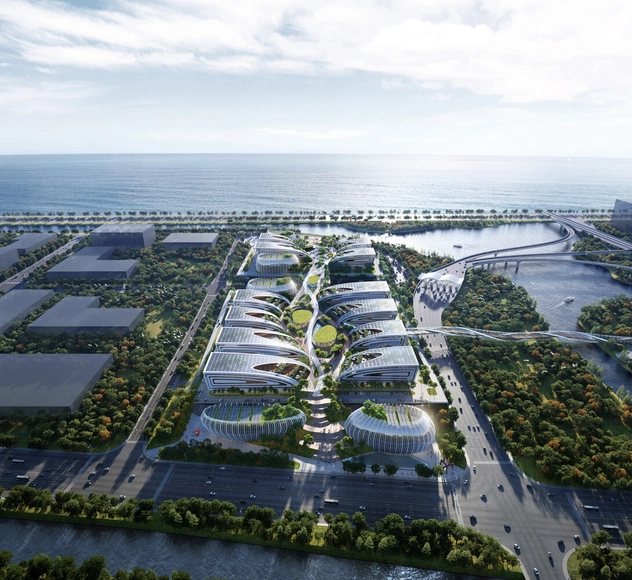
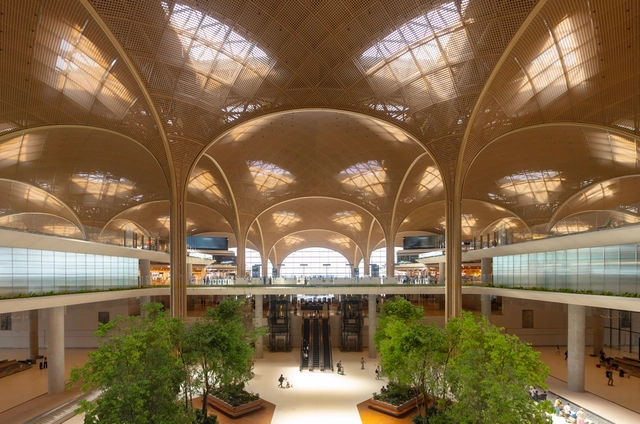
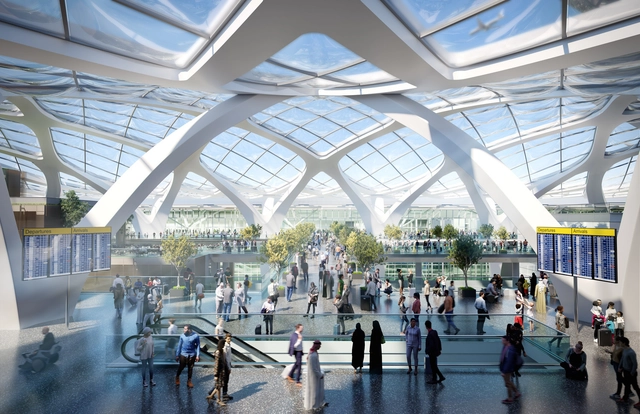
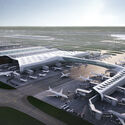
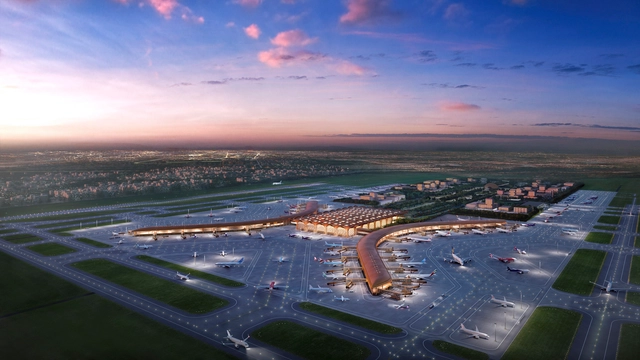
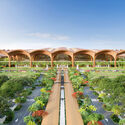
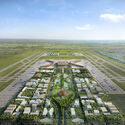
Foster + Partners has completed the Techo International Airport in Phnom Penh, Cambodia, marking a new chapter in the nation's vision for sustainable growth and improved regional connectivity. Situated 20 kilometers south of the city center, the airport's terminal building spans 235,500 square meters and forms the centerpiece of a 24-square-kilometer master plan. Drawing inspiration from Cambodia's vernacular architecture and tropical landscape, the design integrates cultural references and environmental responsiveness to create a contemporary yet contextually rooted gateway for internationaltravel. The first phase, including the head house and northern pier, opened to the public in 2025, while the southern pier is scheduled for completion by 2030.
Toronto Paramedic Services Multi-function Station 02. Image Courtesy of Diamond Schmitt Architects
As cities and infrastructures evolve to meet shifting cultural, environmental, and social demands, new architectural projects are redefining how public spaces and civic institutions operate. This edition of Architecture Nowbrings together proposals spanning different contexts and scales: on Yakushima Island, Jean Nouvel embeds a boutique retreat for NOT A HOTEL into a UNESCO-listed forest landscape; in New York City, Rossetti and WSP are preparing a major renovation of Arthur Ashe Stadium to expand capacity and enhance the visitor experience; in Toronto, Diamond Schmitt and gh3* have broken ground on a mass-timber, net-zero paramedic station; and across the English Channel, Hollaway Studio is leading a transformation of LeShuttle's UK and French terminals into more seamless and sustainable gateways. Together, these projects reflect how design is being used to adapt existing systems and landscapes to new forms of public life.
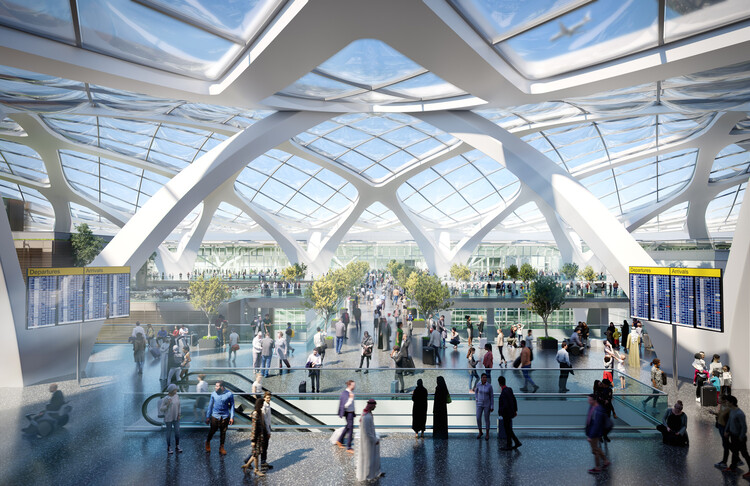
This edition of Architecture Now brings together projects that explore how architecture is reshaping global gateways, cultural destinations, and urban living. SOM's design for a new Arrivals and Departures Hall in Austin and Scott Brownrigg's Heathrow West proposal highlight the airport as a civic threshold, while Kerry Hill Architects' three-tower precinct in Brisbane emphasizes public space and subtropical landscapes in high-density housing. Zaha Hadid Architects' beachfront tower in Florida extends Miami's sculptural coastal tradition, and Pharrell Williams and NIGO's Japa Valley Tokyo introduces a temporary cultural district blending art, hospitality, and retail. Together, these initiatives reflect how infrastructure, lifestyle, and design intersect to define contemporary urban experience.
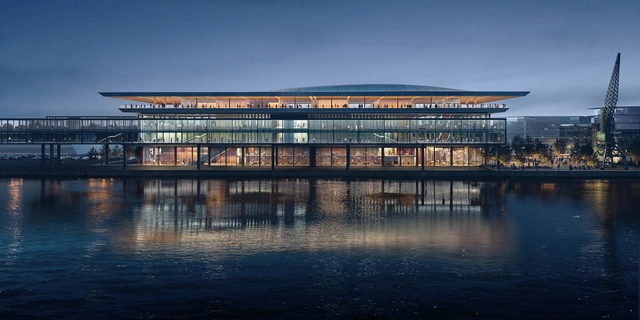
Zaha Hadid Architects (ZHA) has been announced as the winner of the international competition for the design of the Riga Ropax Terminal in Latvia. Collaborating with Latvian practices Sarma Norde Architects and Alps Landscape Architects, as well as Sweco Finland, ZHA’s proposal includes the repurposing of an existing shipping warehouse, to be transformed into a key multi-modal transport hub for the city, located along the Daugava River. The competition was open to anyone who qualified. Out of the ten registered entries, the third prize was awarded to US-based Berenblum Busch Architects, the second prize went to R-Konsult from Estonia.
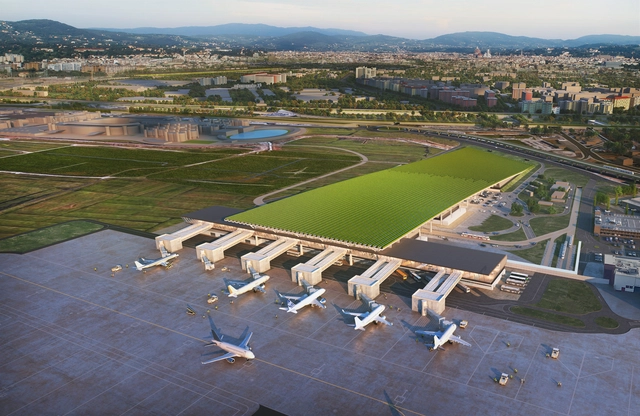
Rafael Viñoly Architects has released new renderings of their design for the new international terminal at Aeroporto Amerigo Vespucci in Florence, Italy. According to the architects, upon completion, the new terminal is expected to welcome over 5.9 million passengers a year, becoming one of the largest airports in the Tuscany region of Italy. In a nod to the Tuscan traditions of winemaking, the terminal’s rooftop features a 19-acre productive vineyard. The project is divided into two construction phases, with the first one scheduled to be completed in 2026, and the second in 2035.
Construction is underway at the new Techo International Airport in Phnom Penh, Cambodia, designed by Foster + Partners. The project, located 20 kilometers from Cambodia’s capital city, draws inspiration from the vernacular architecture that defines the area, searching to provide adequate design solutions in response to the tropical climate. The commission, which was won following an international competition, includes the master plan for a new airport city in addition to the new terminal building.
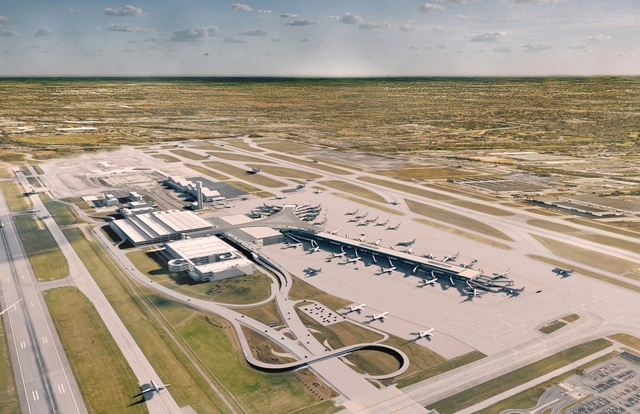
As the fastest-growing metropolitan city in the Midwest region, Columbus is situated amidst Central Ohio’s exciting blend of infrastructure and natural landscape. Columbus and its surroundings are currently undergoing a significant phase of cultural expansion and anticipate a population surpassing 3 million by 2050. In collaboration with Columbus-based Moody Nolan, Gensler has just revealed their design for the new terminal at John Glenn Columbus International Airport in Ohio, a facility to grow the city and support it in reaching these goals of expansion.
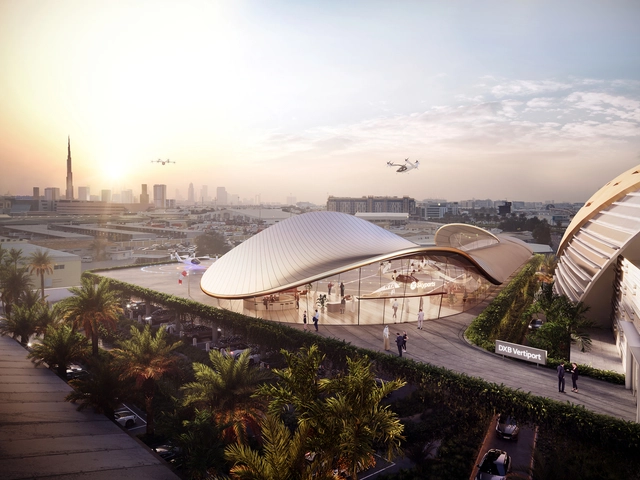
Vertiport Terminal, Dubai. Image Courtesy of Foster + Partners
Foster + Partners has developed a provisional concept design for a Vertiport terminal, located next to Dubai International Airport, in collaboration with Skysports Infrastructure, the leading designer and operator of Vertiport technology for advanced air mobility.
Skyports Infrastructure and Dubai's Highways and Transport Authority are now considering four initial locations, with the DXB vertiport being one of them (RTA). The locations are envisioned as part of an electric vertical take-off and landing (eVTOL) infrastructure network that will link Dubai's most populated and well-known places and offer high-speed, zero-emission transportation. The RTA's Dubai Metro network and Dubai International Airport are just two existing transportation hubs with which the vertiport network will interact. By 2026, the RTA and Skyports Infrastructure intend to have a network of vertiports ready for use for air taxi services.
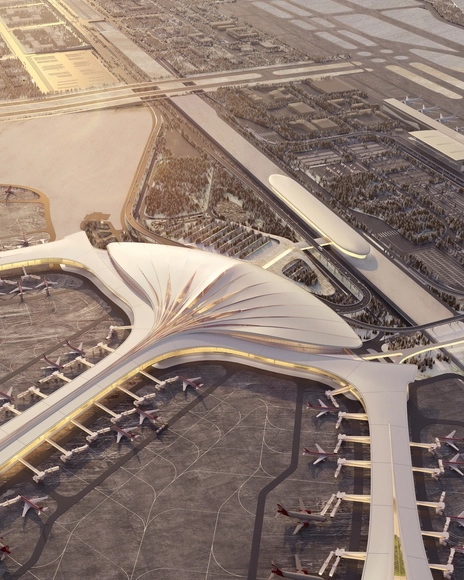
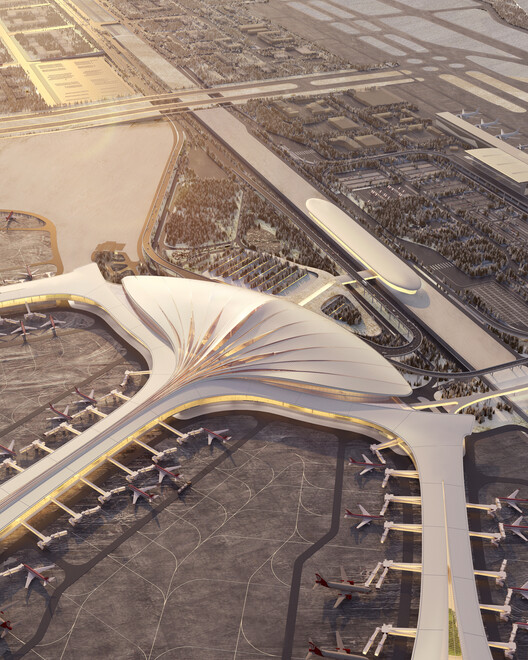
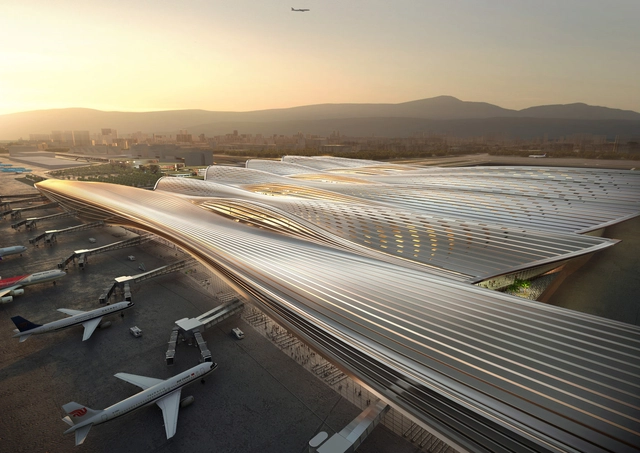
Following an international competition, MAD Architects, in collaboration with ChinaAirport Planning & Design Institute and Beijing Institute of Architectural Design, has revealed the design of the Changchun “Longjia” International Airport Terminal 3 in China. The new building is expected to accommodate 22 million passengers per year. After completion, the 270,000 square meters terminal will become the largest transportation junction in Changchun city and the Jilin Province.
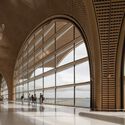
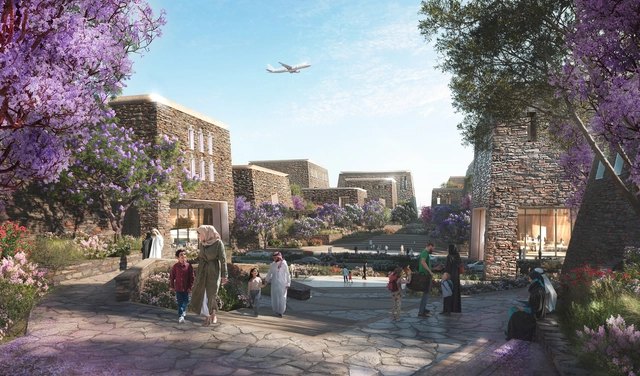
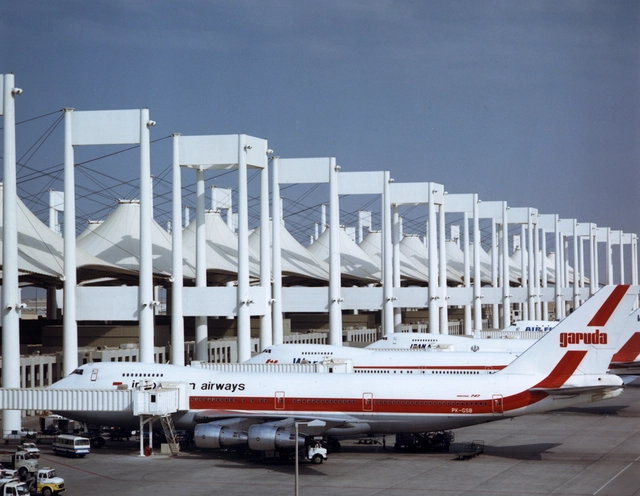
The Islamic Arts Biennale re-imagines the Western Hajj Terminal at King Abdulaziz Airport in Jeddah, Saudi Arabia, as a cultural space to create an evocative journey to explore Islamic heritage. The terminal, designed by Skidmore, Owings & Merrill and a winner of the 1983 Aga Khan Award, will be extended and complemented to create the setting for the event. Through the contributions of over 60 artists from over 20 countries, the biennale aims to become a platform to explore and reflect the diversity of the Muslim experience worldwide. Themed Awwal Bait, or The First House, the event intertwines commissioned works with never-before exhibited historical artifacts to convey a holistic perspective of the Islamic arts. The Biennale, curated by Sumayya Vally, now in its inaugural edition, will be open from January 2023 to April 2023.
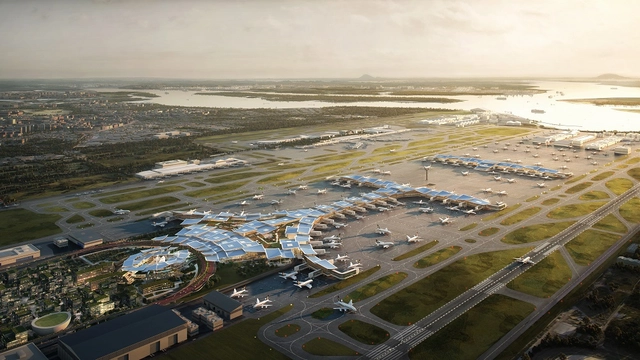
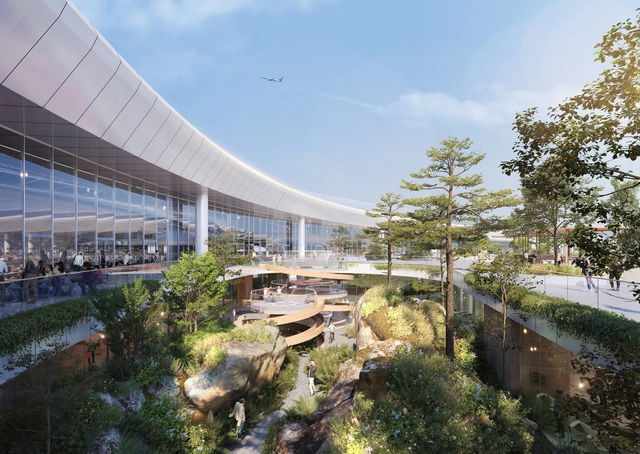
KPF and Heatherwick Studio have revealed the design for the fifth terminal of Changi Airport in Singapore. The concept behind it revolves around the concept of “airport as a city”, presenting itself as a social extension of the namesake district of Changi, at the eastern end of Singapore. The terminal is planned to add a capacity of 50 million passengers per year. Instead of a single monotonous structure, the terminal is comprised of a series of human-centered social spaces, offering different qualities of light, atmosphere, and experience to both visitors and residents of Singapore.
When the first commercial planes took flight, so did architecture. Like many other moments of technological advancement, the fascination with soaring through the skies heavily influenced the design movements of the last fifty years- not only in terms of how we design airports and think about the airline passenger experience, but the aesthetics of aviation and how the fabrics, textures, and high-end details would influence our lives on the ground.
Nordic Office of Architecture won the interior design competition for the new Chongqing Jiangbei International Airport Terminal 3B in China with a concept that integrates experiential programmes and references the identity of the Chinese city. Created in collaboration with UDG, ADC and Lichtvision, the project aims to facilitate intuitive wayfinding while providing travellers with a series of interactive spaces and attractions along their journey.
In a competition organized by Shenzhen Airport, Rogers Stirk Harbour + Partners (RSHP) and China Northeast Architectural Design & Research Institute (CNADRI) have won a competition to design the Terminal 4 Bao’an International Airport in Shenzhen, China. The winning design offers a new 400,000 sqm building with connections to existing and new transport infrastructure, as well as a space that promotes passenger interaction and wellbeing, all while maintaining a safe post-pandemic environment.
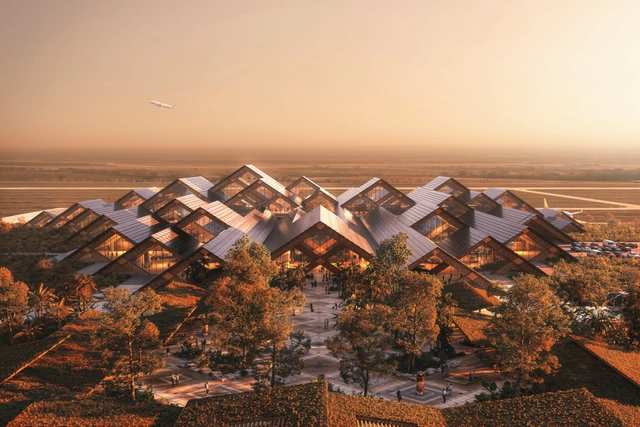
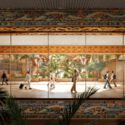
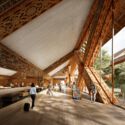
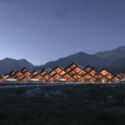
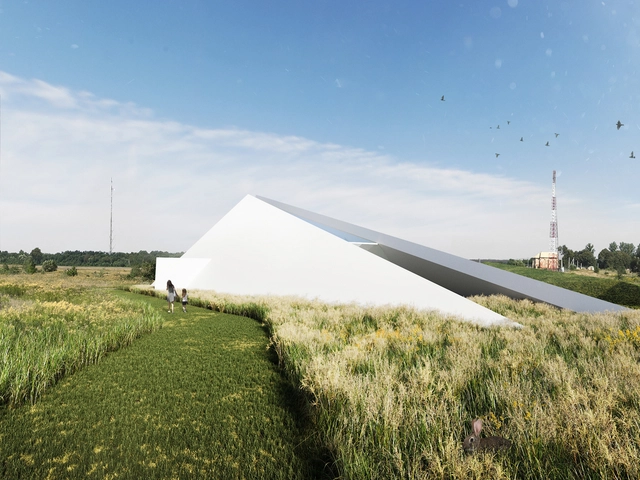
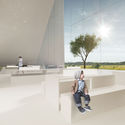
The Ukrainian based architecture and design firm O.M.SHUMELDA has conceived a conceptual project that embodies a small terminal that draws the borders of the country. Without acting as a separation, Blurred Border is a proposal that impresses and inspires first comers.






























.jpg?1578061519 "Courtesy of O.M.Shumelda")
