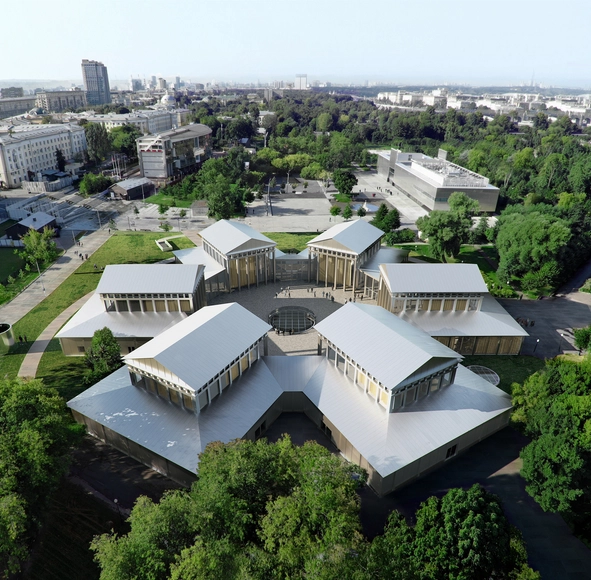
Courtesy of SANAA/Garage Museum of Contemporary Art
The Garage Museum of Contemporary Art in Moscow, Russia has announced the construction of the Hexagon pavilion by SANAA (Sejima and Nishizawa and Associates). The major architectural project will increase the museum’s physical footprint through the reconstruction of the Hexagon pavilion adjacent to its current home in Gorky Park, and will include a new public courtyard, exhibition spaces, and café, all designed around the "organics of presence, loyalty to the principles of sustainable consumption, and the creation of an accessible environment".
Responsible use and consumption of natural resources and the impacts of the building industry have been ongoing concerns in the field of architecture and urban planning. In the past, concepts such as clean slates, mass demolitions, and building brand new structures were widely accepted and encouraged. Nowadays, a transformation seems to be taking place, calling for new approaches such as recycling, adaptive reuse, and renovations, taking advantage of what is already there. This article explores a selection of projects and provides a glimpse into interventions by renowned architects in pre-existing buildings.
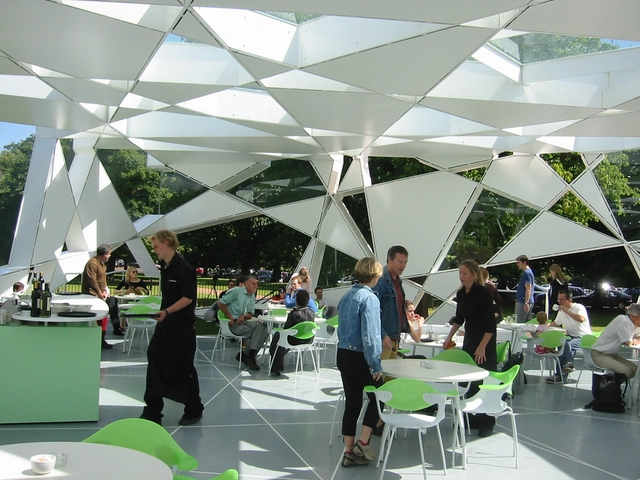
Serpentine Gallery Pavilion. Image Courtesy of Toyo Ito & Associates, Architects
Examining the work of Tokyo architect Toyo Ito (b. 1941) – particularly his now seminal Sendai Mediatheque (1995-2001), Serpentine Gallery (London, 2002, with Cecil Balmond), TOD's Omotesando Building (Tokyo, 2004), Tama Art University Library (Tokyo, 2007), and National Taichung Theater (2009-16) – will immediately become apparent these buildings’ structural innovations and spatial, non-hierarchical organizations. Although these structures all seem to be quite diverse, there is one unifying theme – the architect’s consistent commitment to erasing fixed boundaries between inside and outside and relaxing spatial divisions between various programs within. There is continuity in how these buildings are explored. They are conceived as systems rather than objects and they never really end; one could imagine their formations and patterns to continue to evolve and expand pretty much endlessly.
Shenzhen Bay Culture Park. Image Courtesy of Proloog
Shenzhen, as the modern metropolis in southeastern China that links Hong Kong to China’s mainland, has undergone rapid real estate development and intensive construction bidding in recent years.
“Shenzhen Ten Cultural Facilities of New Era” serves as a significant international design competition that has attracted much attention and investment from many high-level active architects worldwide.
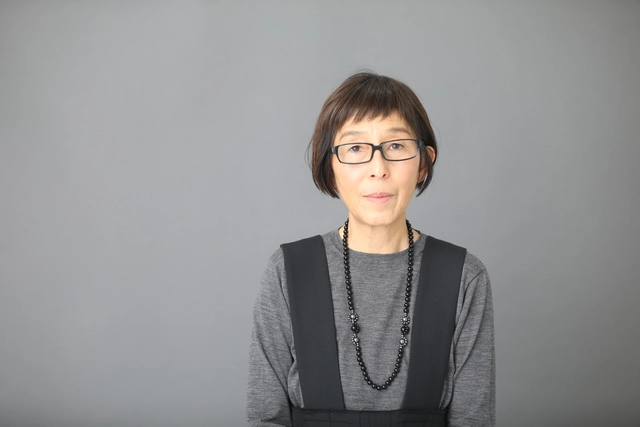
Kazuyo Sejima - Photo by Aiko Suzuki . Image Courtesy of La Biennale Architettura 2021
The Board of Directors of the 2021 Venice Biennale has appointed Kazuyo Sejima as president of the international jury, in charge of awarding mainly the Golden Lion for Best National Participation, the Golden Lion for the Best participant, and the Silver Lion for a promising young participant. In addition, they have also selected four other jury members from Peru, Lebanon, Ghana-Scotland, and Italy. The Awards Ceremony will take place in Venice on Monday, August 30th, 2021.
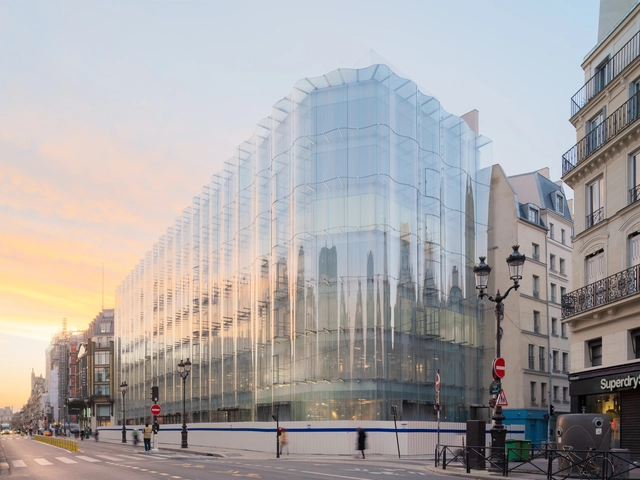
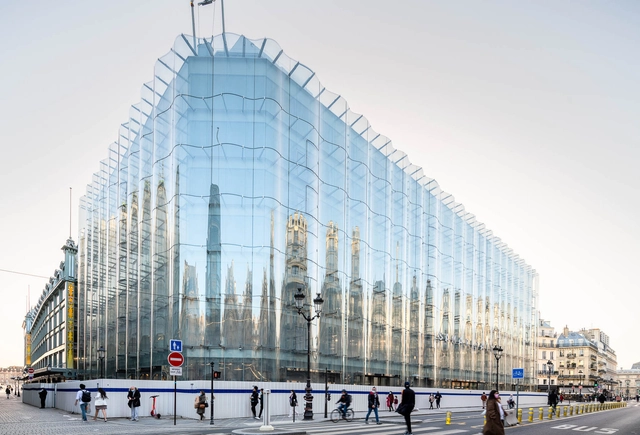
After surpassing many hurdles, SANAA's renovation of La Samaritaine Department Store is set to open its doors to the public. The redesign of the Parisian retail institution reinstates its historical value while bringing a contemporary contribution to its architecture.
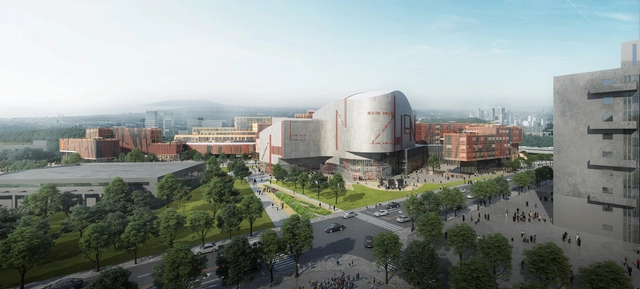
Miralles Tagliabue EMBT, directed by Benedetta Tagliabue, has won the international competition to design the Shenzhen Conservatory of Music, one of the city's 10 new era cultural buildings. Characterized by the dialogue generated with its surroundings, the complex integrates music and art in nature with a proposal of organic and sustainable architecture.
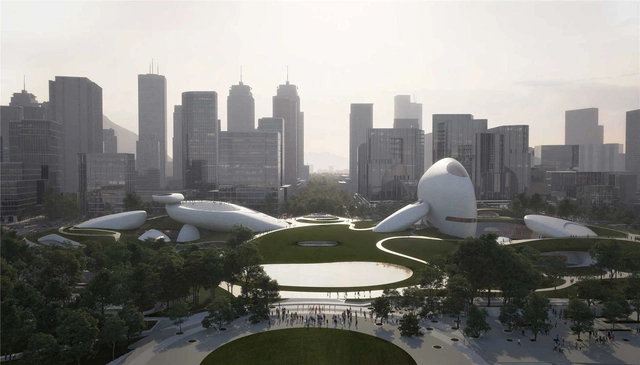
Courtesy of International Architecture Design Competition for the Shenzhen Maritime Museum
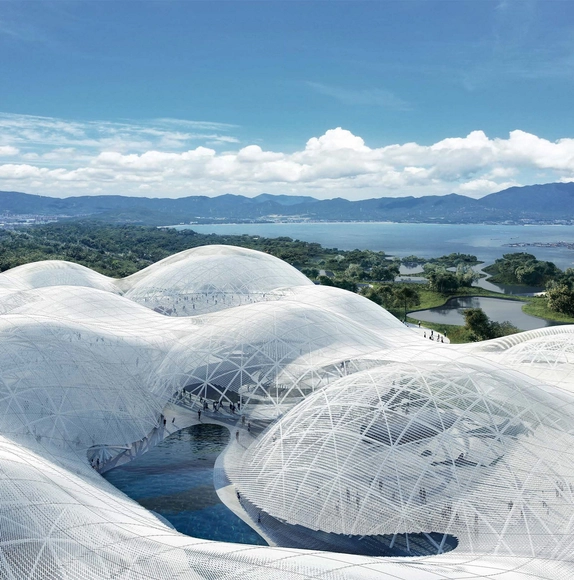
The proposal designed by SANAA, “The Cloud on the Ocean” was just selected as the winning entry of the International Architecture Design Competition for the Shenzhen Maritime Museum. Led by Kazuyo Sejima and Ryue Nishizawa, SANAA imagined an intervention emerging between mountains and sea, combining the local cultures, site features, and maritime elements.
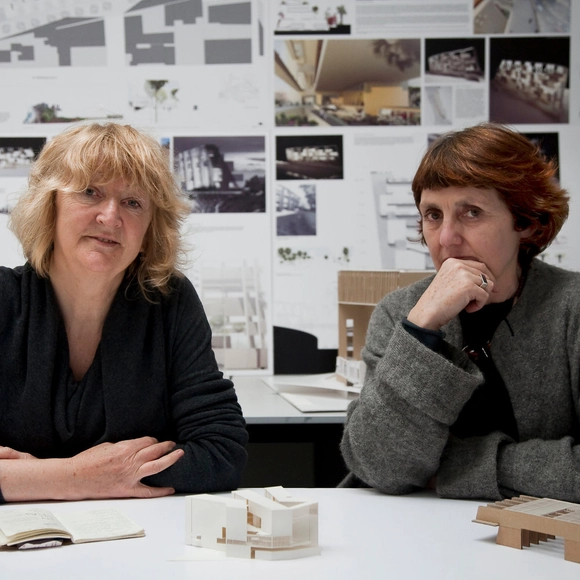
This year, architecture’s highest honor, the Pritzker Prize, has been granted to Grafton Architects, a Dublin-based architectural firm mainly ran by female partners Yvonne Farrell and Shelley McNamara. For the first time ever in its 42-year history, due to the constraints set by Covid-19 global pandemic, the organizers of the Pritzker Prize decided to use Livestream the award ceremony. Having reached the end of 2020, ArchDaily has summed up what current and previous Pritzker Prize winners have accomplished during this turbulent year.
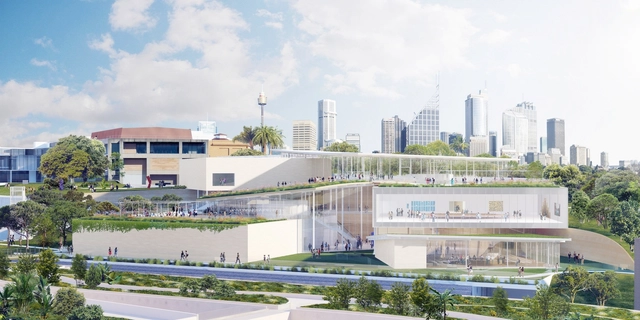
Tokyo-based SANAA has designed a new addition to the Art Gallery of New South Wales (AGNSW) in Sydney. As the firm's first building in Australia, the project will transform the flagship art museum and connect through an outdoor public art garden overlooking Sydney Harbor. The new building is designed to contrast the Gallery’s 19th-century neo-classical building as a light, transparent and open addition.
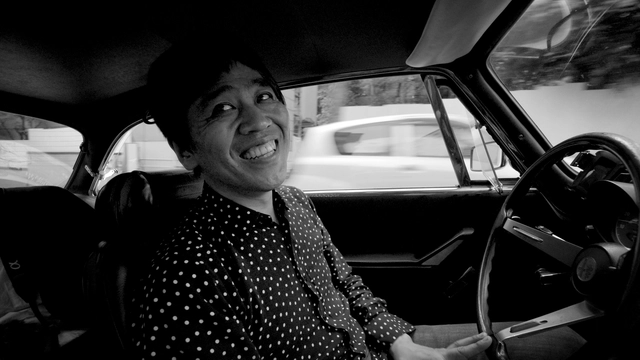
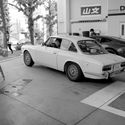
Questioning “how rooted architecture practice is and how much the built and cultural environment feeds and shapes our imagination”, Beka & Lemoine’s latest film follows one of the most celebrated Japanese architects of our times, Ryue Nishizawa in his vintage Alfa Romeo (Giulia) as he wanders in the streets of Tokyo. After winning the prestigious DocAviv 2020, the black and white documentary Tokyo Ride will soon première in many major architecture film festivals both in Europe and in North America.
In 1926, Le Corbusier developed the five points that would become the foundations for modern architecture. Once materialized in 1929 in the iconic Villa Savoye project, Le Corbusier's principles - pilotis, free design of the ground plan, free design of the facade, horizontal window, and roof garden - have been extensively explored in modern architecture and continue to influence the most diverse contemporary architectural projects to this day.
The five points became a kind of guideline for the New Architecture, as Corbusier used to call it. Even after decades, new technologies, materials, and demands of society have continued to update those architectural solutions, announced almost a century ago as the basis for a new architecture.
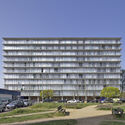
SANAA’s recently completed social housing complex in Paris was captured by the Architecture and Photography studio of Vincent Hecht. Part of Paris habitat, France’s largest public utility social housing company, the project comprises four buildings accommodating more than 100 social housing units in total.
Founded in 1995 by architects Kazuyo Sejima (born 29 October 1956) and Ryue Nishizawa (born 7 February 1966), SANAA is world-renowned for its white, light buildings grounded in the architects’ Japanese cultural origins. Despite the white exteriors, their architecture is far from modernist; the constant incorporation of ambiguity and doubt in SANAA’s buildings is refreshing and playful, taking the reflective properties of glass and brightness of white to a new level.
Bezalel Academy of Art and Design. Image Courtesy of SANAA
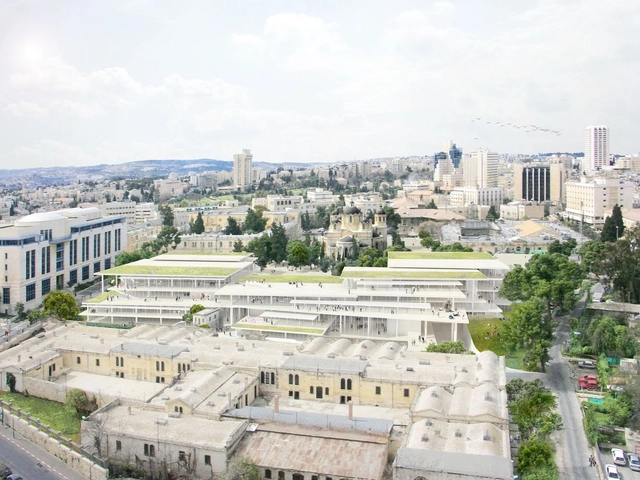
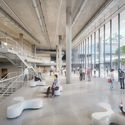
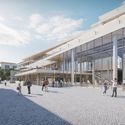
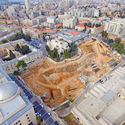
SANAA's new campus for the Bezalel Academy of Arts and Design in Jerusalem is now set for a 2022 opening. Initially proposed in 2013, the new project for Israel’s national school of art broke ground back in 2015. The campus is being built in the Russian Compound in Jerusalem’s City Center. The design will bring together 2,500 students and 500 faculty members as the school moves from the current Mount Scopus Campus. The new campus aims to revitalize the city center and connect to the urban fabric of Jerusalem.
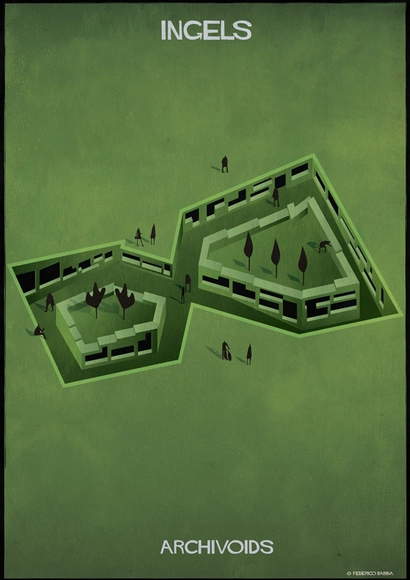
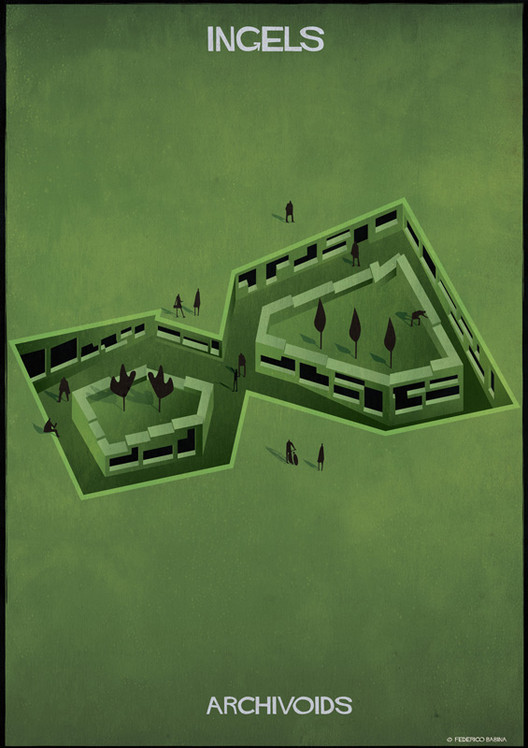
Babina’s images create an inverse point of view, a reversal of perception for an alternative reading of space, and reality itself. Making negative space his protagonist, Babina traces the “Architectural footprints” of famous architects, coupling mysterious geometries with a vibrant color scheme.



Nacasa___Partners.jpg?1629103408 "Tod's Omotesando Building_interior. Image © Nacasa & Partners")


Kai_Nakamura.jpg?1629103497 "'Minna no Mori' Gifu Media Cosmos. Image © Kai Nakamura")





















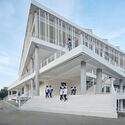
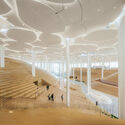

.jpg?1584528528&format=webp&width=640&height=580)
.jpg?1584528322 "© Vincent Hecht")
.jpg?1584528452 "© Vincent Hecht")
.jpg?1584528126 "© Vincent Hecht")
.jpg?1584528246 "© Vincent Hecht")
.jpg?1584528528)
_Dean_Kaufman.jpg?1477582154&format=webp&width=640&height=580)
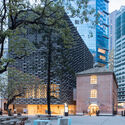
_Dean_Kaufman.jpg?1477582154 "Grace Farms / SANAA. Image © Dean Kaufman")

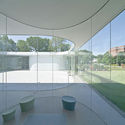
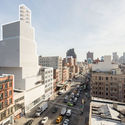
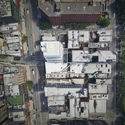
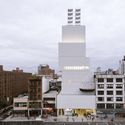
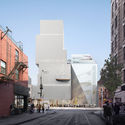
.jpg?1477667050 "New Museum / SANAA. Image")
_Dean_Kaufman.jpg?1477582154)