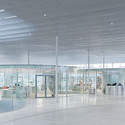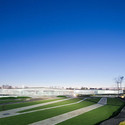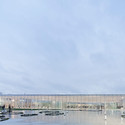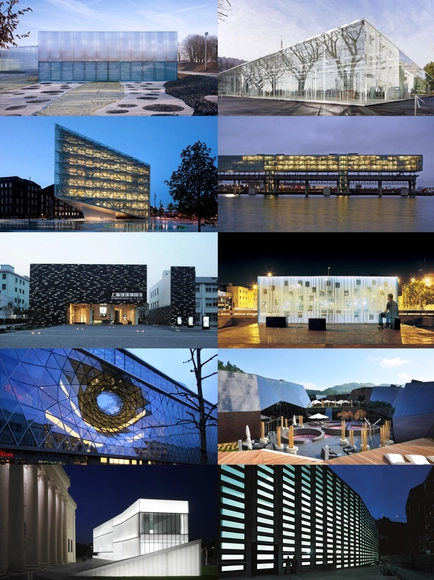
To celebrate the launch of ArchDaily Materials, our new product catalog, we've rounded up 10 awesome projects from around the world that were inspired by one material: glass. Check out the projects after the break...
To celebrate the launch of ArchDaily Materials, our new product catalog, we've rounded up 10 awesome projects from around the world that were inspired by one material: glass. Check out the projects after the break...
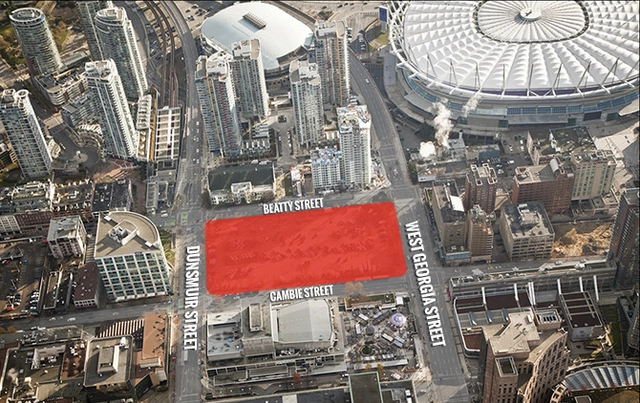
In an odd twist of fate, the architects of the soon-to-be-demolished American Folk Art Museum, Tod Williams Billie Tsien Architects, and the architects spearheading the MoMA redesign (that will require its demolition), Diller Scofidio + Renfro, will soon compete to design the Vancouver Art Gallery. Joining them on the impressive shortlist are Herzog & de Meuron, KPMB Architects, and SANAA. More after the break.

As part of their annual research for the World Architecture Top 100, Building Design (BD) has compiled a list of which architects are most admired by their colleagues from across the globe. Last year's results were somewhat predictable, with Foster + Partners leading and Renzo Piano's Building Workshop and Herzog + de Meuron close behind. According to BD, "this year saw a trend towards more commercial names."
This year's "most admired" list includes:
Most architects are familiar with the work of Iwan Baan, the eminent photographer who has documented some of the most famous buildings of our time. But what you may not know is that Baan had not originally intended to photograph architecture. Had it not been for a chance meeting with Rem Koolhaas, things may have turned out quite differently.
In the video above, Baan speaks with ERCO at the Louvre Lens, a SANAA-designed offshoot of the Paris Louvre located in a small mining town in the north of France. As he traipses around the museum's campus, he speaks about everything from his approach to photography (one that is less wrapped up in architecture than you might think) to the importance and transformative properties of light .
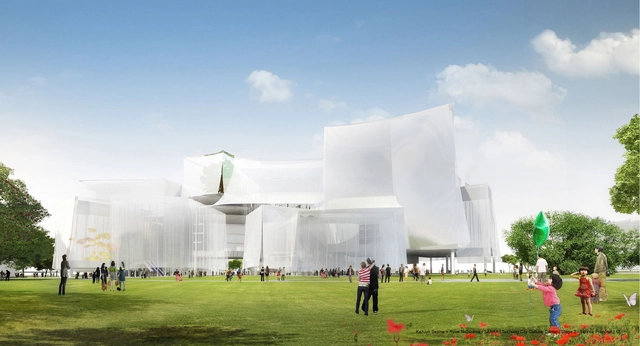
SANAA, it is. In attempts to separate itself from its sister cities, Taichung City has named SANAA, led by Kazuyo Sejima and Ryue Nishizawa, winners of an international competition that intends to unite a newly formed city. As of December 2010, Taichung city executed a mega-merger that increased its population from 1 million inhabitants to 2.5 million, encompassing the skyscraping towers of downtown Taichung to the agricultural mountainside villages of Taichung County. As a result, the local government envisioned a new urban space that would place art at its core, celebrating the regions' disparate cultures.

Today, SANAA (Sejima & Nishizawa and Associates) unveiled plans for a 400,000 square-foot building in Jerusalem that will form a new, interdisciplinary downtown campus for the Bezalel Academy of Art and Design. The competition-winning proposal, designed by the 2010 Pritzker laureates in collaboration with Israel’s Nir -Kutz Architects, features an array of stacked horizontal slabs that react to the area’s topography and surrounding context in order to create a series of outdoor terraced viewing platforms and multi-level interior spaces where students and teachers can meet, study and display their work.
More on the new SANAA-design downtown campus after the break...
In Chile, a very special project is being developed.
Eduardo Godoy, a design impresario who started his business in Chile in the '80s, has always been an advocate for design and architecture in the country. In Chile, more than 40 schools of architecture have flooded the market, but the ever-growing number of professionals has had a relatively small impact on Chilean cities. Seeing the almost infinite landscape of cookie-cutter housing in the suburbs, Godoy asked himself: why not break this model into smaller pieces, each designed by a particular architect, each an opportunity for a young professional? With this in mind, and to foster the appreciation for architects, Eduardo and his team at Interdesign started a project called "Ochoalcubo" (Eight-Cubed). His original idea was to make 8 projects, with 8 buildings designed each by 8 architects, to create developments where the singularity of each piece was key, in order to demonstrate how the individuality of the architect could result in good architecture.

Out of 140 architects considered, 12 architects have been selected by the Nobel Foundation to compete to design their new home, a Nobel Center in Blasieholmen, Stockholm. The conspicuously European selection, chosen for their "design and artistic abilities and experience working in intricate urban environments," includes some very big names - including BIG, David Chipperfield Architects, Herzog & de Meuron, and OMA. The only non-Europeans to compete will be SANAA's Kazuyo Sejima and Ryue Nishizawa.
See the full list of competitors, and more information on the competition, after the break...
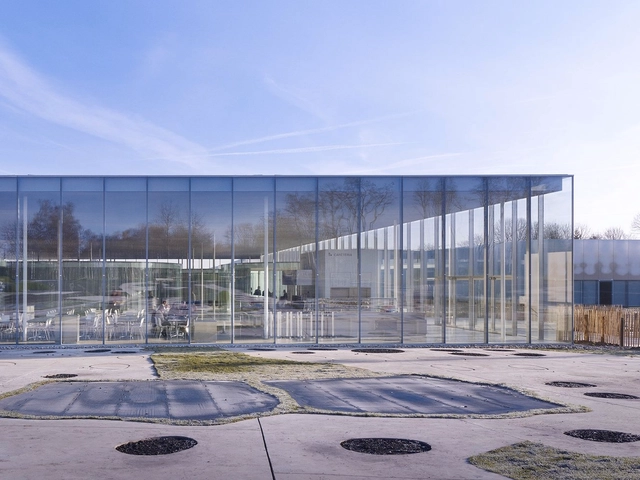

SANAA has just unveiled their plans for the Bocconi University Campus in Milan, Italy. The design features various undulating structures, forming connective inner courtyards, that wind their way across a 17,500 square meter green space open to both students and neighborhood residents.
According to Paola Nicolin, a professor at Bocconi and writer for Domus, the University is a "playground" for the imagination, using "non-hierarchic compositional elements" to establish a relationship between the campus' organic forms and the human lives which inhabit it. In Nicolin's words, the project "speaks of transparency, empathy for nature, and far-sightedness."
More images and info on the project, after the break...

News from the 2012 Venice Biennale: Japanese architect Kazuyo Sejima has been appointed as the first architecture mentor for the Rolex Mentor and Protégé Initiative – a unique program that pairs major artists with young talents. Recognized as “one of the most important creative disciplines”, architecture has added as the seventh category in the Rolex’s global philanthropy program, which already includes literature, music, visual arts, dance, film and theatre.
Kazuyo Sejima is expected to announce her protégé in the Fall. She and the young architect will collaborate for a year on the international project Home For All, which she established with other leading Japanese architects – Toyo Ito, Riken Yamamoto, Hiroshi Naito and Kengo Kuma – in response to the 2011 housing crisis caused by Japan’s devastating tsunami.
The idea will be to design community meeting spaces for people who are living in emergency accommodation. Continue after the break to learn more.

A mix of twenty local and internationally renowned firms have been invited to participate in a design competition seeking “creative and practical design concepts” on thirteen acres of prime waterfront real estate at the historic Fort Mason Center in San Francisco. Although mostly comprised of parking lots and former military buildings, the site attracts nearly one million annual visitors with its stellar views, cultural events, historic background and well-respected restaurant.
Depending on who accepts the challenge, local firms may compete with big names such as James Corner Field Operations, SANAA, Studio Gang Architects and BIG.
Continue reading after the break for more.

Sana’a, Yemen is at risk of being the first capital city in the World to run out of renewable, reliable and clean water supplies. With seasonal rain, expensive bottled water and polluted reservoirs, the residents of Sana’a are constantly faced with waterborne diseases and severe drought hazards.
In celebration of World Water Day, we would like to catch you up with the progress Sabrina Faber who was selected as winner of the 2010/2011 Philips Livable Cities Award – a global initiative designed to generate innovative, meaningful and achievable ideas to improve the health and well-being of city-dwellers across the world. Although the project went on hold due to political unrest, The Rainwater Aggregations (RAINS) Project was still able to complete three sites just in time for World Water Day. Continue reading for more.

This article, recently seen on The New York Times, was kindly shared with us by the author Sarah Williams Goldhagen.
A REVOLUTION in cognitive neuroscience is changing the kinds of experiments that scientists conduct, the kinds of questions economists ask and, increasingly, the ways that architects, landscape architects and urban designers shape our built environment.
This revolution reveals that thought is less transparent to the thinker than it appears and that the mind is less rational than we believe and more associative than we know. Many of the associations we make emerge from the fact that we live inside bodies, in a concrete world, and we tend to think in metaphors grounded in that embodiment.

Johann Watzke, Anne-Fanny Cotting & Aurélie Mindel of EPFL (École Polytechnique Fédérale de Lausanne) in Switzerland shared with us their photographic project on the Rolex Learning Center from SANAA which is the campus hub and state-of-the-art library. More images and a brief description after the break.

2010 Pritzker Prize winning SANAA has released renderings to convert La Samaritaine department store in Paris into a mixed-use development. Commissioned by LVMH (client/developer) the architectural concept for the project expresses above all the ambition to restore the La Samaritaine, recognizing the significance of the building and the role the restoration will play in the revitalization of the neighborhood as a whole. The project is schedule to begin July of next year.

Pritzker Prize winning architect Peter Zumthor’s design for the 11th Serpentine Gallery Pavilion was revealed today. A design that ‘aims to help its audience take the time to relax, to observe and then, perhaps, start to talk again – maybe not’, the materials are significant in aiding the design which emphasizes the role the senses and emotions play in our experience of architecture. The Pavilion will be Zumthor’s first completed building in the UK
Zumthor shared that ‘the concept for this year’s Pavilion is the hortus conclusus, a contemplative room, a garden within a garden. The building acts as a stage, a backdrop for the interior garden of flowers and light. Through blackness and shadow one enters the building from the lawn and begins the transition into the central garden, a place abstracted from the world of noise and traffic and the smells of London – an interior space within which to sit, to walk, to observe the flowers. This experience will be intense and memorable, as will the materials themselves – full of memory and time.’
Stay tuned to ArchDaily for more images and news on Zumthor’s design for the Pavilion. Our previous coverage of the Serpentine Gallery Pavilion can be found here, including Jean Nouvel’s Serpentine Gallery of 2010, and SANAA’s 2009 Serpentine Gallery.


If you are a regular ArchDaily reader you know that we have been providing ongoing coverage of Eli Broad’s Broad Museum in Los Angeles. Nearly 120,000 sqf and $130 million dollars, invitations were given to six top architects to submit designs for the new museum. Rem Koolhaas, Herzog and de Meuron, Christian de Portzamparc, Ryue Nishizawa and Kazuyo Sejima, Diller Scofidio + Renfro and Foreign Office Architects competed and in August we informed you that Diller Scofidio + Renfro garnered the commission.
Today, the design for the Broad Museum has been released. Situated adjacent to Frank Gehry’s Walt Disney Concert Hall and Arata Isozaki’s Museum of Contemporary Art, the museum has become a key part of the Grand Avenue redevelopment project that has been losing steam.